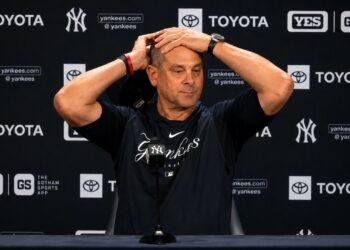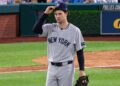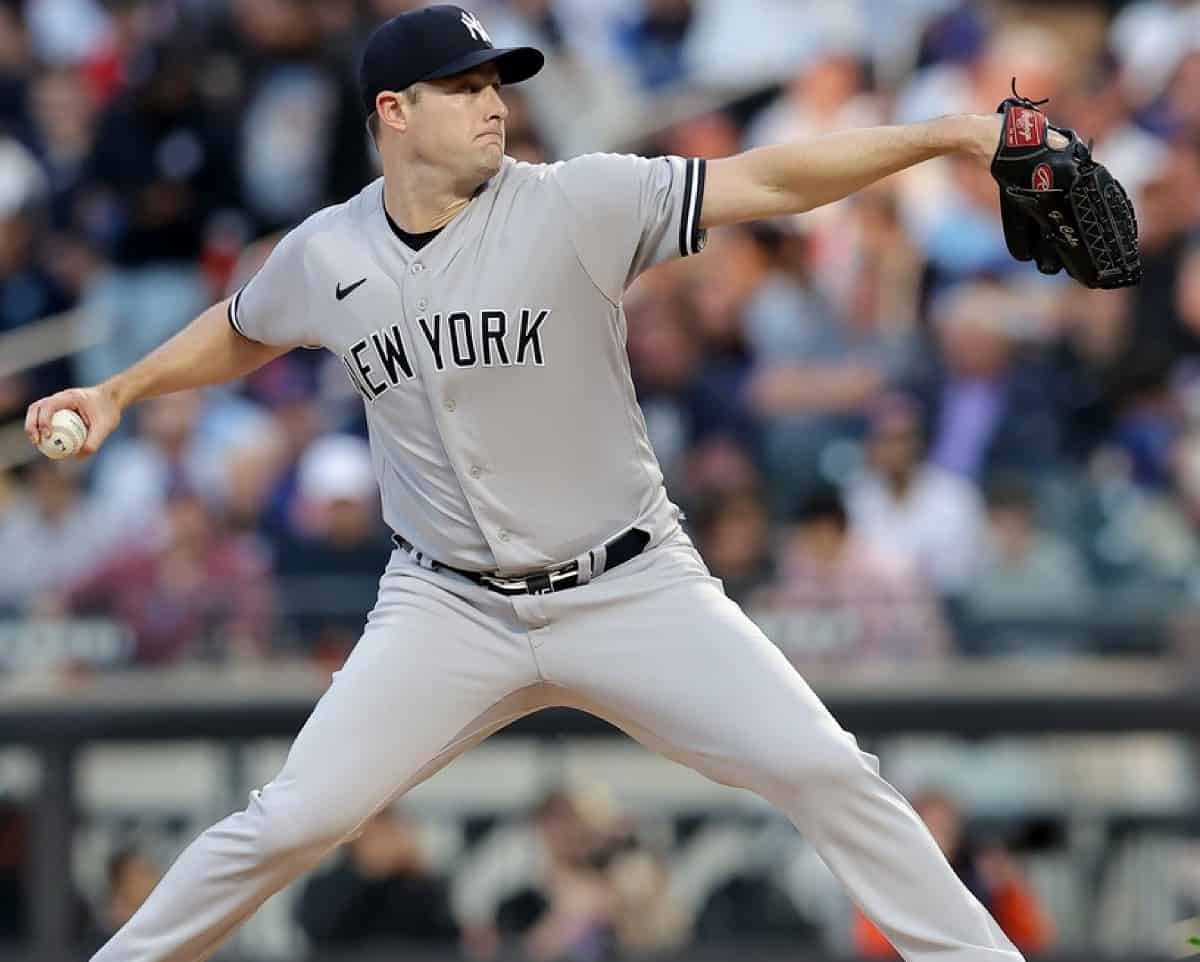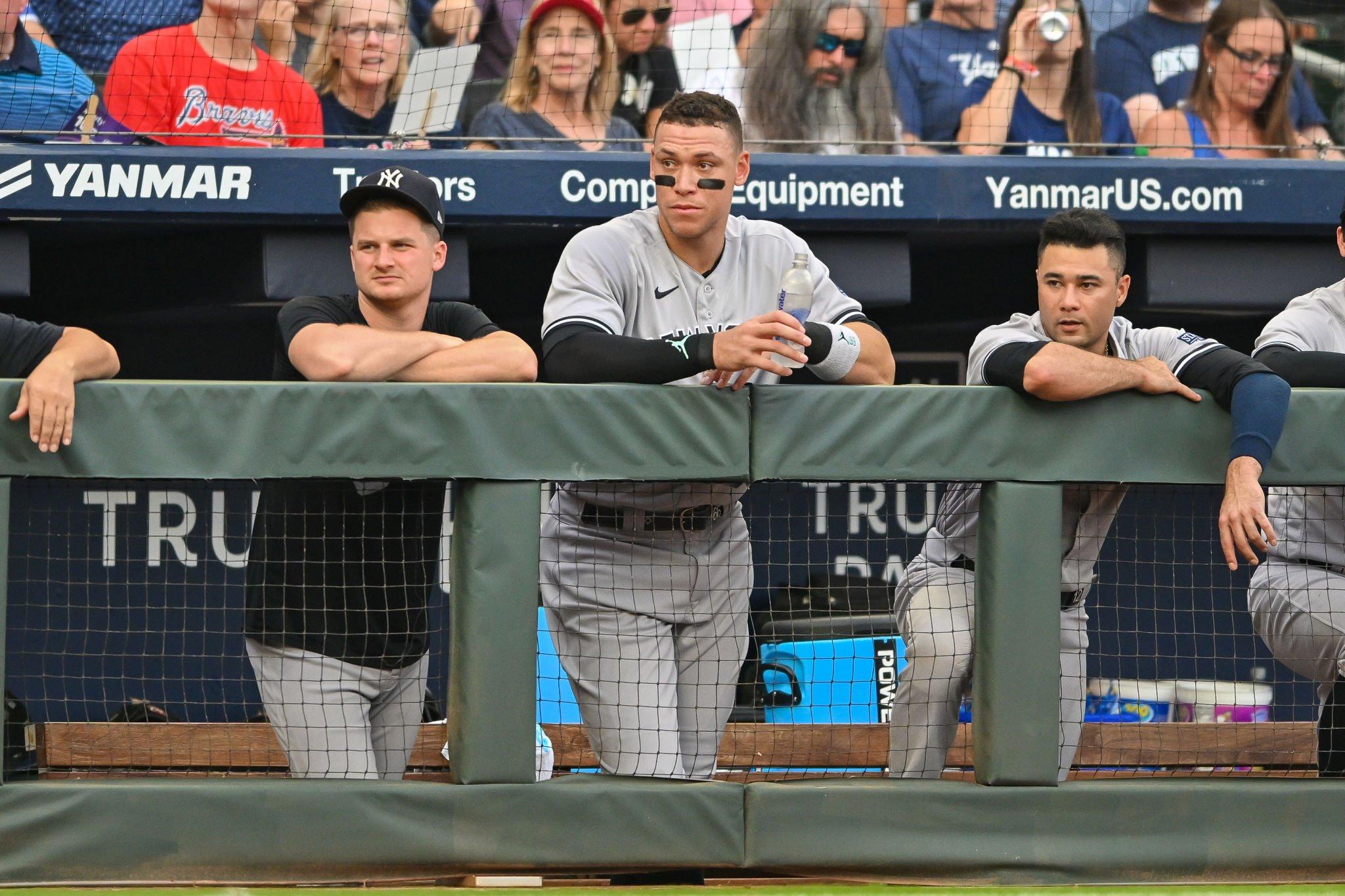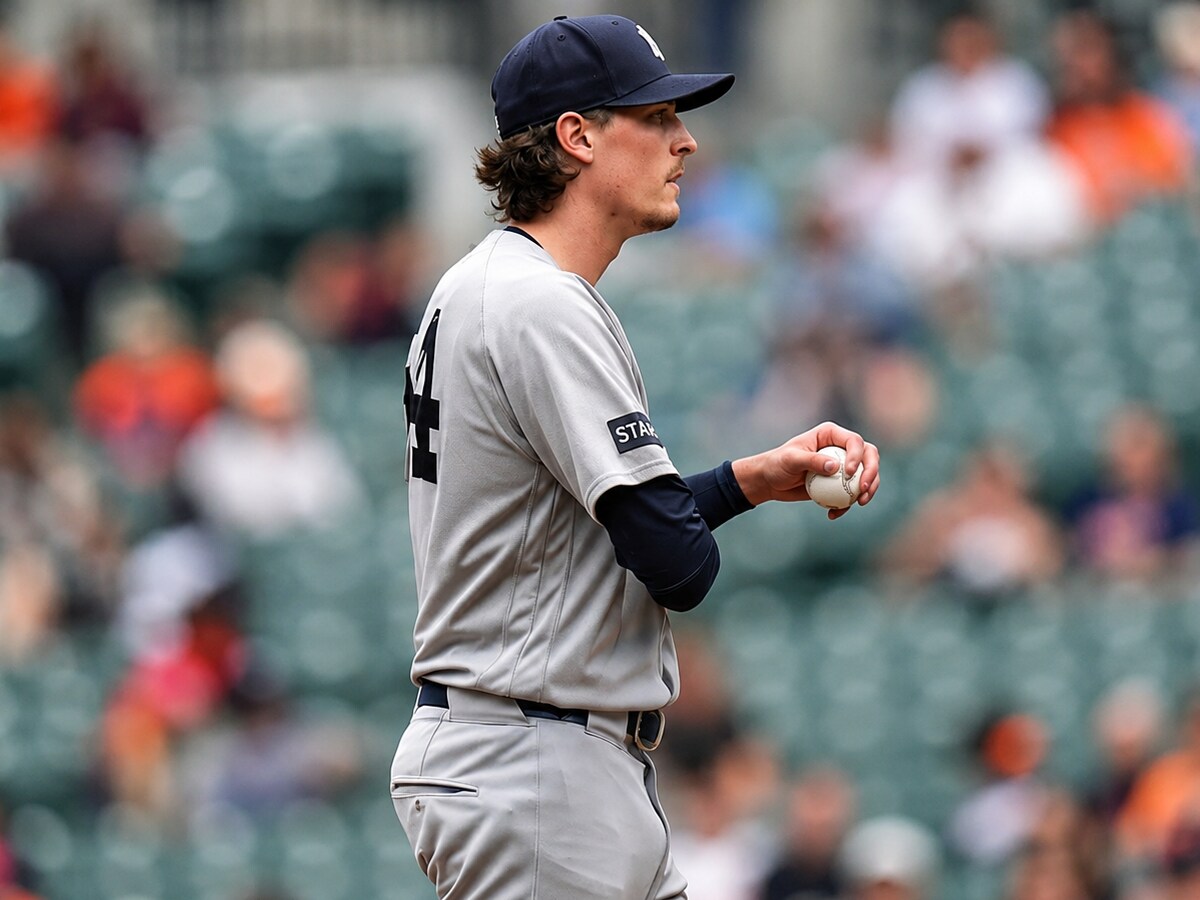
BALTIMORE — Max Fried had spent the past month making his return look complete. The left-hander came back July 22 and quickly restored the form the Yankees expected from a frontline starter. In five starts, he allowed five runs over 24 2/3 innings, a 1.82 ERA, while New York leaned heavily on its rotation during a difficult offensive stretch.
His final appearance before this week’s series against Baltimore offered little outward warning. Fried worked five innings against the Seattle Mariners at Yankee Stadium on Aug. 13, allowing one run on five hits and two walks with four strikeouts in a 1-0 Yankees loss. No public report from that game described a sudden elbow problem or an injury-related exit.
The timing mattered because the Yankees were finally approaching rare rotation depth. Carlos Rodón was set to return Tuesday from left elbow inflammation, Gerrit Cole was back, Cam Schlittler had emerged as an All-Star, and Will Warren and Ryan Weathers remained available. New York began the week holding the first AL wild-card position and sitting 5 1/2 games behind Tampa Bay in the AL East.
But Fried’s effectiveness did not answer the most important question about his left elbow. The first injury had already required more than two months of recovery and a staged throwing program. The issue for the Yankees was whether the elbow could keep absorbing a major league starter’s workload after that process.
Why the recurrence matters more than the label
The Yankees placed Fried on the 15-day injured list Monday, retroactive to Aug. 14, with a left elbow bone bruise. It is the same official diagnosis that sidelined him from mid-May until July 22.
That recurrence makes the latest injury more concerning than the phrase “bone bruise” might suggest.
During the first episode, Fried underwent MRI and CT imaging after leaving his May 13 start in Baltimore with posterior elbow soreness and difficulty getting loose. The Yankees said the studies showed a bone bruise. Fried described the original mechanism as hyperextension, with irritation when the bones at the back of the joint came together during his throwing motion.
The May evaluation also produced an important reassurance. Fried’s reconstructed ulnar collateral ligament was reported intact, and surgery was not indicated. Fried underwent Tommy John surgery in 2014.
No equivalent August imaging report has been made public. The Yankees have not identified the precise bone involved, described the extent of the marrow injury or announced the current condition of the UCL. They also have not said whether this is lingering trouble from the first bruise or a fresh aggravation.
Sports medicine research on throwing elbows shows why those details matter. MRI can reveal bone-marrow edema associated with repetitive throwing stress, while CT can help identify bony changes and loose bodies. The Yankees have not diagnosed Fried with an olecranon stress fracture, posteromedial impingement or another more specific structural condition.
Fried’s first recovery creates a difficult calendar
The most relevant recovery comparison is Fried himself.
His first IL placement was retroactive to May 14. The Yankees activated him July 22, a 69-day interval. If the second episode required the same amount of time, simple calendar math would move a return to about Oct. 22. That is not a Yankees projection, but it shows why a routine late-August return cannot be assumed.
The 15-day designation establishes only the minimum absence. It does not mean the club expects Fried back as soon as he becomes eligible.
The encouraging part is that Fried pitched at a high level after the first injury. He is 4-4 with a 2.81 ERA over 15 starts and 86 1/3 innings this season. Since returning in July, he struck out 29 batters across 24 2/3 innings and allowed one run or fewer in four of five starts.
The troubling part is that those results did not prevent the same diagnosis from returning less than four weeks after his activation.
Surgery is not the current conclusion
Nothing made public through Aug. 18 establishes that Fried needs surgery.
A bone bruise by itself generally does not make surgery the expected treatment. The Yankees treated Fried’s first episode conservatively with rest, a throwing shutdown and a gradual build back to competition. Surgery becomes a different discussion if testing identifies another structural problem.
The Yankees have not disclosed a new MRI, CT scan or X-ray from the August episode. They have not announced whether Fried is fully shut down from throwing or when he might play catch again.
Until those details emerge, the recurrence creates a meaningful risk to the rest of Fried’s regular Yankees season without establishing that his postseason is lost.
Research on surgically treated refractory olecranon stress fractures in competitive baseball players reported successful union in all 18 respondents and return to baseball at the same or higher level in 17, with an average return-to-play interval of 29 weeks; that condition is substantially more severe than the diagnosis currently reported for Fried.
A useful cautionary case is Cleveland reliever Trevor Stephan in 2024. His elbow problem was initially described as a deep bone bruise, but persistent symptoms and additional specialist opinions ultimately showed that his UCL was not providing adequate stability; he underwent reconstruction.
| Injury / case | Management | Recovery or outcome | Relevance to Fried |
| Max Fried, Yankees, 2026 — first episode | Throwing shutdown → bullpen/live BP → Triple-A rehab → MLB | About 10 weeks / 69 days from May 14 retroactive IL date to July 22 activation | Best exact comparator: same pitcher, same elbow, same official diagnosis |
| Olecranon stress injury, conservative throwing-athlete case | Six weeks rest followed by six-week throwing progression | Full return to pitching after roughly 12 weeks | More severe/specific osseous stress pathology; not an MLB Fried diagnosis |
| Yu Darvish, Cubs, 2018 — elbow stress reaction described as bone bruise | Rest; MRI arthrogram diagnosis | Required at least six weeks of rest; season ended; returned to make 31 starts in 2019 | Stress reaction is not identical to an isolated contusion but illustrates prolonged pitching-elbow bone recovery |
| Mat Latos, Reds, 2014 — right-elbow bone bruise | Late-season shutdown | Season ended following Sept. 12 start | Demonstrates calendar risk when recurrence occurs late in season |
| Brandon Morrow, Cubs, 2018 — elbow/right-arm bone bruise | Rest and attempted throwing progression | Did not pitch after July 15; bone bruise improved but elbow remained symptomatic; later underwent arthroscopic surgery | Shows that “bone bruise” can coexist with an unresolved mechanical elbow problem |
| Trevor Stephan, Guardians, 2024 — initially deep bone bruise | Rest/specialist assessment | Persistent problem ultimately attributed to inadequate UCL stability; underwent reconstruction | Warning comparator for diagnostic evolution, not evidence Fried has a UCL injury |
| Refractory olecranon stress fractures, competitive baseball surgical series | Internal fixation | 17/18 returned at same/higher level; average 29 weeks | Surgical boundary case, substantially more severe than Fried’s reported bruise |
Yankees can replace the turn, not Fried’s certainty
Rodón’s return gives the Yankees an immediate answer for the vacant rotation turn. New York can proceed with Cole, Rodón, Schlittler, Warren and Weathers rather than deciding which of six healthy starters should move to the bullpen.
The larger question is what the Yankees will have available if they reach October.
New York’s starters carried a 3.38 ERA, best in MLB, entering the week. Fried was a major part of that strength when healthy. The Yankees signed him to an eight-year, $218 million contract before the 2025 season to provide another frontline option alongside Cole and Rodón.
For now, Fried remains on the 15-day IL rather than the 60-day list. That preserves the possibility of a return before the postseason. It does not provide a timetable.
The next meaningful signs will be medical: whether new imaging is reassuring, whether the UCL remains intact, whether symptoms disappear and how quickly Fried can restart a throwing progression. Until the Yankees provide those answers, the seriousness of this injury lies less in the words “bone bruise” than in the fact that it came back after a 10-week rehabilitation and only five major league starts.
What do you think? Leave your comment below.