NEW YORK — The Yankees enter the offseason with a familiar problem at third base: finding enough offense without creating another weakness in the field. A position that offered little production in 2026 remains an obvious place to examine upgrades as New York weighs its next roster decisions.
Ryan McMahon finished the regular season with a .635 OPS and a 76 OPS+, according to a published review of his season. The latter figure put his offensive production 24% below league average after adjustments for league and ballpark. Those numbers explain why another bat at the position carries appeal.
For the Yankees, the question extends beyond finding someone with a higher home run total. A third baseman who produces more offense but cannot hold the position changes the calculation. His bat then has to justify playing time elsewhere, and the original infield need can remain unresolved.
That distinction matters in a market where a player’s listed position does not settle his eventual MLB role. Evaluating an overseas hitter involves separate judgments about contact, power and defense. A productive season provides evidence of offensive ability, but it does not settle how that player will handle major league pitching.
For the Yankees, availability also matters. An overseas hitter must have a route into MLB before his production can become part of an immediate roster decision. The posting process gives clubs a limited period to examine that possibility, balancing the appeal of a new bat against the demands of a major league role.
Against that backdrop, the most useful comparison is broader than batting average. Walks show how often a hitter earns another route to first base. Strikeouts identify plate appearances that produce no ball in play. Extra-base production helps explain whether the power extends beyond a small number of home runs.
Together, those measures put the Yankees’ third-base question in sharper focus: how much offense a prospective addition offers, how consistently he reaches base and whether his skills address the position’s needs.
Roh offers a potential answer at third base
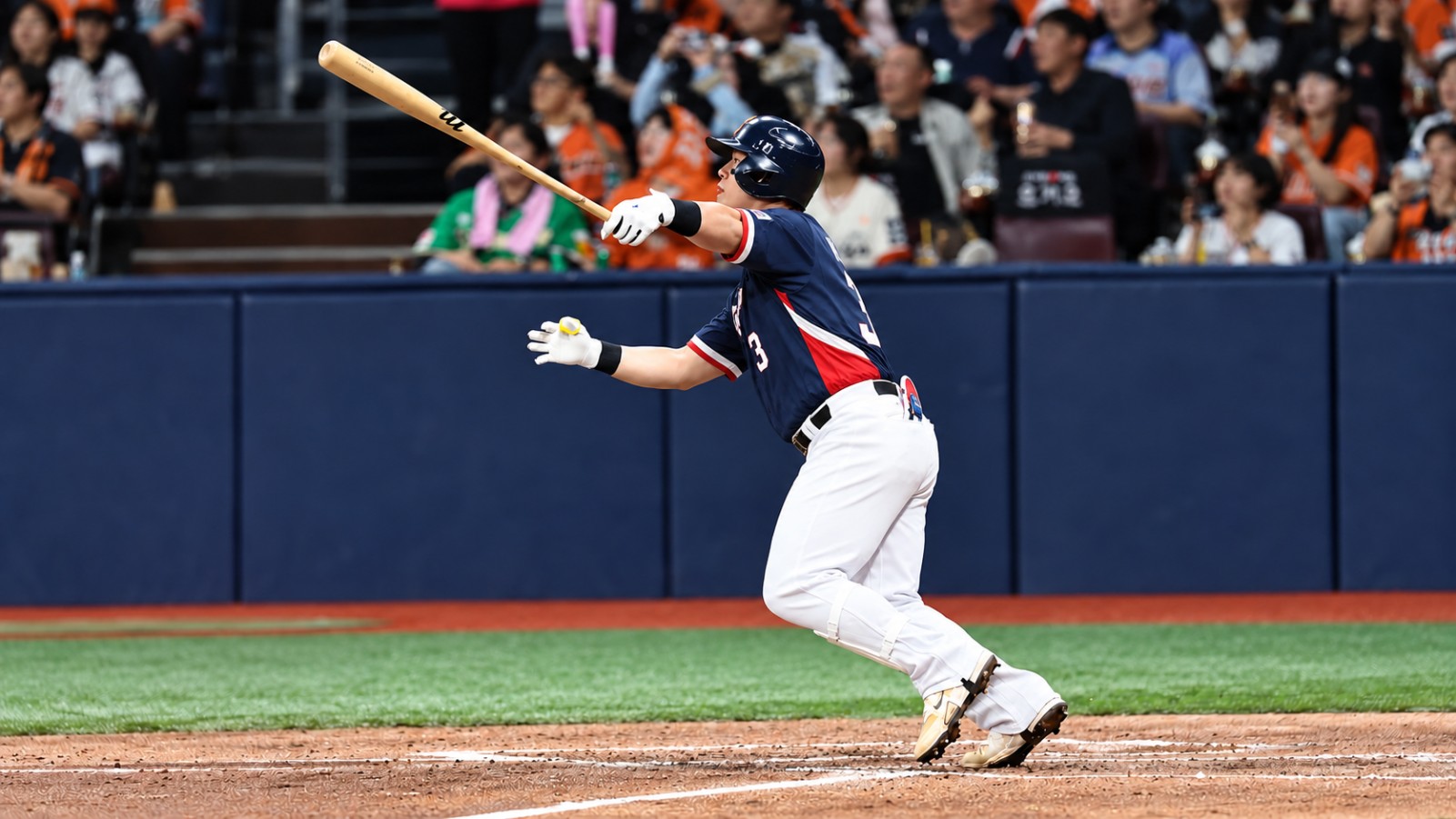
Si Hwan Roh, a right-handed third baseman for the Hanwha Eagles, is listed as a potential Yankees fit in a new international player assessment. His availability through the posting system gives New York an overseas option to evaluate for 2027.
Hanwha posted Roh on Nov. 1. His negotiating period ends at 5 p.m. Eastern on Dec. 1, giving interested clubs a defined window to pursue the 25-year-old.
Roh hit .283 with a .360 on-base percentage and .505 slugging percentage in 2026. He added 29 home runs, 96 RBIs, three steals, 51 walks and 147 strikeouts. The Cardinals, Mariners and Angels also appear among his potential fits.
Roh brings an immediate decision
Roh’s existing arrangement with Hanwha gives the negotiations another dimension. An 11-year extension begins in 2027, but it permits an MLB move through posting this offseason. He would return to that agreement if he does not sign.
His Korean deal agrees to pay 30.7 billion KRW, around $23M, in 11 years. This allows Yankees enough financial flexibility to entice him.
That gives the Yankees a potential acquisition who already has a long-term alternative in South Korea. It also puts a deadline on evaluating whether his offense can translate into an everyday role.
His production has held up across several seasons. Official KBO records show 31 homers in 2023, 24 in 2024 and 32 in 2025 before this year’s 29. That is 116 home runs across four seasons, calculated from the league’s totals.
What Roh’s power and contact numbers reveal
Roh’s 2026 numbers produce an .865 OPS, combining his .360 on-base percentage and .505 slugging percentage. His isolated power, calculated by subtracting batting average from slugging percentage, was .222.
His 29 home runs represented one homer per 19.7 plate appearances across 571 trips to the plate. That frequency offers another way to assess his power alongside the season total.
The contact figures add another part of the evaluation. Roh struck out in 25.7% of his plate appearances and walked in 8.9%. He recorded 0.35 walks per strikeout.
For the Yankees, the attraction is a hitter who has repeatedly produced home runs. The question is how much of that production would carry over against MLB pitching, and whether his contact would support an everyday place in the lineup.
Roh’s four-season total of 116 home runs averages 29 per year. His 2026 output matched that average, following seasons of 31, 24 and 32. That consistency gives the Yankees more than one season of power to evaluate.
A December deadline shapes the immediate market
Roh’s listed position connects him directly to the Yankees‘ infield need. His defensive evaluation would still be central to any decision, because adding offense only resolves the third-base problem if the roster can accommodate his role.
The Yankees’ immediate decision would therefore involve more than buying power. Any pursuit would require a valuation of his contact, defensive role and contract expectations within the same negotiating window.
The Yankees appear alongside the Cardinals, Mariners and Angels as potential fits. Each club has the same negotiating deadline, while Roh has the option of returning to his long-term Hanwha agreement.
As of Nov. 2, Roh’s posting window is open through Dec. 1. That timetable makes him an immediate market option as the Yankees assess ways to improve their infield production for 2027.
What do you think? Leave your comment below.