NEW YORK — The Yankees have spent much of the past year building a pitching staff around proven starters and emerging young arms. Their next international opportunity could test how firmly they intend to preserve that structure.
General manager Brian Cashman faces a different type of roster calculation this offseason. A deep rotation gives New York flexibility, but the bullpen faces uncertainty as several relievers approach free agency and the club weighs how to replace innings in high-leverage situations.
That distinction matters when evaluating pitchers who have excelled in more than one role. International free agents can be difficult to project across leagues, and the best destination for a player is not always the club offering the most obvious immediate opening.
The Yankees also have competition. Their scouting presence in Japan is no secret, and several other MLB clubs have watched the same high-end talent. The Yankees can offer a contender’s stage, but its pitching depth creates questions about how an incoming arm would be deployed.
Taira’s starting preference creates a Yankees problem
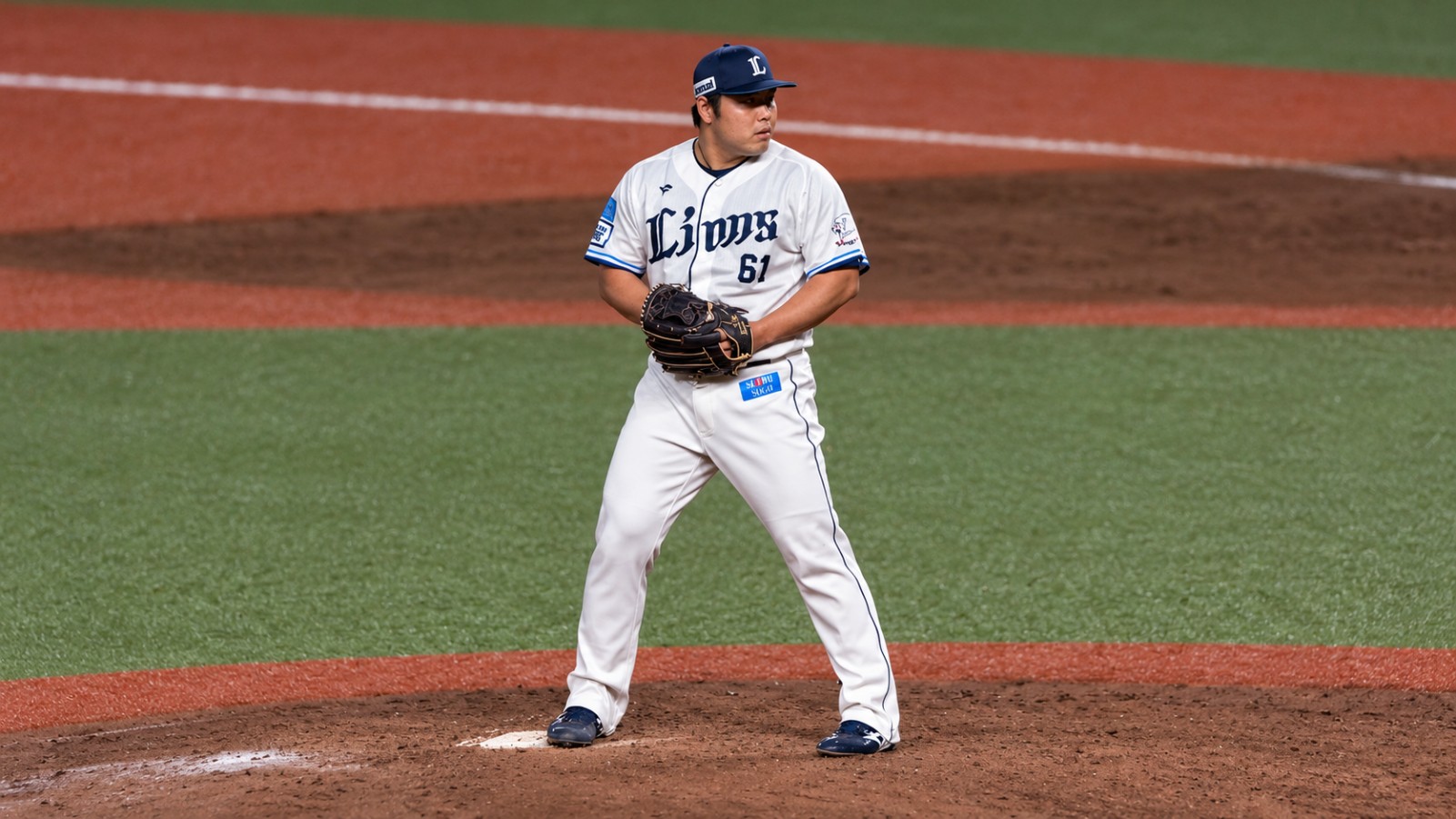
Now one of those questions has become public. Japanese right-hander Kaima Taira, whose move to MLB was approved by the Saitama Seibu Lions on Friday, made clear Saturday that he wants to remain a starting pitcher. The Yankees have scouted Taira, but reports have identified the bullpen as his most natural fit in the Bronx.
The 26-year-old discussed his plans with reporters at Belluna Dome on Oct. 31. He indicated that he wants to join a team that genuinely needs him as a starter and does not see a relief assignment as the preferable option. That position does not rule out the Yankees, but it complicates the role New York could offer.
Taira went 12-5 with a league-leading 1.36 ERA across 23 appearances and 146 innings this season. He struck out 141 and walked 45, allowing only four home runs. His 0.96 WHIP helped establish that his success was not limited to short relief outings.
In 2025, he led his league with 31 saves and recorded a 1.71 ERA over 52 2/3 innings. He has also worked as a setup reliever. Those three assignments explain both the Yankees’ interest and the potential disagreement over his next job.
A Cy Young target clarifies what the pitcher wants
Taira has not named a preferred MLB team. His public remarks instead centered on his ambition to become the first Japanese pitcher to win a Cy Young Award and to appear in a World Series. Those goals are consistent with his desire to establish himself in a major league rotation.
In Seibu’s official announcement, Taira described what the opportunity meant after years in Japanese professional baseball. His message emphasized the long-held goal behind the move.
“I have wanted to play in the Major Leagues for a long time, so I feel like I have finally taken a step toward that goal,” Taira said.
Seibu baseball executive Hiroshi Hiroike also singled out the durability Taira showed while starting throughout 2026. The club had previously moved him between roles according to its own needs.
“It felt as if a closer was pitching from the first inning to the last, and I felt he had reached another level,” Hiroike said.
That assessment captures the issue for the Yankees. Taira’s background makes him a credible relief option, but his latest season provides a statistical argument for a team to give him the ball every fifth day.
The innings gap behind the Yankees’ decision
The role debate is not just about saves versus starts. Taira threw 93 1/3 more innings in 2026 than in 2025, an increase of roughly 177%. He also lowered his ERA from 1.71 to 1.36 despite taking on a much heavier workload. The workload jump and run prevention are a measurable reason his camp could prioritize a rotation commitment.
The Yankees already have Gerrit Cole, Max Fried, Carlos Rodón and Cam Schlittler as prominent rotation options, with Will Warren and Ryan Weathers also in the picture. The club’s stronger immediate need appears to be replacing relief depth, particularly with closer David Bednar and other bullpen contributors eligible for free agency.
Cashman and manager Aaron Boone could still view Taira as a flexible acquisition. But promising a starting assignment would require an answer about how the Yankees allocate innings, while presenting a relief-only job might put New York at a disadvantage against clubs prepared to offer a rotation opportunity.
The Yankees were among the teams whose scouts attended Taira’s seven-scoreless-inning outing against Nippon-Ham in August. He struck out nine in that start. Their evaluation therefore includes firsthand evidence of his effectiveness deep into a game, not merely his earlier work as a closer.
Posting clock adds pressure to a possible deal
Seibu approved Taira’s move Oct. 30, but formal posting starts a separate 45-day negotiating window. Because he is older than 25, Taira can negotiate a major league contract without the international amateur bonus restrictions that apply to younger players. The Lions would receive a release fee tied to the contract value.
A potential MLB work stoppage adds urgency. The current collective bargaining agreement is due to expire in early December, and a lockout could interrupt negotiations if Taira has not signed. As of Nov. 1, no agreement with the Yankees has been announced, and his starting preference remains the key baseball question for any prospective suitor.
What do you think? Leave your comment below.