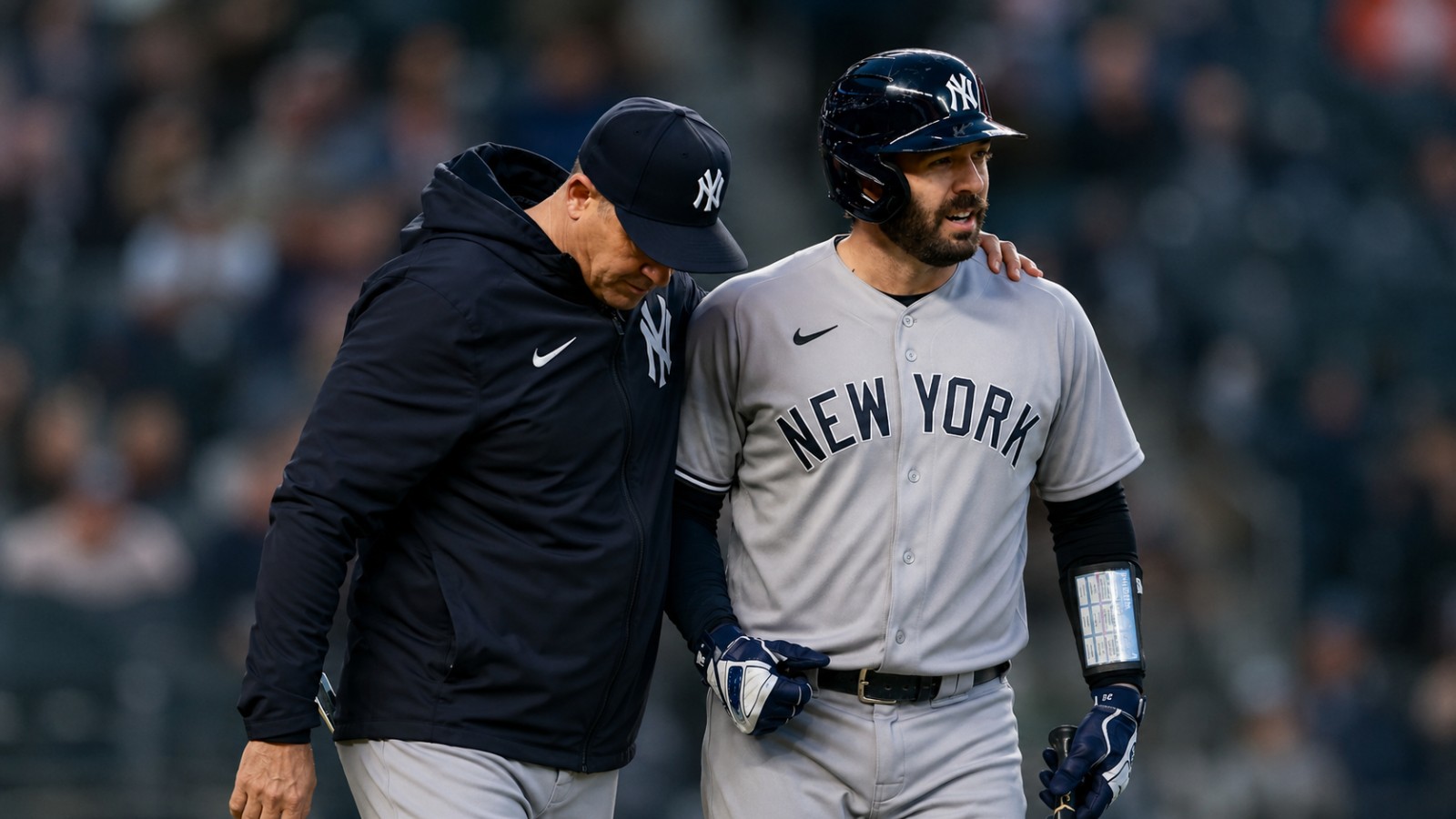
NEW YORK — The Yankees enter the offseason with a catching decision that reaches beyond the bottom of their lineup. Adding offense behind the plate could change Austin Wells’ workload, the distribution of playing time and how much money remains for other roster needs.
The immediate question is whether New York wants a new starter or a stronger partner for its incumbent. Those choices lead to different contract commitments. They also create different expectations for a veteran weighing the Yankees against a club offering him the everyday job.
Wells finished the regular season batting .186 with 14 home runs and a .624 OPS, according to ESPN. That leaves room for an offensive upgrade. But replacing his bat in the lineup would also mean changing the catcher working with the Yankees pitching staff.
The Yankees swept Boston in the American League Wild Card Series before Tampa Bay swept them in the Division Series. Catcher is now part of the roster discussion following that exit, although the available reporting does not establish it as the organization’s highest offseason priority.
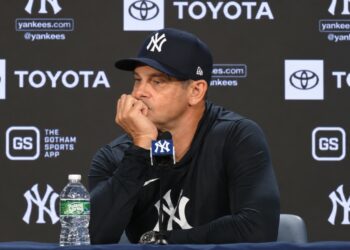
For Aaron Boone, the practical issue would extend beyond choosing a starter. Two catchers capable of handling meaningful playing time would give him more flexibility with rest days and matchups. A newcomer could take starts from Wells without requiring the Yankees to remove Wells from the roster.
That distinction matters in a thin market. A player seeking a regular job may value playing time alongside salary and contract length. The Yankees would have to weigh the offensive return against the cost of carrying two catchers whose preferred roles could overlap.
There is also a difference between a familiar trade target and a newly suggested free-agent fit. Past interest can establish a connection, but it cannot establish an offer or an offseason ranking. With the market yet to open, that separates the strongest available evidence from the possibilities being discussed.
No. 1 option brings the stronger Yankees connection
Ryan Jeffers leads this two-player comparison because the Yankees have previously shown interest in him. Tyler Stephenson is the second option, a potential alternative whose fit has drawn attention without a verified report of an active New York pursuit.
Jeffers, 29, hit .256 with 14 home runs, 56 RBIs and an .814 OPS in 92 games for Minnesota in 2026. His right-handed bat would give the Yankees an offensive option alongside the left-handed Wells.
Bleacher Report analyst Kerry Miller included Jeffers among New York’s potential free-agent additions. Miller revisited the trade-deadline connection while explaining why the catcher could still address a Yankees need.
“But better late than never, right?” Miller wrote.
Miller’s proposal allowed for either a starting role or a roughly even split with Wells. It was a roster recommendation, not confirmation that the Yankees have designated Jeffers their No. 1 offseason target.
Jeffers could bring a cost beyond his contract
Spotrac lists Jeffers’ 2026 salary at $6.7 million. That arbitration salary is a historical reference, not an estimate of what signing him this winter would require.
The Minnesota Star Tribune reports the Twins are expected to offer Jeffers a one-year, $23 million qualifying offer.
If he receives and rejects that offer, signing him could also cost the Yankees draft compensation under MLB’s qualifying-offer rules.
The reported $23 million figure is not an asking price for a multiyear contract. No verified Yankees offer or agreed free-agent price has emerged in the reviewed reporting. The potential commitment therefore includes an unresolved salary, contract length and possible compensation cost.
No. 2 option offers a different price comparison
Stephenson hit .241/.323/.404 with 15 home runs and 54 RBIs in 468 plate appearances for Cincinnati in 2026. The right-handed hitter offers another way to increase production without making Wells’ departure a condition of the move.
Spotrac lists Stephenson’s 2026 salary at $6.8 million. His ability to secure multiple years and regular starts will help determine whether he fits the Yankees’ budget and catching plans.
One market comparison is Danny Jansen’s two-year, $14.5 million Rangers contract, reported by MLB.com. That averages $7.25 million annually.
Cincinnati reporter Charlie Goldsmith identified Jansen as a comparable catcher contract in January, while noting Stephenson could seek more years. That remains a historical comparison, not a current Stephenson price forecast or a reported Yankees bid.
His right-handed swing also does not guarantee an ideal platoon. Stephenson hit right-handed pitching better than left-handed pitching in 2026, a complication for a role built primarily around spelling Wells against lefties.
The OPS gap separates two possible upgrades
Jeffers’ .814 OPS is 190 points above Wells’ .624. Stephenson’s .727 OPS. He remains the top Yankees catching target.
Those gaps describe offensive results, not projected wins or defensive value. They also show why the two candidates represent different decisions: Jeffers offers the larger recent offensive jump, while Stephenson presents another route to deeper catching coverage.
As of Oct. 10, neither catcher has a verified Yankees agreement. Jeffers has the documented prior connection; Stephenson remains a possible alternative. Whether either becomes a replacement or a partner for Wells depends on a market that has not yet opened.
What do you think? Leave your comment below.