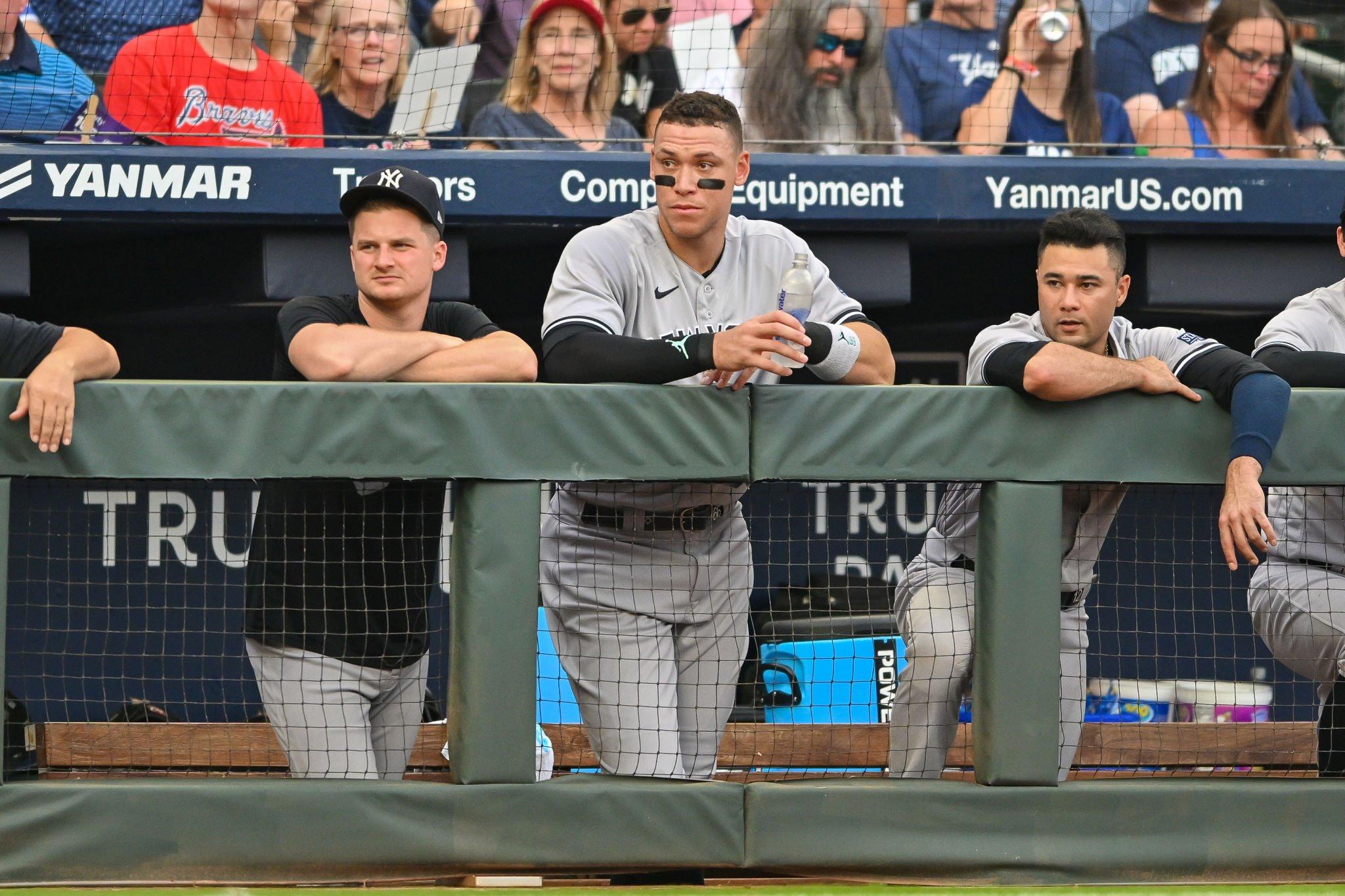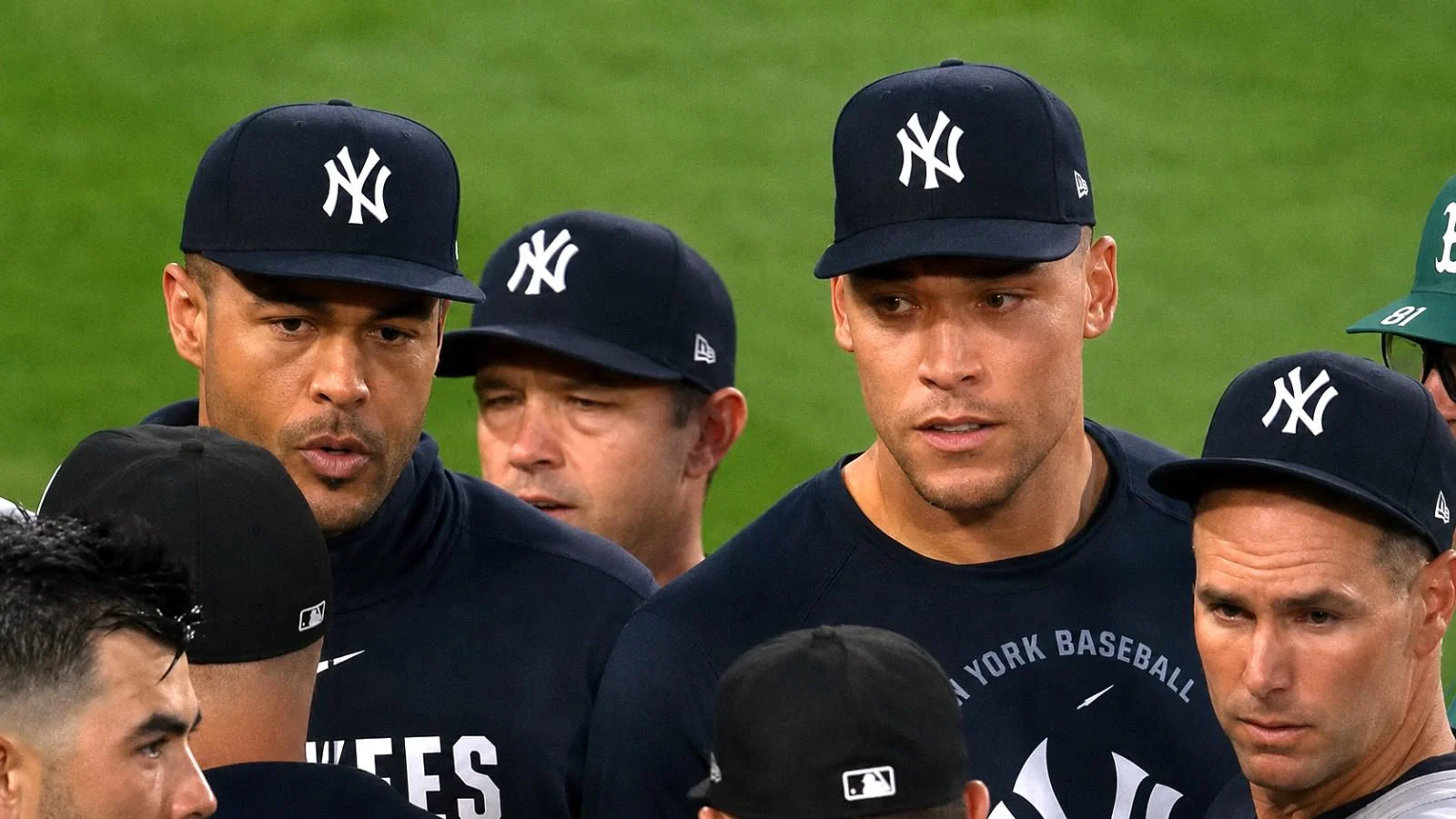
NEW YORK — Aaron Judge finished the Yankees’ postseason without a plate appearance and with another championship opportunity gone. His absence left the lineup without its captain. The aftermath has raised a different question: how much responsibility belongs to the player who could only watch?
The Yankees lost 4-3 to Tampa Bay at Yankee Stadium on Oct. 7, ending the American League Division Series in a sweep. Rookie Victor Mesa Jr.’s two-run homer against Max Fried broke a sixth-inning tie.
The Yankees’ season ended with their championship drought at 17 seasons.
Judge, 34, missed both playoff rounds because of a right calf strain. A rib stress fracture had already interrupted his regular season. He played 66 games, batting .241 with 18 home runs and 41 RBIs.
That made this October different from previous debates about Judge’s postseason hitting. There was no new run of strikeouts or missed scoring opportunities to examine. The Yankees had advanced past Boston without him, then failed to win a game against the Rays.
His position inside the organization remained significant, however. The Yankees named Judge their 16th captain on Dec. 21, 2022, according to the club’s announcement. He is both a central lineup presence when healthy and a public voice for teammates after a loss.
Judge used that voice after elimination to urge the organization to strengthen the roster. He acknowledged that acquiring every available player was unrealistic, while making clear that reaching October alone did not satisfy the standard he associated with New York.
Those comments put roster construction, player responsibility and managerial authority into the same offseason discussion. Each involves a different decision-maker. Together, they frame the question now facing the Yankees: what needs to change after another early exit?
Lugauer puts Yankees captain at center of criticism
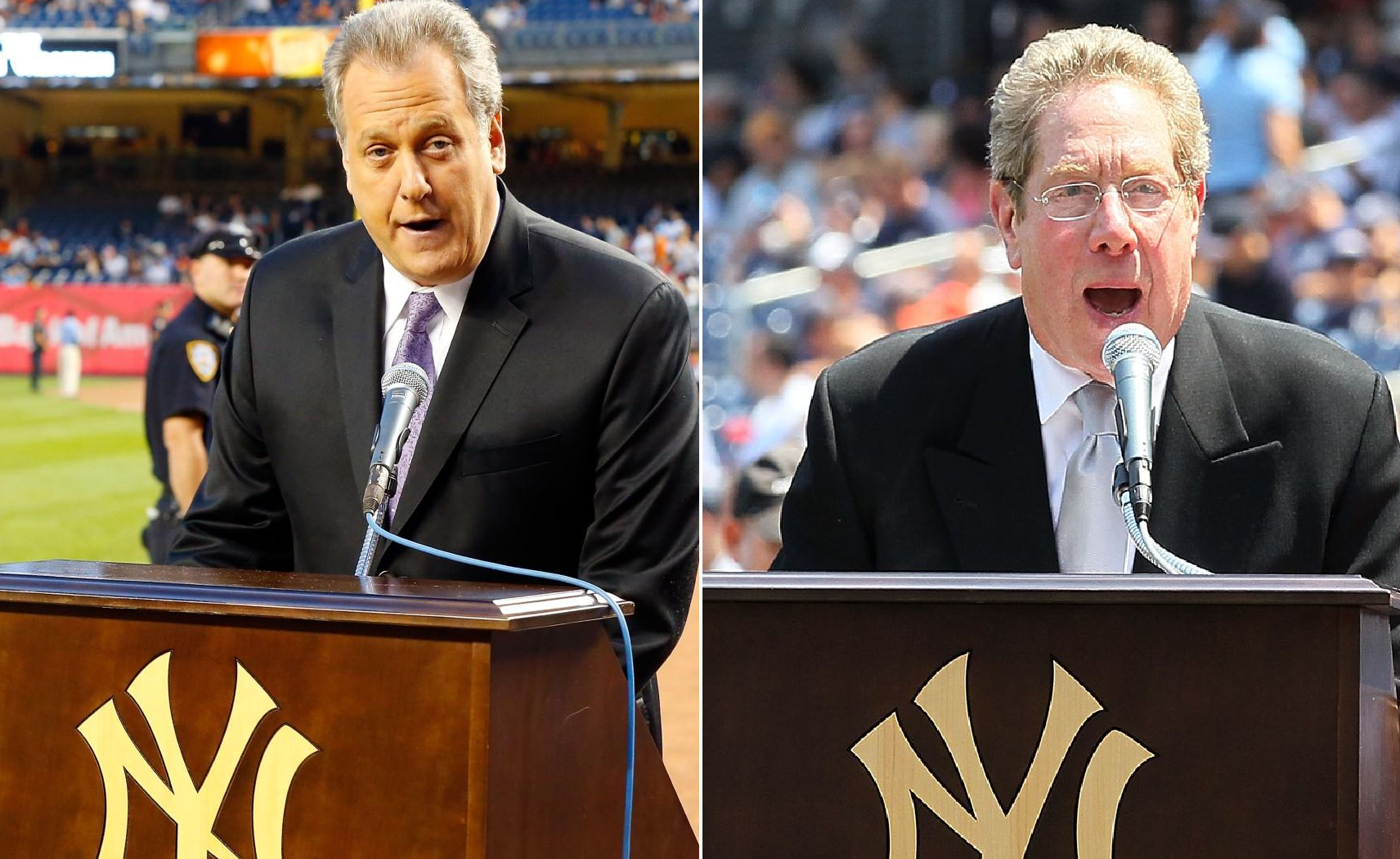
WFAN host Tommy Lugauer directed that scrutiny toward Judge on Oct. 8, arguing that the captain shares responsibility for what the host described as an overly comfortable clubhouse under Aaron Boone.
Lugauer’s criticism went beyond Judge’s inability to play. He challenged the star’s influence over the Yankees’ working environment.
“I think Aaron Judge is part of the problem,” Lugauer said.
The host then described the atmosphere he believes Judge accepts. His assessment was an opinion about the clubhouse, not a disclosed account from a player or team official.
“I think Aaron Judge is comfortable with this country club,” Lugauer said. “He is the captain, he is the star player, and I think Judge is comfortable with the soft atmosphere, with the country club atmosphere… If Aaron walked into Hal’s office or Cashman’s office with other players on the team and said, we want this Boone out of here, Boone would be out of here. But I think the players, especially Aaron Judge, they like this type of atmosphere and this type of environment.”
Lugauer argued that Judge and other players could persuade owner Hal Steinbrenner or general manager Brian Cashman to dismiss Boone. He invoked the Knicks’ coaching change involving Tom Thibodeau as his comparison.
Judge’s public demand focuses on improving roster
Judge’s own remarks after the sweep addressed filling organizational needs. He called for personnel improvements and a commitment that matched the Yankees’ championship expectations.
“We’re the Yankees,” Judge said. “I feel like they should go all-in and do what they need to do.”
That statement did not identify Boone as the problem. Judge also credited the front office with assembling winning teams, while explaining that winning seasons alone were insufficient.
The distinction separates the two arguments. Lugauer wants greater pressure from the captain on the clubhouse environment. Judge publicly directed pressure toward the people responsible for building the team.
A similar debate followed Cal Raleigh’s comments after Seattle missed the 2023 postseason. Raleigh urged the Mariners to acquire established players and commit more fully to winning.
“We’ve got to commit to winning,” the catcher then said. “We have to commit to going and getting those players.”
Raleigh later apologized for any perceived criticism of teammates or coaches.
The comparison concerns how players challenge organizational decisions only to fall back.
The 96-game absence behind the leadership debate
Judge’s 66 appearances represented 40.7% of a 162-game regular season. Subtracting that total leaves 96 games without him, or 59.3% of the schedule. Those figures are calculated from the season total.
That measures availability, not leadership. The Yankees needed replacement production for most of the schedule, then played their entire postseason without their captain in the lineup.
His October record also requires separating seasons. Judge’s career postseason average stands at .236, with 17 home runs and 41 RBIs in 65 games entering these playoffs. His absence left those totals unchanged.
Judge’s dropped fly ball in Game 5 of the 2024 World Series remains part of the scrutiny surrounding his postseason record. It cannot explain a 2026 series in which he never played. Nor can batting statistics establish what he says to teammates privately.
The captain has publicly asked the Yankees to improve. Lugauer has argued that the captain should force a different kind of change. The unresolved issue is whether the organization’s offseason response addresses the roster, its leadership structure or both.
What do you think? Leave your comment below.