CHICAGO — The Yankees say Jazz Chisholm Jr.‘s injury looks minor. The harder part is what they do next.
A team this thin does not have the luxury of easy calls. When a key player tweaks a muscle, the instinct to rest him collides with the reality of a lineup already missing its biggest bats.
That tension played out in real time Thursday. One of the club’s most important players stayed on the field long after he first felt something wrong, then kept playing defense, then finally came out late in a game New York could not win anyway.
Now the Yankees have a choice to make, and it is not as simple as it sounds. Push him back in immediately, or spend one day being careful with the very thing that makes him special.
A blunder, then a cramp, then a long wait to come out
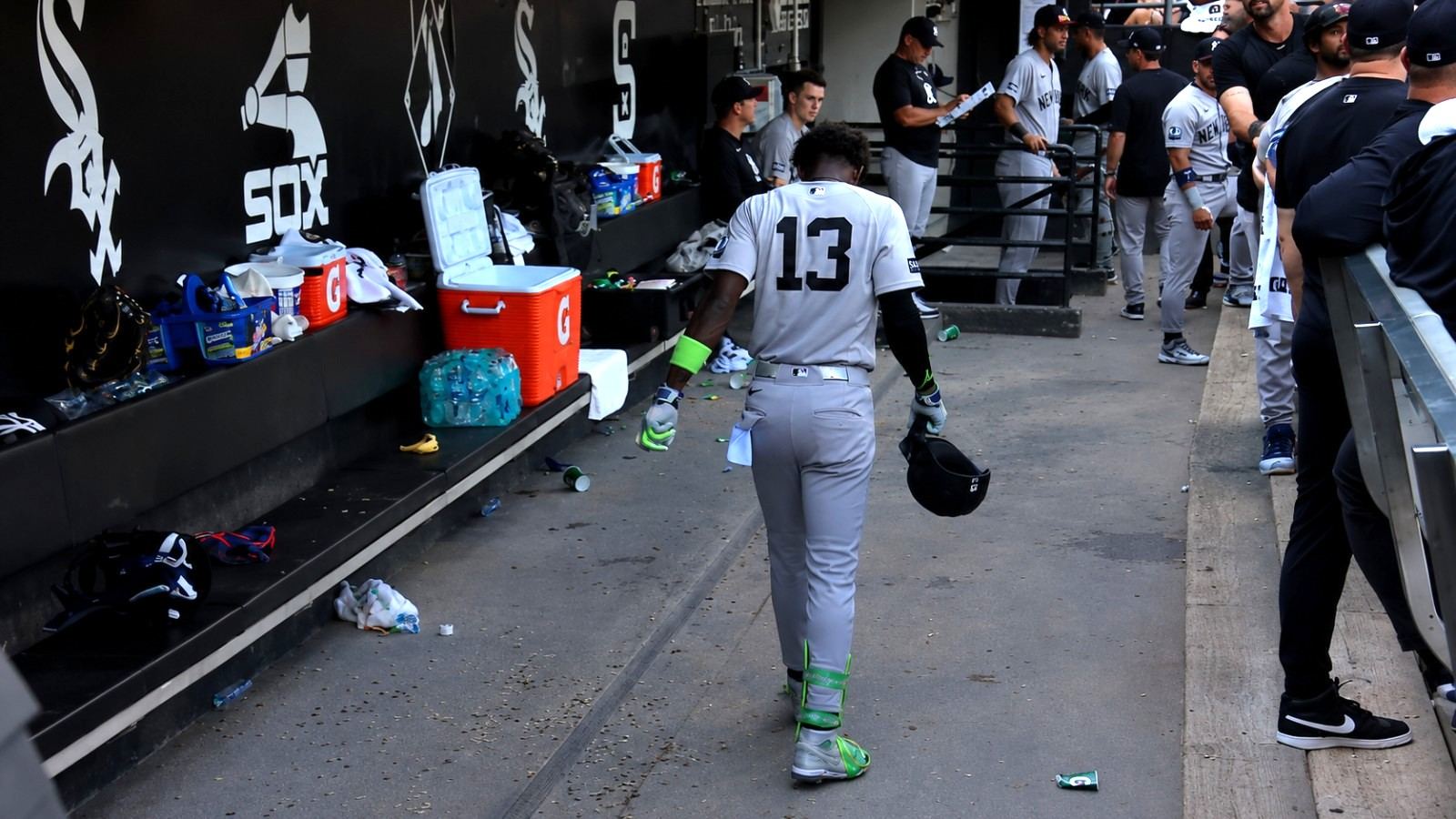
Second baseman Jazz Chisholm Jr. exited the 11th inning of a 1-1 game against the White Sox, one the Yankees went on to lose 2-1 on a walk-off walk at Rate Field. It was the second straight extra-inning defeat and dropped New York to 61-48.
His day had already taken a turn on the bases. Chisholm singled to open the seventh, then wandered too far off first and was picked off by reliever Sean Newcomb, erasing a leadoff runner in a scoreless game. The blunder was costly on its own.
The physical trouble followed. Chisholm said he first felt cramping in his right hamstring in the eighth inning while fielding. He stayed in the game but looked uncomfortable, stretching the leg and grabbing at it between pitches.
It grew more visible in the ninth. Chisholm appeared to tweak the hamstring running to first on a groundout and limped back to the dugout. He jogged and moved gingerly around the field from there, clearly bothered.
The Yankees finally pulled him in the 11th. After Chicago intentionally walked him with a runner on third and two outs, Jose Caballero came in to run. Chisholm’s afternoon was done.
The exit capped a frustrating game in more ways than one. The Yankees wasted seven scoreless innings from starter Ryan Weathers, went 1-for-15 with runners in scoring position and lost in extra innings for the second day in a row. Every regular matters more when the runs are this hard to come by, which is why Chisholm leaving the field drew immediate attention.
Chisholm and Boone play it down
Chisholm framed the issue as a cramp rather than a strain, and said treatment had already helped. He described the leg as improving as the innings passed.
“It started to feel better as the game went on,” he said, “but they just wanted to play it safe to avoid injury.”
He said he expects to be in the lineup when the Yankees visit the Chicago Cubs on Friday afternoon. His expected return of July 31 remains the current projection, and he was listed as day-to-day.
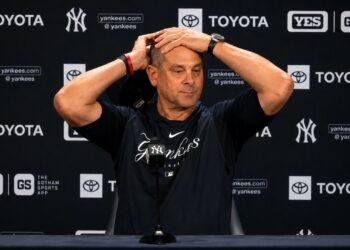
Manager Aaron Boone offered a matching read, saying the training staff was not worried by what it saw.
“The trainers don’t think it’s much,” Boone said of the issue with Chisholm’s hamstring.
This is not the first time this month the Yankees have had to weigh caution against need with Chisholm. He exited a game earlier in July with right big-toe discomfort, then returned to the lineup the following day. The pattern of playing through and bouncing back frames the decision in front of them now.
Why the hamstring threatens what makes him valuable
The wrinkle with this injury is where it lives. A hamstring problem strikes directly at the speed that makes Chisholm uniquely valuable, and speed is a large part of why he is in the lineup during this down season.
The numbers show why that matters. Chisholm has 30 stolen bases alongside 16 home runs this season, the rare power-speed blend the Yankees cannot easily replace. His overall line, .224 with 45 RBIs and a .708 OPS in 102 games, is down from last year, but his legs remain a weapon.
That is the risk in rushing him. An elite baserunner coming back too soon from hamstring discomfort could either reinjure the leg or, more subtly, stop running with the aggression that defines his game. Either outcome dulls his biggest edge.
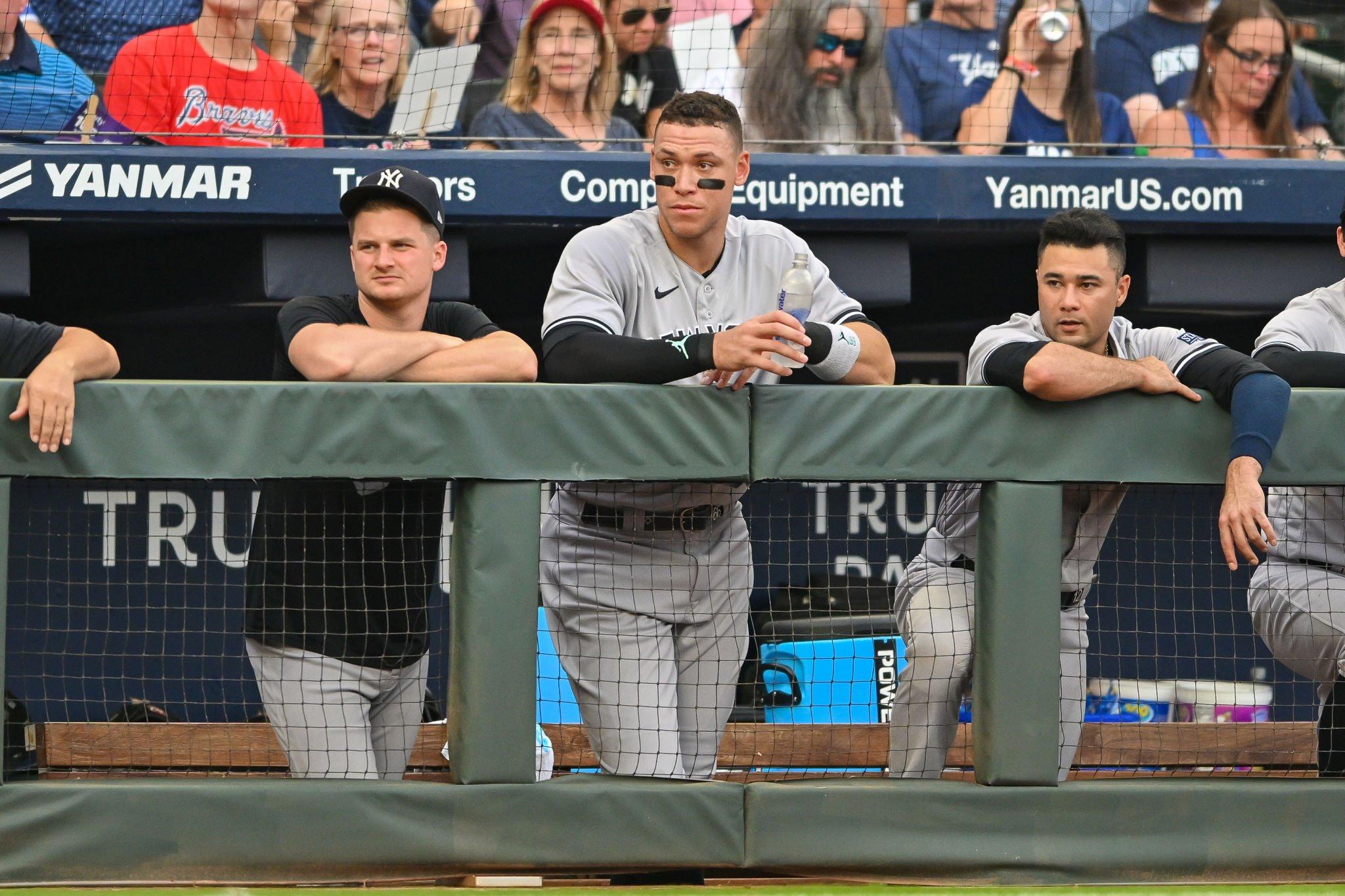
The stakes are raised by who is already out. Cody Bellinger strained his left hamstring in Philadelphia and might not return until September. Aaron Judge has a right first-rib stress fracture, and Giancarlo Stanton a right calf strain, with no timetable for either. Losing Chisholm too would gut an already thin group.
A one-day call with bigger consequences
So the Yankees arrive at a real decision, days before Monday’s trade deadline. Chisholm expects to play. The question is whether one extra day of rest is worth more than his bat and legs back in the lineup immediately.
The case for caution is straightforward. A hamstring that is rushed can turn a cramp into a strain, and a strain into weeks lost. For a player whose value is tied to running, the downside of pushing too hard is steep.
The case for playing him is just as real. The Yankees have scuffled to score for weeks, and every regular they can run out matters. Sitting him, even briefly, means asking an already struggling offense to do more without one of its few dynamic pieces.
For now, the signals point toward Chisholm being available. The injury appears minor, the training staff is unconcerned, and the Yankees are treating it as day-to-day. New York opens at Wrigley Field on Friday, and how it handles a seemingly small hamstring call could echo well beyond a single afternoon.
What do you think? Leave your comment below.