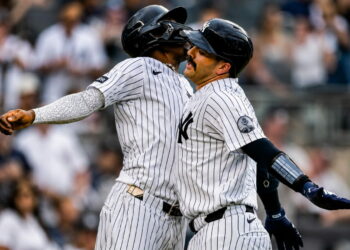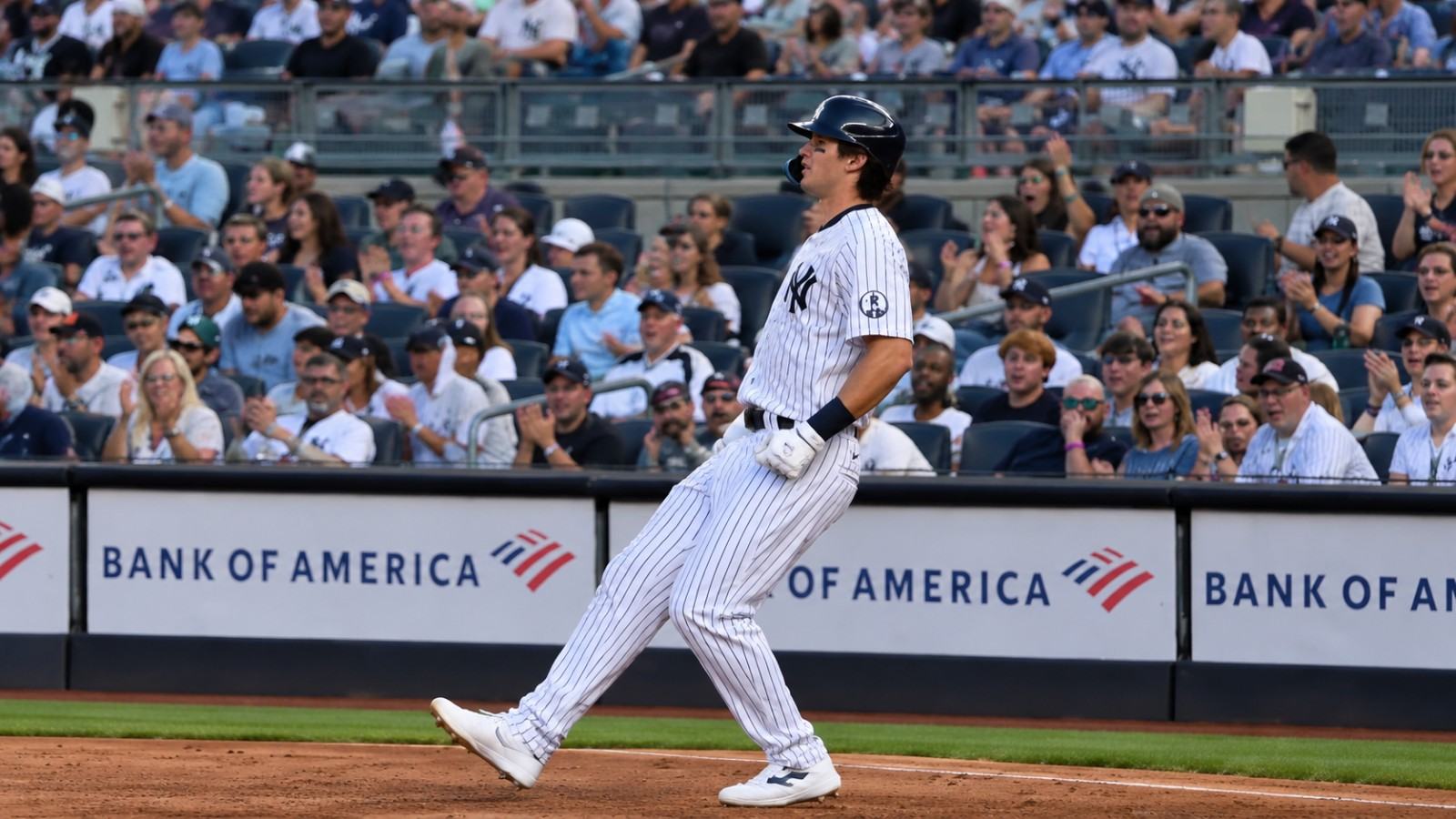
BRONX, N.Y. — Anthony Volpe owned the loudest moment Thursday night, but Yankees’ bigger development goes overlooked.
Spencer Jones matched his career high with three hits. He drove in two runs with a seventh-inning single and added a sliding catch in the Yankees’ 10-3 win over the Colorado Rockies at Yankee Stadium.
For Jones, the night was less spectacular than Volpe’s grand slam and potentially more revealing. It came one day after he doubled and walked twice, extending the strongest sustained offensive stretch of his rookie season.
Over his last 30 games, Jones is hitting .313 with a .385 on-base percentage and .542 slugging percentage. He has four homers, 20 RBIs and six steals in that span. Over his last 15, the line is .333/.404/.533. The prospect keeps building a quieter case that may matter well beyond one September.
The Yankees have steadily increased Jones’ responsibility since his late-July return. Trent Grisham’s hamstring injury created more center-field time, but Jones has done more than simply occupy the position.
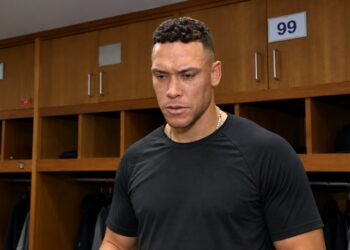
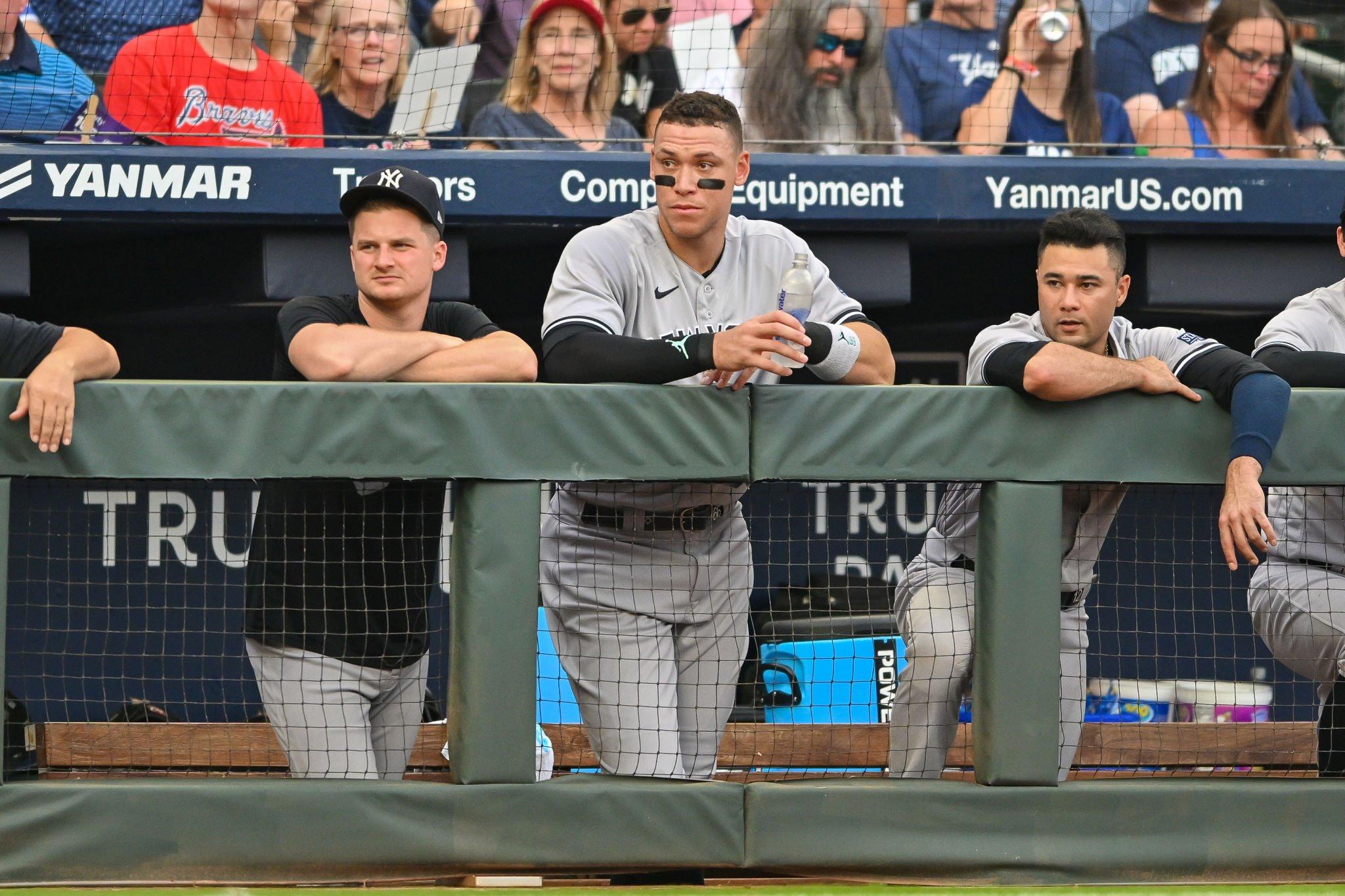
Aaron Judge noticed before Thursday’s three-hit game. After returning from the injured list, the Yankees captain was asked what his comeback meant for teammates. His answer included the rookie who helped keep New York moving without him.
“I’m not sure. You got to ask them. You know, I don’t know… They’ve been playing good ball. You know, especially the guys we called up, the young guys, seeing Spencer Jones do his thing has been fun to watch. And, you know, I just want to fit right back in here and just kind of keep this train moving,” Judge said.
The winter question looks very different now
Nine months ago, the Yankees were considering a far more expensive way to solve the outfield.
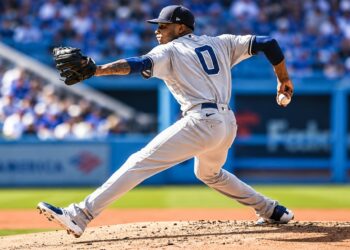
New York touched base with Kyle Tucker’s representatives during the offseason and viewed Tucker and Cody Bellinger as the top free-agent outfielders available. MLB’s own breakdown of the Yankees’ options presented Tucker as the premium outside solution and Jones, along with Jasson Domínguez, as the internal gamble.
Tucker ultimately signed a four-year, $240 million contract with the Los Angeles Dodgers. The deal has a nominal average value of $60 million per season, while deferred money lowers its competitive-balance-tax value to about $57.2 million annually. It includes player opt-outs after the second and third seasons.
The 2026 results have flipped that offseason hierarchy, at least for now.
Through Sept. 11, Tucker is batting .225/.323/.361 with a .684 OPS, 13 home runs, 60 RBIs and 10 stolen bases in 138 games. Baseball-Reference credits him with 0.2 WAR and a 90 OPS+.
Jones, after Thursday’s three-hit game, is batting .255/.333/.452 with a .785 OPS. He has nine homers, 33 RBIs and nine steals despite less than half Tucker’s plate appearances.
The comparison needs a qualifier. Tucker owns a long record of elite production. Jones has fewer than 250 major league plate appearances. This is not a career comparison.
It is a 2026 comparison, and the Yankees are getting more offense from the player who entered the year as the uncertain internal alternative.
2026 Jones-Tucker comparison through Sept. 11
| Metric | Spencer Jones | Kyle Tucker |
| Games | 73 | 138 |
| Plate appearances | 235 | 563 |
| Hits | 53 | 109 |
| Home runs | 9 | 13 |
| RBIs | 33 | 60 |
| Stolen bases | 9 | 10 |
| Batting average | .255 | .225 |
| On-base percentage | .333 | .323 |
| Slugging percentage | .452 | .361 |
| OPS | .785 | .684 |
| bWAR* | 1.1 | 0.2 |
| OPS+* | 113 | 90 |
| Nominal AAV / salary | Spotrac est. $820,000 | $60 million AAV |
*Jones’ batting line and counting stats include Sept. 10. Baseball-Reference had not yet rolled that game into Jones’ advanced line when this file was finalized, so his latest published 1.1 bWAR and 113 OPS+ are through Sept. 9. Tucker’s 0.2 bWAR and 90 OPS+ are current through Sept. 9.
Jones’ recent run makes the comparison harder to dismiss
The strongest argument is not one hot night against Colorado.
Jones’ last 30 games cover 96 at-bats. He has 30 hits, 11 walks and a .927 OPS over that span. His last seven games have produced a .333/.429/.458 line even without a home run.
His contact quality is also loud. Baseball Savant lists Jones with a 15.6% barrel rate this season, evidence that the power is translating even while the strikeouts remain high.
The swing-and-miss issue has not disappeared. It remains the biggest obstacle between Jones and becoming a complete middle-of-the-order threat.
But he is no longer surviving on occasional home runs. Thursday’s three singles fit a broader trend of more ways to reach base and more damage with runners aboard.
Joel Sherman recently put Jones’ rise in wider league context.
“I would venture to say, he’s probably been a top 30 or 40 player in the AL since he came back in late July,” Sherman said.
The cost makes the baseball gap more striking
The financial contrast is impossible to ignore.
Tucker’s contract pays for superstar-level certainty. Jones is still a pre-arbitration player, and Spotrac currently estimates his 2026 salary at $820,000. Tucker’s nominal $60 million annual average is roughly 73 times that estimate.
That does not mean the Yankees were wrong to investigate Tucker. A healthy Tucker playing to his career norms would have given New York another proven left-handed star next to Judge.
But Jones’ emergence changes the cost of the decision in hindsight. The Yankees did not have to spend $240 million to find above-average outfield production from the left side.
They already had a 6-foot-7 first-round pick who needed opportunity.
Jones opened the year in Triple-A after the Yankees re-signed Grisham and Bellinger. He was sent back down after earlier major league looks. Since returning in late July, he has increasingly forced his way into the everyday conversation.
October will decide how far Jones has moved the argument
Jones still has work to do before this becomes anything more than a striking one-season reversal.
The Yankees are 84-62 and three games behind Tampa Bay in the AL East with 16 games remaining. They also hold the first American League wild-card position, 4 1/2 games ahead of Boston.
That means Jones’ next test comes under postseason-level pressure. Judge is back, Bellinger is healthy, Grisham is expected to return, and Heliot Ramos gives Aaron Boone another outfield option.
Jones is no longer competing only for developmental at-bats. He is trying to earn October ones.
Thursday strengthened that case without a home run. Three hits, two RBIs and another clean defensive night were enough.
Last winter, Tucker represented the type of star the Yankees could have bought to make the outfield feel settled. By September, Jones has given the Yankees a cheaper and, so far in 2026, more productive answer they already owned.
What do you think? Leave your comment below.