NEW YORK — For one afternoon in the Bronx, the Yankees saw exactly the kind of at-bats they have been begging for all summer. The trouble was the hitters producing them wore the wrong uniform.
The Los Angeles Dodgers spent the weekend grinding out long counts, fouling off tough pitches and cashing in their chances. The Yankees mostly watched. The contrast told the story of a series, and of a season now tilting in a worrying direction.
Los Angeles took two of three at Yankee Stadium, punctuated by a lopsided doubleheader opener before New York salvaged the finale. The split dropped the Yankees to 55-44 and left them chasing the first-place Tampa Bay Rays in the American League East.
The bigger issue is what the weekend exposed. With the Aug. 3 trade deadline closing in, the Yankees looked like a team whose front office bet on continuity and is now watching that bet unravel at the plate.
A doubleheader that laid the offense bare
The low point came in Game 1 of Sunday’s twin bill. Yoshinobu Yamamoto carved up the Yankees in a complete game, needing just 102 pitches and allowing only four hits in an 8-2 rout. New York’s lone real damage was Trent Grisham’s leadoff home run in the fourth.
Cam Schlittler, the Yankees’ AL ERA leader, never found his rhythm. The Dodgers fouled off 27 pitches, ran his count to 98 across 4 1/3 innings and chased him early despite eight strikeouts and no walks. A three-run game unraveled in the eighth, when New York lost a second ball in the sun and Los Angeles sent seven straight men to the plate against the bullpen.
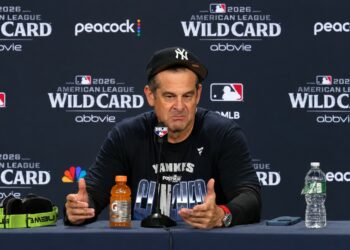
Manager Aaron Boone did not dress up the problem afterward. He pointed to the same shortcoming that has dogged the club for weeks, the failure to string together quality at-bats.
“Obviously we got to be able to do more, we’ve been saying that a lot here the last few weeks,” Boone said. “We got to do a better job of having those heavy at-bats as a group. That’s where we’ve struggled here these last few weeks.”
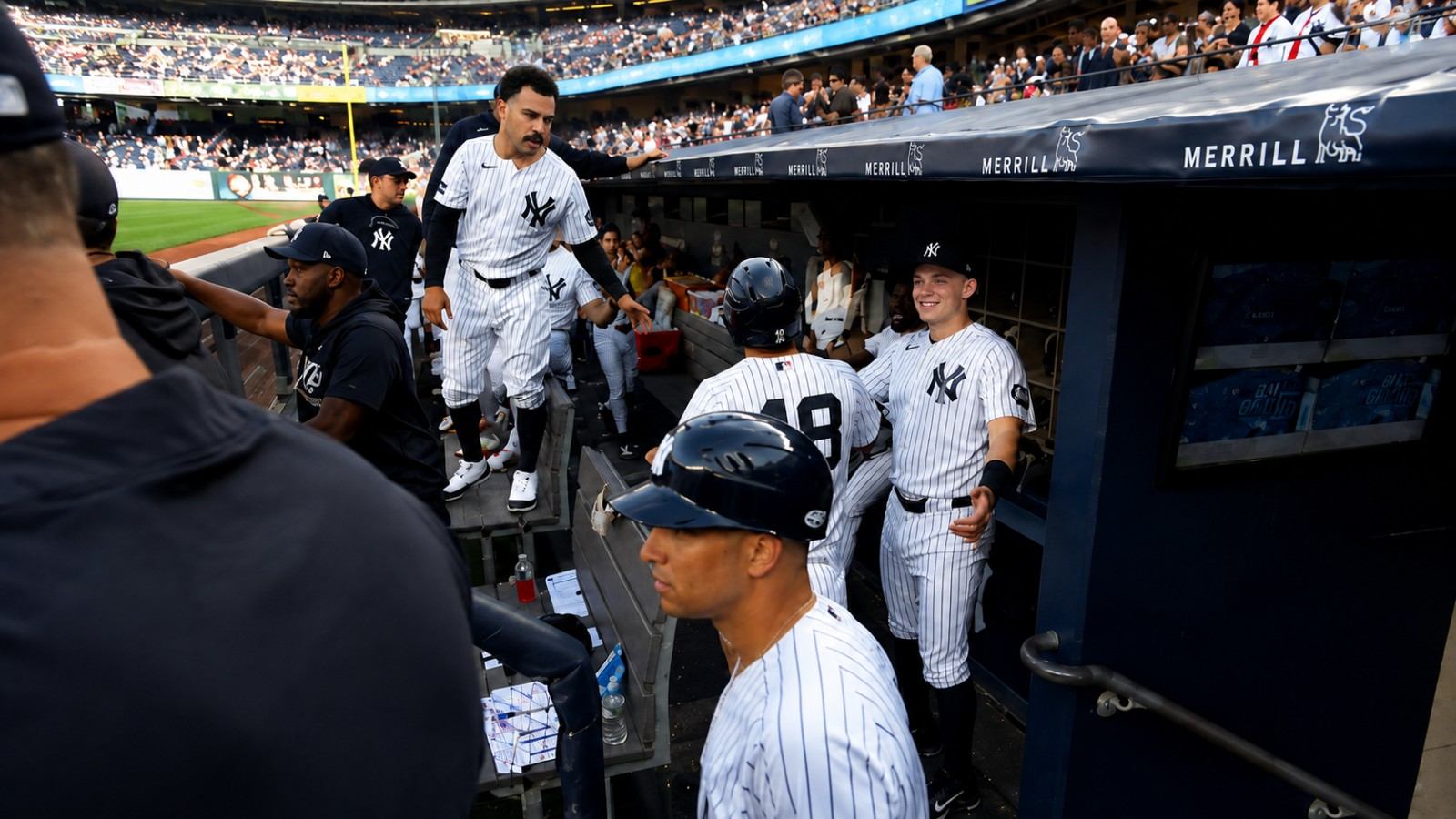
Third baseman Ryan McMahon captured the mood in the room, framing the slump as frustration rather than pressure.
“I don’t know if weight’s the right word, I think just a little pissed off,” McMahon said. “We know we got the guys to get this thing going, so it’s just about doing it.”
The numbers behind the slide
The struggles are not a one-day blip. In 19 games since June 25, the Yankees scored just 30 runs in 106 innings against opposing starters while batting .158, a stretch that has turned a promising season anxious.
The historical company is unflattering. The Yankees lost nine of their last 10 home games with a minus-41 run differential over that span, a low they had never reached at the current Yankee Stadium. Per researcher Katie Sharp, the only prior seasons in which the franchise dropped nine or more of any 10 home games while being outscored by 40 or more were 1911, 1912 and 1986.
Individually, the middle of the order has gone quiet. Cody Bellinger, expected to help carry the offense, went 0-for-3 with two strikeouts in the opener and had hit .172 with a .460 OPS over his previous 25 games since his last home run on June 17.
The supporting cast has offered little. By one measure, Ben Rice was the only Yankees infielder hitting above league average this season, with Austin Wells, Anthony Volpe, Jose Caballero and McMahon all scuffling and Jasson Dominguez sitting below a .700 OPS.
Chisholm rescues the finale, but not the worry
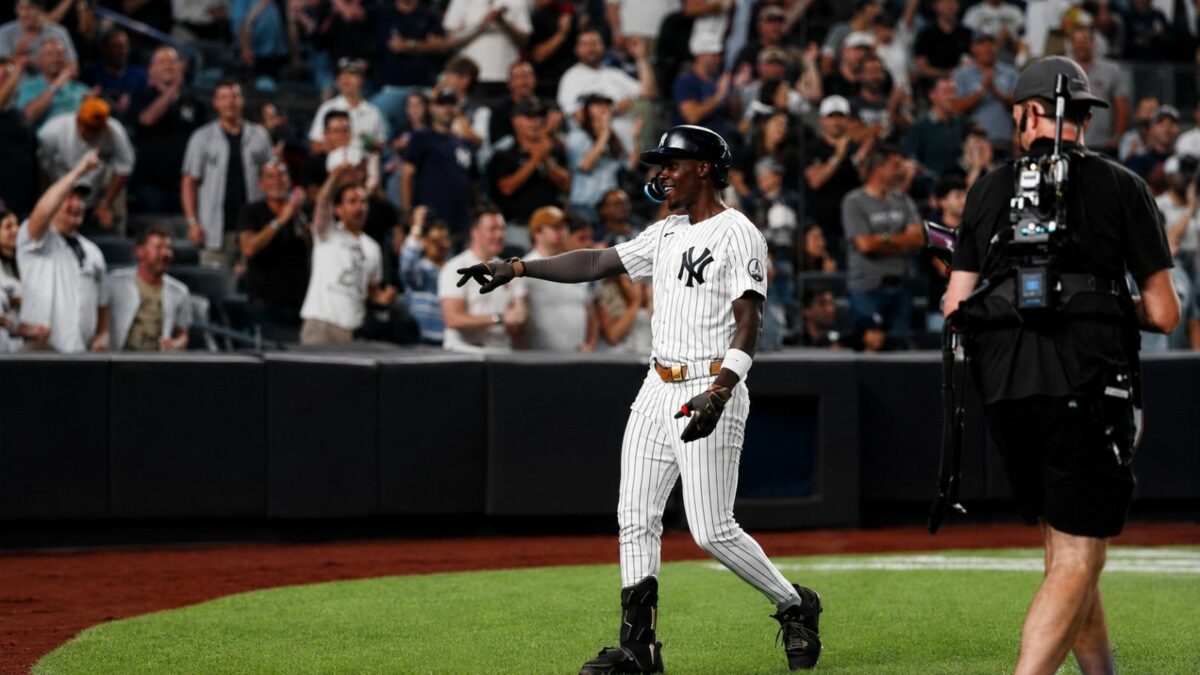
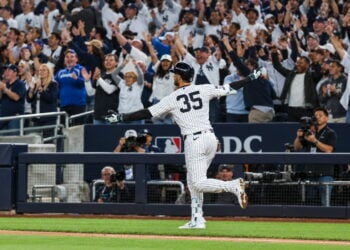
The nightcap offered a brief exhale. Jazz Chisholm Jr. drove an Evan Phillips fastball the other way for a tiebreaking home run in the eighth, his 14th of the year, lifting the Yankees to a 2-1 win and avoiding a sweep.
Bellinger’s first-inning RBI single had staked the lead, Tommy Edman tied it in the eighth with a solo shot off Fernando Cruz, and David Bednar closed a five-out save.
Even the win carried a warning. The Yankees loaded the bases with nobody out and failed to score, a sequence that captured a lineup entering the night with the worst average in baseball with runners in scoring position since Aaron Judge’s injury.
Chisholm did not spare himself afterward. In a walk year, carrying a below-average .705 OPS, the second baseman owned the slump in blunt terms.
“I’ve (stunk) the whole season. The numbers speak for themselves,” Chisholm said. “I feel like we match up against any team in the league. I feel that we beat ourselves a lot.”
Cody Bellinger, another bat counted on to steady the lineup, framed the win as a starting point rather than a solution.
“Out of the break, we expect more out of ourselves,” Bellinger said. “We expect to be better.”
The deadline pressure lands on the front office
The weekend sharpened a question that now hangs over the organization. General manager Brian Cashman largely ran back a roster that fell short a year ago, and without Judge the lineup has been exposed as thin.
Judge remains sidelined, with the latest imaging showing some healing but not enough to resume baseball activities. That uncertainty complicates every decision the Yankees face before the deadline.
Boone was candid about where the team stands, calling the group unfinished as the second half opens.
“We’ve got to get ourselves right and rolling,” Boone said. “We’re an incomplete product at this point and we’ve got to go take it in the second half to give ourselves a chance.”
The urgency is growing because the rest of the division is surging. The Red Sox ripped off 13 straight wins, including a sweep of the Rays, and the Orioles won seven in a row, tightening an American League East the Yankees can no longer treat as a two-team race. New York entered the week second, a game behind Tampa Bay.
The path forward is clear even if the willingness is not. The Yankees need bats, the holes are unlikely to fix themselves by October, and adding help will cost prospect capital the front office has been reluctant to spend.
For now the Yankees remain in the race, but the margin is thin and the offense is scuffling. The next move belongs to Cashman, and the clock is running.
What do you think? Leave your comment below.