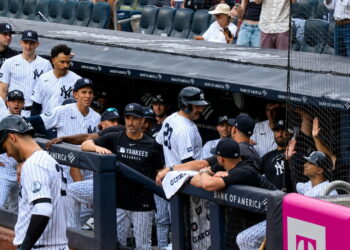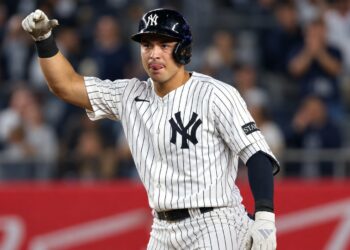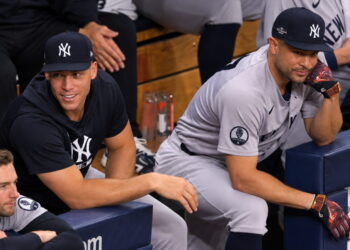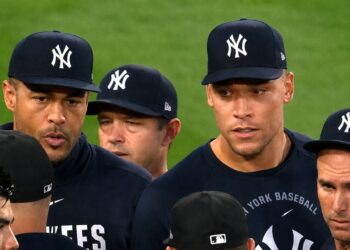
NEW YORK — One replay review drained the noise from Yankee Stadium on Wednesday night.
Anthony Volpe believed he had tied Game 3 of the American League Division Series with a two-run homer to left field in the sixth inning. Replay officials overturned the call. The drive went into the books as an RBI double, and the New York Yankees still trailed 4-3.
That was the final Yankees run of the season. The Tampa Bay Rays held on and finished a three-game sweep in the Bronx.
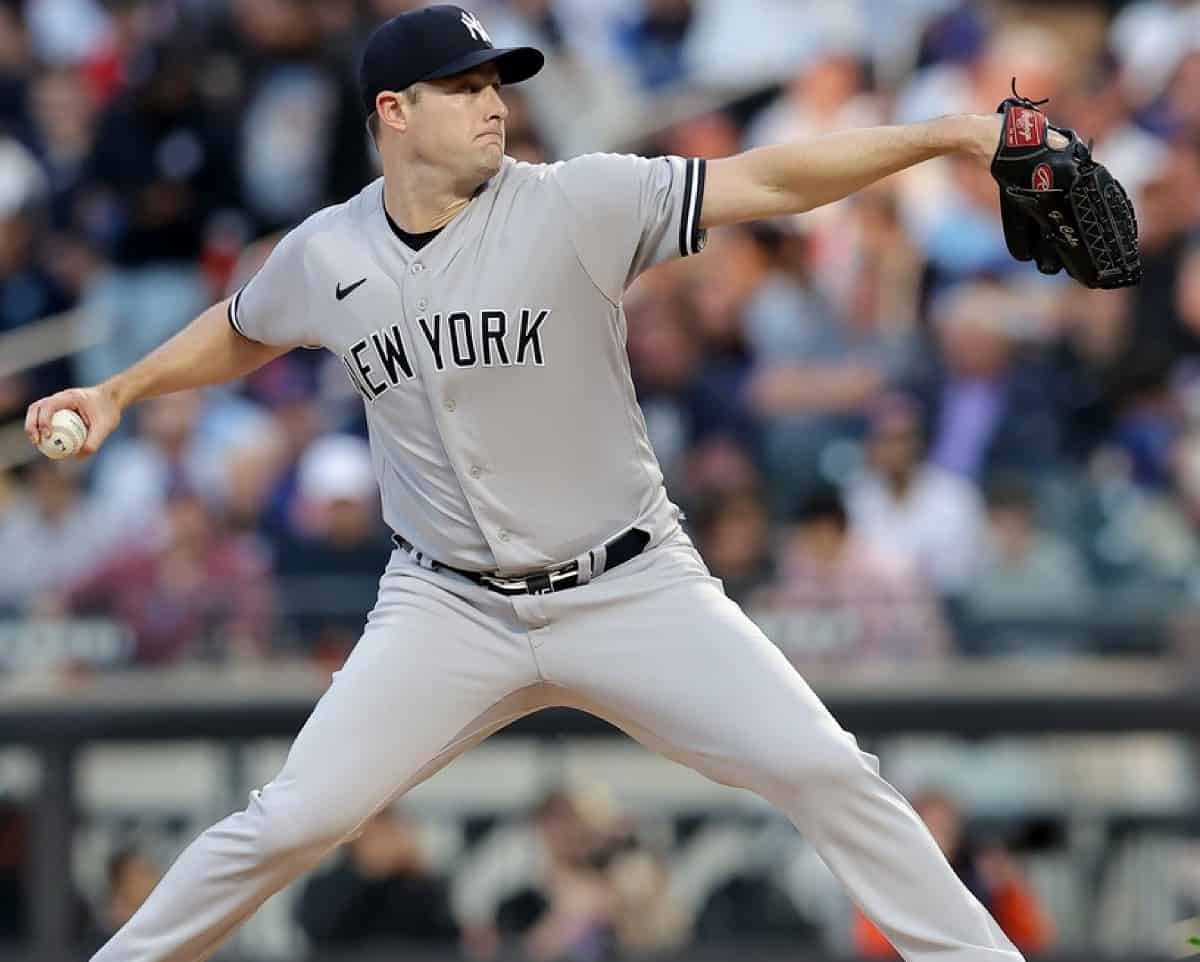
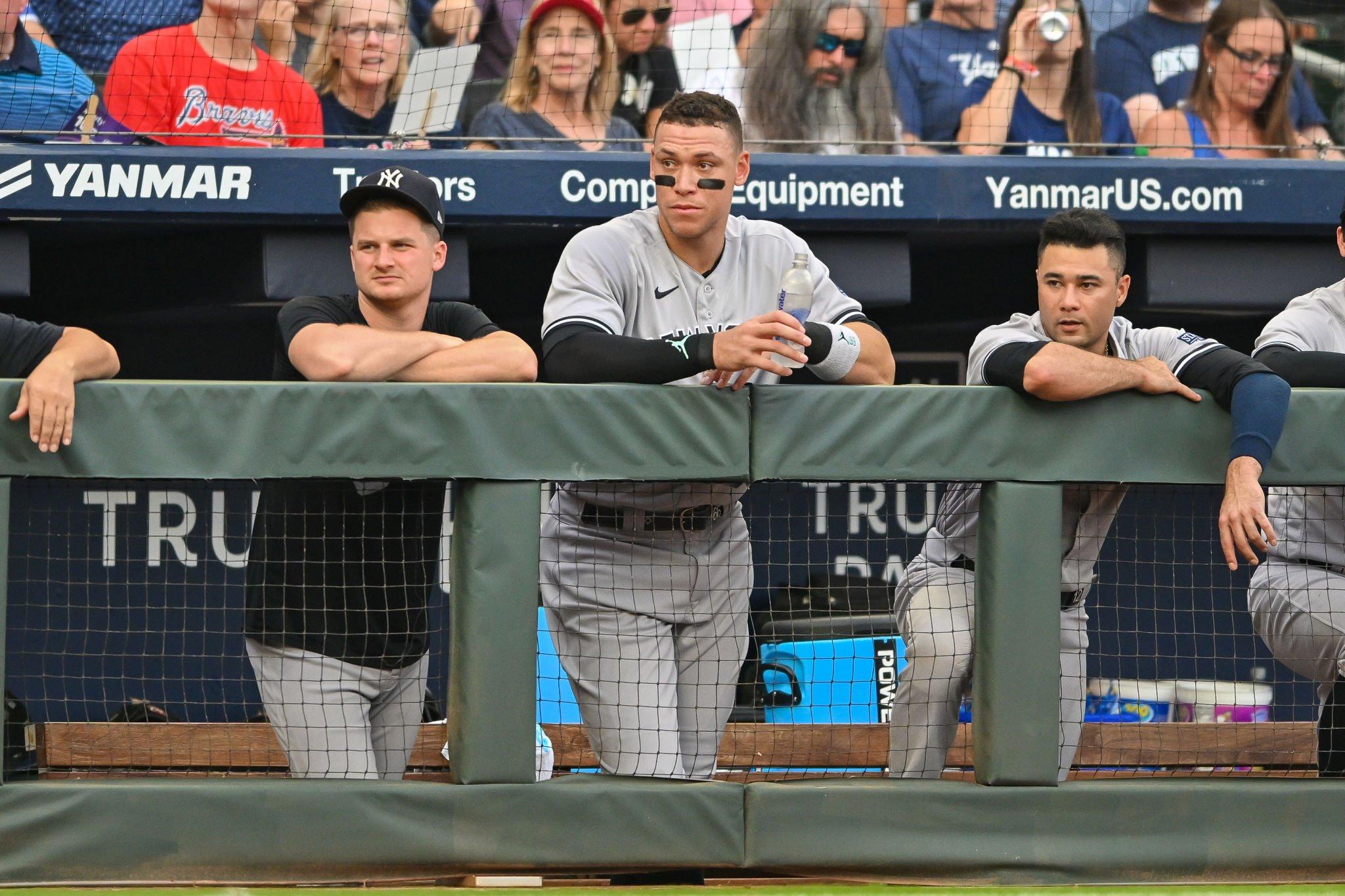
Max Fried, starting with the season on the line, allowed four earned runs on seven hits over 5 2/3 innings with seven strikeouts. The lineup scored five runs in three games. Aaron Judge, left off the ALDS roster with a right calf strain, never took the field.
It was the second straight October the Yankees fell in the division series to an AL East champion. Their last World Series title came in 2009.
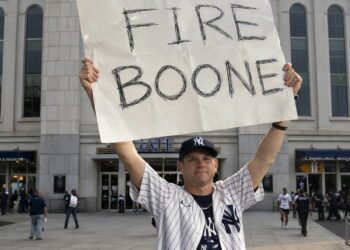
Now the offseason has arrived early. Questions about Aaron Boone’s future surfaced after the game.
One decision looms larger. It involves a player the Yankees cannot easily move and a contract that runs through 2030.
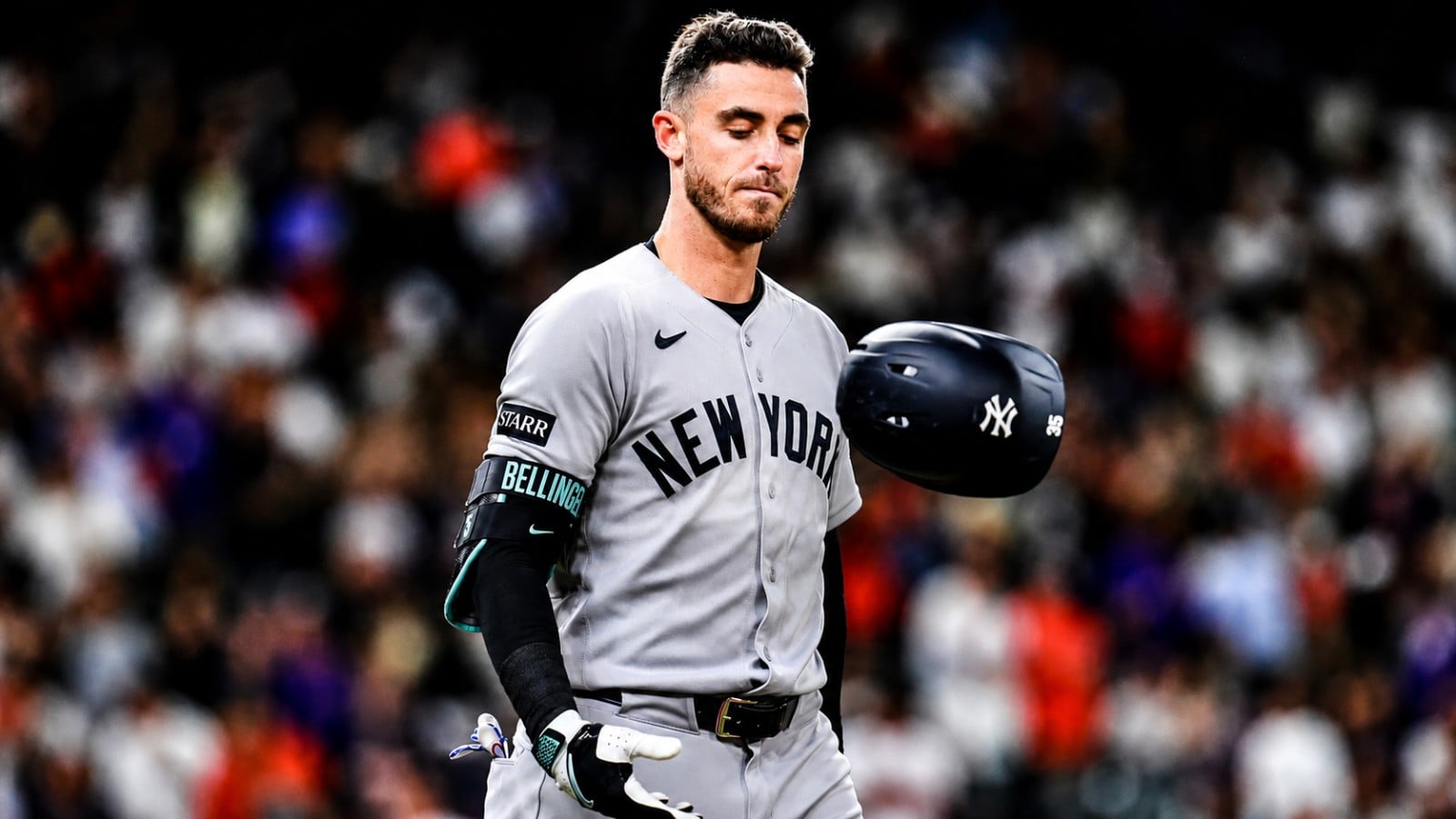
Eight days before the sweep, that same player delivered the loudest swing of the Yankees’ postseason.
Cody Bellinger hit a three-run homer during a six-run sixth inning against Boston on Sept. 30, finishing with four RBIs in a 9-2 win that completed a two-game wild-card sweep. He had caught the ceremonial first pitch from his father, Clay, a former Yankees champion.
Bellinger savored the moment afterward.
“I feel like I was able to enjoy that one,” Bellinger said.
The feeling did not travel to Tampa Bay. Hitting second, Bellinger managed one single across the first two ALDS games. He grounded out against Rays closer Bryan Baker in the ninth inning of a 1-0 loss in Game 1. In Game 2, he flied out with the bases loaded to end the fifth inning.
The Bellinger question moves to the front
Those at-bats pushed a quiet concern into the open. Bellinger, re-signed in January to play left field, now stands as the most complicated piece of the Yankees’ winter.
The issue is production measured against price.
Bellinger hit .264 with a .338 on-base percentage, a .429 slugging percentage, 17 home runs and 73 RBIs in 562 plate appearances this season. His .768 OPS marked a clear drop from 2025, when he hit .272 with 29 homers, 98 RBIs and an .813 OPS in 152 games.
His glove held up. Bellinger was credited with 21 defensive runs saved and six outs above average in left field.
Bellinger’s October remains the sore spot. He is hitting .204 with a .231 on-base percentage and a .367 slugging percentage in 12 postseason games with the Yankees. He batted .190 this postseason. Across 81 career playoff games dating to his Los Angeles Dodgers years, he owns a .210/.276/.375 slash line.
His slide tracked the injuries around him. Judge played only 66 games because of a fractured right rib and a sore right calf, according to The Associated Press. Giancarlo Stanton also missed time, leaving Bellinger with little protection in the Yankees lineup.
Why the Yankees paid to keep him
The Yankees and Bellinger finalized a five-year, $162.5 million contract in January. It includes a $20 million signing bonus, a full no-trade clause and opt-outs after the 2027 and 2028 seasons, The Associated Press reported. Bellinger and agent Scott Boras sought six or seven years, MLB.com reported, while the club would not go past five.
Yankees general manager Brian Cashman described a long standoff.
“We were negotiating with a titan in Scott Boras,” Cashman said.
Bellinger framed his return around the clubhouse.
“When you get into a locker room where it’s about winning and doing it for each other, you don’t really want to leave it,” Bellinger said.
By June, with Judge out and the offense stalled, Bellinger owned his slump after a 7-3 loss to Detroit. He carried a .396 OPS over his previous 12 games at the time, theScore reported.
“There’s no excuses. I need to be better,” Bellinger said.
Opt-out math puts the Yankees in a bind
The contract structure is what makes this winter delicate.
Under the terms, Bellinger received the $20 million bonus plus a $32.5 million salary in 2026. He is due $32.5 million in 2027, $25.8 million in each of 2028 and 2029, and $25.9 million in 2030.
That leaves $110 million owed over the final four years.
To use his first opt-out after next season, Bellinger would have to walk away from $77.5 million guaranteed over three years. He would hit the market at 32. That makes an early exit unlikely if his bat does not rebound, leaving the Yankees with the risk.
Counting the bonus, the Yankees paid about $3.1 million per home run this season. Measured by the deal’s $32.5 million average annual value, which counts against the luxury tax, the figure was roughly $1.9 million per homer.
The no-trade clause narrows the options further. Any trade would need Bellinger’s approval. Reducing his role would weaken the Yankees outfield defense.
Left field sits at the center of the Yankees’ winter
As of Saturday, the Yankees had announced no change to Bellinger’s status.
Every bat the Yankees pursue this offseason will be weighed against a $32.5 million left fielder already on the books and a lineup that sagged without Judge.
For now, the Yankees’ biggest October swing and their most pressing winter question belong to the same player.
What do you think? Leave your comment below.