NEW YORK — The Yankees have one more established option in their search for a second baseman, but pursuing him could require a substantial contract and draft compensation.
New York enters the winter with Jazz Chisholm Jr. on the open market and no settled answer at second base for 2027. Brian Cashman has explored external possibilities while retaining several internal candidates.
Brandon Lowe is a particularly significant name on that list. The 32-year-old left-handed hitter finished the season with the Pirates after spending most of his major league career in the AL East with Tampa Bay.
The Yankees have already checked in on Lowe, according to offseason reporting. His latest decision clarifies that he is willing to test what other clubs will pay rather than accept a guaranteed one-year return to Pittsburgh.
Lowe declined the Pirates’ $23.15 million qualifying offer for 2027 before Tuesday’s deadline, keeping himself on the free-agent market. The decision does not eliminate Pittsburgh from contention, but it leaves the Yankees able to negotiate without requiring a trade.
Lowe’s decision keeps a 35-homer alternative on the market
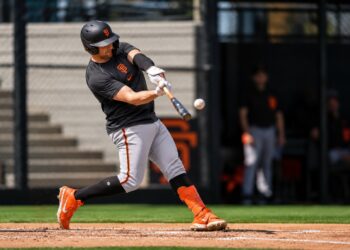
Lowe hit .260 with 35 home runs, 96 RBIs and an .824 OPS in 150 games in 2026. His 35 homers led all major league second basemen. He won his first Silver Slugger Award and was named to the All-MLB Second Team.
Pittsburgh could still re-sign him. General manager Ben Cherington publicly expressed interest in retaining Lowe before the qualifying-offer deadline, describing a return as a welcome outcome for the organization.
“It would be a great outcome if he was a Pirate next year,” Cherington wrote.
By declining the offer, Lowe gave himself the chance to seek a longer deal. ESPN analyst David Schoenfield projected a four-year, $80 million agreement with the Yankees. That figure is a projection, not a reported offer from Cashman.
A second-base opening makes the Yankees a logical contender
Chisholm became a free agent after the Yankees declined to extend him a qualifying offer. He hit 19 home runs in 2026, leaving the club to decide whether to pursue a reunion or replace his production.
Anthony Volpe is an option at second after moving there when rookie George Lombard Jr. took over at shortstop. José Caballero and Luis García Jr. also give manager Aaron Boone alternatives, though none has Lowe’s recent power output.
The Yankees scored at a league-average level overall in 2026 despite hitting 223 home runs, second-most in MLB. Their offense struggled particularly badly during Aaron Judge’s extended absence. Adding Lowe would address the need for production beyond the lineup’s biggest star.
Cashman’s interest comes with a roster decision. Signing an established second baseman could reduce the opportunity for Volpe or force the Yankees to use one of their other infielders in a different role.
The right-field numbers make Lowe more than a routine fit
Of Lowe’s 35 home runs in 2026, 32 traveled to right field. That is 91.4% of his total, an unusually concentrated pull-side profile that fits Yankee Stadium’s shorter right-field dimensions.
Statcast estimated that his 2026 batted balls would have produced 39 homers if every game had been played at Yankee Stadium. That is a ballpark comparison, not a projection for a full season in New York.
Lowe also improved his fielding run value from minus-10 with Tampa Bay in 2025 to plus-12 with Pittsburgh in 2026, a 22-run year-over-year swing. He became a Gold Glove finalist after the Pirates helped him adjust his pre-pitch positioning.
Those defensive gains matter because Lowe’s established appeal had primarily been his left-handed power. For the Yankees, a second baseman who can contribute on both sides would represent a more complete solution than a bat-only replacement.
A contract would carry costs beyond Lowe’s salary
The qualifying-offer decision also changes the cost of signing Lowe. Because he rejected the offer, the Yankees can him without draft-pick and international bonus-pool consequences under MLB’s compensation rules.
Pittsburgh would receive a compensatory selection if he signs elsewhere. A contract worth at least $50 million would put that selection between the first round and Competitive Balance Round A; a deal below that figure would place it later.
That makes the reported four-year, $80 million projection only part of the calculation for Cashman. Lowe has not signed, and the Yankees have not announced an offer. His decision nevertheless leaves a proven 35-homer second baseman available while New York weighs whether to spend on the position or give its internal options another chance.
What do you think? Leave your comment below.