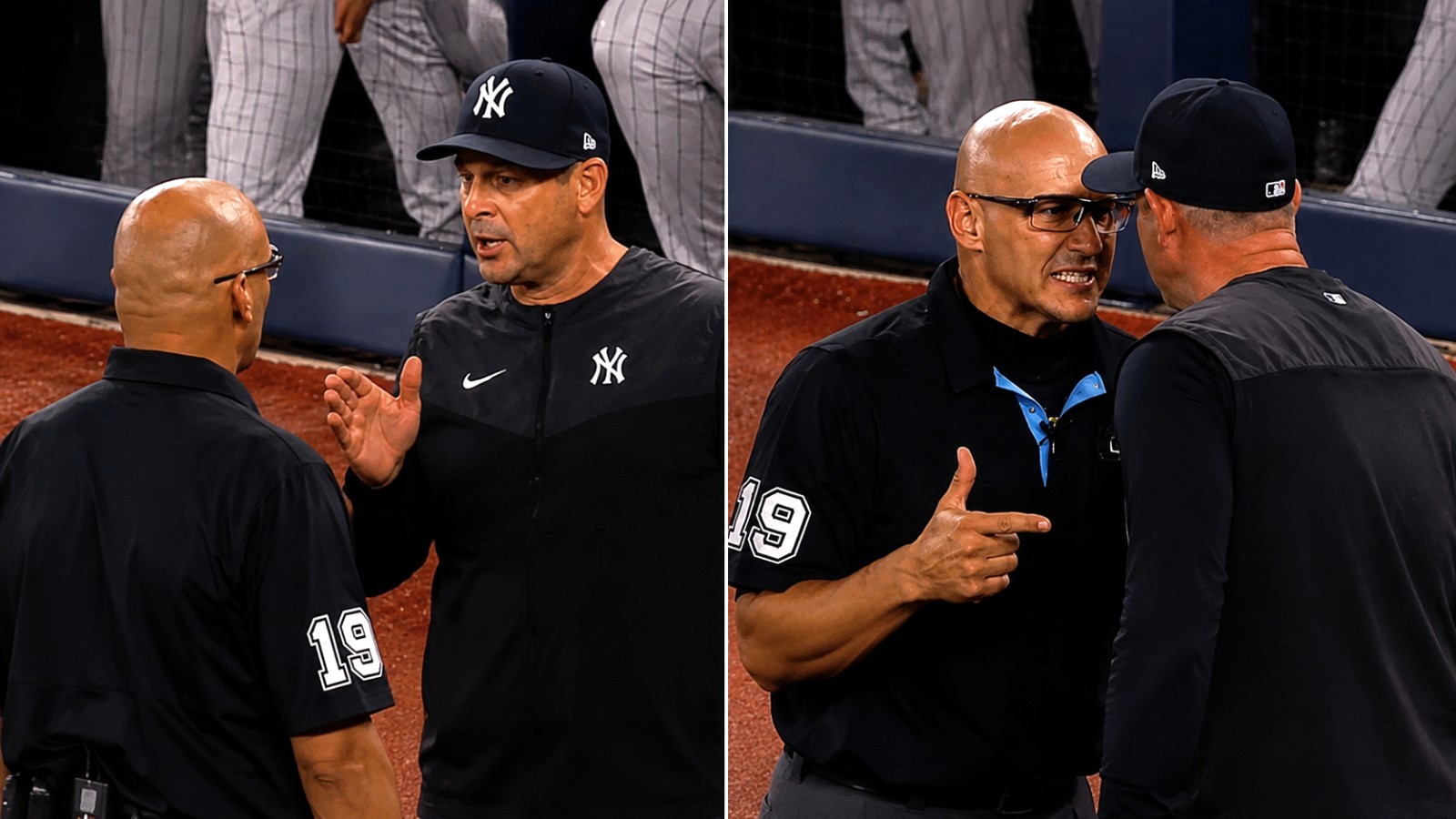
TORONTO — Aaron Boone spent most of Friday night’s sixth inning somewhere he rarely occupies when a disagreement with an umpire is brewing: inside the Yankees dugout, speaking without the theatrics that have made his confrontations part of his managerial identity.
The Yankees had just broken a scoreless tie at Rogers Centre when Trent Grisham homered off Shane Bieber to open the sixth. Gerrit Cole had kept Toronto off the board through five, giving the Yankees a 1-0 lead in a game with little margin for error.
That lead disappeared quickly. A messy bottom of the sixth included Cole’s hesitation on a potential double-play ball, a low throw from Ryan McMahon, Luis García Jr.’s aggressive throw toward third and Alejandro Kirk’s go-ahead RBI double. Toronto later added Kirk’s eighth-inning homer and won 3-1. Bieber earned the win, Cole took the loss and Louis Varland recorded his 27th save.
The defeat dropped the Yankees to 68-54 and kept them 6.5 games behind Tampa Bay in the AL East. New York remained atop the American League wild-card standings, but the Yankees had scored only once in 18 innings and two runs or fewer in nine of their previous 14 games.
Yet the strangest sequence came before Toronto’s rally, when Boone reached a career milestone in a way that looked almost nothing like the previous 49 times he had been sent away.
Carapazza’s question changed the sequence
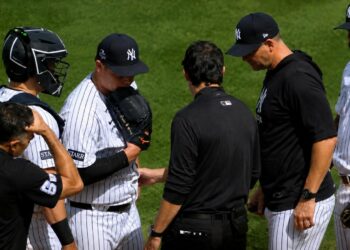
Boone was ejected by home-plate umpire Vic Carapazza in the top of the sixth after a first-pitch breaking ball to García appeared low but was called a strike.
Complaints came from the Yankees dugout. Instead of immediately ejecting Boone, Carapazza turned toward him and asked what he had said because he could not hear him. MLB’s account also noted that the pitch appeared low.
Boone said afterward that he had not been carrying on before Carapazza addressed him. His initial complaint reflected the limits of the new ABS challenge system.
“That was the first time I said anything,” Boone said. “Obviously there were a lot of challenges early, and rightfully so. I just said, ‘We can’t challenge everything.’”
Carapazza asked Boone to repeat himself. Boone said he answered that the pitch was low, and the ejection followed.
“I actually watched the replay, and I just said, ‘It’s low,’” Boone said. “Those things happen, and at the end of the day, we’ve got to find a way to score.”
Only after the ejection did the familiar Yankees scene arrive. Boone left the dugout, confronted Carapazza at home plate and argued face-to-face before heading to the clubhouse.
No. 50 turns Boone’s reputation on its head
The ejection was Boone’s fourth this season and the 50th of his Yankees managerial career. It came in his 1,316th game managing New York and tied him for 25th on the all-time managerial ejections list, according to the figures provided after Friday’s game.
Among active managers, only Cincinnati’s Terry Francona has been ejected more often. The contrast is striking because Boone has accumulated his total in far fewer games.
Boone’s history makes the manner of this Yankees ejection unusual. His memorable confrontations have featured animated arguments and extended exchanges. Friday’s trigger was a short response to a question Carapazza directed toward the dugout.
That does not make the ejection automatically improper. Umpires have authority to eject managers for arguing balls and strikes. The sharper question is whether Carapazza exercised that discretion too quickly after re-engaging Boone and asking him to repeat a mild objection.
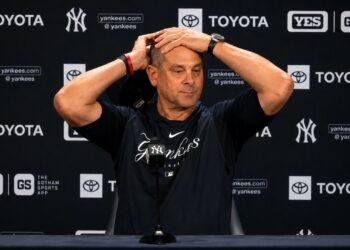
Boone made his view clear afterward, describing the original exchange as harmless and suggesting Carapazza had been having a difficult night.
“It’s just a tired toss with a guy that was struggling early on in this game,” Boone said.
ABS adds a new wrinkle to an old Yankees argument
The 2026 ABS Challenge System makes Boone’s complaint more relevant than a routine strike-zone argument.
Under MLB’s rules, managers cannot challenge a ball-strike call. Only the batter, pitcher or catcher can initiate an ABS review, and the request must come immediately without help from the dugout. Each team begins with two challenges and retains successful ones. A failed challenge is lost.
Boone therefore could not personally correct the call he believed Carapazza missed. His comment that the Yankees could not challenge everything also reflected the strategic cost of using limited challenges on borderline pitches.
MLB introduced ABS challenges to give players a fast way to correct missed calls while keeping human umpires behind the plate. Friday showed that the system has not eliminated friction between Yankees managers and umpires.
It may create a new version of it. A manager can see a call he believes is wrong, cannot initiate a challenge himself and still risks ejection if he objects verbally.
Carapazza remained within his authority. But the order of events is what makes Boone’s 50th stand apart: the umpire asked for clarification, Boone supplied it, and the conversation ended with the Yankees manager gone.
Yankees could not turn the ejection into a spark
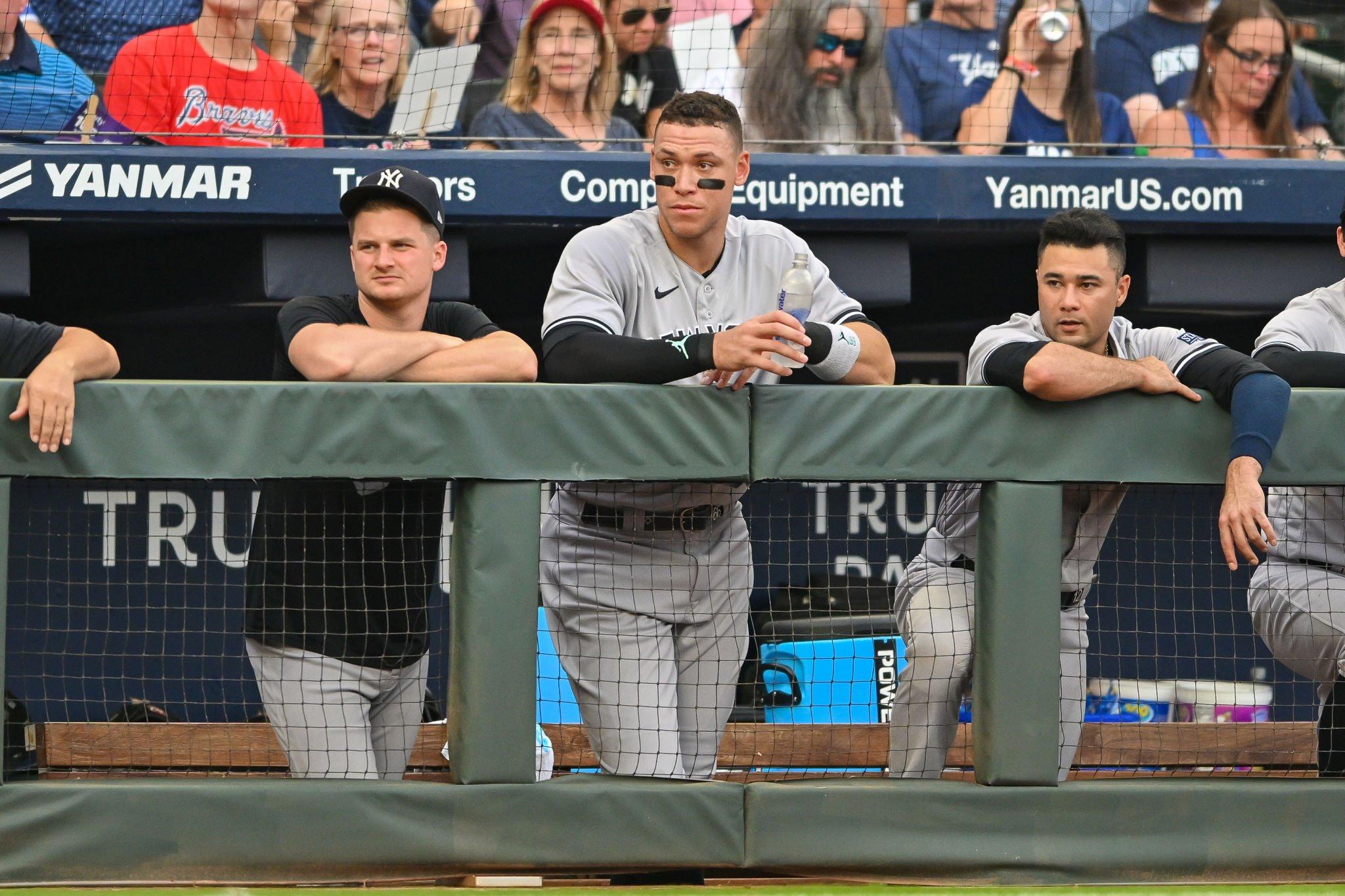
Bench coach Brad Ausmus managed the Yankees for the remainder of the game at Rogers Center, but the lineup did not respond after Boone left.
Grisham’s homer was New York’s only run. Toronto scored twice in the bottom of the sixth, then Kirk homered off rookie Bradley Hanner in the eighth during Hanner’s major league debut.
Boone rejected the idea that an ejection should function as an emotional device to wake up the Yankees offense. His concern remained execution rather than theater.
“You don’t get fired up to score,” Boone said. “You need to be under control to score. Obviously, it continues to be a challenge for us. This is another night where I thought we made decent contact and were having some of the right at-bats, but at the end of the day, we gotta push runs across when we get opportunities because that’s where we’ve struggled.”
The Yankees left Rogers Centre with another low-scoring loss, another costly sixth inning and Boone’s name one line higher on the managerial ejection leaderboard.
No. 50 will be remembered less for the confrontation that followed than for how little it apparently took to start it.
What do you think? Leave your comment below.