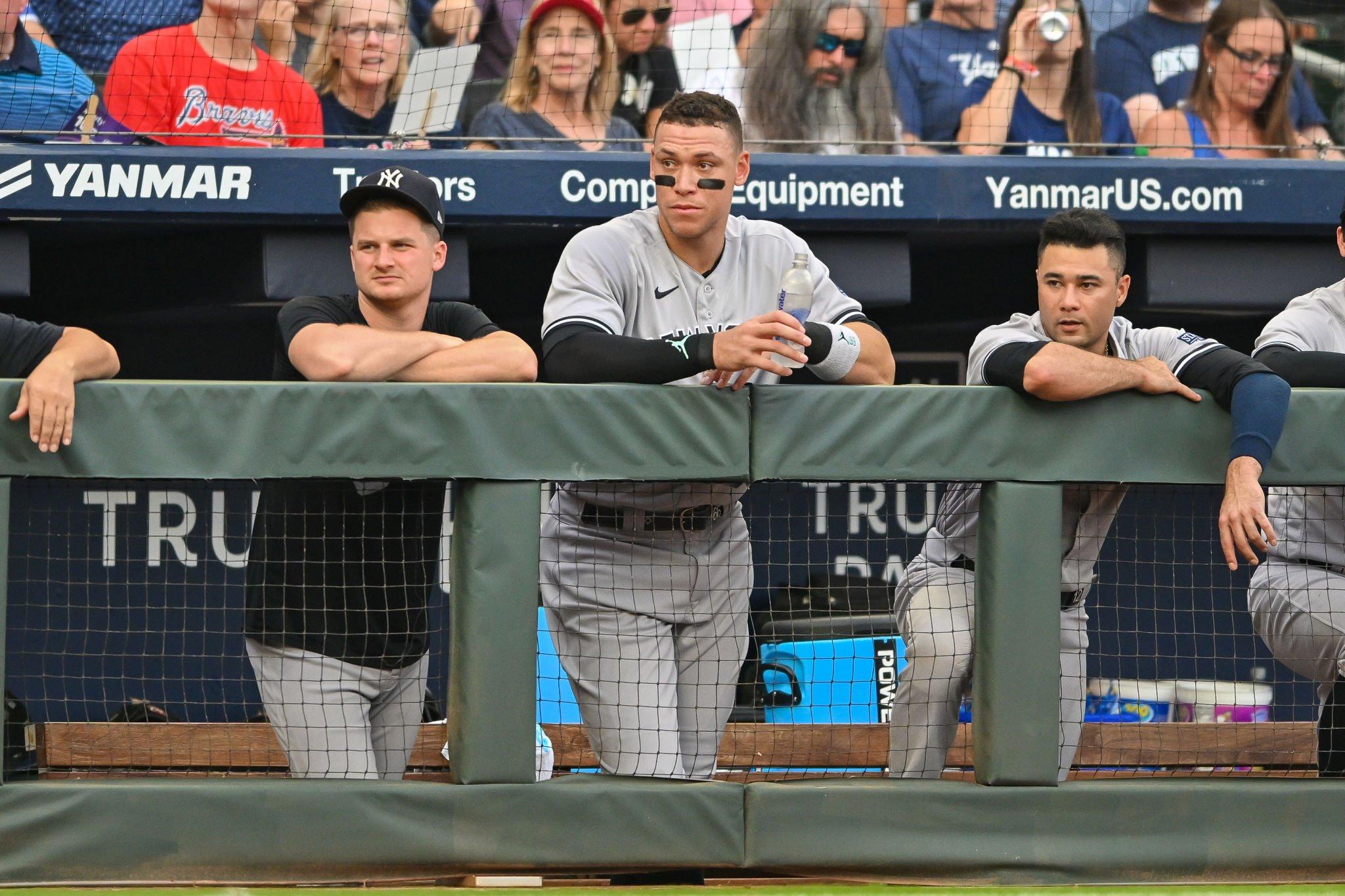
NEW YORK — The Yankees have spent the past week learning how quickly an infield hierarchy can change. A job Anthony Volpe held almost exclusively for three seasons now belongs to a 21-year-old rookie in the middle of a pennant race, leaving the former starter to prove he can help New York in more than the role that once seemed reserved for him.
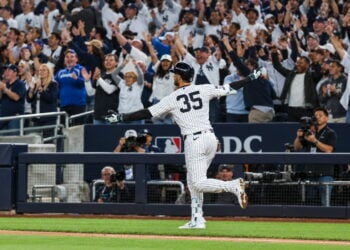
George Lombard Jr. has made that separation harder to ignore. The Yankees promoted their top prospect on Aug. 4, the same day they optioned Volpe to Triple-A Scranton/Wilkes-Barre, and immediately gave Lombard regular work at shortstop. He homered for his first major league hit and has looked comfortable defensively in his first week.
For Volpe, the assignment is no longer only about rediscovering the offensive consistency that made him one of the Yankees’ most prominent prospects. The roster has shifted around him. José Caballero can cover several infield spots, Jazz Chisholm Jr. remains the established second baseman and Lombard has been given runway at shortstop.
The timing makes that squeeze more significant. The Yankees entered Aug. 11 at 66-52, six games behind Tampa Bay in the AL East and 6.5 games clear of the nearest team outside the American League wild-card field, according to MLB’s official standings. Aaron Boone can prioritize the combination that gives the Yankees the best chance to win now.
Volpe’s own 2026 line also explains why there is no automatic route back. In 56 major league games, he hit .240 with a .325 on-base percentage and .322 slugging percentage, with one home run, 19 RBIs and seven stolen bases in 194 plate appearances. The Yankees now have to decide what else he can become while he tries to make the bat matter again. That choice is becoming as important as the numbers themselves during a crowded stretch of the schedule.
A clean first test at a new position
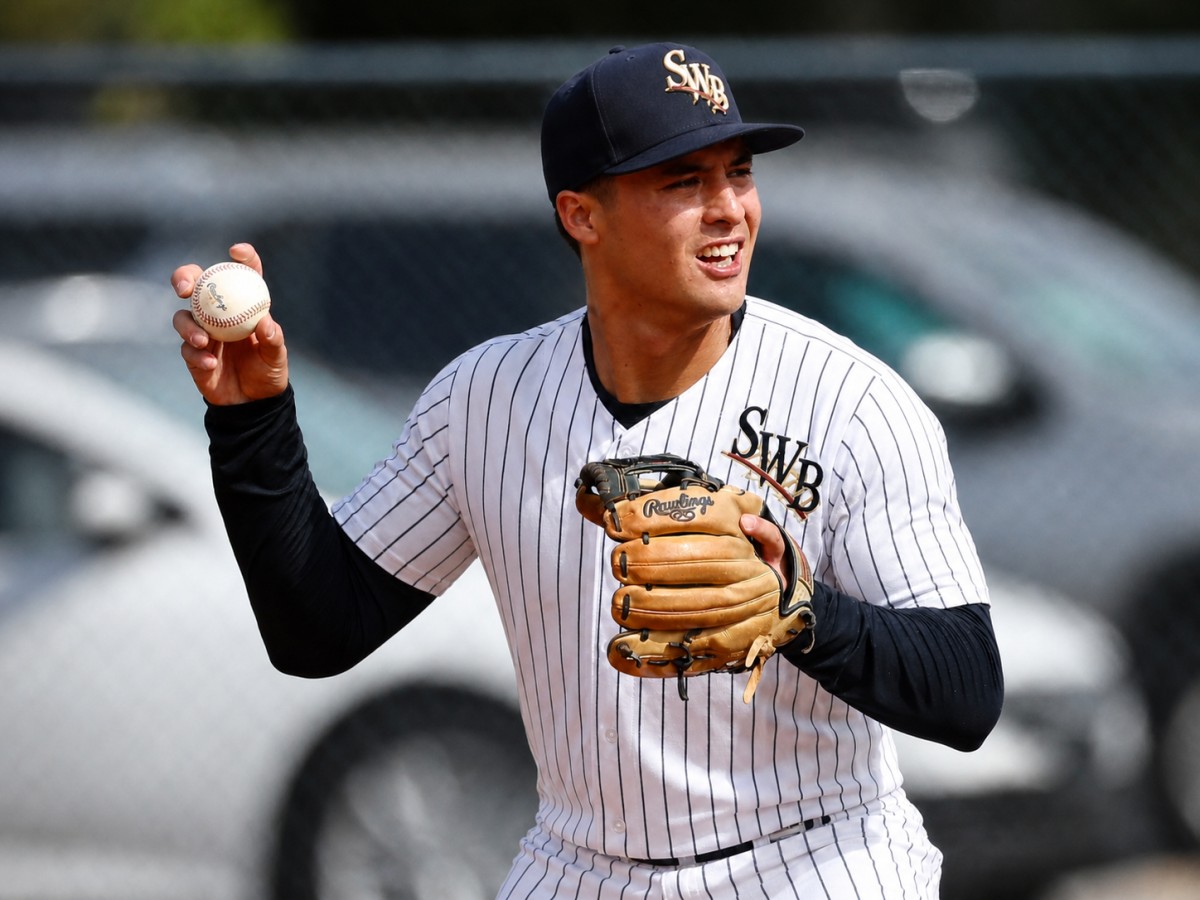
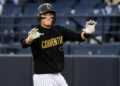
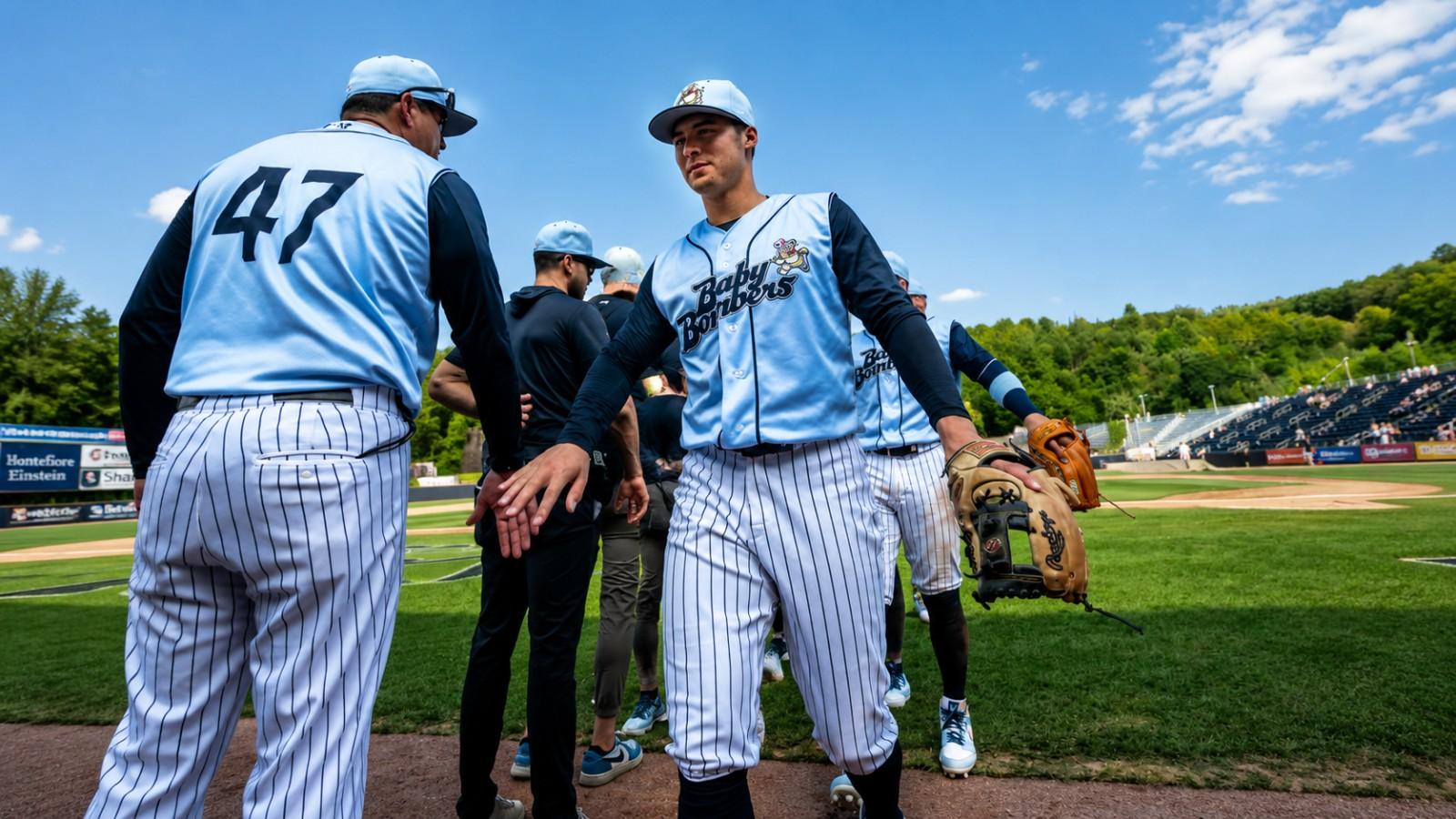
The first visible answer came Saturday in a 9-0 Scranton/Wilkes-Barre loss to Rochester at PNC Field. For the first time since 2021, Volpe started a game somewhere other than shortstop. The team put him at second base, where he handled all three balls hit his way cleanly.
Volpe also supplied the RailRiders’ only extra-base hit, going 1-for-4 with a double and two strikeouts. Rochester used seven pitchers in the shutout. Erik Tolman was credited with the win, while Yankees left-hander Carlos Rodón took the loss during a rehabilitation start.
The switch was not an abandonment of shortstop. Volpe played there Friday and again Sunday. He hit a two-run homer Friday but also made a throwing error. On Sunday, he returned to short as Scranton/Wilkes-Barre rallied for a 9-8 win.
Why second base changes Yankees calculation
The Yankees had already been preparing Volpe for this possibility. During his time in the majors, he occasionally took ground balls at second base on days he was not in the lineup. Triple-A now gives New York a lower-risk setting to turn those practice reps into game experience.
The defensive profile offers a baseball reason to keep testing it. Baseball Savant’s 2026 Statcast data credits Volpe with six Outs Above Average and places his fielding range in the 91st percentile. His arm strength ranks in the 15th percentile. Second base generally asks less of the arm while still rewarding range, reactions and footwork.
Caballero’s versatility also meant the Yankees did not have to force the experiment in the majors. He can move to second when Chisholm needs a day off. That allowed the Yankees to keep Volpe in a familiar role until his option created time for more deliberate work.
The bat still controls Volpe’s timetable
Extra versatility can create another lane to the Yankees roster, but it cannot erase the offensive question.
Volpe’s first Triple-A weekend showed both sides. He drove a two-run homer Friday and doubled Saturday, then had one hit Sunday. He also struck out four times Friday, made the throwing error at shortstop and did not produce enough over three days to suggest that his uneven major league season had suddenly turned.
That is the tension in the experiment. The Yankees can make Volpe easier to carry by expanding his defensive use, but a utility profile alone would represent a different place from where his career began. For a player once viewed as New York’s long-term shortstop, the quickest path back may now require both a better bat and fewer positional limits.
A 2027 opening adds another layer
The Yankees also have a longer-term reason to learn whether Volpe can handle second base.
Chisholm is playing 2026 on a one-year contract and is eligible for free agency after the season, according to MLB. That does not mean the Yankees have decided to let him leave. It does mean the club cannot assume the position will look the same next spring.
Volpe, 25, remains under team control. If he can show the Yankees that he can handle both middle-infield positions while rebuilding his offense, his roster case changes. He would no longer need Lombard to lose the shortstop job to create regular or semi-regular at-bats.
For now, there is no clear timetable for Volpe’s return to the majors, especially if the Yankees stay healthy and Lombard continues to hold his ground. What changed Saturday was the shape of the question. The Yankees are no longer testing only whether Volpe can reclaim shortstop. They have started finding out whether another position can keep him in their plans.
What do you think? Leave your comment below.