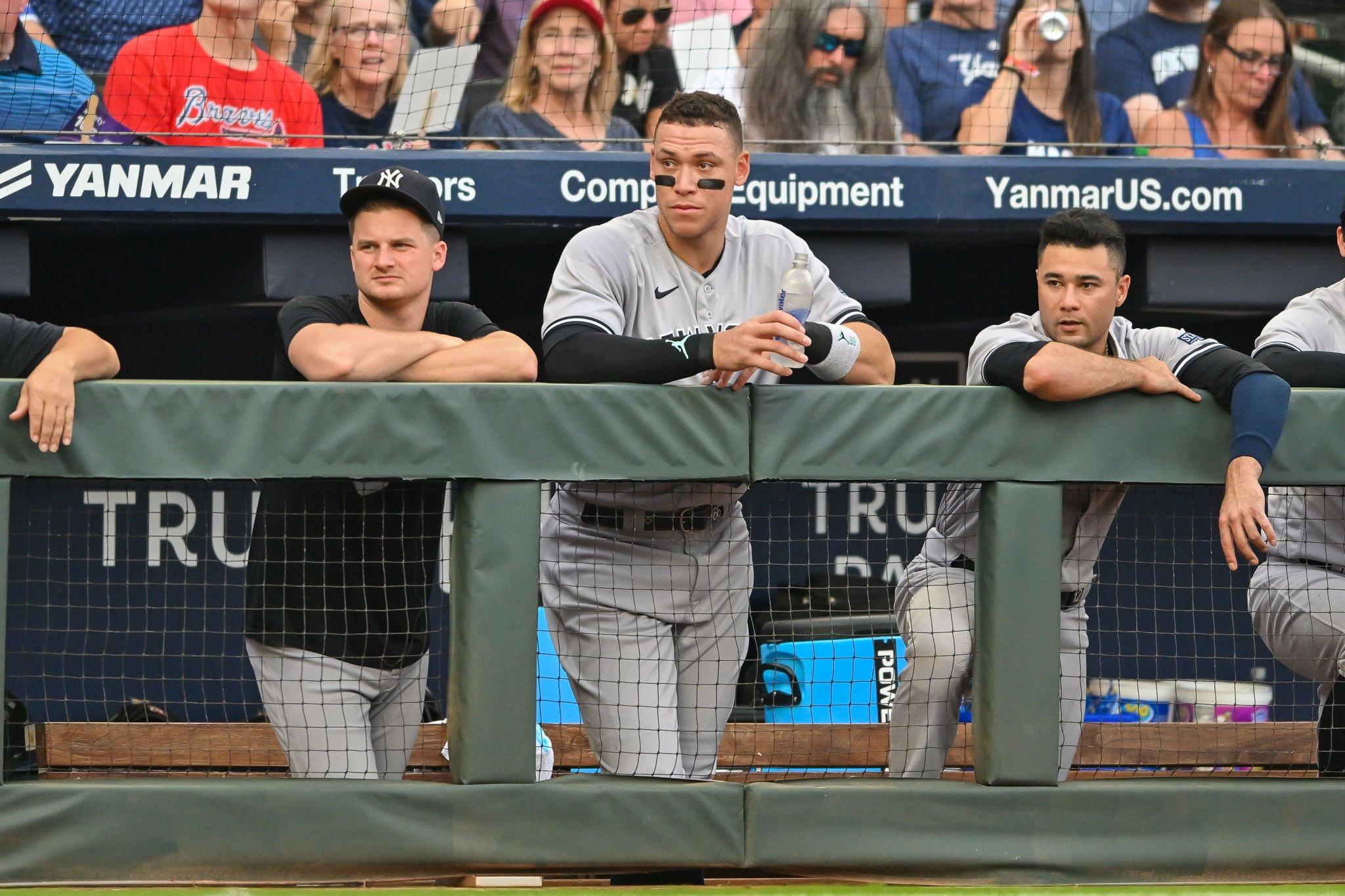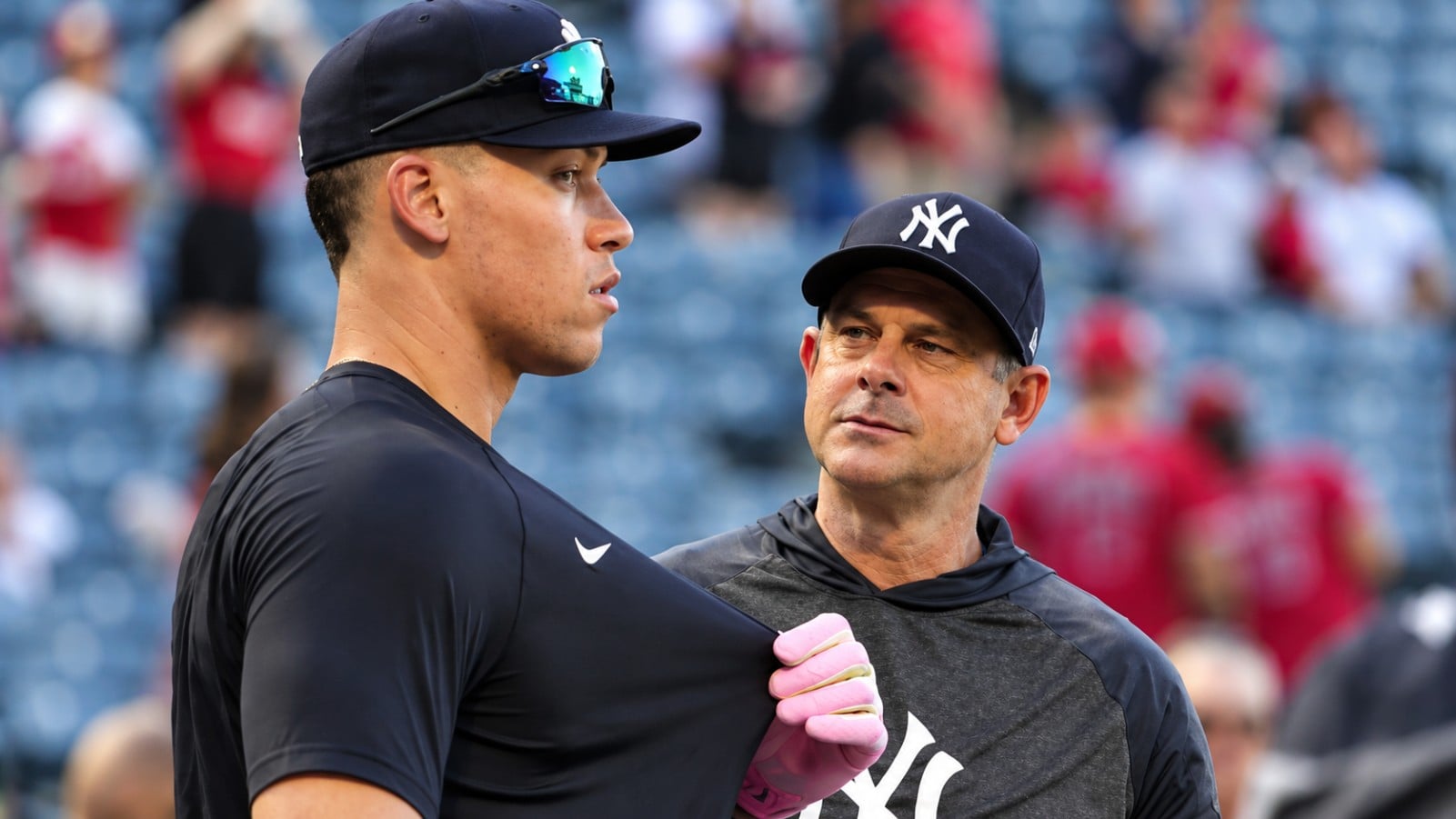
NEW YORK — Aaron Judge stood near the dugout rail at Yankee Stadium as another opponent celebrated a postseason series victory on the Yankees’ field. The captain had spent October on the sidelines, unable to change a season that ended with one last strikeout.
The Tampa Bay Rays finished a three-game American League Division Series sweep with a 4-3 victory on Oct. 7. Trent Grisham struck out against closer Bryan Baker while Ben Rice waited on deck, and the Yankees’ 17-season championship drought continued.
Judge, who turns 35 in April, remains without a World Series ring. His injuries complicated the Yankees’ 2026 ambitions, but they also intensified scrutiny of how many realistic championship opportunities remain during his contract.
Nine seasons into Aaron Boone’s tenure, the disparity between regular-season success and October results has become the central dispute over the Yankees’ direction. The manager has taken eight teams to the playoffs and one to the World Series, without securing a championship.
Calls for change grow after another October exit
That record has triggered renewed public calls for the Yankees to replace Boone rather than enter 2027 with the same manager. No firing has been announced, and the argument for a change remains a demand from critics, not an organizational decision.
The Yankees are 27-30 in postseason games under Boone. New York reached the 2024 World Series but lost to the Los Angeles Dodgers. Division Series exits against Toronto in 2025 and Tampa Bay in 2026 followed.
The 2026 defeat exposed familiar problems. The Yankees scored five runs over three ALDS games after sweeping Boston in the Wild Card Series. Austin Wells’ baserunning mistake in Game 1 and defensive breakdowns in Game 2 gave Tampa Bay additional opportunities.
The Yankees’ repeated inability to beat strong opponents has become especially difficult to dismiss. A postseason series breakdown supplied in reporting on Boone’s tenure shows New York 7-0 against opponents with worse regular-season records, but 1-8 against teams with equal or better records. The split describes series outcomes, not individual games.
That distinction matters: the Yankees have generally advanced when favored, but have rarely overcome a club that matched or surpassed their regular-season performance. The pattern raises questions about roster depth, execution and tactical adjustments, rather than proving a single managerial decision caused every defeat.
Judge backs Boone despite mounting pressure
Boone acknowledged the severity of the loss after the Rays completed the sweep. His response reflected the frustration of failed October rather than any public indication that he planned to step away.
“It’s the worst frickin’ feeling in the world,” Boone said.
Judge offered a sharply different assessment of Boone’s value inside the clubhouse. The injured captain emphasized the manager’s support during a year in which New York endured major absences.
“He puts us in the right position to succeed,” Judge said.
Judge also defended Boone’s handling of a depleted roster and said the manager had supported his players. Pitcher Cam Schlittler likewise endorsed Boone, underscoring the divide between external calls for change and the clubhouse’s public position.
“Booney’s been amazing. I know every guy in this locker room stands behind him. I don’t see a reason why that needs to change,” Schlittler said.
Boone’s regular-season winning percentage stands near .583 through nine seasons. His players have credited him with steady leadership, but their backing does not answer the championship question.
A shrinking window sharpens cost of another failed season
The Yankees’ most pressing calculation is not whether Boone can win 90 games. His teams have already shown that they can. It is how much time the organization can spend testing the same October formula while Judge moves further into his mid-30s.
Judge played only 66 regular-season games in 2026, according to season-end evaluations, and missed the postseason because of a calf injury. His absence helps explain the limited October offense. It also reinforces why the Yankees must build a lineup capable of winning without requiring their captain to carry every critical inning.
There is a second, separate issue: Boone cannot field a more reliable bench, improve contact skills or supply extra bullpen depth without roster decisions from the front office. General manager Brian Cashman shares responsibility for constructing the team Boone manages.
The Yankees can change managers, change personnel or pursue both. Each course has a cost. Retaining Boone preserves a productive working relationship; replacing him would signal that playoff results now outweigh continuity. Neither move, by itself, guarantees a championship.
Yankees’ next public answers remain pending
Attention has shifted to owner Hal Steinbrenner and Cashman. The Yankees have not announced a managerial change, and their customary season-ending public accounting remained outstanding.
Bob Klapisch reported that the organization’s silence would likely end the following week with a press conference involving Boone and Cashman, together or separately. The venue and format had not been established.
Boone said after the elimination that he expected to return for a 10th season. He remains under contract for 2027, making a dismissal an active decision rather than a routine expiration.
Judge has made the championship standard clear even while backing the manager. His perspective reflects a clubhouse that values Boone but also recognizes that another promising season has ended short of its central objective.
“There’s a standard to win a championship,” Judge said. “It’s black and white. There’s no gray area.”
The Yankees now enter their offseason with Judge still seeking his first title, Boone still in place and a decision about the team’s leadership awaiting a public explanation.
What do you think? Leave your comment below.