BALTIMORE — For most of the summer, the Yankees waited on the big swing that never came. On Wednesday night at Camden Yards, they stopped waiting and won anyway.
The 5-3 win over the Orioles pushed the Yankees to a third straight victory. Each of the three came the same odd way, with the biggest run arriving late rather than early.
There was no towering, order-flipping blast in the decisive frame. There was a hit batsman, a walk, another hit batsman, a slow roller and a ball in the dirt. It was messy, and it worked.
That pattern, more than any single hero, is the story of this stretch. A lineup that has struggled to break games open has quietly become baseball’s best at finishing them.
A rally built on chaos, not power
The game turned in the eighth without a hard-hit ball. Baltimore reliever Cam Sanders lost the zone, hitting Heliot Ramos, walking Jazz Chisholm Jr. and plunking Jose Caballero, who batted for the injured Ryan McMahon.
With the bases loaded and two outs, rookie George Lombard Jr. faced Yennier Cano and tapped a slow ground ball up the third-base line. His speed did the rest, beating it out for the go-ahead RBI single and a 4-3 lead.
The insurance run was pure hustle. On the next pitch, Cano bounced a ball that catcher Yohel Pozo blocked but did not corral. Chisholm broke from third at once and slid home to make it 5-3.
The tie-game feel of that inning mattered. The Yankees entered the eighth level rather than trailing, which changed how the rally unfolded.
The disputed call that shaped the night
The Yankees would not have been tied without a break in the seventh. Baltimore’s Pete Alonso launched a drive down the left-field line off Brent Headrick that looked like a go-ahead home run, then flipped his bat as he watched it.
The umpires called it foul. A replay review let the call stand, with the league’s replay center stating that the official could not definitively determine the ball left the field in fair territory. Brent Headrick then struck Alonso out to keep the game even.
The reliever saw it from his own point of view. He admitted afterward the play could have gone either way.
“I’m a pitcher, right? So from my vantage point, I thought it was foul,” Headrick said. “But yeah, I think it could have gone either way. It went in our favor.”
Alonso disagreed but did not dwell on it. He credited the Yankees for capitalizing once the ruling stood.
“They executed and they beared down, and they got it done. We didn’t,” Alonso said. “Obviously, that’s a really defining call in the game. But when adversity is faced, you’ve got to push past it and move through it.”
Boone praises the little things
Manager Aaron Boone did not frame the win as a gift. He pointed instead to the instinct that produced the final run, singling out Jazz Chisholm‘s read on the ball in the dirt.
“We call that the rope-a-dope,” Boone said. “He was flying. How instinctive a baserunner Jazz is, I don’t think he always gets credit for.”
Chisholm, under scrutiny for a rough stretch, said he was simply ready for the moment. His alertness turned a blocked pitch into a run.
“I was ready for a ball in the dirt,” Chisholm said.
Boone also leaned on his relievers, who have carried the Yankees through a rotation stretched thin by injuries. He called the pitching the reason the Yankees are where they are.
“They’ve been awesome. The strength of the rotation and the bullpen is why we’re in this position,” Boone said.
The hidden number behind the winning streak
Here is the stat that ties the run together, and one few are citing. The Yankees now own 28 wins this season when tied or trailing in the seventh inning or later. That is the most in the majors.
The three-game streak is a snapshot of that trait. Ben Rice beat Toronto with a 10th-inning homer Saturday. Trent Grisham broke a tie with a seventh-inning, two-run single Tuesday. Lombard delivered the eighth-inning go-ahead hit Wednesday. Three nights, three different late heroes.
The bullpen has made those comebacks hold up. Over the past nine games, the Yankees’ relievers carry a 1.38 ERA, allowing five earned runs across 32 2/3 innings. On Wednesday, five relievers covered five innings and gave up just one run, Dylan Beavers’ tying homer off Fernando Cruz.
David Bednar closed it for his 29th save, needing 12 pitches after an eight-pitch save the night before. The late-game math has become a strength rather than a worry.
A lineup surviving without its stars
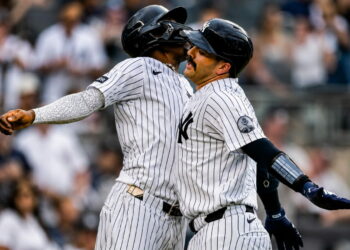
The offense did its part in bulk rather than in bursts. Rice supplied the lone home run, a 431-foot solo shot to right-center in the third for his team-leading 34th, a welcome sign after a brutal August at the plate.
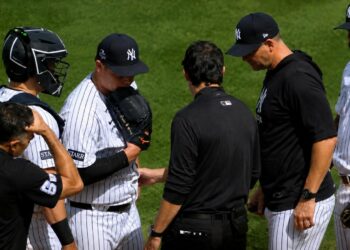
Lombard drove in two without a big swing, pairing a second-inning sacrifice fly with his eighth-inning single. McMahon had a run-scoring single before jamming his left thumb on a baserunning gaffe, though X-rays were negative.
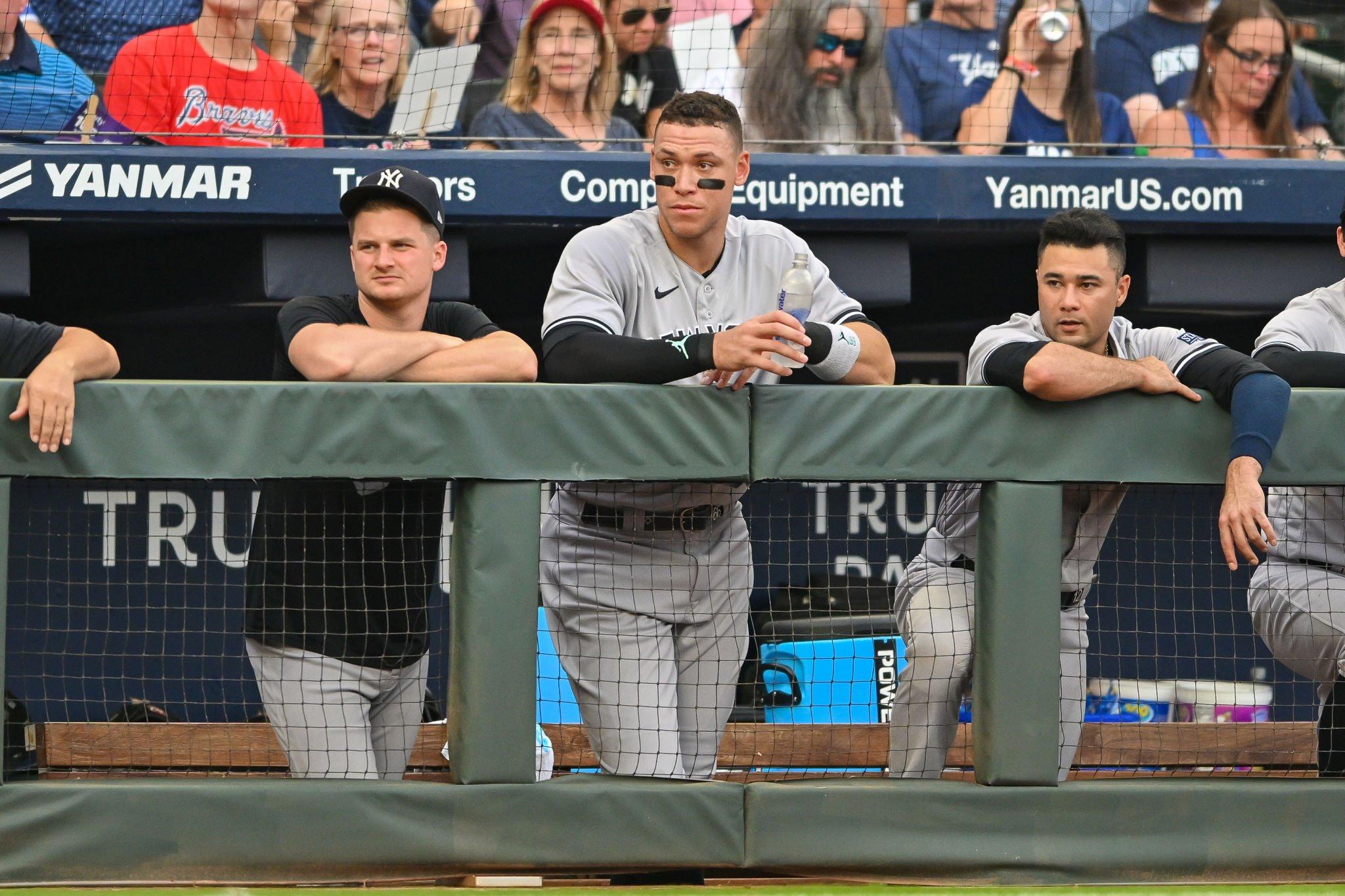
The context sharpens the trend. The Yankees are doing this while Aaron Judge, Giancarlo Stanton and Cody Bellinger remain out, forcing role players and a rookie to manufacture runs.
Starter Will Warren again gave them only four innings, allowing two runs on 90 pitches, the second straight game a Yankees starter did not reach the fifth. That is the warning tucked inside the winning streak.
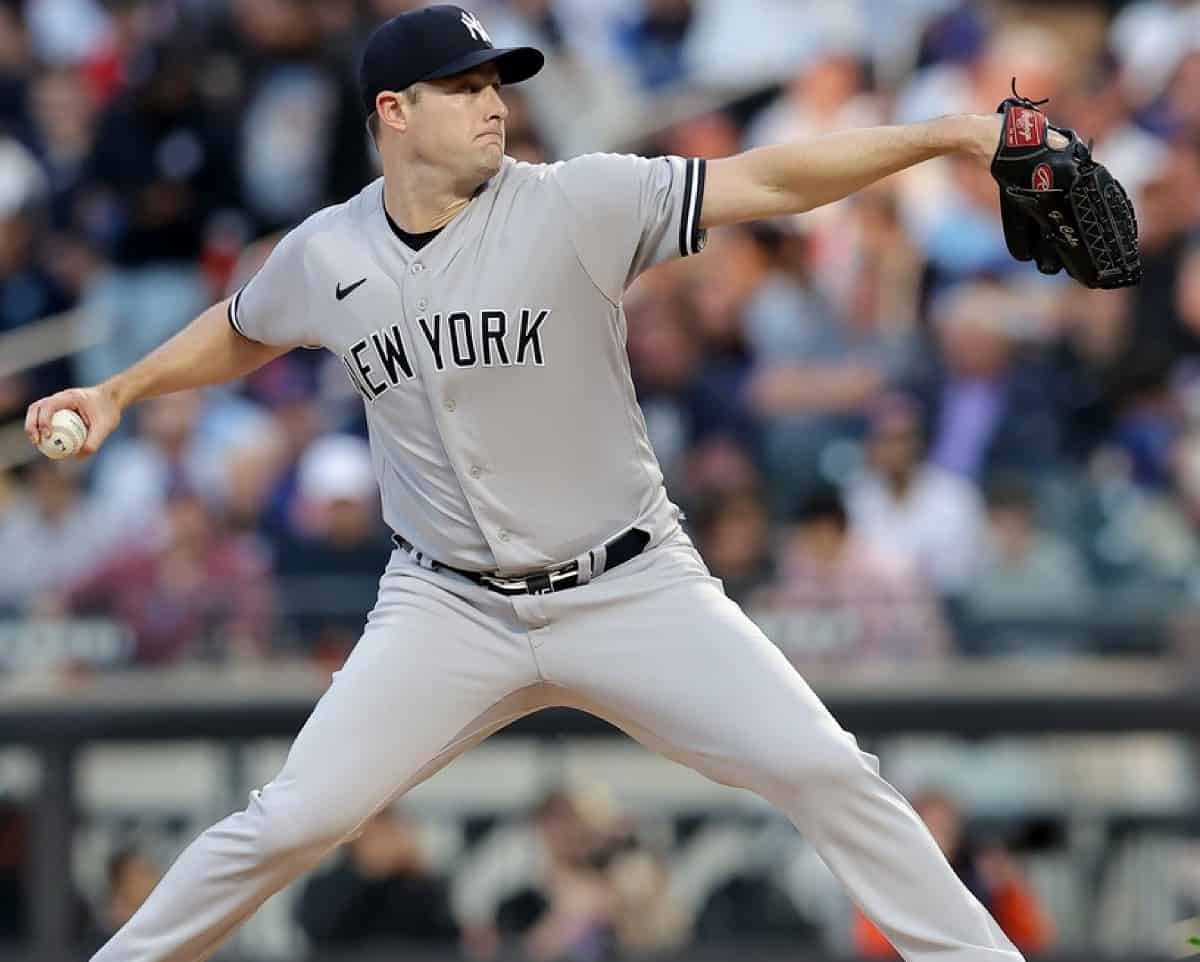
The Yankees improved to 71-55, still second in the AL East and five games behind the first-place Tampa Bay Rays. The Yankees will chase a sweep Thursday, sending Gerrit Cole against Baltimore’s Kyle Bradish. For now, they keep winning late, and they keep finding a different way to do it.
What do you think? Leave your comment below.