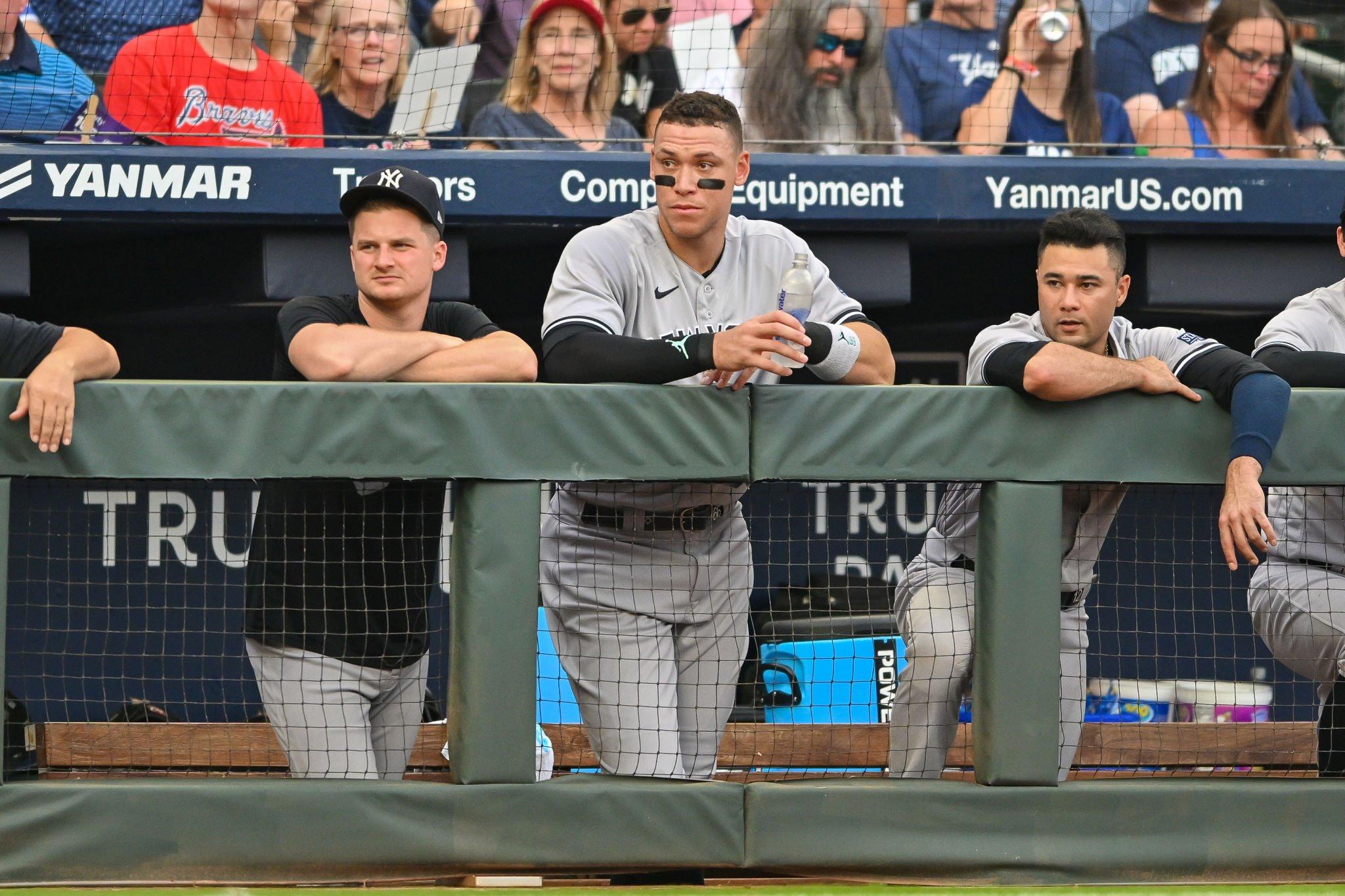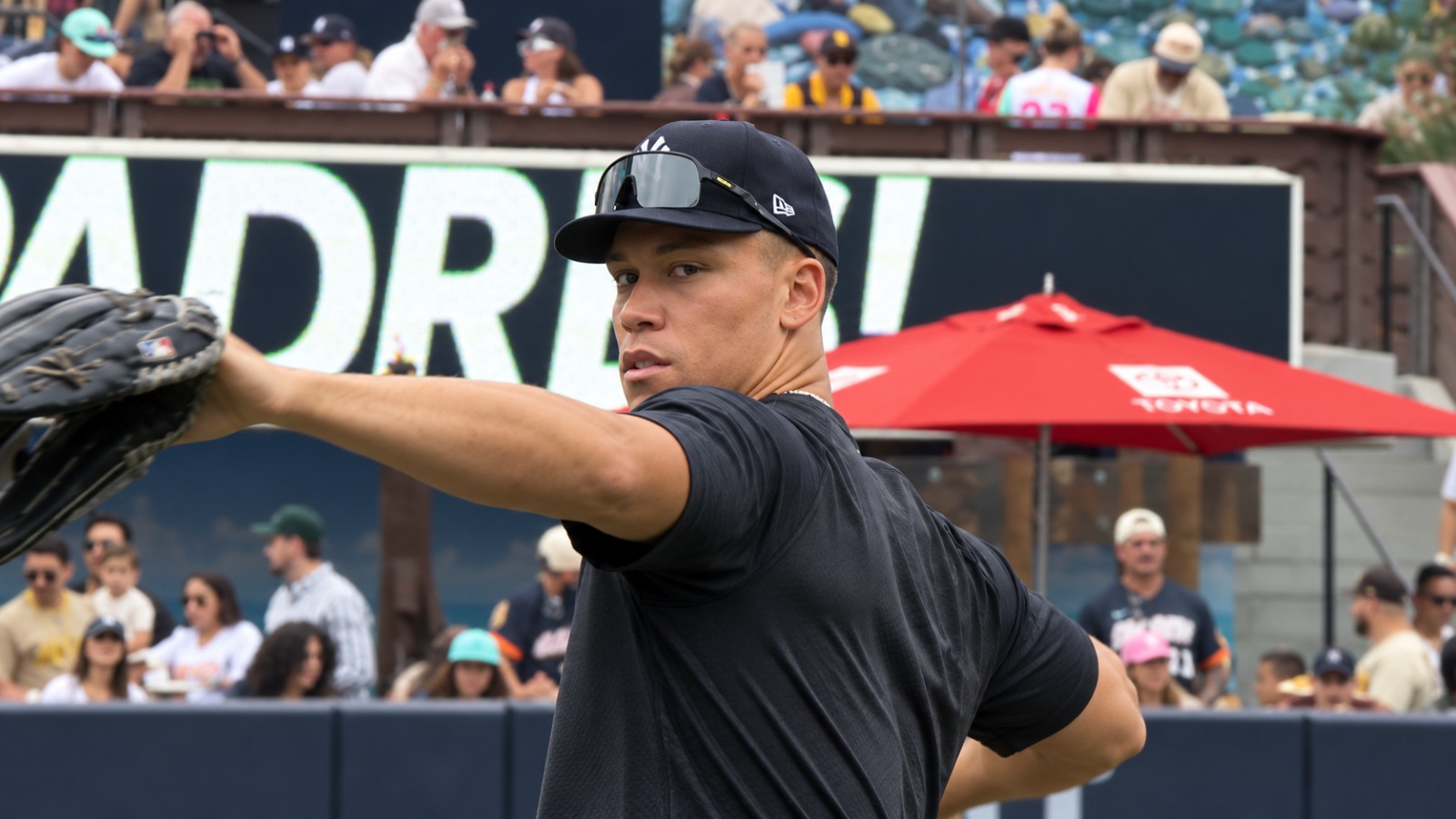
SAN DIEGO — The Yankees left Petco Park on Sunday with another narrow loss, another missed chance to gain ground in the AL East, and the same question hanging over their trip home: How soon can Aaron Judge become an everyday player again?
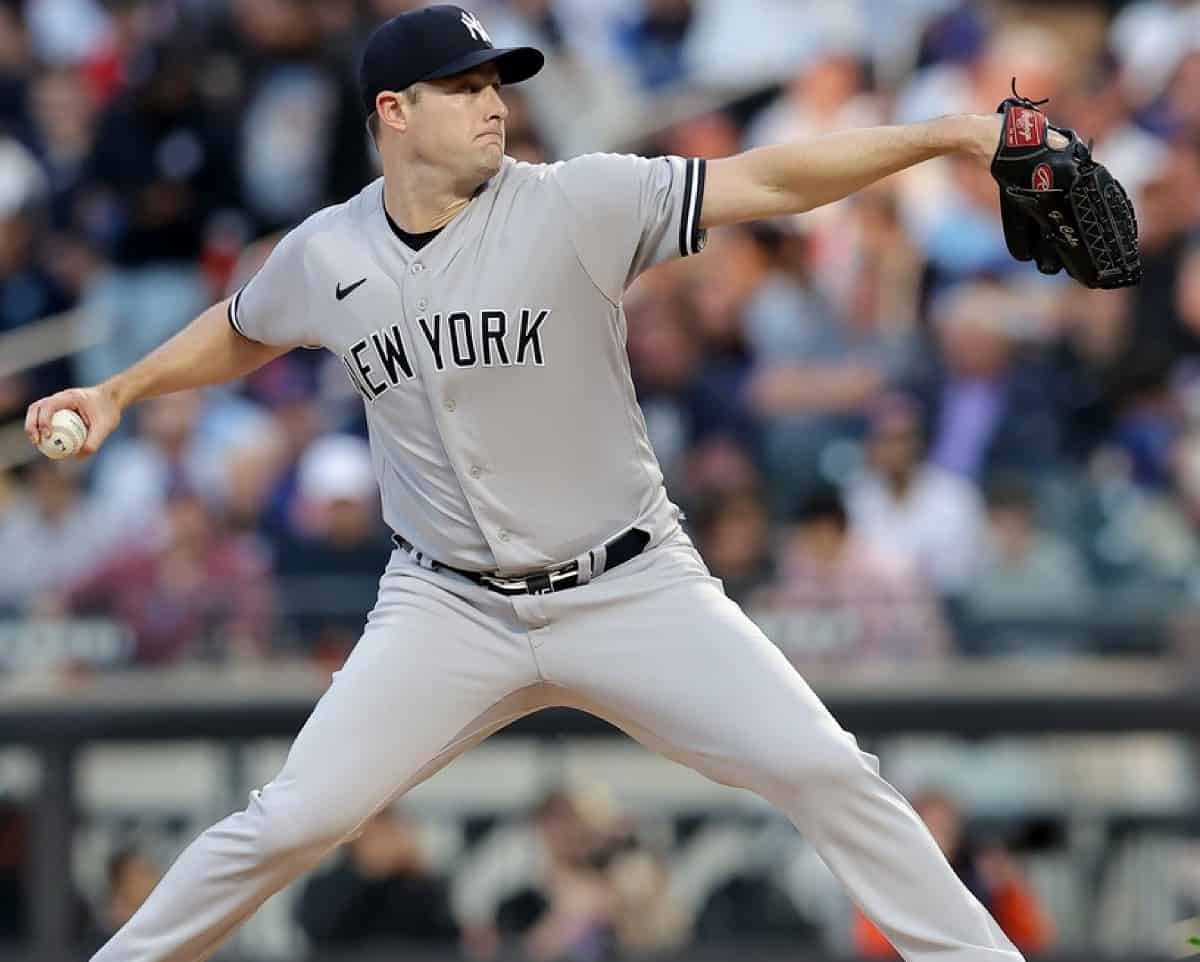
New York fell 4-3 to the Padres after Gerrit Cole surrendered three consecutive home runs to open the game. Luis Campusano added a seventh-inning homer, and the Yankees’ three-run rally in the eighth fell short. The Yankees finished their California trip 3-3.
The loss left the Yankees at 81-62, four games behind Tampa Bay and 2 1/2 ahead of Boston for the American League’s top wild-card spot. Nineteen regular-season games remain.
Judge has not played since May 31 because of a stress fracture in his first right rib. His baseball activities have resumed, but his readiness for full games remains uncertain.
A roster opening does not establish a return date
The Yankees optioned 23-year-old right-hander Elmer Rodríguez to Triple-A Scranton/Wilkes-Barre on Monday, Sept. 7, according to MLB’s official transaction log. The move opened an active-roster spot but did not come with an announcement that Judge would be activated.
Rodríguez was not used during the weekend series in San Diego. The Yankees have not identified the corresponding move. A pitching addition, including Clarke Schmidt, remains a separate possibility.
The Yankees still planned to have Judge face live pitching Monday at Yankee Stadium, but Boone had not identified the pitchers as of Sunday. Judge has indicated he expects to need at least a couple of sessions against live arms before rejoining the lineup.
When asked whether a Tuesday return against the Colorado Rockies was unrealistic, Boone declined to put a firm boundary around the timetable.
“I don’t know. We’ll see,” Boone said.
The answer leaves Tuesday possible without making it the target.
The unanswered question is how much Judge can handle
Judge went on the injured list on June 5, retroactive to June 2, and moved to the 60-day list July 18. He took batting practice with teammates during the West Coast trip. Before Sunday’s finale, he ran the bases and performed defensive work in right field.
Monday’s planned session would be his first time facing live pitching since the injury. The Yankees are attempting to prepare him without a traditional minor league rehab assignment, a route that could restore his bat sooner but leaves less opportunity to rebuild stamina in game conditions.
Ken Rosenthal has identified workload as the central concern. His reporting described a possible approach in which Boone starts Judge with shorter games, checks his fatigue afterward, and adjusts the next day’s assignment rather than immediately committing to nine innings every night.
Rosenthal emphasized that the precise workload remains unknown.
“No one knows just yet what he’ll be able to handle,” Rosenthal said.
Boone has also indicated that Judge must be more selective about risking his body in the outfield. The manager expects him to protect himself, particularly when deciding whether to dive for a ball, according to Gary Phillips of the New York Daily News.
The concern extends beyond swinging without pain. Running, throwing, chasing fly balls, and remaining on his feet for an entire game all contribute to the workload. Practice can test those demands, but competition presents a different challenge.
The roster move has two separate hurdles
Rodríguez’s option creates one form of flexibility, not every form the Yankees will need. MLB’s roster rules distinguish between the active roster and the 40-man roster, a distinction that matters because Judge is on the 60-day injured list.
September clubs carry 28 active players, with no more than 14 pitchers. Optioning Rodríguez removes him from the active group but does not remove him from the 40-man roster. Judge must have room on both rosters when reinstated.
The Yankees can use the opening for a pitcher, preserve it temporarily, or make another move when Judge is ready. The option does not establish their choice.
Schmidt offers a relevant alternative. The right-hander is recovering from Tommy John surgery and pitched two hitless innings for Triple-A on Sunday. He is preparing for a bullpen role, but his activation also depends on the club’s evaluation of his rehabilitation.
Even if Schmidt is the next addition, Judge’s recovery can advance on a separate track.
The remaining schedule raises cost of every missed game
Judge’s absence has covered 84 team games. The Yankees have gone 45-39 during that stretch, a .536 winning percentage, compared with its .566 mark through 143 games overall. The figures show competitive results without establishing how much production his return would add.
MLB’s season statistics show Judge had played 59 games and hit .248/.375/.533 with 17 home runs, 38 RBIs, and a .908 OPS. His bat remains consequential to the postseason race.
Trent Grisham’s hamstring injury adds a direct roster consideration. The Yankees placed him on the 10-day injured list Sept. 5 and recalled Jasson Domínguez. Subsequent testing identified a Grade 2 strain, leaving Grisham’s regular-season return uncertain.
That leaves Boone balancing Judge’s eventual return with the outfield roles of Cody Bellinger, Spencer Jones, and Domínguez. The decision involves defensive coverage as well as the lineup. The Yankees have not announced the corresponding position-player move that would accompany Judge’s activation.
The Yankees opens a six-game homestand Tuesday against Colorado before hosting the Mets from Sept. 11-13. An early return would provide more time to restore Judge’s game rhythm before the postseason, but the club has not committed to that timetable.
The next confirmed step is Monday’s planned live-pitching work in the Bronx. As of the latest supplied update, the pitchers had not been named, no activation date had been announced, and Boone was still unwilling to rule out Tuesday. The roster opening is real. Judge’s clearance and sustainable workload remain the unresolved parts of the comeback.
What do you think? Leave your comment below.