


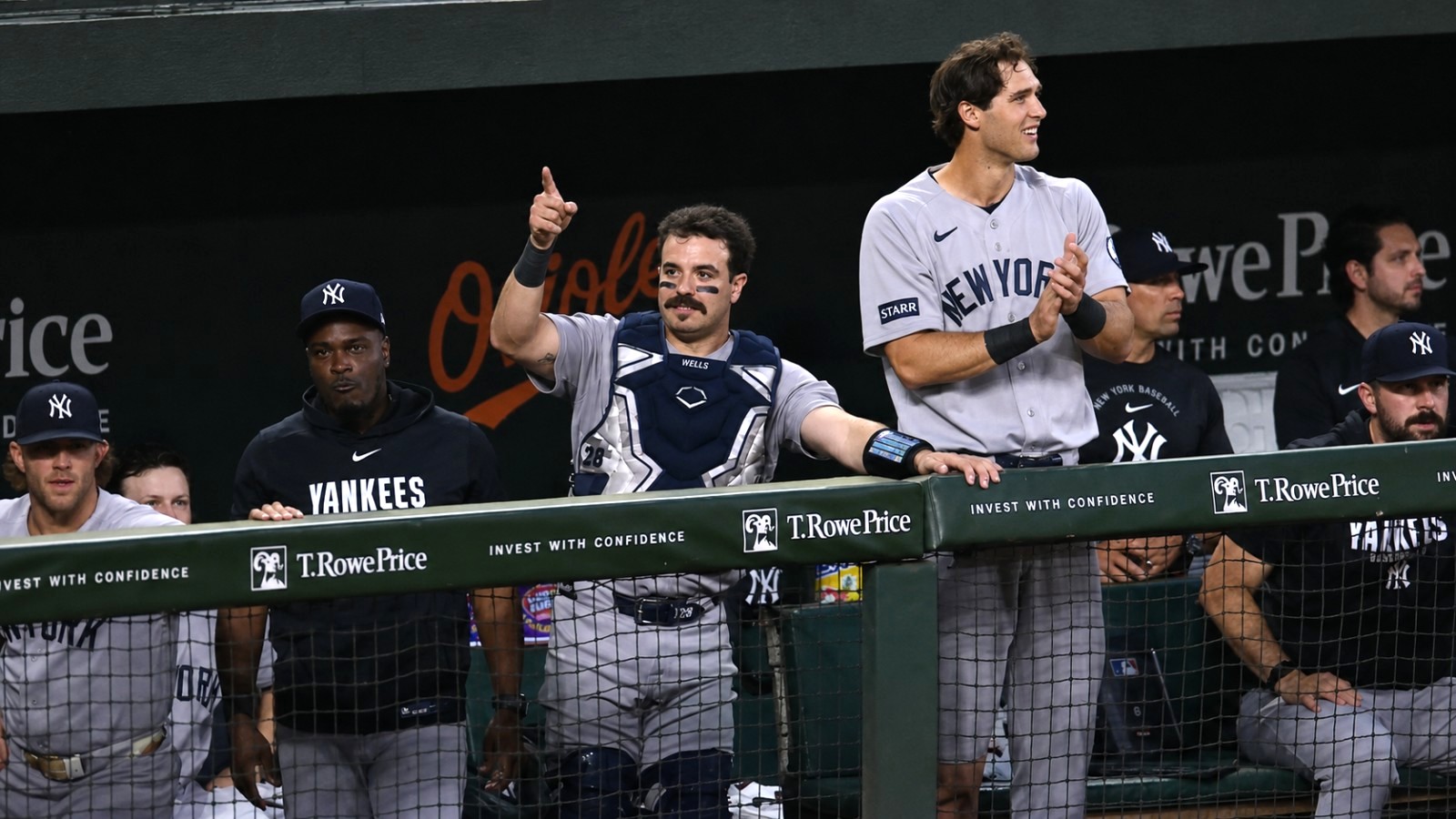
BALTIMORE — The rookie did not need weeks to find an answer. For Spencer Jones, whose grip on regular playing time depends almost entirely on how fast he can solve major league pitching, the timeline has always been the whole story.
A few conversations. A look at recent video. A handful of tweaks made hours before Thursday’s series finale. That was the sequence, and it framed everything that followed for the Yankees at Camden Yards.
The 25-year-old outfielder has spent his climb through the Yankees system fighting one question. His raw power ranks with anyone in the sport. His contact rate has not always let him reach it. Every return to the Bronx has circled back to the same test: can he adjust before the strikeouts pile up.
So the most telling part of his night was not the box score. It was what he did before the game started, and what he said afterward.
Jones collected three hits, drove an opposite-field home run and scored twice as the Yankees beat the Orioles 6-1 on Thursday night. New York completed a three-game sweep and pushed its winning streak to four. He and Luis García Jr. shared the loudest offensive lines on a night the club piled up 11 hits.
The number that stood out was the process behind them. Jones said the Yankees flagged something in pregame work, went back through film from the previous few days and made changes before first pitch. Then he cashed them in.
Jones turns pregame work into immediate results
The adjustment did not push Jones toward pull-side power. His biggest swing went the other way.
With the Yankees already ahead in the sixth, Jones lofted a pitch into the left-field seats for a solo homer, the opposite-field damage that has trailed him through every level. He later lined a single up the middle for his third hit and finished with two runs scored.
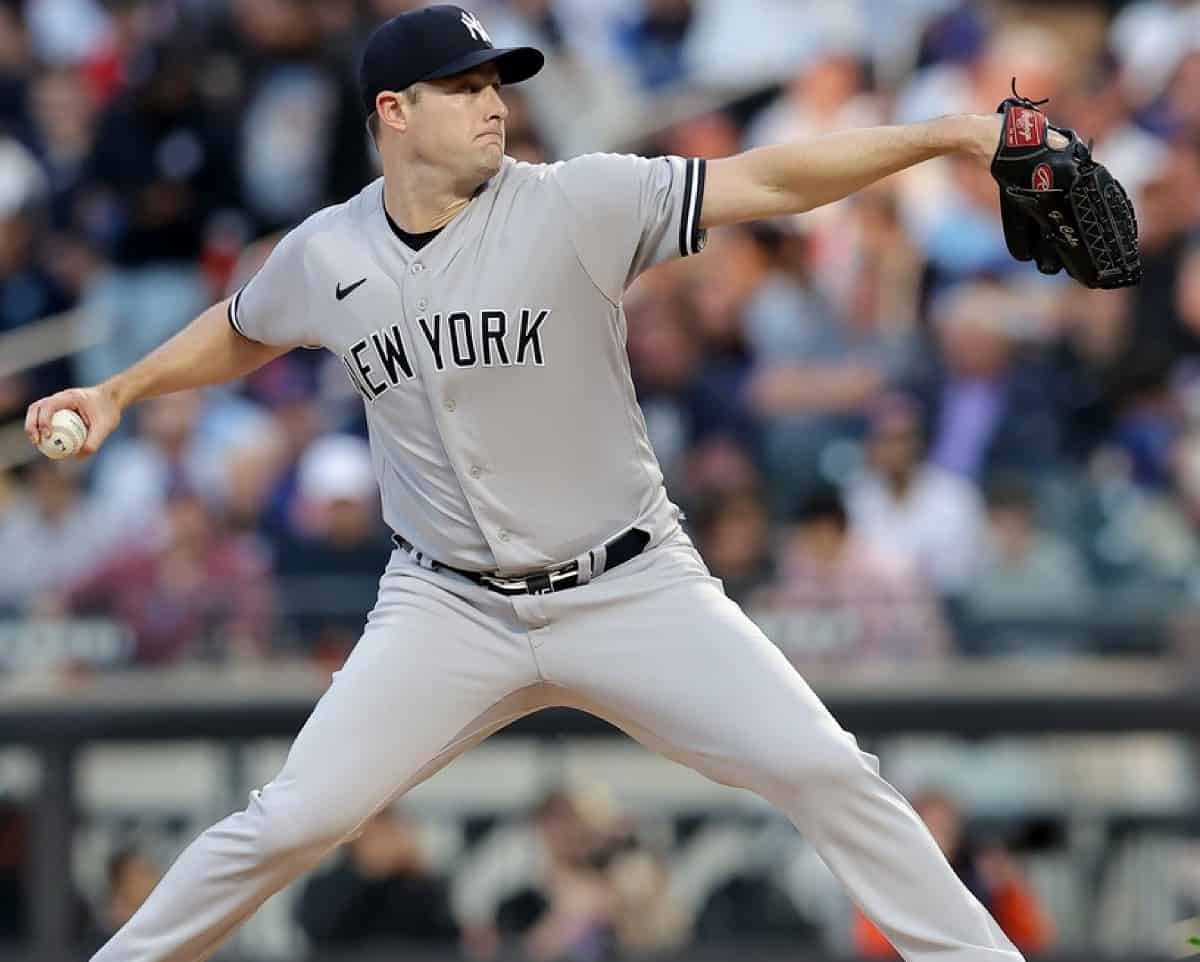
Luis García matched him, homering in the same sixth to help chase Orioles starter Kyle Bradish. Gerrit Cole worked six sharp innings with eight strikeouts, and Ryan Yarbrough added three perfect innings for the save. But the development the Yankees have chased all summer belonged to Jones.
The performance lifted Jones’ 2026 major league line to .220/.314/.407 with five home runs, 18 RBIs and five stolen bases through 47 games. The numbers stay modest. What sits underneath them is more interesting.
Jones explains the changes behind the breakout
Jones did not credit luck or a soft matchup. He pointed to work done long before the lineup card was posted, the quick problem-solving the Yankees have waited to see translate against big league arms.
“Just some conversations I had earlier in the day, kind of looking at some film from the past couple of days, some adjustments we wanted to make,” Jones said. “And then got some pitches to hit, and I’m glad I was able to help the team.”
He has framed his larger improvement in the same plain terms, describing the change as mental before mechanical. The rookie said the biggest shift has been slowing the game down.
“I think I just needed to settle in a little bit. I needed to slow things down,” Jones said. “I think [the] first time around, you try so hard to do a lot of things. And for me, I’m a chill bird. I just need to kind of relax and allow myself to do as I do, and not try to force anything.”
Asked about the offense as a whole, Jones kept the focus on the group.
“I think it’s just confidence,” Jones said. “The boys are playing well, and I think a nice series sweep is a confidence builder for sure, but just consistent at-bats and just keep adding on and knowing that the next guy’s got you, I think we’ve done a really good job.”
A hidden Statcast signal the box score does not show
Since his July 26 recall, his strikeout rate has fallen to roughly 25.5%, a sharp drop from the 42% he posted across his first two stints, according to Statcast. Jones’ expected batted-ball line over that window sits near .282/.374/.635, and his average exit velocity of about 94.2 mph would rank among the hardest-hitting qualified batters in the majors. The contact is catching up to the power.
That gain is the whole ballgame for his profile. A strikeout rate in the mid-20s, paired with elite exit velocity, is the difference between a bench bat and an everyday Yankees outfielder. Thursday was the visible tip of a trend the data has signaled for weeks.
His opposite-field strength is the rare tool that travels. Jones does not need Yankee Stadium’s short right-field porch to do damage, so the club has no reason to rebuild his swing around pulling everything. The homer to left in Baltimore was a live demonstration.
Jones’ timing collides with a crowded Yankees outfield
The audition is arriving at a complicated moment. The Yankees’ outfield is about to get crowded again, and Jones is forcing his way into a conversation that was tilting away from him.
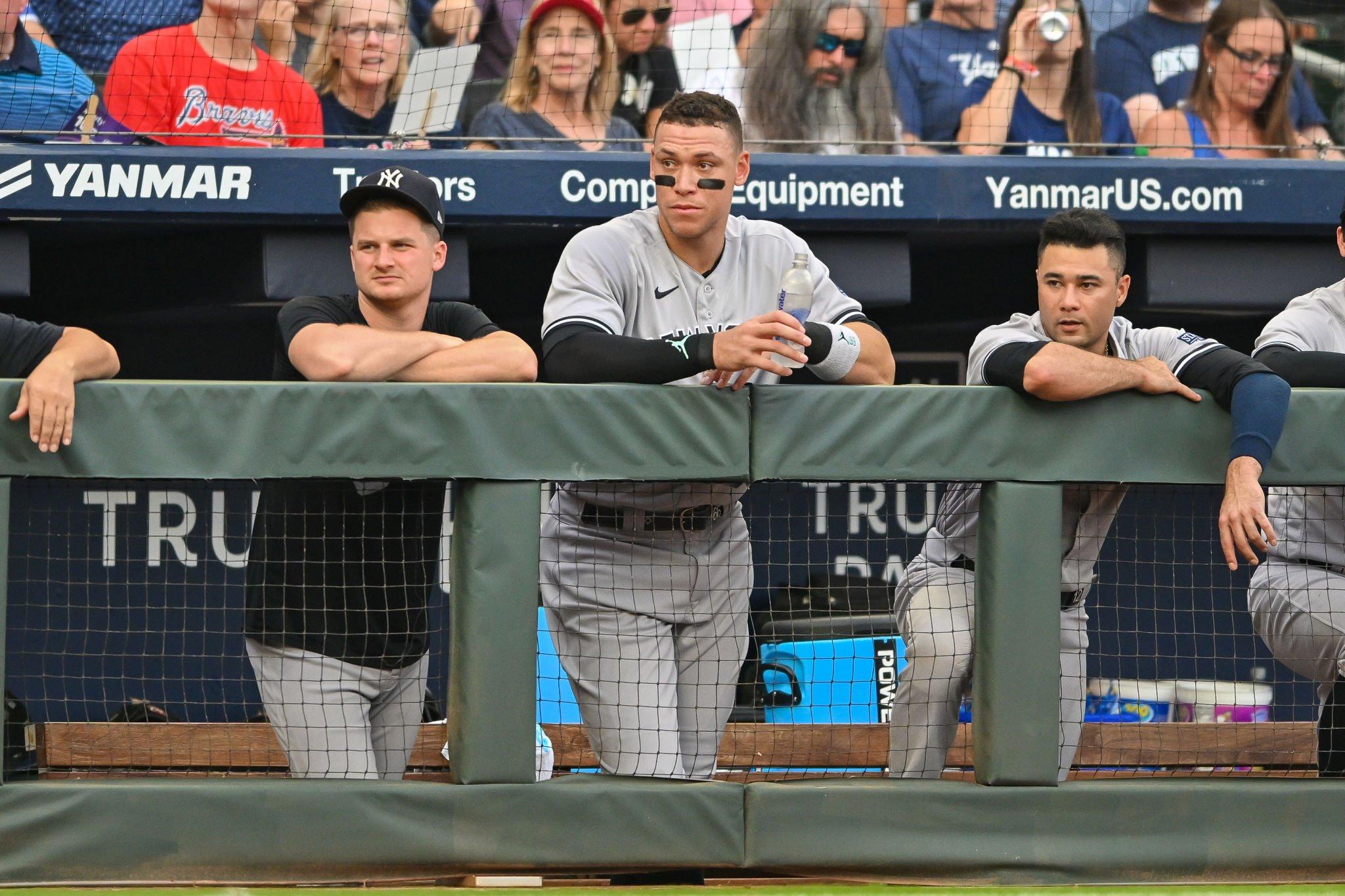
Cody Bellinger and Aaron Judge are both working back toward the lineup, and their returns will squeeze the group of healthy outfielders chasing regular at-bats. Aaron Boone will have to decide who keeps playing. Every three-hit night makes that call harder against Jones.
The Yankees did not promote Jones to be a spare corner outfielder. The appeal was always the ceiling: enormous raw power, real speed and the athleticism to profile in center. One game does not settle that.
The Yankees left Baltimore at 72-55, four games behind first-place Tampa Bay in the AL East and firmly in the postseason race. Jones left with something more personal: proof that an adjustment he mapped out hours before first pitch survived contact with major league pitching, and did so in a game that mattered to the standings.
What do you think? Leave your comment below.















Keep playing him. His confidence grows every day. To send him down would not be productive. He deserves a fair shot!