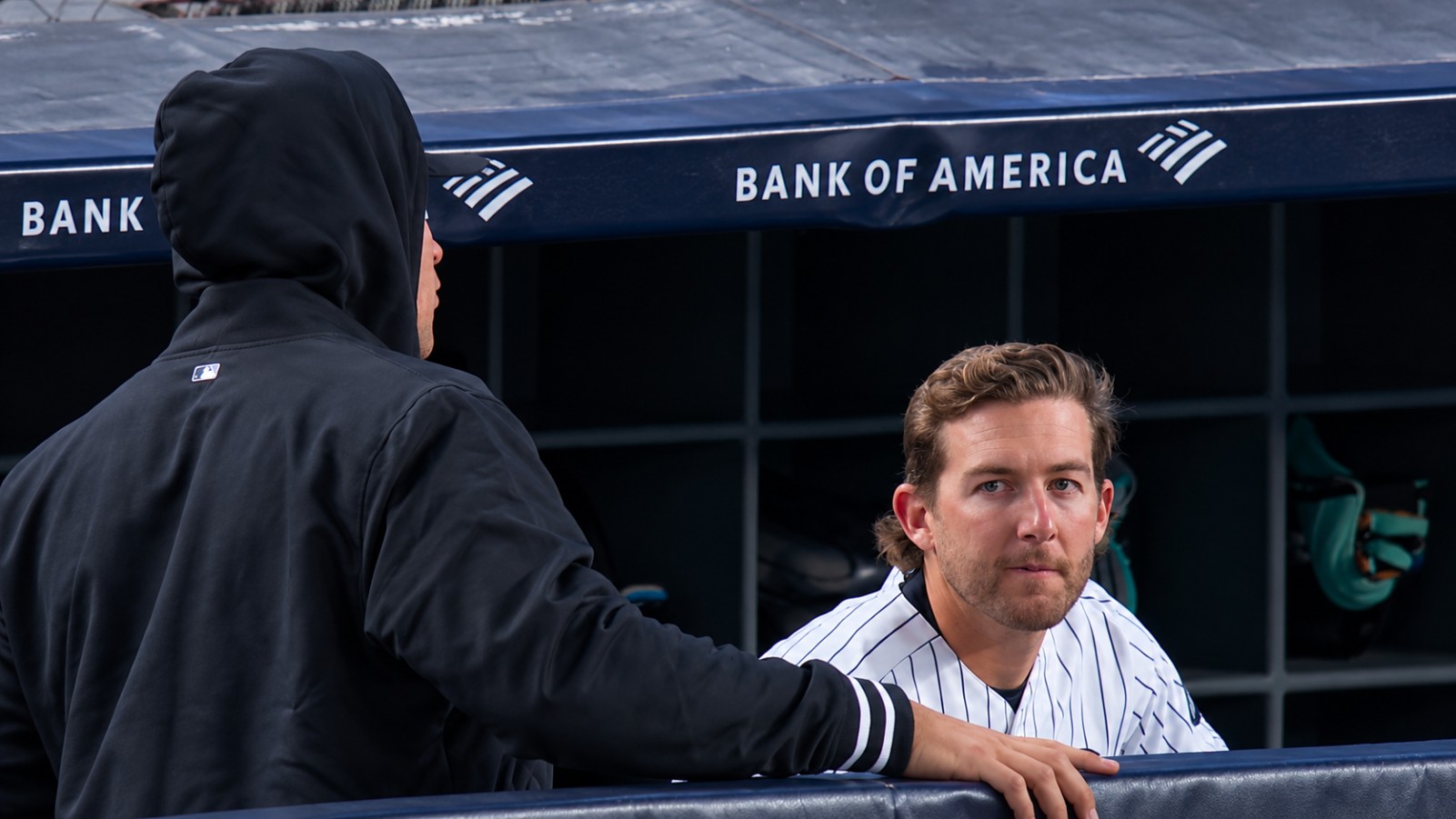
ST. PETERSBURG, Fla. — One overlooked Ryan McMahon trend could change how Yankees handle third base in ALDS.
The Yankees reached the AL Division Series by overwhelming Boston, but the next opponent creates a different kind of strain. Tampa Bay can turn routine-looking contact into an inning that forces an infield to rush, reposition and make throws from uncomfortable angles.
That makes clean defense a central part of New York’s attempt to keep its postseason momentum moving. Boston rarely forced the Yankees into this kind of constant small-ball stress during the two-game Wild Card sweep.
The Rays do not need a three-run homer to change a game. They spent the regular season manufacturing movement, forcing defenders to charge, throw on the run and make decisions at full speed. MLB’s official team statistics show Tampa Bay led the majors with 45 sacrifice bunts. That style already hurt the Yankees in September, when Taylor Walls dropped down a run-scoring bunt single during a 6-1 Rays victory at Yankee Stadium.
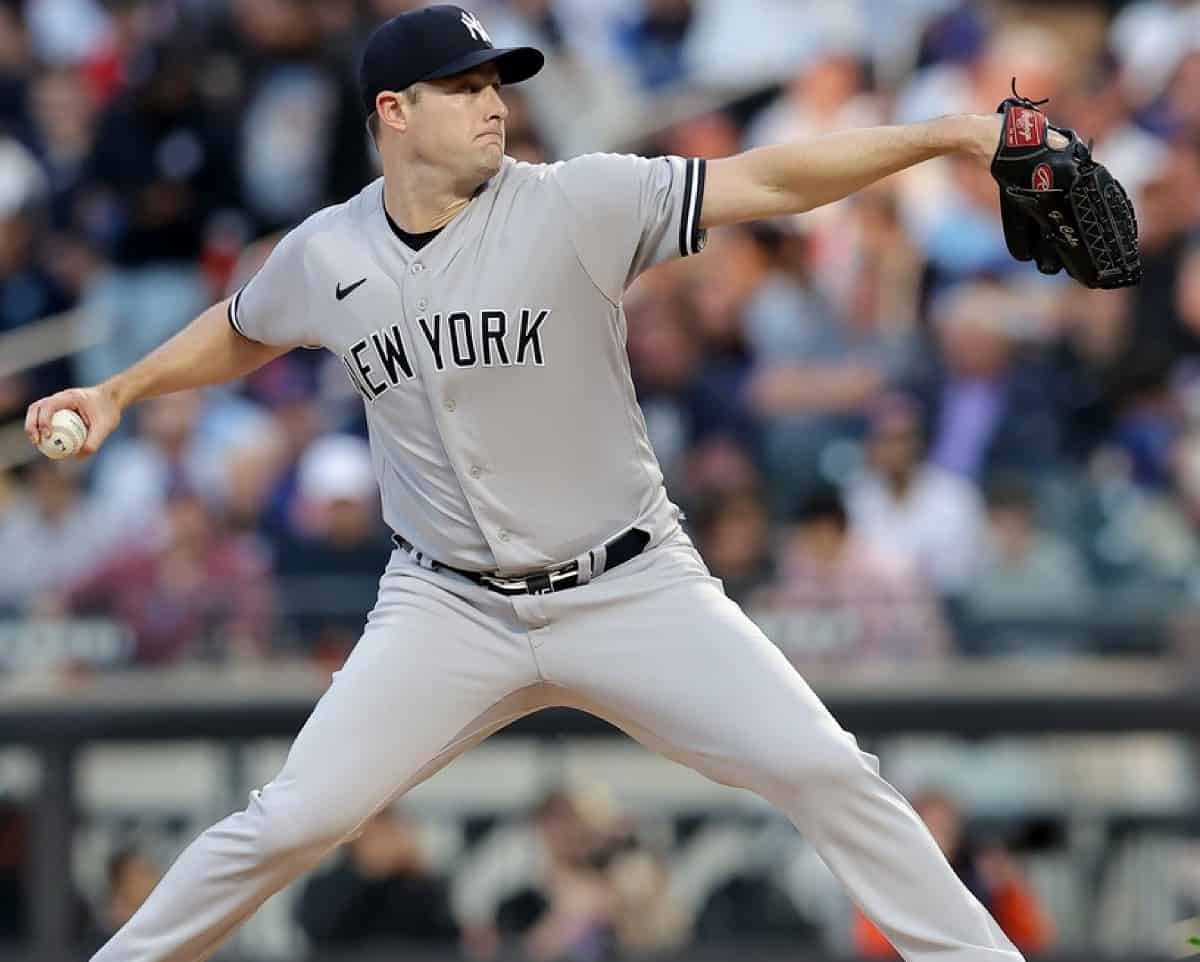
The pressure moves directly toward the left side of the Yankees’ infield when the best-of-five series opens Saturday at 6:30 p.m. ET at Tropicana Field. New York will start Gerrit Cole against Drew Rasmussen. Tampa Bay went 98-64, won the AL East and took seven of 13 regular-season meetings from the Yankees. The Rays also spent the year creating value with speed, ground balls and situational contact rather than waiting only for power.
Ryan McMahon was acquired in 2025 largely because the Yankees wanted stability and high-end defense at third base. He arrived with four straight Gold Glove finalist selections through 2024. In his final full season with Colorado, MLB credited him with seven Outs Above Average and Sports Info Solutions credited him with 10 Defensive Runs Saved. That version of McMahon would fit this matchup almost perfectly, because Tampa Bay’s offense puts a premium on the first clean out.
Yankees face uncomfortable McMahon decision
The problem is that the Yankees did not consistently get that version late in 2026. McMahon’s recent lapses give Aaron Boone reason to consider a more aggressive third-base call.
Of the 10 regular-season bunts directed toward McMahon found that he converted seven into outs. The three failures all came within the final four bunt attempts to his side, although one was driven more by the pitcher’s inability to make the play than McMahon’s reaction.
The most visible breakdown came Sept. 20 in Arizona. With the Yankees protecting a 3-2 lead in the sixth, Geraldo Perdomo bunted toward the left side. McMahon reached the ball near the mound but struggled with the transfer and could not record the out. Arizona loaded the bases and tied the game on a sacrifice fly before winning 5-3.
Two nights later, Walls’ seventh-inning bunt single scored Chandler Simpson and helped turn a 1-0 game into a four-run inning in Tampa Bay’s 6-1 win.
The numbers show a sharp defensive drop
The bunt trouble stands out because McMahon’s reputation was built on preventing extra bases.
Baseball Savant credited him with zero Outs Above Average at third base in 2026. A September-only review of his Fielding Run Value dropped him to minus-2 for the month. That sharply contrasts with his 2024 metrics.
His bat gives Boone little margin to overlook defensive leakage. Baseball-Reference lists McMahon at .213 with a .279 on-base percentage, .357 slugging percentage, 11 homers and 41 RBIs over 124 regular-season games. Statcast shows a .200/.259/.300 September line with one homer.
McMahon still flashed his upside against these Rays on Sept. 23, driving in five runs, including a grand slam, in a 9-2 Yankees victory. He went 1-for-4 with an RBI and a walk in the two-game Wild Card Series sweep of Boston.
Boone already opened the door to alternatives
The Yankees have prepared for the possibility that third base could become matchup-dependent.
Before the postseason, Boone said Anthony Volpe could see time at third and noted Jose Caballero as another option.
“Trying to be as flexible as possible,” Boone said Sept. 23. “There’s a lot of different [roster] iterations and ways we could go in the Wild Card Series.”
Boone then acted on that flexibility. Amed Rosario started at third against left-hander Payton Tolle in Wild Card Game 1, with McMahon entering later. McMahon returned to the starting lineup against right-hander Sonny Gray in Game 2.
Rasmussen is a right-hander, which normally points toward the left-handed-hitting McMahon. Tampa Bay’s bunts, infield contact and speed complicate that platoon math.
Why one extra out could decide the series
The Yankees do not need McMahon to carry the lineup. They need clean outs.
That means charging bunts decisively, controlling slow rollers and completing double-play chances when Tampa Bay gives New York an extra out. Against the MLB leader in sacrifice bunts, one hesitation can extend an inning before the middle of the order gets a clean swing.
A drastic Yankees call would not require removing McMahon from the ALDS roster. It could mean a shorter leash, a late defensive replacement, or using Volpe, Caballero or Rosario at third.
McMahon’s glove once made that discussion unnecessary. His September created it.
The Yankees will finalize their ALDS roster before Game 1. With Tampa Bay built to test every inch of the infield, the choice at third base has become more consequential than McMahon’s spot near the bottom of the lineup suggests.
What do you think? Leave your comment below.