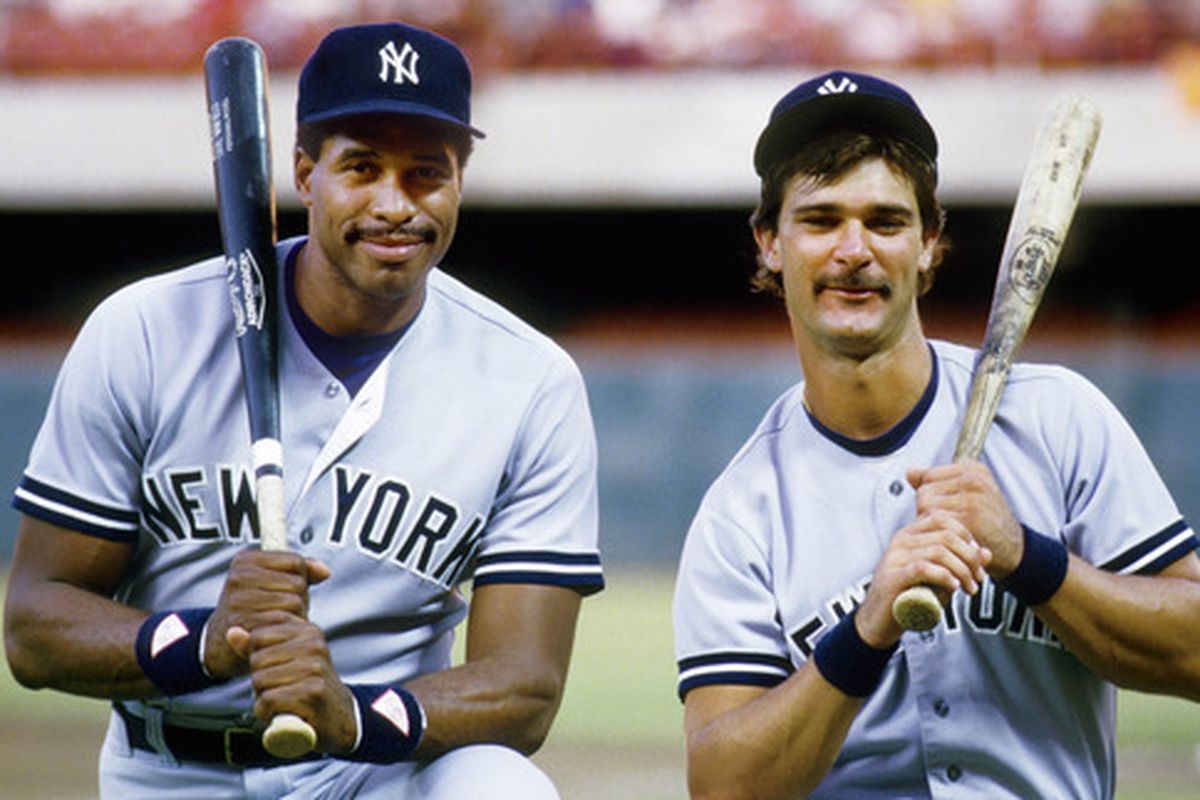
NEW YORK – Dave Winfield arrived in the Bronx with enormous expectations after signing a 10-year, $23 million contract on Dec. 15, 1980, then one of the richest deals in sports. He chose the Yankees despite other interest because he wanted to compete for a championship and expand his charitable work in New York.
In the new interview, Winfield said the relationship with George Steinbrenner deteriorated almost immediately. He recalled being told early in his Yankees tenure that the owner did not intend to pay the full amount the Yankees legend believed the contract required and that he could take the dispute to court if he objected.
That disagreement was only the beginning. Winfield, who also served as a player representative for the union, said he later clashed with Steinbrenner over drug-testing proposals that Winfield believed needed to be collectively bargained rather than imposed on players.
Winfield said Steinbrenner tried to trade him more than once and threatened to make his situation difficult. The Yankees icon’s account is that the combination of those threats and the drug-testing dispute led him to fear he could be set up in some fashion involving drugs.
It is an allegation of suspicion, not a claim that a setup was proven. But it is notable because the documented Winfield-Steinbrenner battle later escalated far beyond a normal contract dispute.
Winfield says contract fight turned personal
Winfield has reopened one of the ugliest chapters in Yankees history with a striking new account of how far he believed his feud with George Steinbrenner could go.
The Hall of Famer, appearing on the Oct. 1 episode of Fat Joe and Jadakiss’ “Joe and Jada” podcast, said his long-running conflict with the late Yankees owner became so bitter that he feared someone around Steinbrenner might try to connect him to drugs.
“I suspected that somebody close to that circle might try to entrap me with something to deal with drugs or something like that,” Winfield said.
Winfield did not say such an attempt actually occurred, and he did not identify anyone he believed tried to carry one out. His comments described a fear he says developed after clashes over his contract, player-union issues and drug testing.
The remarks add a new layer to a feud that was already extraordinary by baseball standards. It eventually involved lawsuits, a gambler hired to provide information about Winfield and Major League Baseball stripping Steinbrenner of day-to-day control of the Yankees in 1990.
The feud eventually brought MLB discipline
Winfield and Steinbrenner also fought over obligations connected to the David M. Winfield Foundation for Children. Contemporary reports said the Yankees legend alleged Steinbrenner failed to make required contributions, while Steinbrenner challenged the foundation’s operations. The litigation was settled out of court in 1989.
Behind the scenes, Steinbrenner became involved with Howard Spira, a self-described gambler who had ties to Winfield’s former agent. MLB’s historical account says Steinbrenner paid Spira $40,000 while seeking information about the Yankees icon.
Commissioner Fay Vincent ruled in July 1990 that Steinbrenner’s conduct was not in the best interests of baseball and forced him to give up control of the Yankees. Steinbrenner was later permitted to return in 1993.
The discipline came months after the Yankees traded Winfield to the California Angels in May 1990. MLB also penalized the Yankees over Steinbrenner’s conduct surrounding that trade, fining the owner and ordering the club to compensate the Angels.
Winfield, meanwhile, kept playing. He spent six more seasons in the majors after leaving New York and won the 1992 World Series with Toronto. He finished his 22-year career with 3,110 hits, 465 home runs and 1,833 RBIs before being elected to the Baseball Hall of Fame in 2001.
New memoir puts Yankees years back under microscope
The timing of Winfield’s comments is not accidental. His new memoir, “Touching All the Bases: A Story of Power, Purpose, and Surviving the Bronx,” was released Sept. 15 and devotes major attention to his decade-long battle with Steinbrenner.
The publisher describes the book as an account of Winfield’s career, philanthropy, labor involvement and the pressure he faced in New York. A recent Kirkus review notes that the memoir draws on court records and phone transcripts while revisiting the feud.
During the podcast, the Yankees legend made clear that the conflict changed the way he viewed his workplace. He said he came to New York because he wanted to play for the Yankees, only to reach a point where he felt the organization was acting against him.
More than three decades after the feud ended, the broad outline is already part of Yankees history. What is new is Winfield’s description of how threatening the environment felt from inside it.
His drug-entrapment fear cannot be independently established from the interview. But against the documented backdrop of lawsuits, private investigators, a gambler and MLB discipline, Winfield’s latest account gives one of the most notorious owner-player feuds in baseball another unsettling chapter.