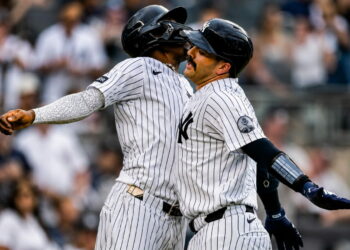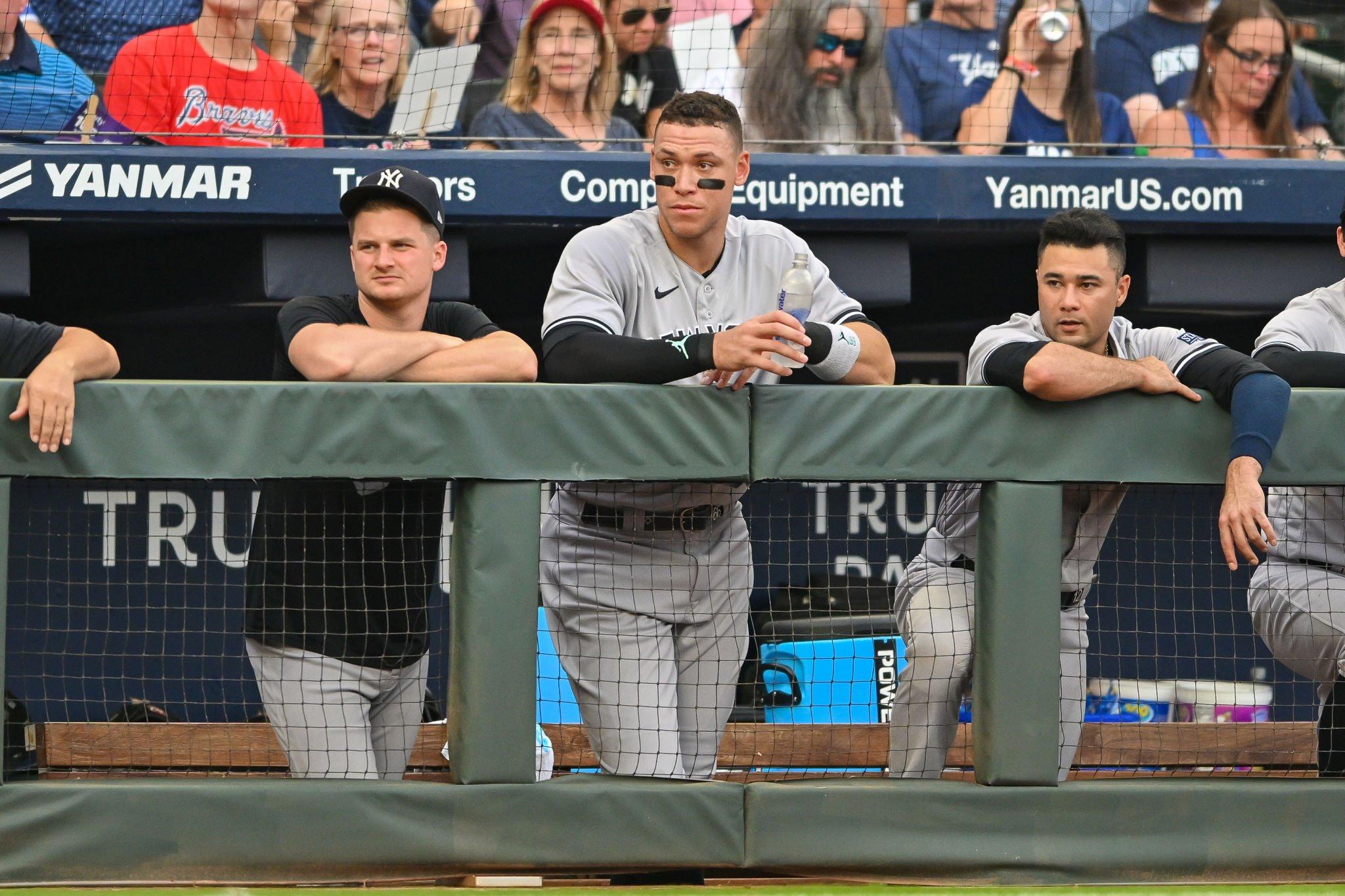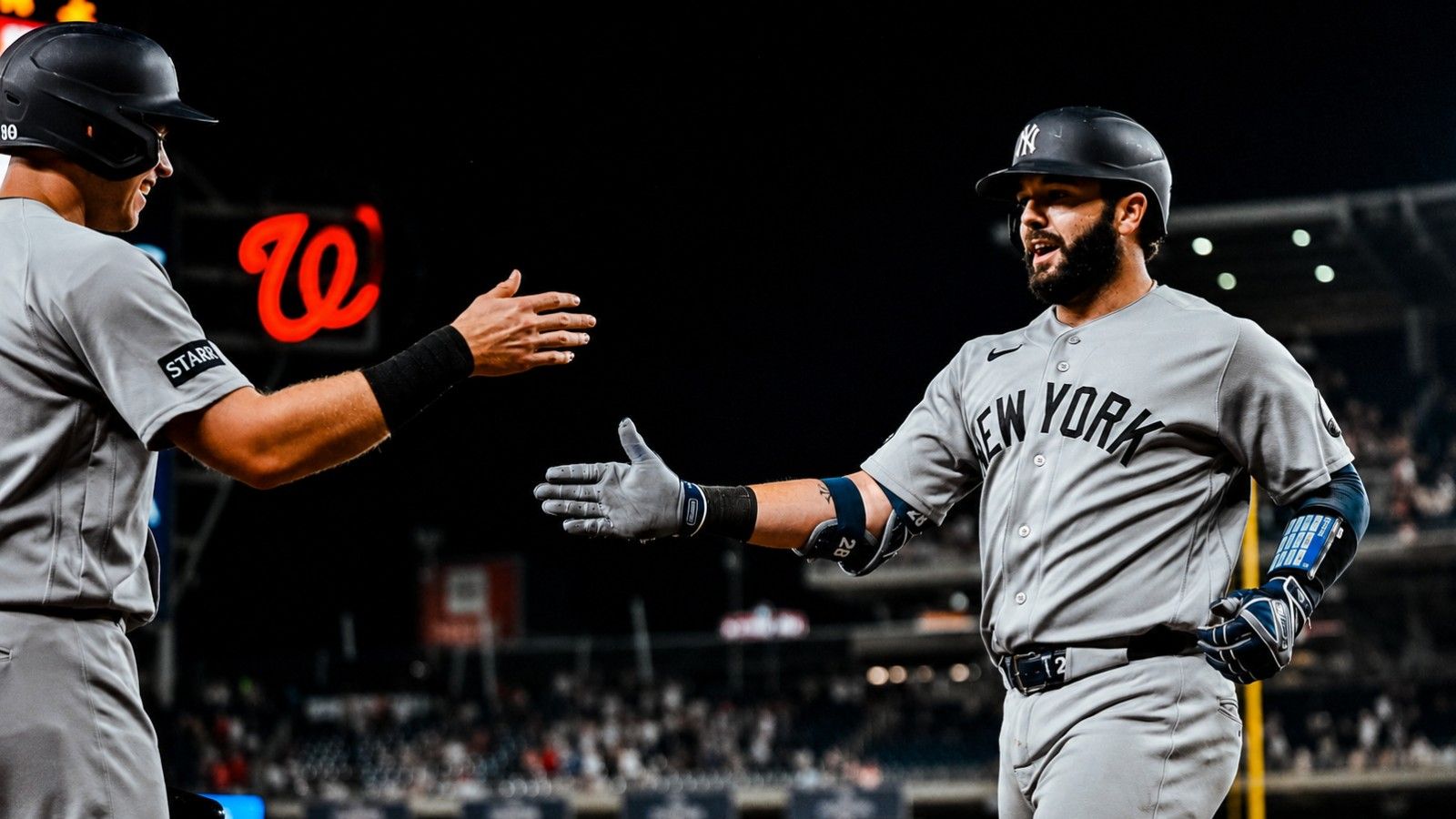
NEW YORK — Austin Wells hit a home run Thursday night. Then he hit another one Friday. For the Yankees catcher who had gone deep once since May 22, two swings in two nights felt like a revival.
They were also, for the Yankees front office, something more useful. A reason, however thin, to do nothing at all.
The timing is hard to ignore. With the Aug. 3 trade deadline closing in and catcher standing as the worst position on a contender, Wells picked the exact moment to remind everyone of the power that once made him a 21-homer threat. A hot weekend does not erase a historically bad season. But it can soften the pressure to fix one.
And softening that pressure may be precisely what Yankees GM Brian Cashman wants.
A number that borders on historic
Strip away two good nights and the season underneath is grim. Wells entered the weekend hitting around .150 with four home runs, 10 RBIs and an OPS under .500 across roughly 190 plate appearances. His 42 wRC+ ranked among the four worst marks in all of baseball.
The franchise context is worse. No Yankees player has posted a lower OPS in a season of at least 175 at-bats since Jim Mason‘s .445 mark in 1976. Only a handful of players in team history have carried an average that low through 185 plate appearances, a list that includes Joey Gallo and Dick Howser.
The position as a whole has been a sinkhole. Yankees catchers entered the week ranked last among all 30 teams in wRC+ and dead last in slugging, dragging an already injured Yankees lineup shorter every night.
A hole that deep on a contender, weeks from the deadline, normally guarantees a move. The Yankees have chased far smaller upgrades in far calmer summers than this one.
Cashman’s own words point away from a fix
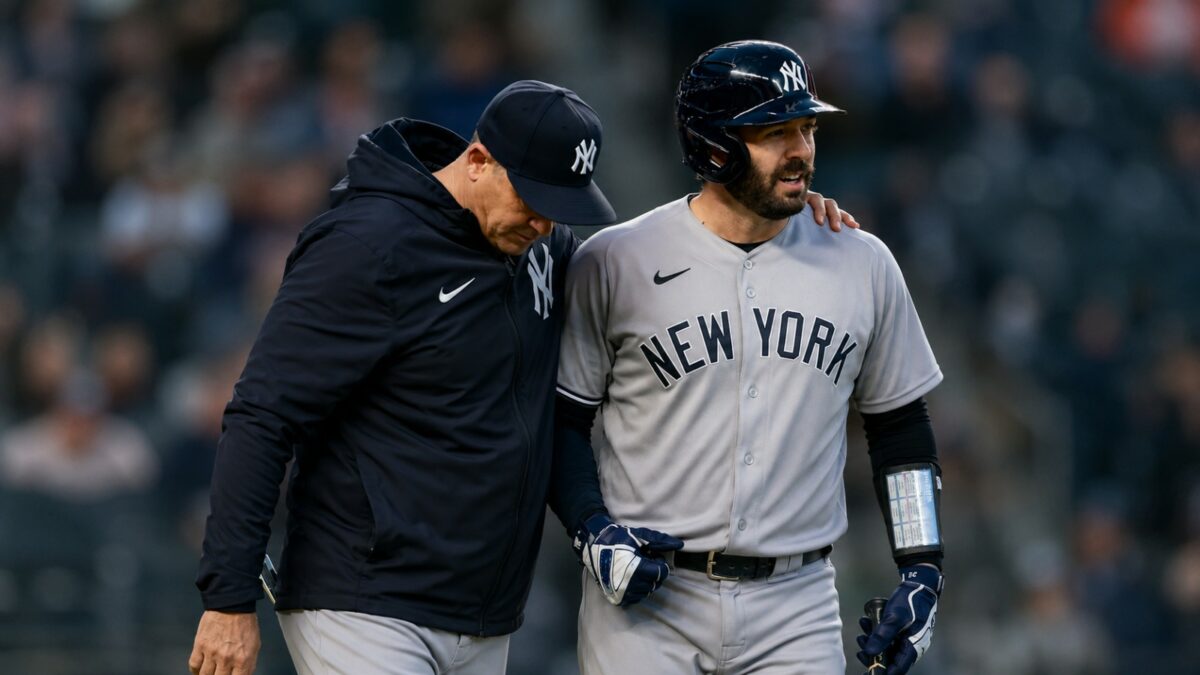
The general manager has not hidden the problem. Speaking before the series finale in Tampa Bay, Cashman acknowledged the catching situation in plain language, a rare public admission of a specific weakness.
“Brian Cashman called his catching situation an issue, clearly,” The Athletic’s Chris Kirschner reported.
Naming a problem is not the same as promising to solve it. Reporting from MLB.com’s Mark Feinsand this month laid out a front office expected to attack the bullpen aggressively while treating the catching spot differently.
Feinsand framed the split between the two needs directly.
“Catcher is a different situation,” Feinsand wrote.
The reasoning is rooted in the pitching staff. Cashman has long been reluctant to install a new everyday catcher midseason, wary of disrupting a group of arms that has largely carried the Yankees. Wells grades as an above-average framer, the pitchers credit him for their comfort, and the club has thinned its own depth by trading away catching prospects in recent years.
Why the surge is convenient, not conclusive
This is where Wells’ weekend becomes more than a feel-good story for the Yankees. A front office already inclined to stand pat now has visible evidence to point to, a catcher supposedly turning a corner at the ideal moment.
The evidence does not hold up to weight. Two home runs across two games, one a ninth-inning insurance shot in the Yankees’ 5-3 win over Washington, do not reverse a .150 average or a bottom-of-baseball wRC+. They are a sample small enough to vanish by next week.
The market makes the temptation to wait even greater. The Yankees’ clearest target has been Minnesota’s Ryan Jeffers, viewed as the best right-handed-hitting catcher likely to be available. Jeffers was hitting .295 with a .949 OPS before a hamate fracture ended his first half, and he has begun a rehab assignment. But the Twins hover near a wild-card spot and may not sell, and behind Jeffers the board thins out fast.
A reluctant buyer with limited options and a suddenly warm incumbent has every excuse to talk himself out of a deal. Wells just handed the Yankees that excuse.
The cost of talking yourself out of it
Publicly, the Yankees keep backing their catcher. Manager Aaron Boone has pointed repeatedly to what the staff sees beneath the slash line, a hitter getting into better positions even when the results lag.
“If he does that, the results will follow,” Boone said of Wells’ improving swing positions.
Patience is defensible when a team can afford it. This Yankees team, four games back in the AL East, may not. New York has spent weeks near the bottom of the majors in scoring, has played without Aaron Judge and Giancarlo Stanton, and cannot easily punt offense from another lineup spot. Every night Wells hits at the bottom of the order, the margin shrinks.
There is a defense of the plan. If the pitching staff truly values Wells behind the plate, and if the framing and game-calling are worth the offensive drought, then protecting that chemistry has real value in October. That case is legitimate, and Cashman has made it before.
The risk is mistaking a convenient moment for a real solution. The Yankees see their catching problem clearly, by their own admission. The question is whether two July home runs let them pretend it has fixed itself.
Nothing is settled. Cashman has a long history of landing the players his club gets linked to, and a Wells relapse could force a rethink before the window closes. But as of now, the pieces line up in one direction, and Austin Wells just made the easy choice easier.
What do you think? Leave your comment below.