ST. PETERSBURG, Fla. — Derek Jeter has already said it and now all eyes are on Cam Schlittler.
The Yankees walked out of Tropicana Field on Saturday night carrying the kind of frustration that can make a short postseason series feel even shorter.
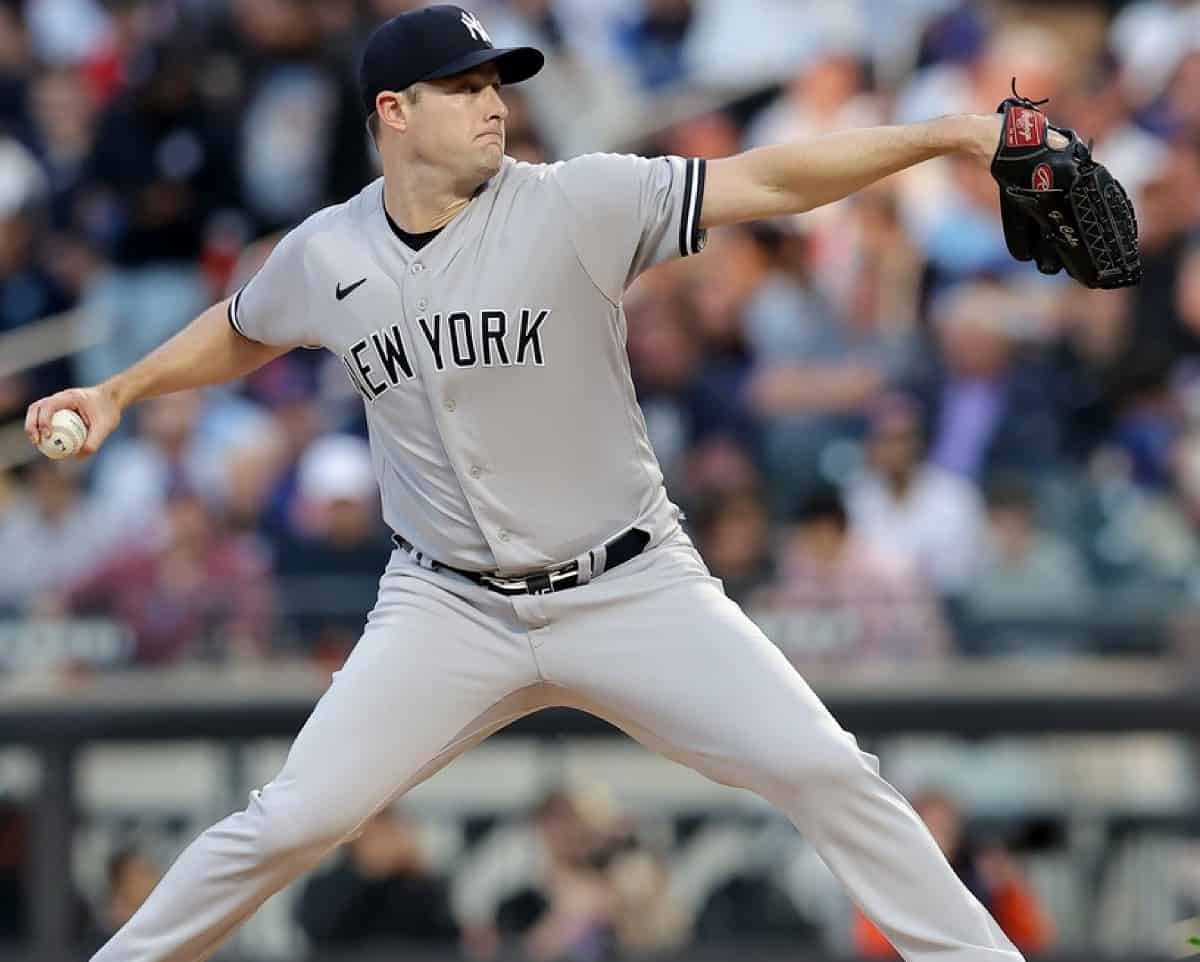
Drew Rasmussen earned the win after holding the Yankees to one hit in a 1-0 Game 1 loss. Austin Wells broke up the no-hit bid with a two-out double in the eighth, then was thrown out trying to reach third. Jonathan Aranda’s third-inning homer handed Gerrit Cole the loss, and Bryan Baker earned the save.
The Yankees need a response Monday before the series shifts to Yankee Stadium. They also need length after Cole worked five innings and the bullpen covered three. An 0-2 hole would leave the Yankees needing three straight wins to advance.
Cam Schlittler gets that assignment. The 25-year-old has one extra day of rest after throwing a career-high 117 pitches over 6 1/3 scoreless innings in the Yankees’ 9-0 Wild Card win over Boston. He allowed two hits, struck out 10 and walked one.
Schlittler has reason to trust his stuff against Tampa Bay. In three starts, he went 1-1 with a 2.81 ERA, striking out 21 and walking three over 16 innings. The Rays managed one extra-base hit, an April triple, and did not record a barrel.
There is a catch. The Rays can force Schlittler to work. He needed 85 pitches for five innings April 12 and 70 for three Sept. 24, although the Yankees intentionally shortened that final tuneup. Tampa Bay’s contact approach can make successful innings expensive.
Recovery also matters after the longest outing of Schlittler’s career. The extra day between starts gave the Yankees ace more room to reset after the 117-pitch effort against Boston.
“I felt like I recovered good,” Schlittler said. “Luckily, I’ve got the extra day of rest this time through. That kind of takes care of most of it.”
That is why Monday is not simply about overpowering Tampa Bay. The Yankees want Schlittler to combine a proven Rays formula with the pitch he unveiled far more aggressively against Boston.
Schlittler already knows the Rays formula
His best Rays start came July 6 at Tropicana Field: eight innings, one run, eight strikeouts and no walks. In April, he allowed three earned runs over five innings despite eight strikeouts.
The contrast explains the formula: limit free bases, avoid deep counts and accept quick contact instead of chasing every strikeout.
Schlittler said Tampa Bay can change innings by pressuring both pitchers and defenders.
“They’ve got a great lineup, some power guys at the top, some scrappy guys at the bottom,” Schlittler said. “Their brand of baseball is putting the ball in play and putting pressure on the defense.”
His goal is not to turn every two-strike count into a 100 mph showcase.
“I feel like if I need to get one, I’m going to be able to do that,” Schlittler said. “But I’m always willing to sacrifice strikeouts for weak contact quick outs.”
Road dominance gives Yankees another reason to trust him
Schlittler posted a 1.16 ERA across 17 road starts, and the Yankees now send him back to a park where he already delivered eight innings of one-run ball this summer.
The environment looked different Saturday. Tropicana Field drew 40,542, its largest crowd in 16 years, and the Rays’ support was loud enough for Aaron Boone to single it out Sunday.
Before the series, Schlittler suggested the Yankees might not feel like a true road team.
“I wouldn’t say there’s really too much of an away crowd here,” Schlittler said. “I expect there to be a lot of Yankees fans. In some ways, you are, to an extent, kind of playing at home. I feel like the guys are excited to have that atmosphere here.”
Game 1 changed that backdrop. Game 2 will test whether Schlittler’s road dominance travels with him when the building sounds more like Tampa Bay than the Bronx.
The new weapon changes Schlittler’s Game 2 mix
Schlittler leaned on his curveball more than ever against Boston. He threw 32, or 27% of his pitches, and generated eight whiffs after using it as a secondary offering for much of the year.
The timing matters because Tampa Bay posted a .262 wOBA against curveballs, fifth-lowest in MLB.
It gives Schlittler another way to attack a lineup familiar with his upper-zone velocity and gives the Yankees an answer when Tampa Bay extends at-bats with foul balls.
The usage spike was unprecedented: Schlittler had never thrown more than 20 curveballs in a major league game before Boston.
His 32 curves produced eight whiffs on 16 swings and four strikeouts. Tampa Bay also finished at minus-5 batting run value against right-handed curveballs thrown 85 mph or harder.
Efficiency matters as much as velocity
The Yankees do not need another 117 pitches. They need Schlittler to keep the Rays from turning every inning into a bullpen countdown.
His three starts produced three walks and one extra-base hit across 16 innings. The concern in two games was efficiency, not damage.
That makes the curveball more than an October wrinkle. If it shortens at-bats and keeps hitters from sitting on elevated velocity, it can attack the one part of this matchup that has troubled Schlittler.
The Yankees offense still must answer for its one-hit opener, but Game 2 starts with a pitcher who has already suppressed Tampa Bay. Now Schlittler has another weapon and a clear formula for keeping the ALDS from returning to the Bronx with no margin left.
What do you think? Leave your comment below.