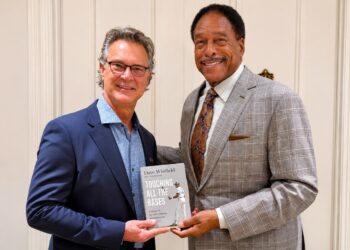
PHILADELPHIA — A dispute over six restaurants brought protesters, police and counterprotesters into the streets of Center City on Sunday. By the end of the confrontation, three people had been arrested and two officers had suffered minor injuries. Reggie Jackson, the Yankees Mr. October, was at pain over the episode.
The demonstration followed days of anger over a planned boycott of businesses with Jewish or Israeli ties. Supporters crowded some of those same restaurants, forming lines that turned an attempted economic protest into a highly visible public dispute.
Jackson’s connection to the Philadelphia area made the dispute personal, while his experience with discrimination gave his response a dimension beyond the latest political argument.
For Yankees fans, the intervention was a reminder that one of the franchise’s defining championship figures has remained willing to confront issues far outside baseball. The strongest language arrived before Sunday’s protests began, underscoring the Yankees legend’s personal stake.
Reggie Jackson challenges Philadelphia leaders
Hall of Famer Reggie Jackson, who grew up in Wyncote near Philadelphia, denounced what he described as antisemitism in his hometown area in a November 7 post on X. He questioned why political leaders had not responded more forcefully and urged people to speak against hate.
Jackson ended his appeal with a line that captured the urgency of his response.
“What the hell? We have to speak up.” Jackson wrote.
The demonstration that drew the Yankees great into the debate was organized around a boycott promoted by Philly Bike On Your Left. A circulating flyer identified Mac Mart, K’Far Cafe, Huda, Goldie, Dizengoff and Schlesinger’s Deli. Organizers said the protest challenged businesses they associated with support for Israel and expressed solidarity with Palestinians.
The group rejected accusations that it was motivated by antisemitism. It also said the timing of the ride, held on the eve of the anniversary of the 1938 Kristallnacht attacks on Jewish communities, was not intentional.
A warning rooted in Jackson’s own experience
Jackson’s statement connected the Philadelphia dispute to the segregation he encountered as a young Black baseball player in the 1960s. He described being confronted by racist signs and being excluded from public accommodations.
His recollection put the present-day controversy in the context of discrimination he has spoken about publicly, including during Major League Baseball’s 2024 tribute to the Negro Leagues at Rickwood Field in Birmingham, Alabama.
Explaining why the boycott troubled him, Jackson said the memory of those experiences still shaped his response.
“I remember what that hatred looked and felt like. We cannot accept it in any form, directed at any people.” Jackson wrote.
In a November 5 announcement, the Pennsylvania Human Relations Commission condemned targeting Jewish-owned businesses and warned that public campaigns based on owners’ perceived religion or ancestry can intimidate entire communities. At the same time, the commission affirmed the right to peaceful political protest and boycotts.
Philadelphia Mayor Cherelle Parker also criticized singling out businesses because their owners are Jewish. Those official reactions predated the demonstrations that unfolded Sunday.
Why the Yankees icon’s involvement matters
Jackson’s public standing was built during a five-season run with the Yankees from 1977 through 1981. He hit 144 home runs for New York and helped deliver consecutive World Series titles in 1977 and 1978.
His three home runs against the Los Angeles Dodgers in Game 6 of the 1977 World Series made him an enduring symbol of performing under pressure. The Yankees retired his No. 44, and he entered the Baseball Hall of Fame in 1993. His Yankees legacy still makes his comments national news.
That history gives his latest statement a particular resonance for the Yankees audience. Jackson is not commenting on a clubhouse argument or an MLB decision. He is using the public stature he earned in pinstripes to challenge civic leaders in the region where he grew up.
A distinctive feature of this episode is the timeline. Jackson spoke out Saturday, before the Sunday street confrontation. His warning was directed at the targeting and rhetoric surrounding the planned boycott, rather than at arrests that had not yet occurred.
Boycott draws crowds, arrests and another planned ride
Sunday’s protest and counterprotest brought crowds near Rittenhouse Square. Long lines formed outside K’Far and Goldie as customers arrived to support the targeted restaurants. Police separated opposing groups, although confrontations developed.
Local television reports said three people were arrested. Two officers sustained minor injuries. Those developments added public-safety consequences to a debate that had begun with a social media flyer.
Organizers reiterated that their boycott concerned the businesses’ alleged support for Israel, not their owners’ faith. They said another ride was planned for the following Sunday, leaving the dispute active after Jackson’s call for public opposition to hatred.
The Yankees legend’s November 7 statement remains one of the most recognizable sports voices to enter the argument, as Philadelphia officials and residents confront the fallout from the weekend demonstrations.
What do you think? Leave your comment below.