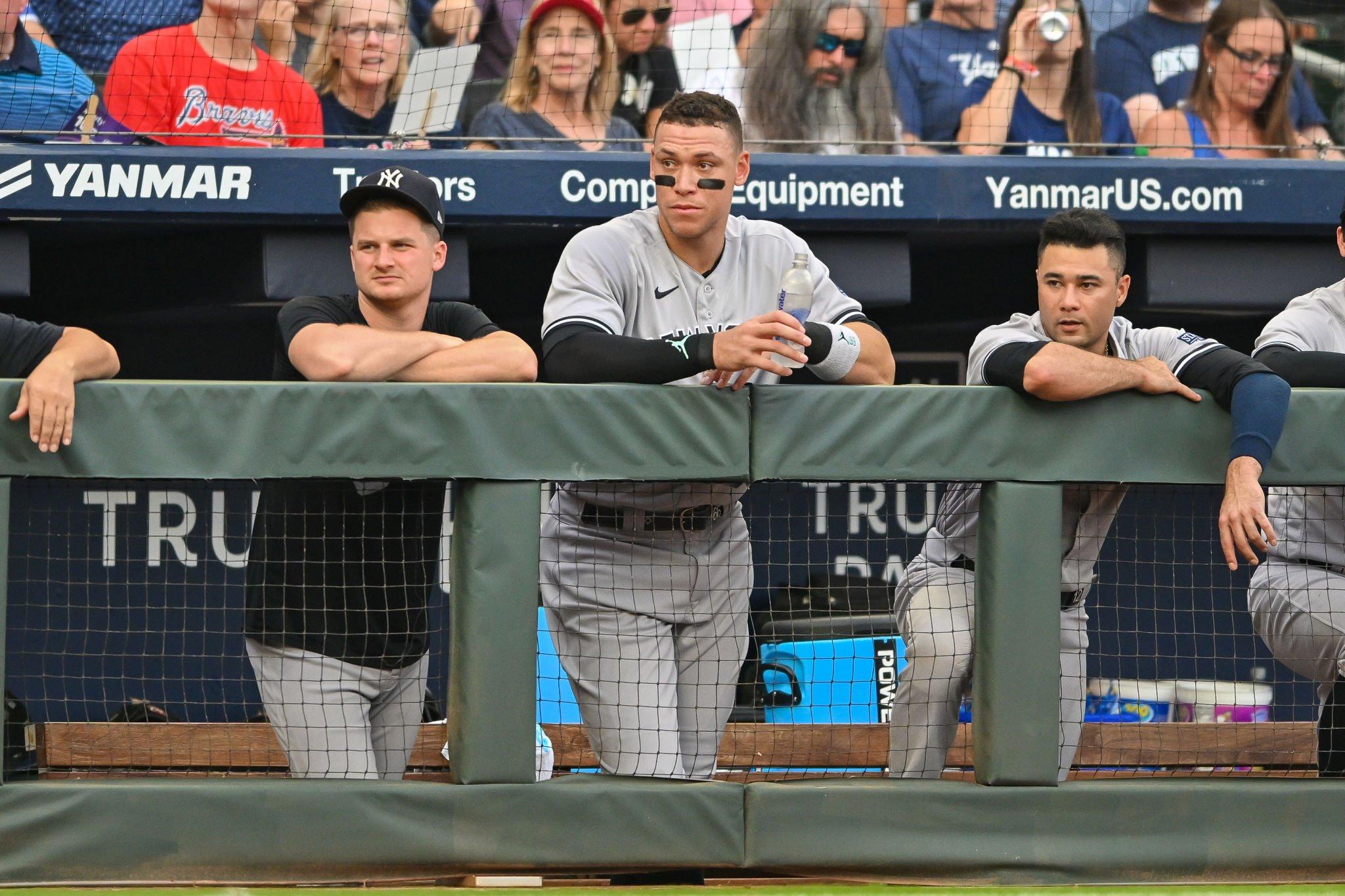
NEW YORK — For three days, the Yankees chased clarity and found only more worry. Aaron Judge sat out, the team called the problem a bone bruise near his right rib cage, and the pain kept surfacing in his right shoulder whenever he swung. Then the diagnosis arrived, and it came with a frightening medical phrase that needs unpacking.
Judge has a stress fracture of the first rib on his right side. It is not thoracic outlet syndrome, and it is not a thoracic spine stress fracture, even though all three terms sound alarmingly alike. Understanding the difference explains both the danger the Yankees dodged and the one they still face.
The diagnosis the Yankees could finally name
Late Thursday, the Yankees announced the result of days of testing. Judge has a first-rib stress fracture on his right side. The team said he will rest, limit activity, and be reimaged in roughly four to six weeks to measure the healing before deciding the next step. The Yankees added that he is expected to return at some point this season.
Manager Aaron Boone did not soften the blow to the lineup. With the Yankees entering Friday at 37-25, a half-game behind the Rays in the American League East, losing Judge for much of the summer is a serious hit.
“He’s the best hitter in the sport, so you know there’s a void there,” Boone said. “But we also have really good players that can pick it up, too. I love the way we played the game today, but you’re not replacing Aaron Judge.”
What a first-rib stress fracture actually is
A first-rib stress fracture is a small crack caused by repetitive stress rather than a single violent blow. It is an overuse injury, the kind most often seen in overhead athletes like baseball players, pitchers and tennis players. The cause is essentially a tug-of-war inside the body.
The first rib sits just beneath the collarbone, surrounded by powerful muscles. The scalene muscles pull upward while the serratus anterior pulls downward. During repetitive, forceful overhead motion, those muscles yank the bone in opposite directions. When they fatigue or strengthen faster than the bone can adapt, the constant cyclical stress causes micro-tears and weakens a naturally thin section of the rib known as the subclavian groove.
The symptoms explain why this took the Yankees days to pin down. A first-rib stress fracture does not always feel like rib pain. It can show up as a dull ache or sharp pain under the shoulder blade, behind the collarbone, or at the base of the neck. It tends to worsen with deep breaths, coughing, or lifting the arms overhead. For a hitter like Judge, that overlap made a rib injury feel like a shoulder problem.
Why this is not thoracic outlet syndrome
Here is the phrase that had Yankees fans bracing for the worst before the diagnosis: thoracic outlet syndrome, or TOS. It is not the same as a first-rib stress fracture, and the distinction is enormous.
Thoracic outlet syndrome is a compression problem, not a broken bone. Doctors use the term when nerves or blood vessels get squeezed in the narrow space between the collarbone and the first rib. It can be neurogenic, venous, or arterial, and its symptoms include pain, numbness, tingling, weakness, swelling, or color changes in the arm or hand. Judge’s diagnosis is different. His is a stress injury to the bone itself.
That difference mattered deeply for the Yankees. A TOS diagnosis could have meant a far more complicated recovery, sometimes involving surgery to relieve the pressure. The concern was not imaginary. The Yankees sent Judge to Dr. Gregory Pearl in Dallas, a specialist in thoracic outlet syndrome, before the fracture was confirmed.
How the two conditions can be linked
The two problems are related without being identical, which is part of what makes the first rib so delicate. The first rib features a groove for the subclavian artery, its weakest point and the most common fracture site.
If a first-rib fracture is left untreated or heals improperly, it can form excess callus tissue that crowds that tight space and compresses the nearby nerves and blood vessels. That is one pathway that can eventually lead to thoracic outlet syndrome. In other words, a first-rib stress fracture can be a possible cause of TOS down the road, but it is not the same diagnosis. For now, the Yankees announced the fracture, not the syndrome.
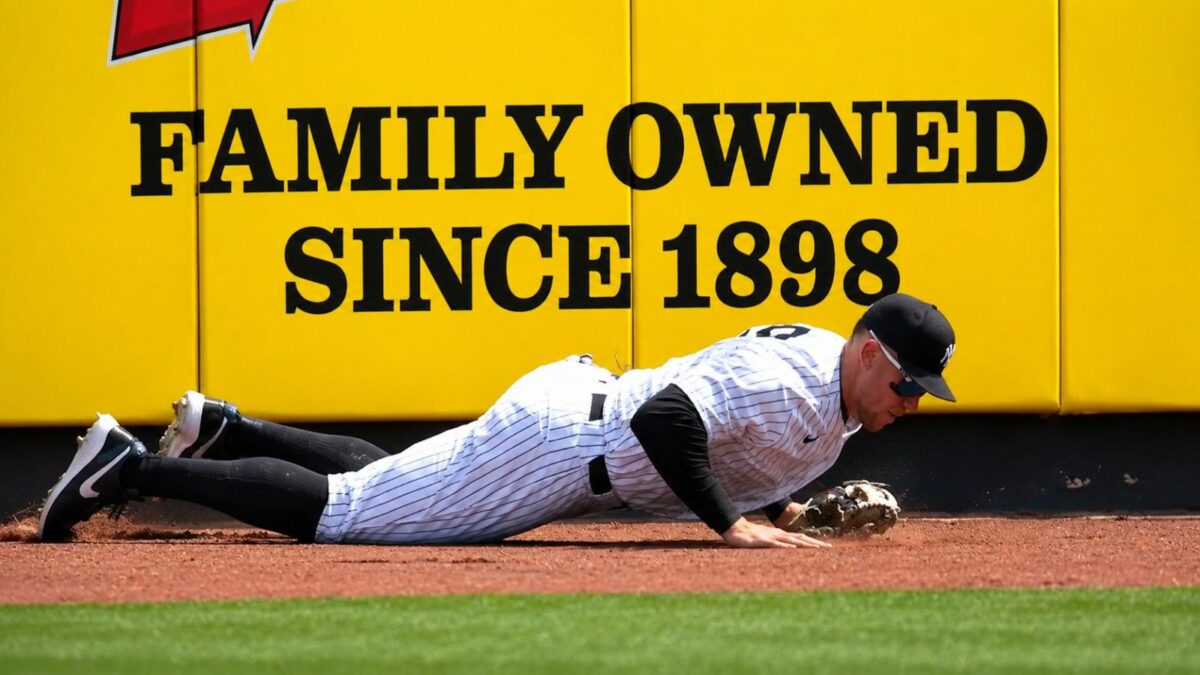
Judge’s history adds weight to the caution. In March 2020, he was diagnosed with a stress fracture in that same first right rib, an injury tied to a partially collapsed lung and traced back to a diving play. At that time, Boone acknowledged that surgery to remove the rib had been discussed, a procedure similar to those used in TOS cases.
How it differs from a thoracic stress fracture
The term thoracic stress fracture muddies the picture too, because it sounds so close to what Judge has. In medical usage, that phrase usually refers to a stress injury in the thoracic spine, the upper and middle back made up of 12 vertebrae, T1 through T12.
Judge’s injury is far more specific. The first rib sits at the very top of the chest, tucked under the collarbone and beside the structures involved in thoracic outlet syndrome. So while his fracture is in the thoracic region in the broadest sense, it is not a spine injury and it is not automatically TOS. Thoracic rib stress fractures in ribs two through 12 also differ, typically appearing on the sides or back, linked to twisting forces, breathing mechanics, or forceful arm motion, and carrying a much lower risk of nerve or vessel entrapment.
Why the timeline still stings for the Yankees
For the Yankees, the wording is as important as the diagnosis. The team did not say Judge will be back in four to six weeks. It said he will be reimaged in four to six weeks. That is a checkpoint, not a return date, and he would still need time to build back up afterward.
Treatment for a first-rib stress fracture is almost always conservative. It starts with rest, immobilization of the upper extremity, and pain control, followed by physical therapy to strengthen the shoulder and chest once the bone heals. That healing typically takes four to eight weeks, but delayed healing can happen, which is why the Yankees are reading this one scan at a time.
That leaves the Yankees with a single clear medical answer and one hard baseball truth. A first-rib stress fracture, thoracic outlet syndrome, and a thoracic stress fracture are not interchangeable labels. The Yankees avoided the worst-case diagnosis. But they still lost the center of their lineup, the reigning MVP, for a significant stretch of the season.
What do you think? Leave your comment below.