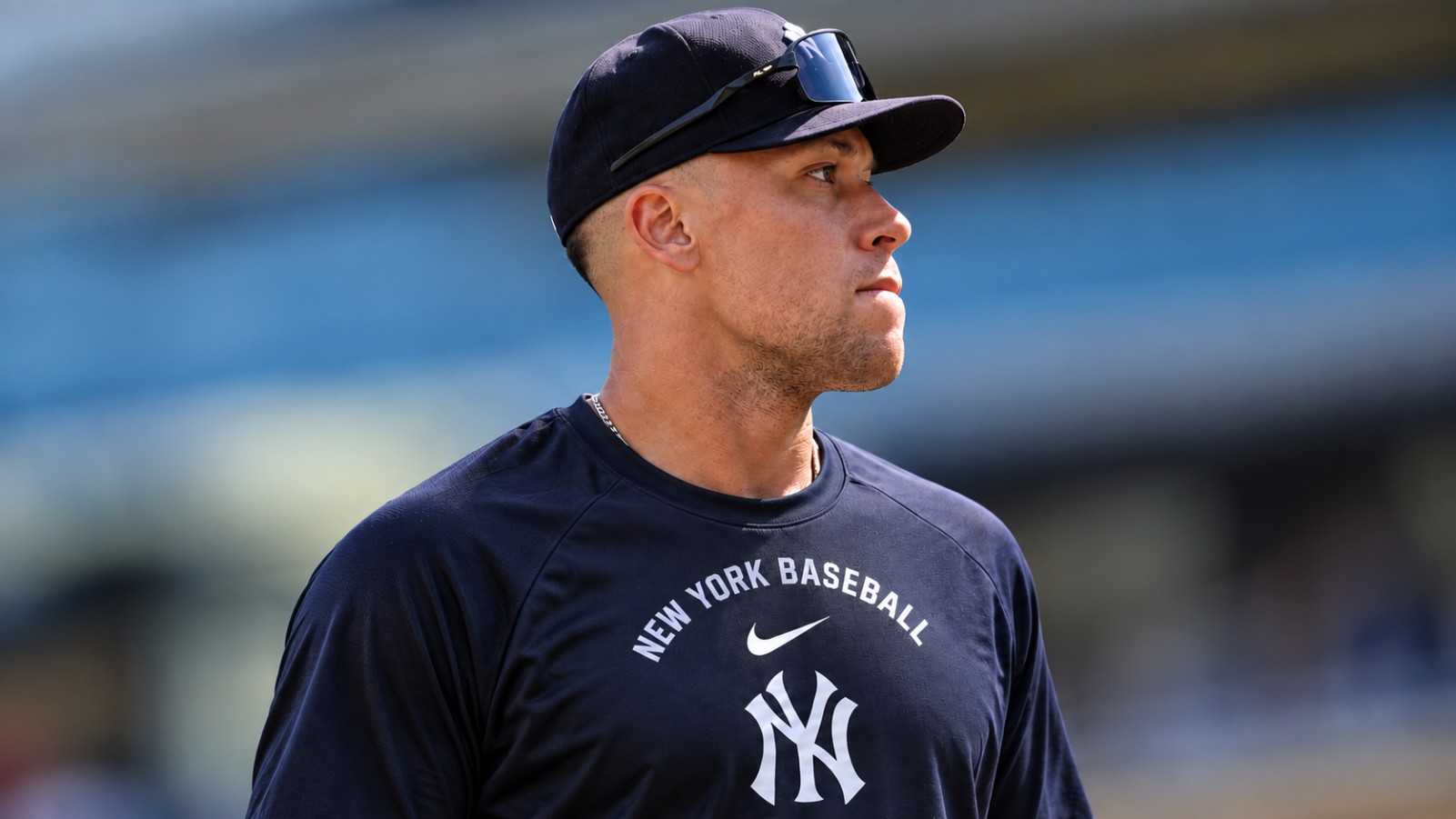
PHOENIX — The Yankees faces a postseason question that cannot be answered by the calendar alone. The reason: Aaron Judge’s latest setback.
The Yankees captain is back on the 10-day injured list after an MRI confirmed a strain in his right calf. The move is retroactive to Thursday, which makes Sept. 27, the final day of the regular season, the earliest he can be activated.
Judge’s timing makes the uncertainty harder to absorb. He had returned Sept. 8 after missing more than three months with a stress fracture in his first right rib. In seven games back, he went 4-for-23 with one home run, one walk and 13 strikeouts.
The injury surfaced Wednesday in Minnesota. Judge felt discomfort in the first inning of a 5-4, 13-inning loss, stayed in the game and was removed before his scheduled sixth-inning plate appearance. The Yankees initially described the problem as lower-leg tightness before imaging revealed the strain.
Judge has played only 66 games this season, batting .241 with 18 home runs and 41 RBIs. The Yankees now have to decide not simply whether he can stand in the lineup, but whether his lower leg can tolerate the repeated force of hitting, accelerating and running the bases in October.
For the Yankees, availability and effectiveness are separate questions. A player can be medically cleared before he has rebuilt enough lower-body confidence and timing to handle postseason game speed. Judge also has almost no opportunity for a normal progression through rehab games because the minor league schedule is effectively over.
That puts the Yankees in an unusual position. Their best hitter may reach his first eligible activation date only two days before the Wild Card Series, with every running test, batting session and recovery day carrying more information than the calendar itself.
What is a soleus injury, how is it caused
The soleus is a calf muscle running from below the knee to heel beneath the gastrocnemius. A soleus strain occurs when fibers or their tendon junction are overstretched or torn. It helps lift the heel and create push-off force, important in acceleration and the baseball swing. The soleus feeds into the Achilles tendon complex, but a strain does not make rupture inevitable.
Sports-medicine research links soleus strains to fatigue, overtraining and repetitive knee-flexed running. They can also occur under sudden force. Judge said the location affects movements central to his job.
“It’s a little more crucial with running and hitting and all those kinds of things,” Judge said.
Which MLB players have had it?
Baseball has precedents. Judge reinjured his soleus in 2020 and was told the second rehab would take about twice as long as the first.
Cleveland outfielder Lonnie Chisenhall had a Grade 3 left soleus strain in 2018 and was projected to miss eight to 10 weeks.
Minnesota’s Luis Arraez had a minor right soleus strain in 2021. Brewers reliever Craig Yoho opened 2026 on the IL with a low-grade right soleus strain.
Those cases show why the diagnosis alone does not establish Judge’s timetable.
Recovery time can vary dramatically by location
The Yankees have not disclosed the grade of Judge’s strain, and Judge said he did not know it. That missing detail prevents a reliable public estimate of how long he will need.
Sports-medicine research shows why a single recovery number can mislead. A peer-reviewed study of 44 high-level and professional athletes with MRI-confirmed soleus injuries found an average return-to-play time of 29.1 days, with a range from six to 81 days.
Central myotendinous injuries averaged about 44 days, while lateral myotendinous injuries averaged about 19 days.
Those figures are not a forecast for Judge. They show that the exact location and extent of damage can matter as much as the generic diagnosis. Grade 1 strains involve relatively limited fiber damage, while Grade 2 and Grade 3 injuries involve progressively greater disruption.
The Yankees’ decision not to publicize the grade does not, by itself, establish that the strain is severe.
Judge still targets October return
Judge did not offer a timetable Saturday, but he made his goal clear. His answer also reflected how little certainty exists with nine days between his earliest activation date and the start of the injury.
“I’d like to be back by the postseason. That’s definitely the plan. I got really no answers for you on any timeline or anything like that,” Judge said.
Judge said he can continue throwing and intends to work while the calf heals. Aaron Boone, meanwhile, has framed the next phase around what Judge can physically handle rather than the label attached to the MRI.
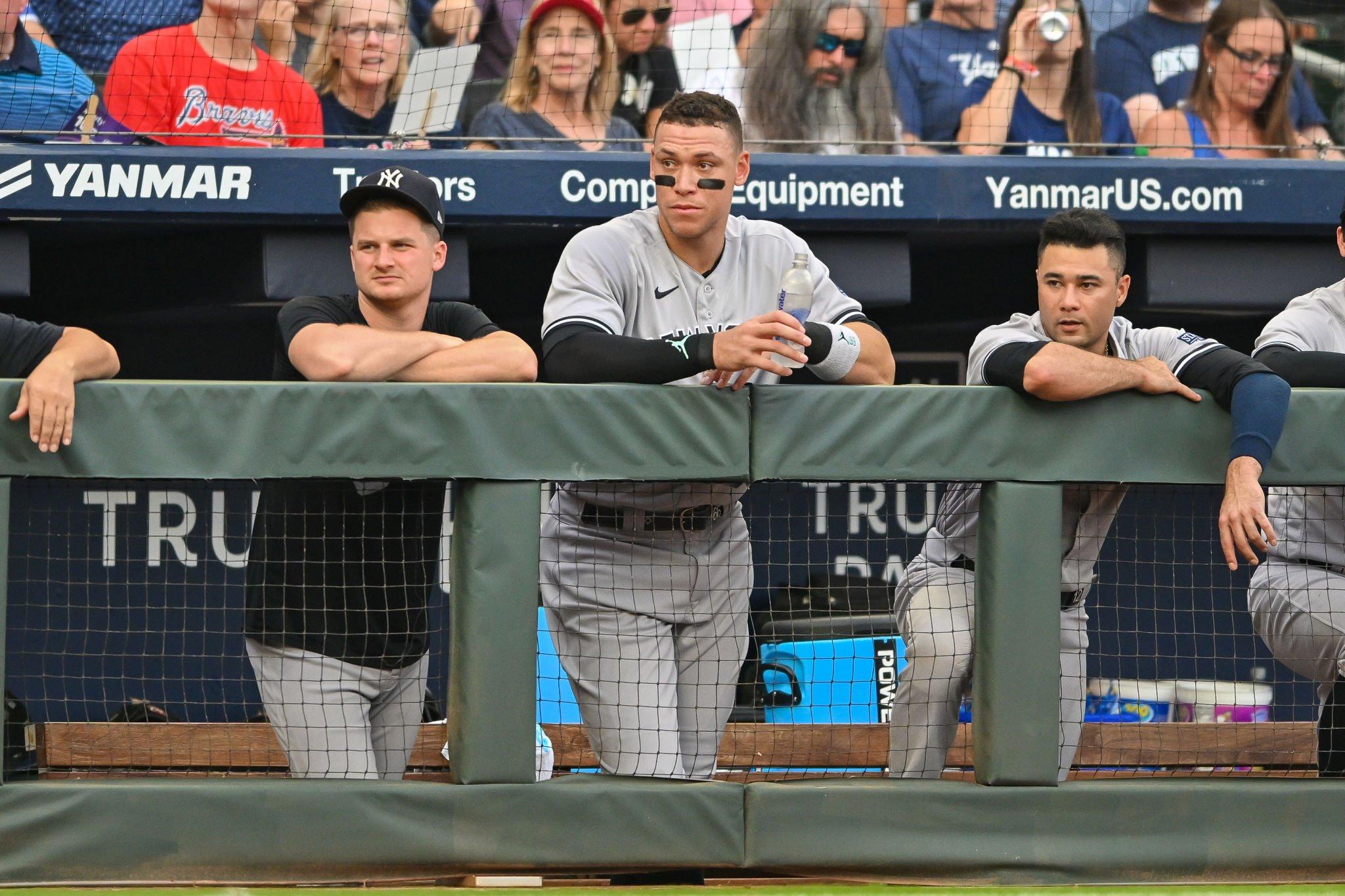
“We’ll see as the days go by what he’s able to tolerate,” Boone said.
Yankees face a functional test, not just a date
The most important checkpoints now are practical ones. Judge must be able to load the calf, accelerate, decelerate, rotate through a swing and run without creating a setback. A return on Sept. 27 would leave the Yankees only one regular-season game to judge how those movements hold up under game conditions.
Judge has played through calf discomfort before, but he said this episode feels different because of where the strain sits. That makes the next week less about whether he can beat the injured-list clock and more about whether his soleus can handle postseason intensity when the Yankees need their most important hitter back.
What do you think? Leave your comment below.