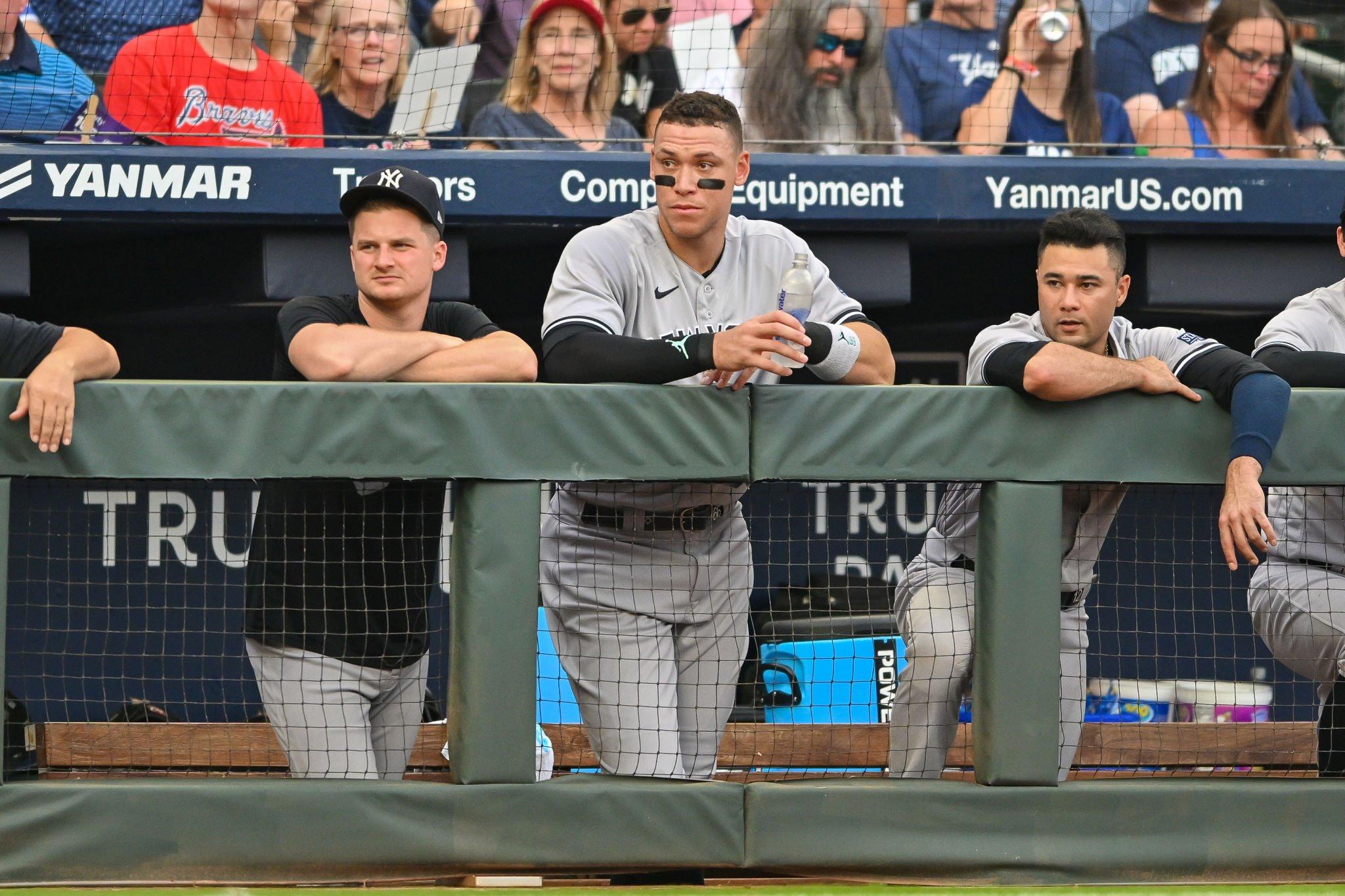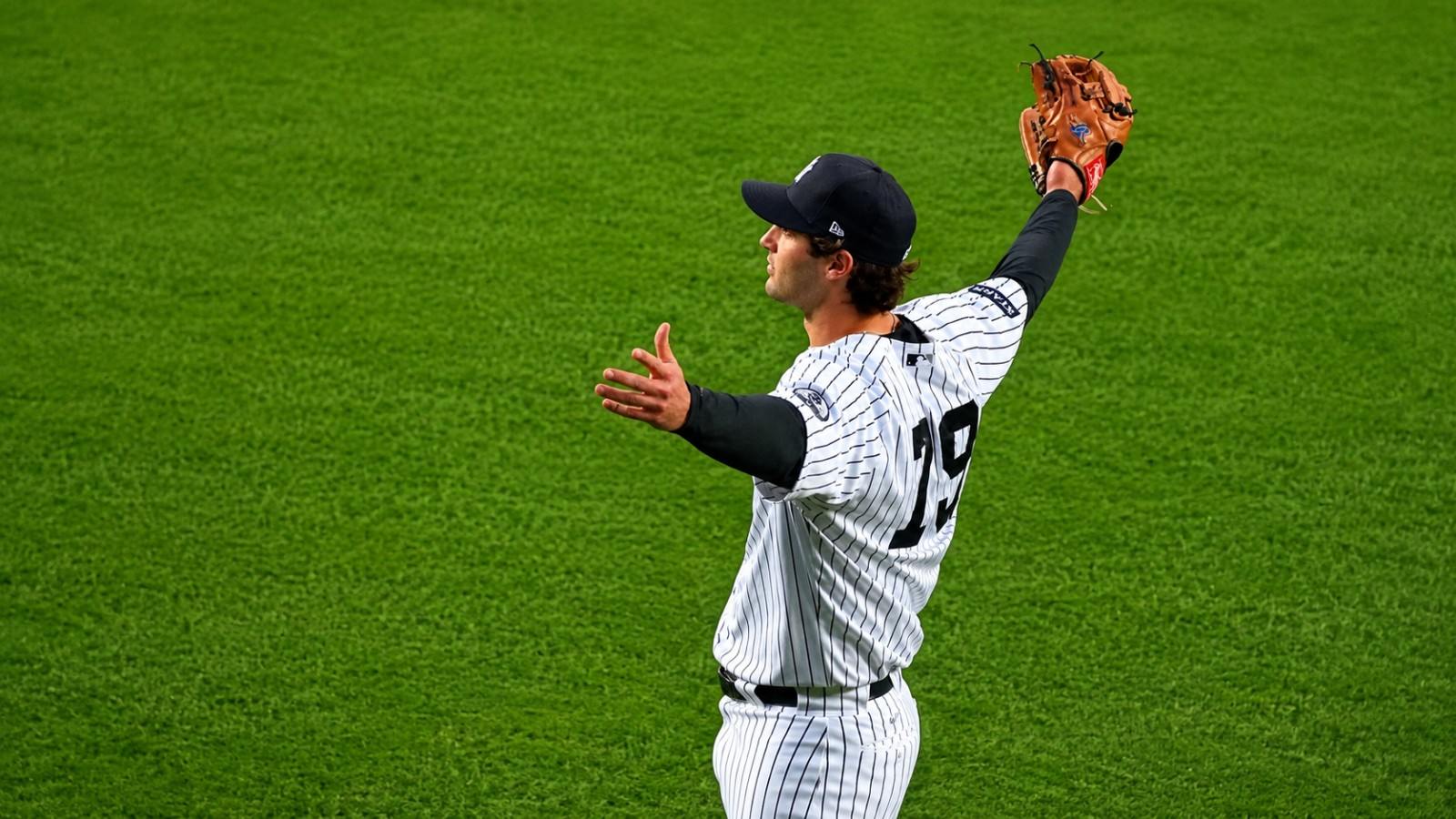
NEW YORK — A month ago, Spencer Jones got the call he had spent years chasing, and it slipped through his fingers. Now, through the worst kind of luck for the Yankees, he is getting another one. Aaron Judge’s rib fracture has cracked the door open a second time, and the question hanging over the Bronx is simple. Is the towering prospect ready this time?
The Yankees are promoting Jones from Triple-A Scranton/Wilkes-Barre, Jack Curry of YES Network reported Friday. The timing is no accident. With Judge sidelined for at least four to six weeks, the Yankees need power, and Jones has plenty of it. Whether he can harness it at the highest level is the open question.
A first chance that fell flat
Jones cannot escape what happened in May. When Jasson Dominguez went down with a shoulder sprain, the Yankees called up the 6-foot-7 slugger for his major league debut. The results were rough.
Across 10 games and 24 at-bats, Jones slashed just .167/.259/.167. He collected four singles, drew three walks, and drove in two runs, with no extra-base hits to show for it. The most glaring number was his strikeout rate, a staggering 44.4 percent that more than doubled the league average of around 22 percent. The Yankees sent him back to Triple-A on May 22.
That demotion was not a surprise to the front office. Yankees insider Brendan Kuty of The Athletic reported the team was not caught off guard by the struggles, given the contact questions that have followed Jones through the minors. The whiffs were the same flaw scouts had flagged for years.
The loud tools that keep the faith alive
Here is why the Yankees are willing to try again. Even in that ugly first stint, Jones showed the kind of raw power that cannot be taught. The surface stats were bad, but the underlying data was electric.
During his first Yankees run, Jones posted a 97.2 mph average exit velocity and a 75.0 percent hard-hit rate, according to Baseball Savant. Both figures crushed the major league averages of 88.6 mph and 37.0 percent. When he connects, the ball travels like few others in the sport. He was also flawless in the field, handling 41 2/3 innings in center and right without an error while adding an assist.
The Triple-A production backs up the promise. This season with the RailRiders, Jones has mashed 13 home runs with 48 RBIs and a .949 OPS across 156 at-bats in 43 games. He is a first-round pick from 2022 out of Vanderbilt, MLB Pipeline’s top outfield prospect in the system, and a 25-year-old whose ceiling has long excited the organization.
The one flaw that will decide it
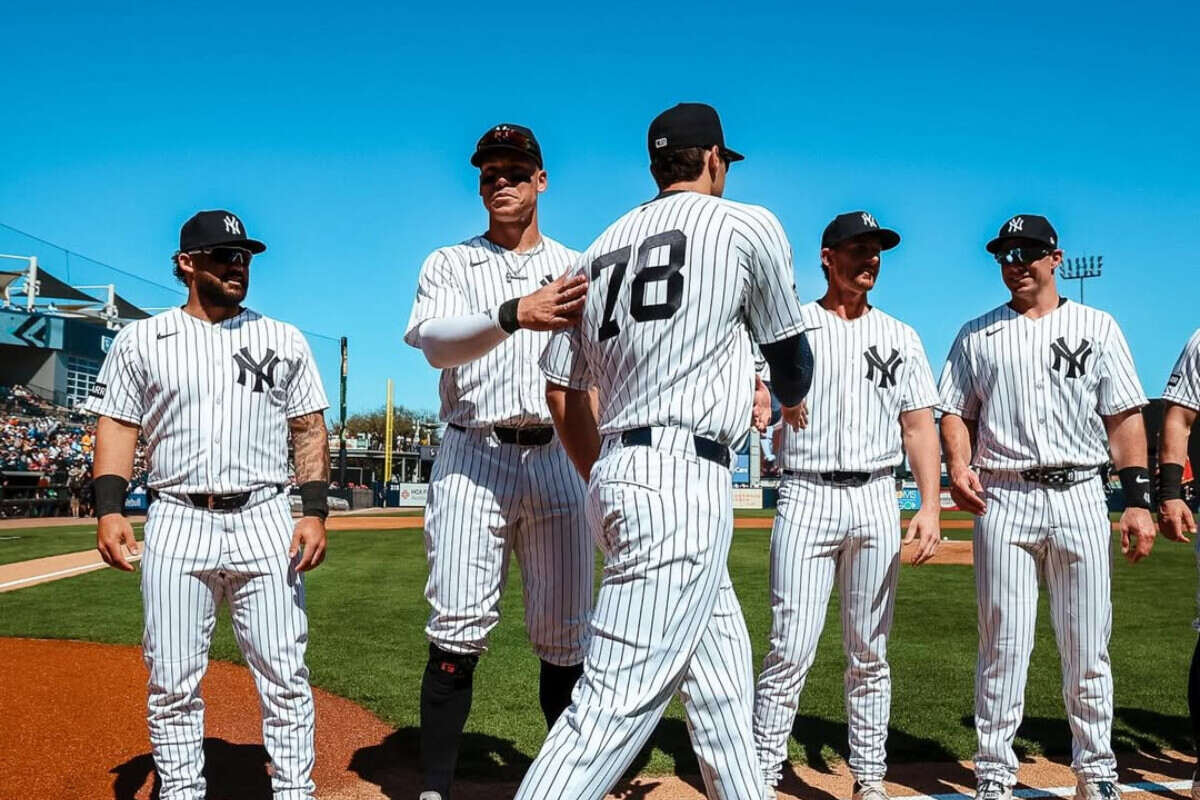
This is where Jones’s second chance will be won or lost. The power has never been the issue. The contact has.
MLB Pipeline’s scouting report calls him a boom-or-bust bat with at least plus-plus raw power but huge contact problems. Those issues produced alarming strikeout and swing-and-miss rates in the minors, including a 35 percent strikeout rate and a 42 percent whiff rate in 2025. His naturally long left-handed swing leads him to chase too many pitches and struggle to put strikes in play. His numbers against upper-level left-handers last year, a .189 average with a 43 percent strikeout rate, were especially worrisome.
The pattern continued early this year. Jones has 56 strikeouts in 39 games at Triple-A, and he whiffed 12 times in his 24 big league at-bats. Major league pitchers will attack that weakness more precisely than anyone he has faced. If he cannot make enough contact, the same story could repeat.
Still, there is reason to think Jones arrived more prepared this time. Before his first call-up, manager Aaron Boone praised a recent stretch of cleaner at-bats.
“The last three or four weeks have been a lot of consistent at-bats,” Boone said at the time. “The power has been there, less swing and miss, which is some of the things we were seeing a little bit in spring training.”
A clubhouse that believes in the slugger
Jones has support inside the room, and that matters for a young player carrying pressure. Teammates have pointed to his even temperament as much as his bat. Utilityman Max Schuemann, who came up through the minors alongside him, described what Jones brings beyond the power numbers.
“He shows up every day with the same attitude,” Schuemann said. “Whether it’s a good day or a bad day, it doesn’t matter for that guy.”
Schuemann kept his scouting report on the power short and direct, calling it special. That steady demeanor could help Jones weather the ups and downs that come with hitting in New York, especially while replacing the best hitter in baseball.
A safety net if the bat goes quiet
The Yankees have built in protection should Jones struggle again. This time, they are not forced to ride out a slump the way a thinner roster might have to.
If Jones needs a breather, the Yankees can turn to the versatile Schuemann in right field, or to Amed Rosario, who has already logged time there. More significantly, help is on the way. Dominguez was set to begin a rehab assignment Friday, putting his return within reach and offering a glimpse of an outfield that could feature both young sluggers at once. That depth means the Yankees can let Jones find his footing without forcing him into the lineup every day if the swing-and-miss returns.
The opportunity in front of Jones is the one he has waited for since Vanderbilt. The Yankees need a dangerous bat with real pop while Judge heals, and Jones fits that description as well as anyone in the system. The next month and a half will tell whether he is finally ready to seize it, or whether the contact questions that have shadowed his rise will follow him to the Bronx once more. For the Yankees, the hope is that a second chance brings a different ending.
What do you think? Leave your comment below.