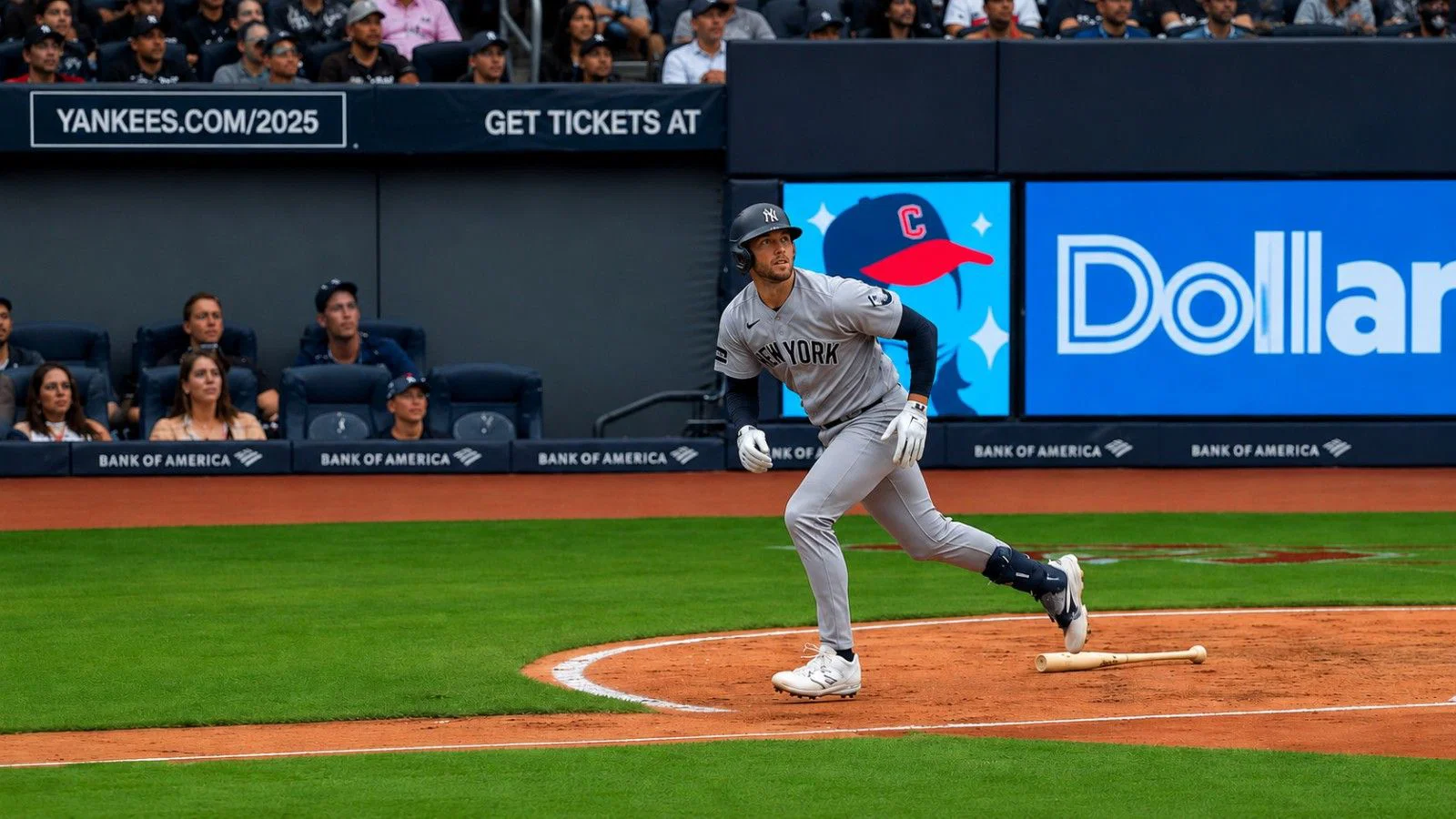
NEW YORK — The Yankees entered the offseason with an expensive question at third base and no obvious answer. The answer they chose in 2025 was supposed to bring dependable defense, left-handed power and contract stability. Instead, the final guaranteed season has become the most difficult part of the arrangement.
New York’s postseason ended in three games against Tampa Bay, with defensive mistakes again drawing attention. The Yankees had won 93 regular-season games, yet the position they spent considerable resources to stabilize remained unsettled when October arrived.
The problem extends beyond one disappointing playoff series. New York needs to build a more productive lineup for 2027 while weighing the salary already committed to a player who contributed little offensive value this season. That creates a decision involving performance, payroll and the price of finding somebody better.
General manager Brian Cashman must also assess whether the Yankees can afford to surrender further prospect value to fix a position they addressed through a prospect trade only 15 months ago. Waiting for a rebound would preserve continuity, but it could limit other roster upgrades.
A Cardinals vacancy creates possible escape route
Ryan McMahon, the Yankees third baseman acquired from Colorado at the 2025 trade deadline, is owed $16 million in 2027, the last season of his six-year, $70 million contract. St. Louis has been identified as a plausible destination because the Cardinals are open to a short-term answer at third base while protecting opportunities for younger players.
The link is a proposed fit, not a reported negotiation. No agreement or formal discussions between the Yankees and Cardinals involving McMahon had been confirmed as of Oct. 19.
The Yankees sent pitching prospects Griffin Herring and Josh Grosz to the Rockies for McMahon in July 2025. At the time, a strong glove and a contract running through 2027 made him more than a deadline rental. The extended control now complicates New York’s attempt to move on.
McMahon hit .213 with a .279 on-base percentage, .357 slugging percentage, 11 homers and 41 RBIs in 124 games during 2026. He finished with a 78 wRC+, indicating production 22% below league average after adjustment for park and run environment. His October struggles provided no late counterweight to that season.
A new call to cut McMahon changes stakes
Some fans went further than the trade proposals, arguing the Yankees should release McMahon before spring training if they cannot find a suitable partner. That is not a Yankees decision, and releasing him would not erase the remaining guaranteed salary.
The argument reflects fading confidence in the original defense-first calculation. McMahon’s third-base metrics declined to zero Outs Above Average and minus-3 Defensive Runs Saved in 2026, according to the published assessment. Those numbers measure different aspects of defense and should not be treated as interchangeable, but both point to less value than the Yankees envisioned.
He still made hard contact at times. The same assessment cited a 90.5 mph average exit velocity and a 44.8% hard-hit rate. Those measures show some underlying strength, but they do not offset a low on-base percentage or guarantee that a hitter will generate runs.
The salary math creates three unequal choices
A straight release leaves the Yankees responsible for the $16 million guarantee, subject to any applicable offsets, while opening a roster spot. A trade in which New York pays half the money would save approximately $8 million but likely bring a modest return. Keeping McMahon would retain the player and his defensive rebound potential, while risking another season of below-average offense.
That difference is the heart of the decision. Even a trade saving $8 million would not automatically finance a quality replacement. New York would need to commit additional resources, whether in free agency or a second trade, to improve third base.
St. Louis used several players at the hot corner in 2026 and has been linked to a temporary solution rather than a long commitment. McMahon’s expiring contract could suit that timetable, especially if the Yankees retain salary. It does not establish Cardinals interest in McMahon himself.
An inexpensive relief arm or a lower-level prospect would be a more realistic speculative return than an established everyday player. Suggestions involving catcher Pedro Pagés have appeared in trade commentary, but there is no indication the Cardinals have offered him.
Yankees still lack a confirmed replacement plan
The Yankees could explore other third-base options, including an external trade, free agency or an internal alignment involving Jose Caballero and Anthony Volpe. None has been identified publicly as an agreed-upon solution. Any personnel decision would have to balance fielding, offensive production and what it does to the rest of the infield.
The contractual deadline is less urgent than the baseball decision: McMahon remains under team control for 2027, but the Yankees must determine whether carrying him into spring training helps or obstructs their offseason plans. Through Oct. 19, the Cardinals possibility and the release argument remained proposals, not transactions.
What do you think? Leave your comment below.