NEW YORK — The Yankees are facing renewed criticism over how they use their financial resources and young talent after another early postseason exit.
New York swept Boston in the Wild Card Series before Tampa Bay swept the Yankees in the AL Division Series. The club never held a lead in that second series, which ended with a 4-3 loss at Yankee Stadium.
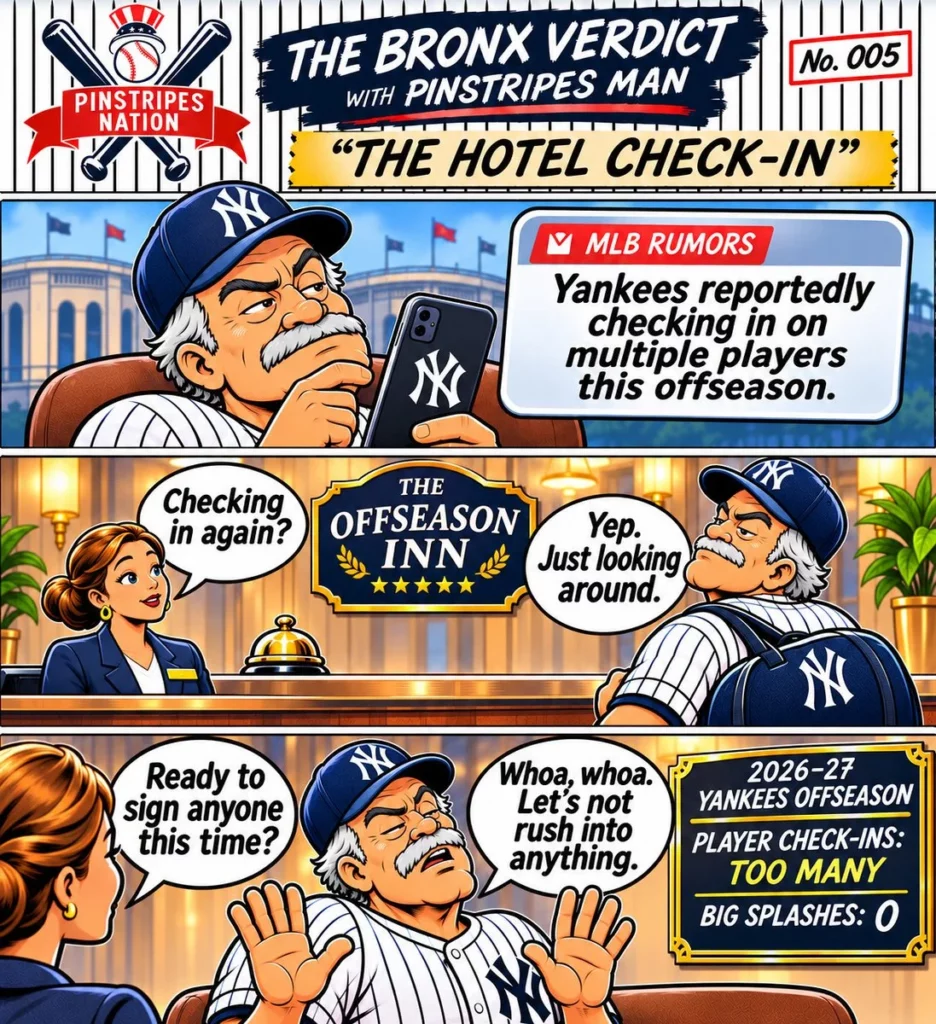
The result has kept general manager Brian Cashman under scrutiny as he works to reshape the roster. Questions about the club’s willingness to trade prospects are now part of a broader debate over its direction.
A discussion released Tuesday put the focus on the cost of preserving the same approach when the team’s competition is willing to take bigger risks.
Sheffield likens Yankees to a restaurant chain
Gary Sheffield Jr., son of former Yankees outfielder Gary Sheffield, compared the franchise’s approach to that of Chipotle during a Nov. 24 appearance on Sal Licata’s show.
Sheffield’s criticism centered on a front office that, in his view, prioritizes predictable results over taking chances that could improve the club’s championship prospects.
“If you’re not taking any risk, you’re just Chipotle,” Sheffield said.
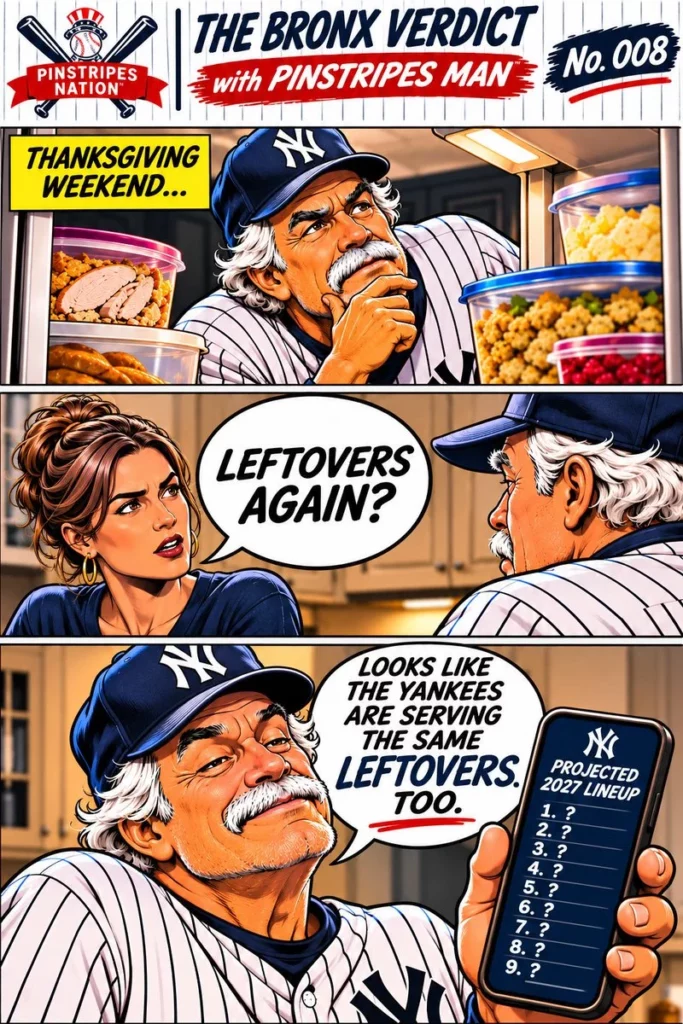
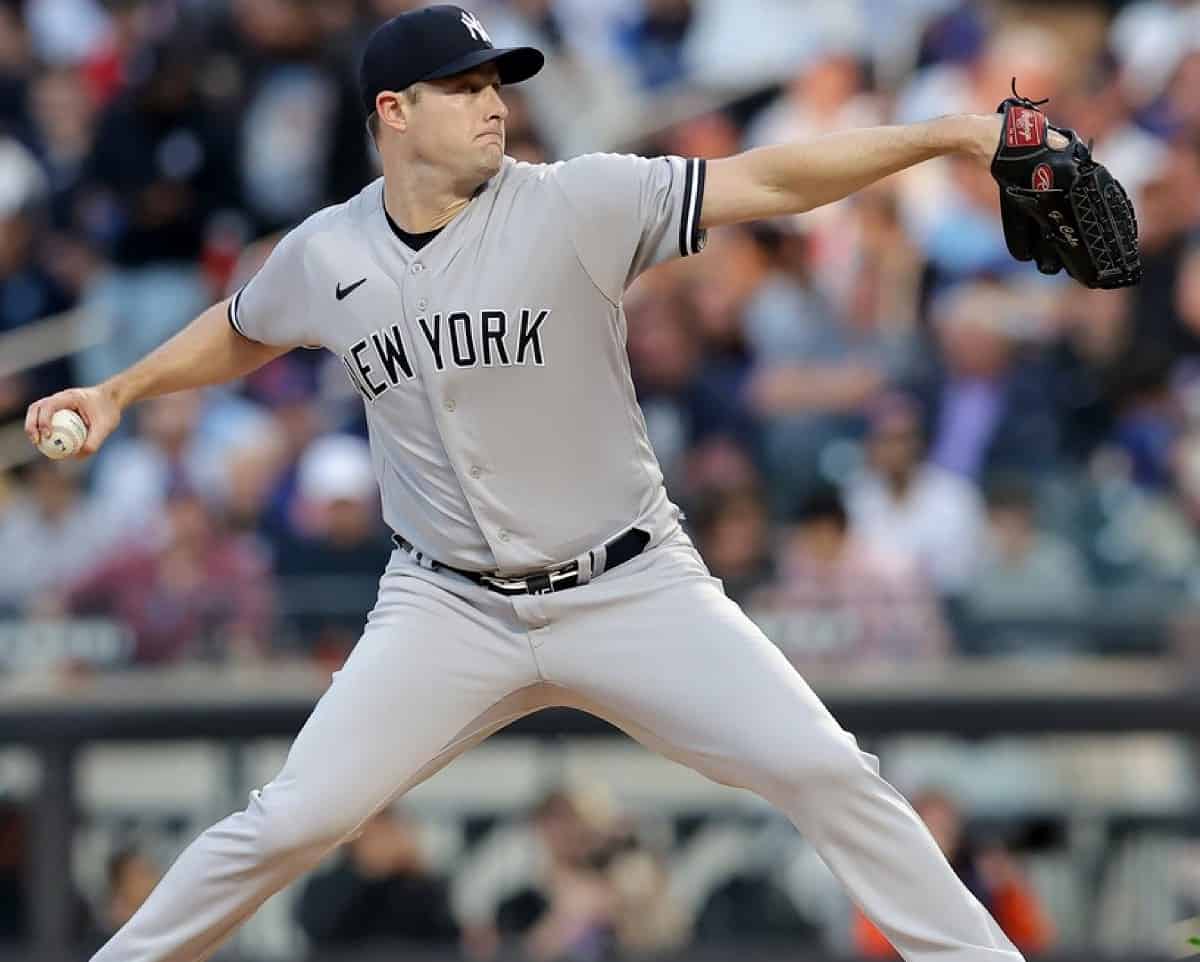
Jasson Domínguez, Anthony Volpe and Luis Gil came up during the conversation about the timing of trades involving young players. Sheffield questioned the wisdom of retaining players through their periods of greatest trade value without securing a corresponding return on the field.
That argument is a criticism of strategy, not evidence that the Yankees rejected a specific available trade involving any of the three players.
Cashman faces questions over roster construction
Licata and Sheffield also questioned whether the Yankees have assembled enough hitters with complementary skills. Their concerns included the need for a consistent leadoff option and dependable everyday play at second base.
Licata identified Cleveland outfielder Steven Kwan as a player who could address some of those needs. Sheffield pointed to the Yankees’ earlier acquisition of DJ LeMahieu as an example of a move that departed from a power-centered approach.
Those suggestions place the emphasis on the composition of the lineup rather than the total amount spent on it.
Sheffield also argued that replacing manager Aaron Boone would not resolve the underlying roster issues if Cashman continued to build the team the same way. The criticism shifts responsibility toward the executive who acquires players rather than the manager who deploys them.
The trade value question has two sides
The Yankees’ decisions involving young players carry two distinct costs. Trading a prospect means giving up potentially inexpensive production for multiple seasons. Keeping him means forgoing the return another team might offer while his market value is high.
The tradeoff is particularly significant for a club with expensive established stars. A productive player under team control can help preserve payroll flexibility, while an established acquisition can address an immediate weakness.
There is no single point at which a prospect must be traded. The more relevant test is whether the organization has a viable everyday role for him or can obtain an upgrade that justifies surrendering his remaining years of control.
The Yankees’ postseason results illustrate the difference between maintaining a competitive team and finding a roster combination that can advance against stronger opponents. Their two wins against Boston did not translate into a single win against Tampa Bay.
Mets’ approach intensifies the debate
The conversation also contrasted the Yankees with the Mets under owner Steve Cohen. The Mets recently agreed to a nine-year, $450 million deal with Tarik Skubal, putting another major commitment on their books.
The two clubs are operating amid uncertainty over a proposed MLB salary cap. That makes the allocation of existing resources, including young talent, an important part of the offseason debate.
Sheffield also advocated using Aaron Judge as a full-time designated hitter and moving on from Giancarlo Stanton. That would involve another tradeoff: protecting Judge’s availability while finding a replacement for his defensive innings.
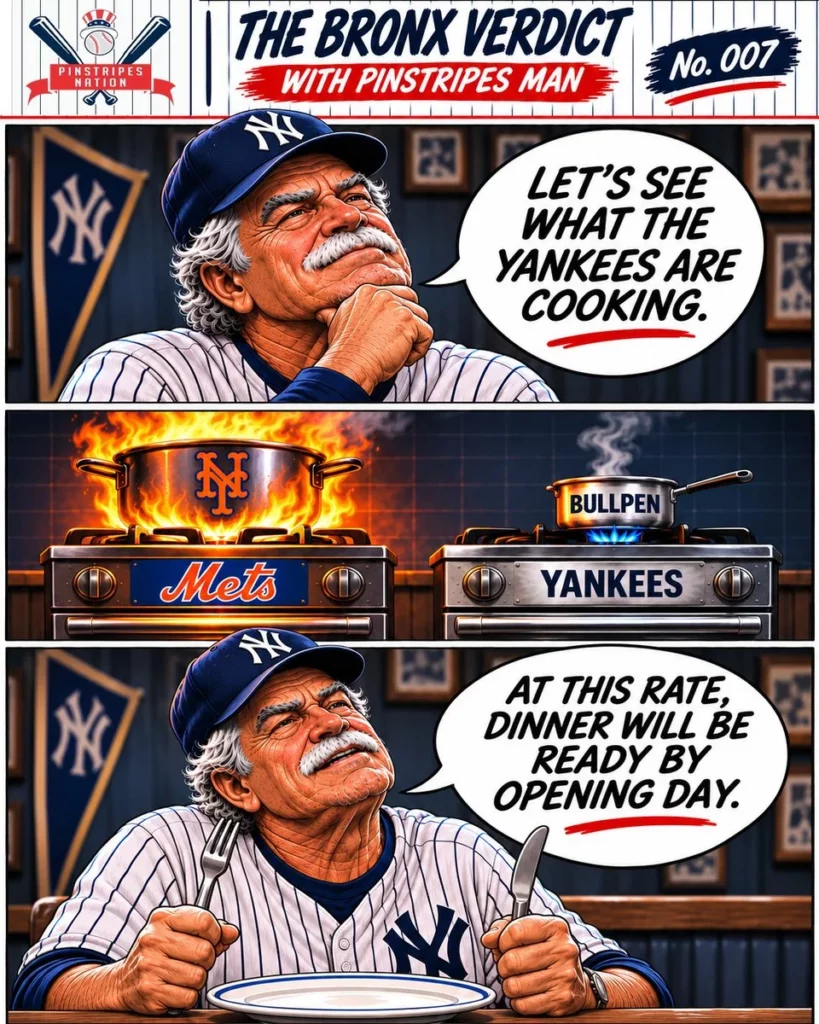
None of the suggested roster changes was announced by the Yankees during the interview. Cashman’s publicly identified offseason priority has been rebuilding the bullpen, according to the club’s official news coverage.
The front office still has unresolved lineup decisions as the current collective bargaining agreement approaches its Dec. 1 expiration.
What do you think? Leave your comment below.