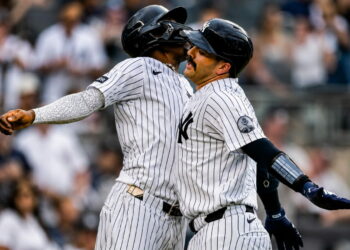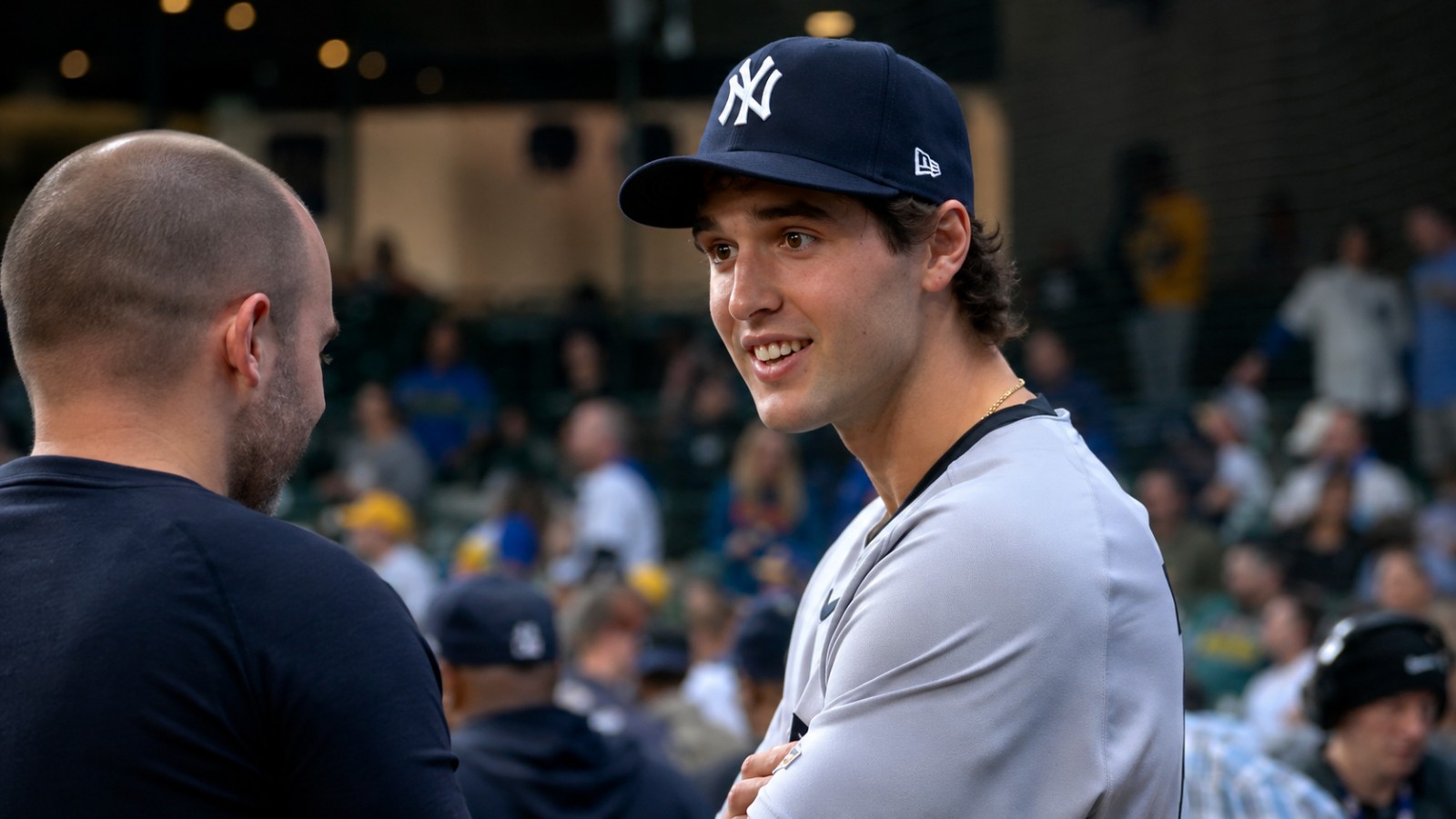
CHICAGO — Spencer Jones supplied nearly everything the Yankees could create Saturday night, turning a difficult matchup and a stiff wind at Wrigley Field into another argument that his bat belongs in a postseason race.
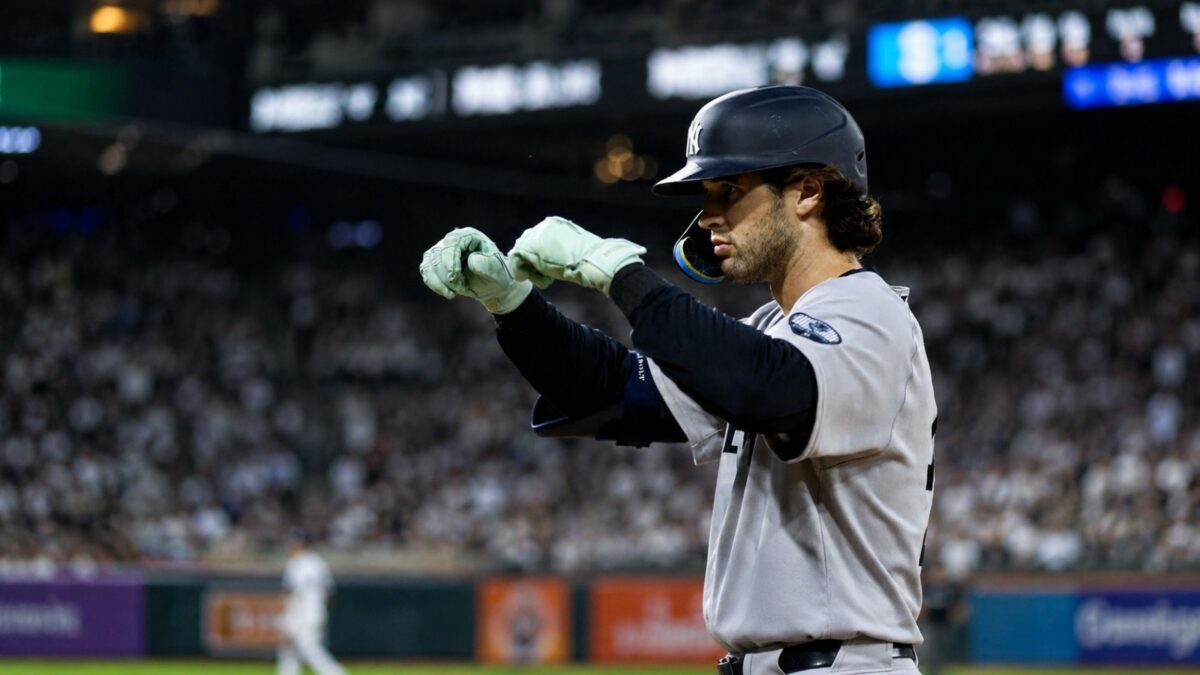
Jones went 2-for-4, scored both New York runs and drove a 106 mph opposite-field home run over the left-field wall in a 5-2 loss to the Chicago Cubs. His seventh-inning shot off left-hander David Peterson gave the Yankees a 2-1 lead. It also became his third homer in four games and his fifth in 105 major league plate appearances.
Aaron Judge, Cody Bellinger and Giancarlo Stanton remain on the injured list, leaving the lineup short on established power.
Jones has begun to fill part of that void. The 25-year-old has hit safely in four straight games, with three home runs and five RBIs during the run. He is batting .247 with a .333 on-base percentage and a .452 slugging percentage, along with five homers, 13 RBIs, 10 runs and three stolen bases. His recent at-bats have forced a fresh evaluation at the most important point of the Yankees season.
A changing deadline calculation
A few weeks ago, the young slugger looked like trade bait. He was striking out at an alarming clip in the minors, his swing looked long, and the questions about whether he would ever hit big league pitching had grown loud. For a team chasing October, he seemed more useful as a chip than as a bat.
The story reads differently now. Over three months, the same player has climbed out of a deep hole and turned himself into one of the more intriguing bats on the Yankees’ roster. The strikeouts have fallen. The walks have risen. The power has arrived. And the timing could not be more awkward for a front office weighing every asset before Monday’s deadline.
A Yankees source told PinstripesNation.com that the club is rethinking its previous willingness to trade Jones and is leaning toward keeping the rookie. The shift reflects the lack of a preferred outfield upgrade on the market and Jones’ improvement through three major league stints.
The Yankees entered deadline season prepared to consider Jones for a significant return. His power and club control made him attractive, while his strikeout history created doubt.
That risk remains, and 105 plate appearances do not settle his ceiling. The Yankees see a hitter adjusting while replacements remain unavailable or expensive.
Thin outfield market changes Yankees’ math
The Yankees have searched for an impact bat who can help against left-handed pitching. The outfield group has offered few clean solutions.
Controllable players such as Taylor Ward and Jo Adell would require substantial prospect returns. Seiya Suzuki and Tyrone Taylor have surfaced as possible fits, but no preferred target has become available at a price the Yankees consider sensible, according to the source.
Trading Jones for a marginal upgrade would remove a cost-controlled hitter from a lineup already missing Judge and Bellinger.
Jones has helped his case by answering a major question. In 17 plate appearances against left-handers since June 5, he has five hits, including two doubles and two home runs, with one walk and four strikeouts. His .313/.353/.813 slash line has encouraged the Yankees to test him beyond a strict platoon role.
The monthly trend also stands out. In May, Jones hit .167 with a .259 on-base percentage and a strikeout rate near 44 percent. The bat looked overmatched. His wRC+, a measure where 100 is league average, sat at just 29. That is the version of Jones that fueled trade speculation.
June brought a turn. He slashed .225/.340/.468, trimmed the strikeouts and posted a 128 wRC+, well above average. July was the breakout. Jones hit .278 with a .381 on-base mark and a .611 slugging percentage, cut his strikeout rate to 23.8 percent, and produced a 176 wRC+. The trend line has pointed up all summer, and the Yankees have taken notice.
The Aaron Judge comparison strengthens patience case
The Yankees have a familiar reason to avoid a rushed judgment on a large power hitter with swing-and-miss concerns.
At a similar checkpoint in 2016, Judge had four home runs in 95 plate appearances, a .608 OPS, a 44.2% strikeout rate and a 62 wRC+. Jones, through his first 101 plate appearances, had four homers, a .743 OPS, a 38.6% strikeout rate and a 111 wRC+.
The comparison does not project Jones to become Judge, a three-time AL MVP. It shows why New York values patience when power and adjustments remain visible.
Jones added another homer in his next four plate appearances Saturday. He also reached on Busch’s error in the fifth and scored from second on José Caballero’s single. Against a left-handed starter who struck out eight over 6 1/3 innings, Jones created both Yankees runs.
Other trade chips remain in play
Keeping Jones would not remove the Yankees from significant trade talks.
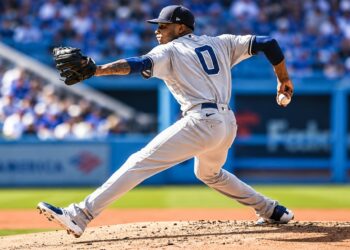
The source said New York remains open to discussing Domínguez, right-hander Elmer Rodríguez and other pitching and position-player prospects if a suitable offer improves the major league roster. Rodríguez is MLB Pipeline’s No. 73 overall prospect and one of the organization’s most valuable near-ready arms. Even Will Warren and Ryan Weathers are on the block.
Domínguez remains young and controllable, but his uneven offense and Saturday’s seventh-inning play showed the gap between potential and dependable production. The Yankees would consider him in a larger deal, according to the source.
The Yankees are separating players they view as part of the immediate lineup from those they could use to obtain a clear upgrade.
Jones has moved closer to the first group. His progress against left-handers, falling strikeout rate and power have changed the Yankees’ calculation. Unless an unexpected impact bat becomes available, New York’s revised plan is to let the rookie continue making his case in pinstripes.
What do you think? Leave your comment below.