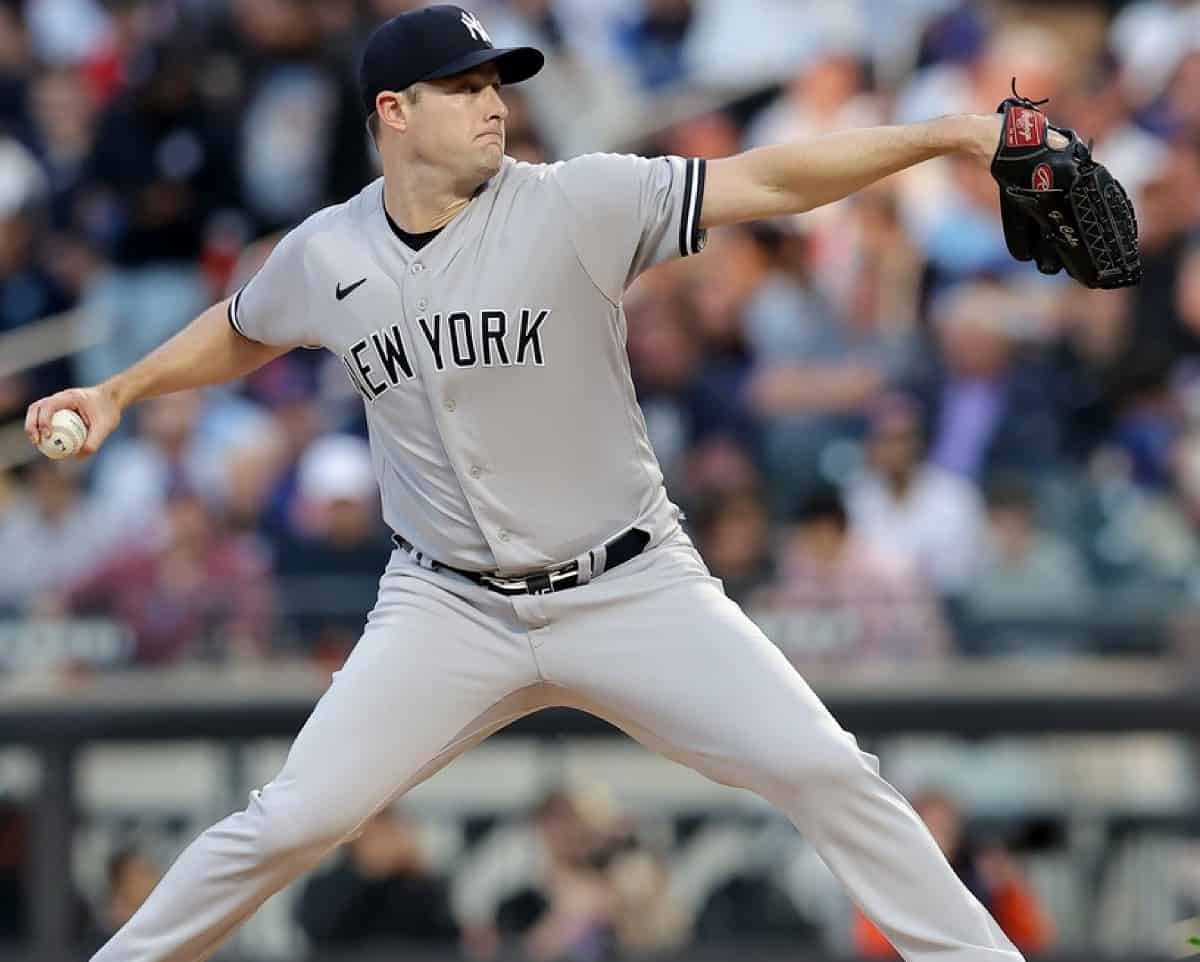
NEW YORK — Max Fried walked off the mound at Camden Yards after three innings, headed straight into the clubhouse and did not come back. The Yankees pulled him Wednesday with left elbow posterior soreness after just 61 pitches in a 7-0 loss to the Baltimore Orioles.
The Yankees announced Fried would travel back to New York on Thursday, the team’s off day, for MRI and an examination by team physician Dr. Christopher Ahmad.
What Fried said afterward told a more specific story than the standard injury announcement.
He described a hyperextension sensation. A “banging feeling” at the back of the elbow and triceps area. Something that had come and gone across multiple starts this season. This time it stayed.
“There’s been numerous starts this year where I’ve kind of hyperextended or had kind of that banging feeling, and it just kind of goes away, or you’re able to deal with it for the couple pitches or the inning and then it goes away,” Fried said.
“This one, I think it’s just probably one too many times and it’s just a little irritated and a little pissed off.”
He also described how the soreness affected his ability to execute pitches from a cold state.
“It was kind of hard for me to kind of warm up and loosen up,” Fried said. “The first hitter of the inning would be like 88, 90, 91, and then by the fourth, fifth hitter, 20 pitches in and I’m kind of able to get things loosened up. Just wasn’t sharp and it was just hard to kind of keep bouncing back.”
What is elbow hyperextension and how does it happen in pitchers
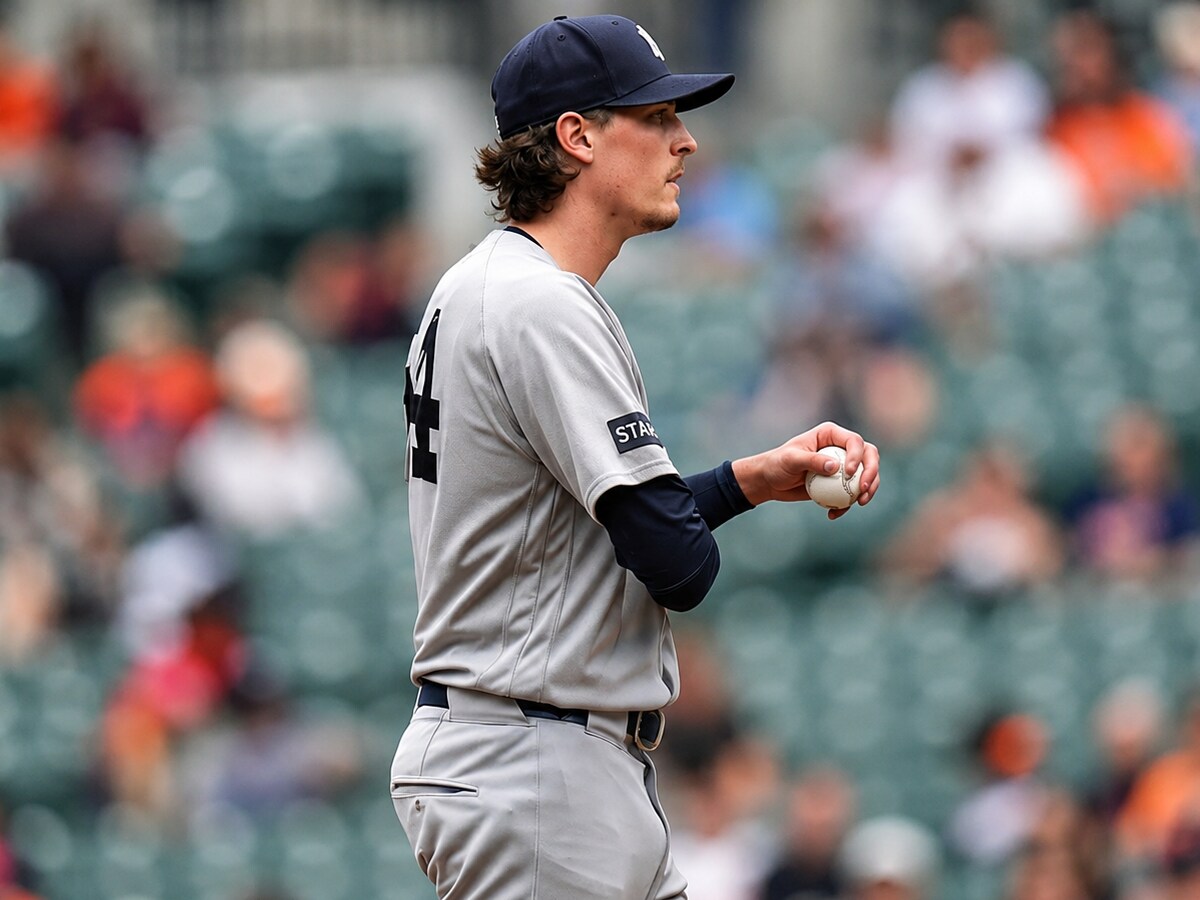
The elbow is a hinge joint. It bends and straightens within a specific anatomical range. Hyperextension happens when the joint is forced past its normal straightening limit, bending backward beyond what the bones and ligaments are designed to allow. That forced movement places sudden, intense stress on the posterior structures of the elbow. For Yankees pitchers like Fried, who generate elite velocity on every throw, that posterior stress accumulates across a long season.
In everyday life, elbow hyperextension is usually caused by a fall onto an outstretched arm or a direct impact. In baseball pitchers, the mechanism is different. It typically occurs during the deceleration phase of the throwing motion, the fraction of a second after ball release when the arm has to rapidly slow down from peak velocity. The elbow extends fully and the structures at the back of the joint absorb the braking force.
For a Yankees starting pitcher who throws 90 or more pitches every five days at 95 mph or harder, that deceleration force is enormous. Applied repeatedly across a full season without adequate recovery between outings, the cumulative stress on the posterior elbow can build to the point where the tissue becomes chronically irritated. That is the pattern Fried described: a problem that appeared and then disappeared across numerous starts before finally refusing to go away.
The Yankees medical staff would have been monitoring this closely. The fact that Fried pitched through it in multiple outings without being shut down suggests the decision was made that the irritation was manageable. Wednesday changed that calculation.
The risk: Olecranon, triceps tendon and posterior capsule

Three specific structures at the back of the elbow take the most punishment in repeated hyperextension events, and each one can produce different types of damage with different timelines.
The olecranon is the bony prominence you can feel at the tip of your elbow when your arm is bent. In pitchers who throw hard, the olecranon can repeatedly strike the olecranon fossa, the socket in the upper arm bone designed to receive it. That impact causes bone bruising and, over time, bone spurs. This condition is called valgus extension overload syndrome and is one of the most common elbow problems among major league pitchers, several of whom have landed on the Yankees injured list over the years dealing with exactly this issue. Bone spurs in that space can limit range of motion, cause sharp pain on extension and make early-inning throws extremely difficult. If large enough, they require surgical removal.
The triceps tendon attaches just above the olecranon. During hyperextension, the triceps is placed under sudden eccentric load, meaning it is being stretched and contracted at the same time. Repeated stress to the tendon causes micro-tears and inflammation, a condition called triceps tendinopathy. An irritated triceps tendon produces the same sluggish warm-up pattern Fried described to Yankees reporters, where the arm gradually loosens over multiple pitches but never quite feels right from the first throw.
The posterior capsule of the elbow can also become thickened and tight. Capsule stiffness restricts full extension and contributes directly to the between-innings tightness a pitcher feels when the arm cools down. For a Yankees ace who needs to work efficiently from pitch one of each inning, a stiff posterior capsule is a real performance liability.
When all three of these structures are irritated simultaneously, the picture looks exactly like what Fried put on display Wednesday at Camden Yards in a Yankees uniform. Low early-inning velocity. Gradual improvement as pitches accumulate. A feeling that never fully resets before the next inning begins.
Symptoms in pitchers and why Fried’s account fits so precisely
Posterior elbow hyperextension irritation presents in a recognizable pattern, and for Yankees fans it maps directly onto what Fried described. The symptoms include tightness and stiffness at the back of the elbow, reduced velocity that improves only after extended warm-up, discomfort when fully straightening the arm, a dull ache or sharp sensation during hard throws from a cold start and a gradual loosening over the course of an inning that resets to stiffness between innings.
Fried described every one of those symptoms in precise detail to Yankees reporters after the game. His fastball sitting at 88-91 mph for the first two batters of each inning, then climbing toward 95 mph only after 15-20 pitches, is a near-perfect clinical description of posterior elbow stiffness driven by repeated hyperextension stress.
The recurring nature of the issue adds important context. Fried confirmed the sensation had been present in numerous starts and had faded each time. That pattern points to chronic irritation that was successfully managed until Wednesday, when the accumulated load exceeded his body’s recovery capacity. In medical terms, this is called a threshold injury, and it is the kind of thing Yankees trainers would have been tracking across every start. The structure has been accumulating damage slowly over time. One event does not cause it. A long series of events eventually tips the balance.
How serious is it, and what the Yankees fear most
The answer depends entirely on what Thursday’s imaging reveals.
In the best-case scenario for the Yankees, the MRI shows only soft tissue inflammation with no structural damage. The olecranon is intact, the triceps tendon is healthy and the posterior capsule is irritated but not torn. In that case, a pitcher can typically return in two to three weeks with rest, anti-inflammatory treatment and a graduated throwing program. That outcome would align with Fried’s own hopeful assessment.
A more concerning finding would be a bone spur in the olecranon fossa or early valgus extension overload syndrome. Bone spurs can sometimes be managed conservatively through rest and modified throwing, which is the route the Yankees would prefer. But if the spur grows large enough to cause mechanical obstruction or persistent pain, surgical removal is required. That procedure typically sidelines a pitcher for two to four months, which would effectively end Fried’s 2026 Yankees season.
The worst-case scenario for the Yankees would be a stress fracture of the olecranon. These are less common but do occur in power pitchers. An olecranon stress fracture usually requires surgery and a recovery timeline that runs four to six months. That would be a season-ending diagnosis.
One critical distinction matters enormously for Yankees fans who know Fried’s history. He underwent Tommy John surgery in 2014. That procedure repairs the ulnar collateral ligament, which sits on the inner side of the elbow. Posterior elbow soreness is located at the back of the joint, anatomically separate from the UCL.
A posterior problem does not automatically put the UCL at risk and does not indicate another Tommy John situation. That is the primary reason both Fried and Yankees manager Aaron Boone were measured in their early comments rather than alarmed. Posterior is not the same as inner, and that distinction matters greatly.
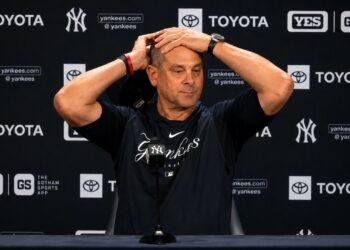
Boone offered a carefully worded assessment when reporters asked about the Yankees’ level of concern.
“In talking to him, not that concerned, and where it is,” Boone said. “But we’ll do all the testing and whatnot Thursday.”
What do you think? Leave your comment below.