NEW YORK — Here is the strange situation the Yankees find themselves in at the end of May: Ryan McMahon is having one of his worst offensive stretches as a major leaguer, he has already committed as many errors as he had in a full season last year, and he just got benched in back-to-back games.
And yet, his recent two-game homer surge may have just made him the most important trade chip the Yankees have.
The calculus is not complicated. McMahon’s real problem is his bat. His defense was the selling point. But after a month and a half of watching him slash .190/.255/.307 while striking out at a 31.3% clip, the Yankees appear to have reached a verdict. The team benched him on consecutive nights late in May, starting Amed Rosario and Jose Caballero at third base on those occasions. The message was hard to misread.
Now comes the harder question. McMahon has $16 million owed to him this season and another $16 million committed for 2027. Simply releasing him makes little financial sense. Trading him, even at a fraction of his value, might be the only move that helps the Yankees fix their real weakness before July 31.
That weakness is the bullpen.
The McMahon problem in plain numbers
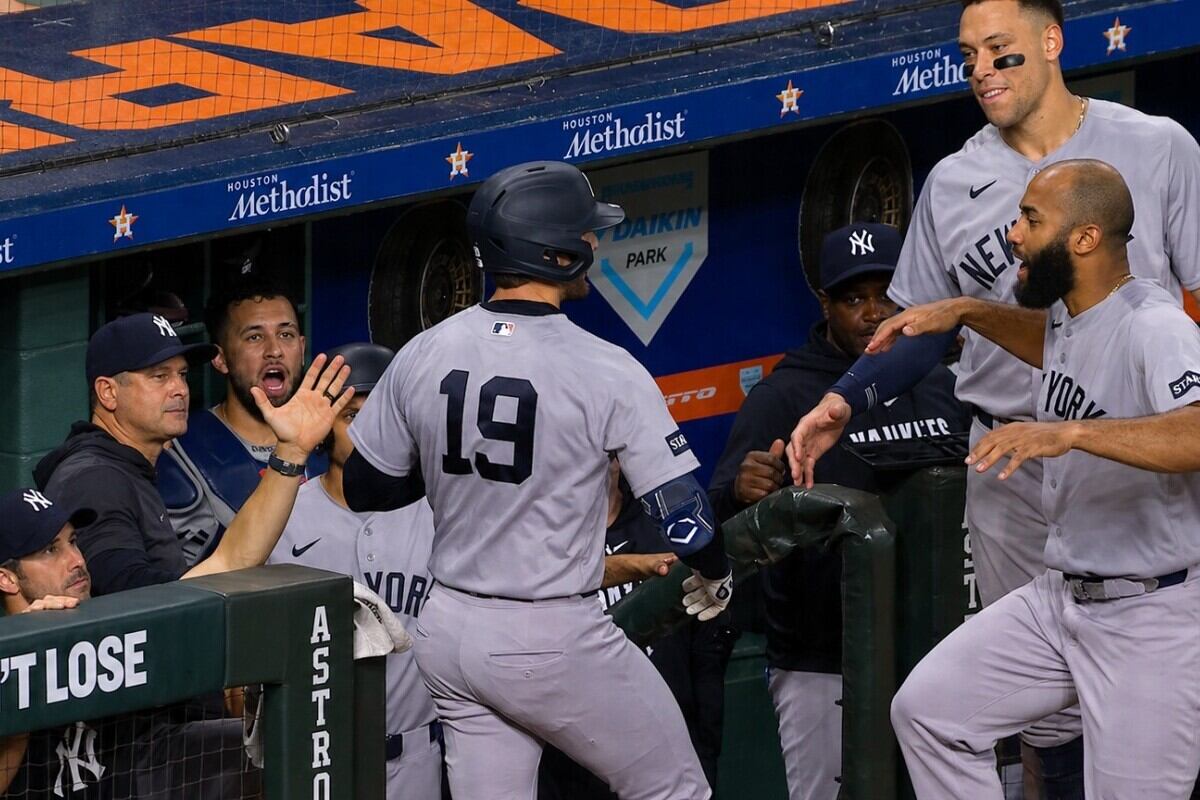
The Yankees traded for McMahon at last year’s deadline believing they were getting an above-average defender with enough pop to handle the bottom of the order. What they got instead is a player whose offensive numbers have deteriorated at every level.
| Stat | 2025 (Yankees) | 2026 (Yankees) |
| Batting average | .246 | .190 |
| OBP | .302 | .255 |
| Slugging | .408 | .307 |
| OPS | .710 | .562 |
| Strikeout rate | 28.1% | 31.3% |
| Errors | 4 (91.3 inn. more) | 4 (fewer innings) |
| Outs above average | Top 10 | 17th |
The defensive numbers are just as concerning. McMahon already has four errors in 2026, matching the same total he posted across 91.3 more innings last season. His outs above average rank has slipped from elite territory to 17th in the majors, according to Baseball Savant. The glove-first argument for keeping him in the lineup is eroding fast.
New York Post Yankees beat writer Greg Joyce highlighted McMahon’s struggles in his first-third-of-the-season review this week. McMahon received the unofficial designation as the Yankees’ least valuable player to that point, a damning assessment for a $16 million infielder on a team with championship expectations.
The consecutive benchings underscored the organization’s shifting view. Rosario went 4-for-6 with two homers in one of those starts. Caballero, who can play multiple positions, handled third base in the other. Neither is a long-term fix. But both demonstrated that the Yankees have options at the position beyond McMahon’s declining production.
Why Yankees’ bullpen problem makes McMahon decision urgent
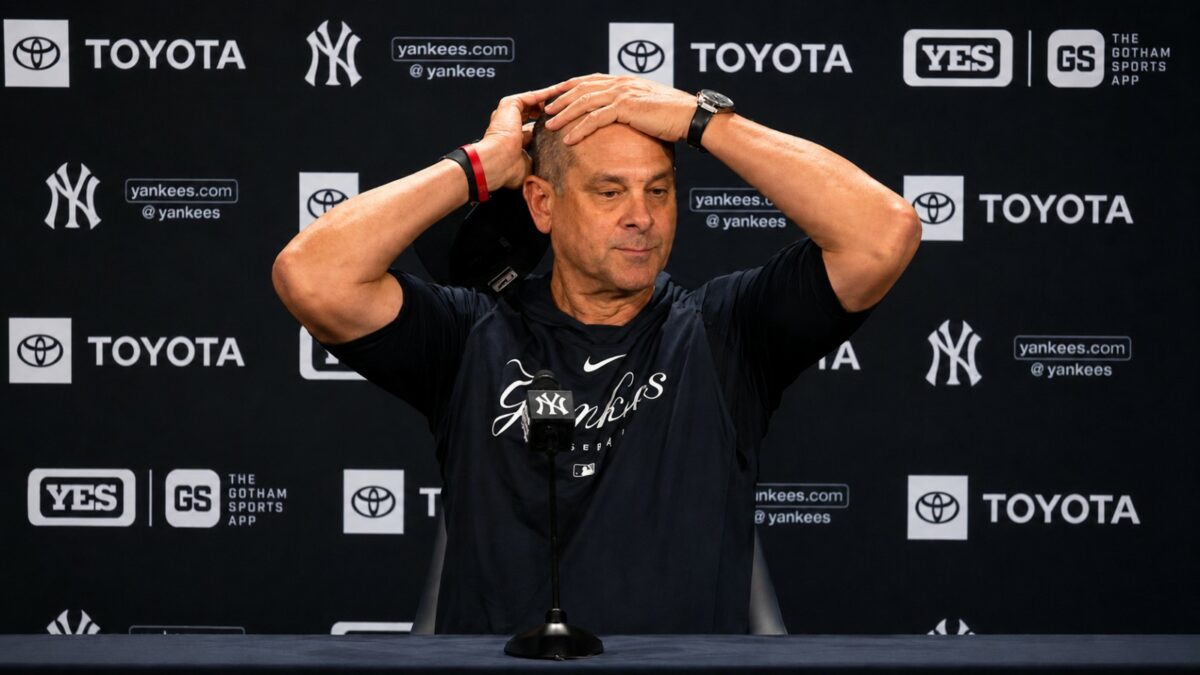
The Yankees entered 2026 with a bullpen built largely on projection and optimism. Several key relievers stepped into significantly larger roles than they had handled the year before. The results have been inconsistent. While Fernando Cruz has been excellent in high-leverage spots, stranding 20 of 24 inherited runners, the unit as a whole lacks a second shutdown arm to pair with him.
The rotation has covered for those bullpen weaknesses so far. New York’s starters carry a collective 2.95 ERA, the best mark in baseball, and have produced six straight quality starts through Friday. But a team that reaches October with a rotation that good and a questionable bullpen is still exposed. One-run games in a seven-game series expose every thin spot.
The Yankees need a high-leverage reliever before the deadline. Acquiring one at market price will cost prospects. Acquiring one with McMahon as a sweetener could lower that prospect cost and simultaneously solve the third base problem in one transaction.
That is the trade math. McMahon’s remaining $16 million this season plus his $16 million option for 2027 is a $32 million liability. Teams that need a stopgap at third base and have a surplus reliever they are willing to move might be willing to absorb that contract if the Yankees send a sweetener along.
Brendan Beck as the sweetener and the Marlins angle
The trade package being discussed in Yankees circles involves pairing McMahon with right-handed pitching prospect Brendan Beck. The idea is to make the contract more palatable by attaching a young arm with upside.
Beck has been a reliable arm in the Yankees’ system over the past two seasons, going 13-5 with a 3.36 ERA across 26 appearances between Double-A and Triple-A last year. In 2026, he posted a 3-2 record with a 4.42 ERA in 10 minor league appearances before earning a brief MLB call-up on May 7. He threw three innings against the Rangers and allowed two earned runs in a 9-2 win. He returned to Triple-A Scranton and responded with 17 strikeouts over 16 innings across his next three starts.
At 27 years old, Beck sits in a window where teams considering him see a pitcher who is closer to big-league ready than most minor league prospects. That makes him a more attractive trade chip than a younger arm with equal uncertainty.
One of the teams frequently mentioned as a potential McMahon destination is the Miami Marlins. Miami has struggled to stabilize third base all season, cycling through multiple options with no consistent solution. The Marlins are not in a position to chase a blockbuster trade. They are, however, the kind of franchise that takes on reasonable contracts attached to controllable infielders while parting with a reliever they are not contending with.
The specific Marlins reliever drawing interest from Yankees circles is Lake Bachar. Bachar is a right-handed arm with relief upside who fits the profile of a high-leverage option New York is targeting. A McMahon-plus-Beck package for Bachar would give the Marlins the infielder they need at third base, unload a piece of bullpen surplus, and clear space for a younger arm in their own system.
How the Yankees fill McMahon’s spot without trading for a replacement
The Yankees’ internal options at third base are more viable than they appeared two months ago. Rosario has shown he can handle the position defensively and gave the Yankees a two-homer, four-hit game in his most recent start there. Caballero is a versatile infielder who can cover multiple spots and keep Anthony Volpe at his natural shortstop position.
Volpe has been recovering his form at shortstop and posted three hits with a home run and two RBI in the most recent game he started there. Keeping him at his natural position while rotating Rosario and Caballero at third is a workable short-term solution while the front office pursues a more permanent answer.
The key in any McMahon trade is not what the Yankees get back in the box score. It is what the move unlocks financially and on the pitching side. Moving $32 million in commitments off the books while acquiring a late-inning arm changes the Yankees‘ roster construction in a way that pure prospect trades cannot.
The McMahon experiment has not worked. Two straight benchings and a .605 OPS since arriving in New York confirm it. What his surplus trade value could accomplish, though, is the part of this story that still has a positive ending. The Yankees’ bullpen math depends on whether Brian Cashman is willing to make that move before time runs out.
What do you think? Leave your comment below.