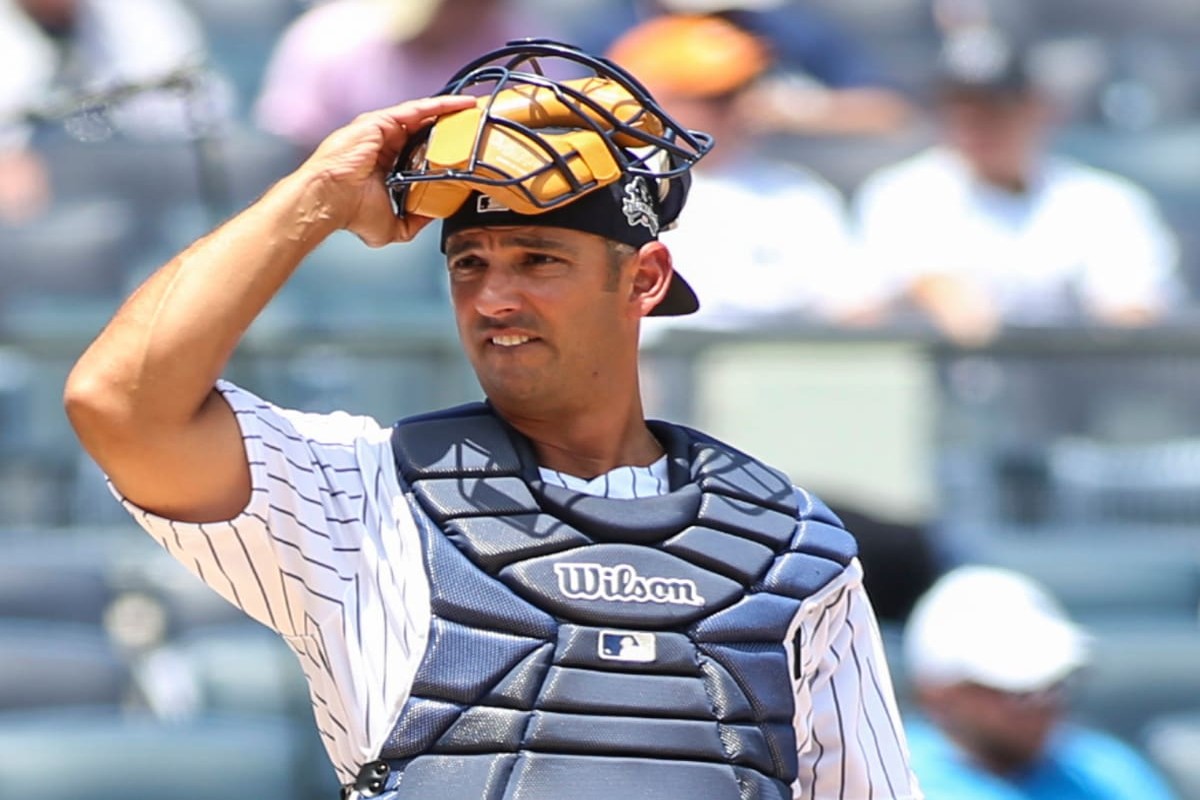
NEW YORK — Ask a Yankees fan about Jorge Posada and the memories arrive fast. Five All-Star nods. Five Silver Slugger Awards. Four World Series rings. A switch-hitting bat that anchored the middle of the order for more than a decade in the Bronx.
Those are the numbers that built his reputation. A .273 career average, 275 home runs and 1,065 RBIs across 17 seasons, all of them in pinstripes. He remains one of only five catchers in MLB history to reach 1,500 hits, 350 doubles, 275 homers and 1,000 RBIs.
Fans point to 2007 as his peak. That year Posada hit .338 with 20 homers and 90 RBIs at age 35, a season almost unheard of for a catcher that deep into his career. From 2000 through 2011, no catcher in baseball drove in more runs or hit more home runs.
Yet the offense is only the part everyone remembers. Buried in the same standout year that started his prime is a defensive oddity so rare that most fans have never heard of it. It has nothing to do with his bat, and it sets him apart from nearly every catcher who ever lived.
A record Yankees fans may not know
In the 2000 season, Posada turned two unassisted double plays as a catcher. Only one other backstop in the history of the sport has done that in a single year. Frank Crossin of the St. Louis Browns managed it in 1914, and no catcher had matched it in the 86 years since.
The unassisted double play is one of baseball’s strangest outcomes. A catcher recording both outs alone, with no teammate touching the ball, almost never happens. Doing it twice in one season put Posada in a category with a single name beside his own.
The scorebook notation for the first one reads DP, 2U. In plain terms, that is a double play, catcher unassisted. For an official scorer to write it at all is unusual. To write it twice for the same player in the same year is close to unheard of.
The play that started it in Arlington
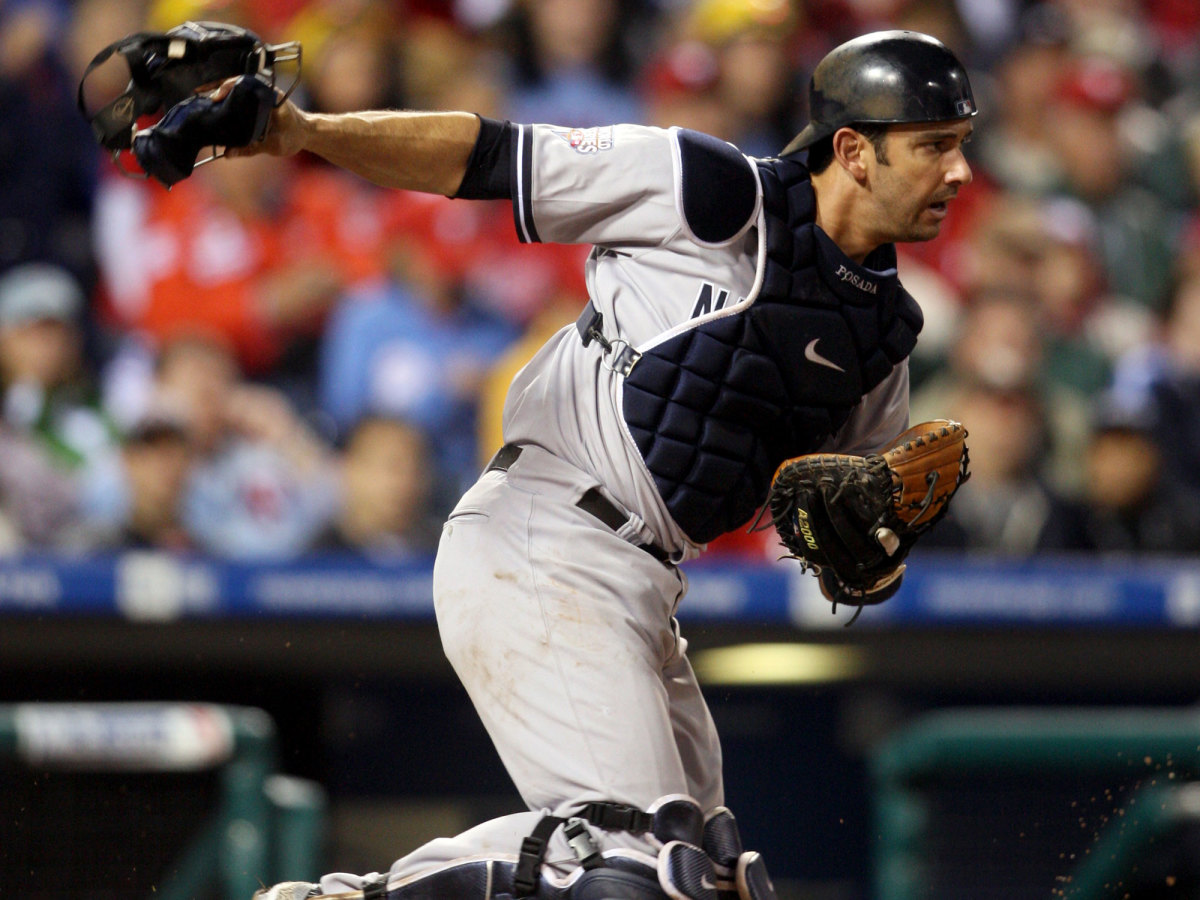
The first came on April 17, 2000, at The Ballpark in Arlington against the Texas Rangers. The Yankees had pushed across a run in the top of the 11th to lead by one. The Rangers loaded the bases with no outs in the bottom half, and the winning run stood 90 feet away.
Todd Erdos entered in relief with the game on the line. Luis Alicea, batting left-handed, chopped a ball in front of the plate. Replays suggested it grazed his leg, but home plate umpire Jeff Kellogg ruled it fair and live.
Posada reacted before anyone else. He grabbed the ball, stepped on home plate to force the runner breaking from third, then tagged Alicea, who had lingered in the batter’s box believing the ball was foul. Two outs, one catcher, no assists.
The play needed a second look. Kellogg initially signaled the run had scored, then checked with his crew at Posada’s urging and confirmed the catcher had touched the plate. The Yankees escaped and won, 5-4, for their sixth straight victory.
Afterward, Posada made a prediction about the odds of anyone ever seeing the sequence again. The rarity of the moment was not lost on him.
“You will never see that again, never,” Posada said. “You will never see an unassisted double play by the catcher. I can see one out, but not a double play. You won’t see it again.”
His manager did not want to think about how close the game had come to slipping away. Joe Torre watched Erdos wriggle out of a bases-loaded, no-out jam for his first career save.
“You don’t want to replay that sucker,” Torre said.
A second one that even Posada did not expect
Less than a month later, Posada did the thing he had just called impossible. On May 12, 2000, against the Detroit Tigers, he recorded his second unassisted double play of the season.
That one arrived through a different path. It was scored as an unassisted double play after an interference call on a strikeout and throw-out sequence. The specific game details are sparse in the public record, but the official scoring stands, and it completed the pair that made the season historic.
The two plays together are what place Posada beside Crossin in the record book. One came on a squeeze that fell apart. The other came on a call that turned a strikeout into two outs. Neither looked like the other, which is part of what makes the feat so odd.
For a player better known for his bat, the double plays are a reminder of the instincts that carried his defensive game. He was never regarded as an elite fielder, but he read developing plays quickly. Both outs on both days came from a catcher thinking a half-step ahead of everyone else on the field.
A footnote that outlasts the box scores
Posada retired after the 2011 season having spent his entire career with the Yankees. He is not in the Hall of Fame, and the debate over his defense has followed him. The unassisted double plays sit oddly against that reputation, evidence of a sharp baseball mind even on the days his glove drew criticism.
The offensive milestones are the ones that get repeated. The rings, the Silver Sluggers, the run of dominance among catchers from 2000 to 2011. The 2000 season alone brought a first All-Star Game, a Silver Slugger and a World Series title over the crosstown Mets.
The unassisted double play record hides beneath all of it. More than two decades later, Posada and Frank Crossin remain the only catchers to turn two in a single season. It is the kind of Yankees history that rarely makes the highlight reels, and it belongs to a player most fans think they already know by heart.
What do you think? Leave your comment below.