NEW YORK — The Yankees spent most of the summer believing their bullpen could absorb a postseason race and let deadline pass without an addition.
New York’s relief corps owned the best ERA in the majors in early August, and the late innings looked stable enough for the front office to spend elsewhere.
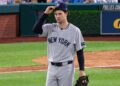
But everything unraveled Tuesday night at Yankee Stadium. The Yankees carried three different leads against Houston and still lost 9-7 after the bullpen collapsed. Fernando Cruz surrendered Jeremy Pena’s two-run homer in the sixth that erased a 5-3 Yankees lead.
Next day, he was placed on the injured list with a likely surgery decision looming.
Cruz had already become a warning sign inside an otherwise strong pitching staff. He posted a 2.25 ERA across 44 appearances before the All-Star break, then a 5.52 ERA in 17 outings afterward, according to MLB’s updated Yankees coverage. His season line still stood at 4-6 with a 3.13 ERA, two saves and 61 appearances, but the trend had changed.
The timing matters. It now leaves Boone and the front office with less proven depth just as the schedule and standings make every inning more expensive. That decision is now being tested by injuries and performance uncertainty across a relief group the Yankees expected to carry October leverage.
But the biggest question came with Cruz’s disclosure Thursday.
Cruz’s second-half numbers make timeline stand out
Cruz’s 5.52 ERA over 17 second-half appearances was more than twice his 2.25 mark over his first 44 games.
Baseball Savant lists his 2026 four-seam fastball at 93.2 mph on average. Opponents hit .311 with a .541 slugging percentage against it. Peña’s game-tying homer Tuesday came on a four-seamer at 91.5 mph.
One pitch cannot diagnose an elbow problem. Still, Cruz’s performance slide combined with his three-week disclosure makes the Yankees’ monitoring process part of the story.
Cruz says discomfort lasted about three weeks
The larger issue surfaced after Cruz finally told the Yankees what he had been feeling. An MRI revealed a partial tear of the ulnar collateral ligament in his right elbow. Cruz is seeking a second opinion from Dr. Keith Meister, and Tommy John surgery remains on the table.
Cruz said the discomfort had been present for roughly 20 days to three weeks. He believed it was inflammation or another familiar problem he could pitch through because he had felt similar symptoms three or four times earlier in his career.
He hopes rest, injections and medication can help him avoid surgery. No decision has been made, and his 2026 season is over regardless of the treatment path.
Cruz said the diagnosis initially left him emotional before he settled into a calmer view of what happened.
“I think it happened to the right guy. Everything that happened, I think it has a purpose,” Cruz said.
The disclosure creates an obvious Yankees question: How did a high-leverage reliever continue pitching for about three weeks before imaging revealed a partial UCL tear?
The public record does not show that Boone, the Yankees medical staff or the front office knew about Cruz’s symptoms for those three weeks. MLB’s official Yankees injury report says testing followed his Aug. 25 appearance and led trainers to recommend an injured-list move.
There is no evidence the Yankees knowingly used Cruz with a diagnosed ligament tear. There is, however, a fair question about whether his worsening results should have prompted a deeper physical check sooner.
Deadline decision leaves Yankees with less bullpen margin
The Yankees did not acquire a relief pitcher at the 2026 trade deadline. A New York Post review noted it was their first deadline without adding a reliever since 2019, excluding 2020.
At the time, the Yankees bullpen owned a 3.33 ERA, best in MLB, and had posted a 2.56 ERA over its previous 55 games.
Now, the Yankees have signed Michael Fulmer and added Justin Topa. Clarke Schmidt is beginning a minor league rehab assignment, while Ryan Weathers, Luis Gil and Angel Chivilli remain possible internal reinforcements.
Nothing in the available timeline proves the lack of a deadline reliever forced the Yankees to keep using an injured Cruz. It did reduce the club’s margin for error, making his loss more costly.
Past Yankees cases keep injury oversight in focus
Anthony Rizzo played for more than two months after a May 28, 2023 collision with Fernando Tatis Jr. He passed MLB’s concussion protocol, but the Yankees placed him on the injured list Aug. 3 with post-concussion syndrome after testing showed cognitive impairment.
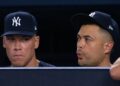
Giancarlo Stanton said he played through pain in both elbows for much of 2024. Severe tendon injuries delayed his 2025 season, although Cashman later said Stanton’s complaints had not surfaced with the club until shortly before camp.
Anthony Volpe felt a pop in his left shoulder on May 3, 2025, continued playing after encouraging initial imaging and received two cortisone injections. Offseason surgery later showed more extensive labrum damage than expected.
Those cases created debate over the Yankees negligence. They do show the difficulty of protecting players who believe they can compete through discomfort.
Cruz now waits for Meister’s opinion while the Yankees move forward without a trusted setup arm. Current evidence does not show New York knew he had a torn UCL for three weeks. The harder question is whether the Yankees had enough warning signs to investigate before Cruz finally spoke up.
What do you think? Leave your comment below.