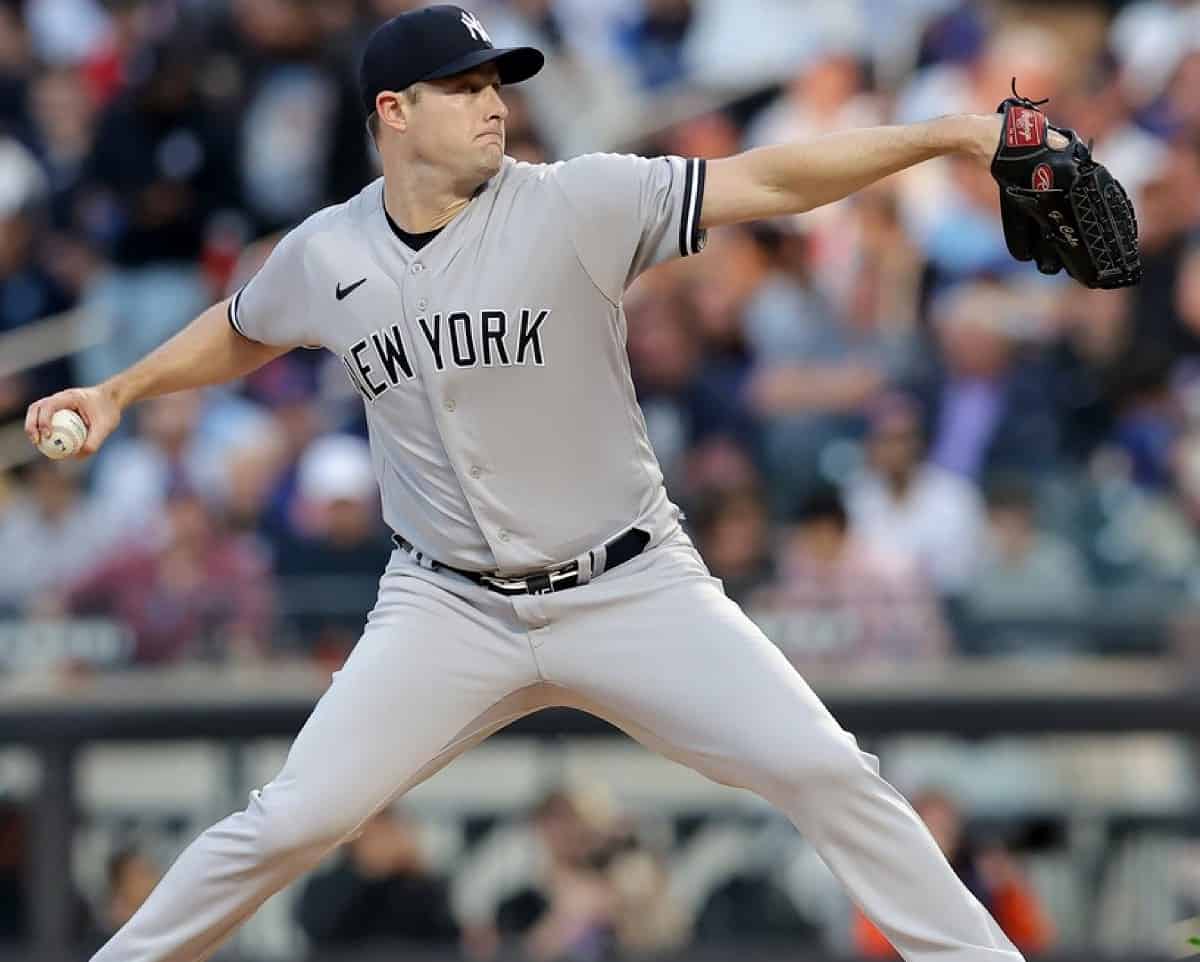
NEW YORK — The Yankees have made a $23.15 million commitment available to David Bednar, yet the more consequential decision concerns who controls his future beyond next season.
The closer is coming off the most demanding workload of his major league career. Keeping him is one of the clearest priorities in an offseason with several bullpen vacancies.
Bednar converted 35 of 39 save chances in 2026, tying for fifth in the majors, and finished 7-3 with a 2.47 ERA, 1.04 WHIP and 76 strikeouts over a career-high 69 1/3 innings in 64 appearances. It was their highest save total since Aroldis Chapman’s 37 in 2019.
After arriving from Pittsburgh at the 2025 trade deadline, Bednar has accumulated 45 saves in 86 regular-season appearances for New York while posting a 2.39 ERA. He has handled the Bronx and gives Aaron Boone an established closer.
The Yankees have until Nov. 17 to learn whether Bednar accepts their one-year qualifying offer. That deadline is approaching as the club also explores a longer agreement, with the expiration of MLB’s collective bargaining agreement on Dec. 1 adding urgency.
Yankees count on coaching relationship as leverage
The Yankees believe their familiarity with Bednar offers something competing teams cannot reproduce quickly. His relationship with the pitching department has been built around communication, small adjustments and an unusual willingness from an established closer to work with his coaches.
Bullpen coach Preston Claiborne praised that working relationship when describing how Bednar and the staff approached refinements to his repertoire.
“It’s been awesome,” Claiborne said.
Bednar described the process as a shared effort rather than a directive from the coaching staff.
“Just a little minor tweak that they saw and it was kind of a collaborative effort,” Bednar said.
On May 17, the Mets’ Tyrone Taylor hit a first-pitch curveball for a tying three-run homer in the ninth. The Yankees lost 7-6 in 10 innings. The staff recognized a broader trend of hitters hunting Bednar’s early-count breaking ball and worked with him to vary his first-pitch selections.
Instead of losing confidence, Bednar sustained a 24-inning scoreless streak from May 22 through July 27, New York’s longest of 2026 and the longest by a Yankees reliever since Clay Holmes went 31 1/3 innings without allowing a run in 2022. His career-best 51.6% ground-ball rate also reflected the effectiveness of his approach.
That history gives Bednar reason to value continuity with Claiborne and pitching coach Matt Blake. It gives the Yankees a persuasive recruiting argument, but the established trust still must translate into acceptable contract terms.
The dividing line complicates efforts to retain closer
The Yankees expect to keep Bednar but not with an one-year deal. But the obstacle is not simply the number of seasons. It is the balance of security and flexibility inside a possible three-year contract, according to information provided by a person familiar with the discussions.
The Yankees are open to a three-year arrangement that guarantees the first two seasons but reserves the third as a club option, the person said. Bednar, meanwhile, wants a three-year contract with an opt-out clause tied to the third season.
Those positions leave the sides at odds over two interconnected terms: the third-year option and the amount of guaranteed control the pitcher receives. New York wants the ability to decide whether to retain him for that final year. Bednar wants the contractual ability to make his own decision.
A club option would let the Yankees avoid a third-season commitment if performance or health declines. A player opt-out would give Bednar an avenue to return to the market if his value rises. Both structures can be attached to a deal spanning three seasons, but the financial exposure and leverage would be different.
The disagreement matters because Bednar enters the market at 32 after a rebound that strengthened his standing among available relievers. His $23.15 million qualifying offer carries a higher annual salary than many multiyear projections, but guarantees only one season.
The best route after the qualifying offer
The most direct solution would be for Bednar to accept $23.15 million for 2027. The Yankees would retain their closer without committing to his mid-30s, although he could return to free agency after the season.
A longer agreement could lower the annual payroll charge while increasing the guaranteed total. One proposed model is three years and $45 million; another is three years and $51 million, potentially incorporating a signing bonus or limited deferrals. Those figures are contract scenarios, not offers confirmed in the current negotiations.
A third possibility is two years and $40 million with a vesting option for another season tied to appearances. That links the final year to availability. It also illustrates why the existing disagreement over a club option versus a player opt-out is difficult to settle: the sides assign control of the third season differently.
Bednar’s 5.77 ERA in 2024 is a reminder of the year-to-year risk in multiyear reliever contracts. But the Yankees would also assume risk by letting their established closer leave while several other bullpen spots remain unsettled. Prospect Carlos Lagrange could eventually provide another late-inning choice, though he is not a proven major league closer.
Timing adds pressure. Bednar’s qualifying-offer deadline is Nov. 17, and the collective bargaining agreement expires Dec. 1, raising the possibility of a lockout that would halt major league transactions. For now, the Yankees have made clear why they want Bednar back. Their next task is finding a structure that protects the club without asking the closer to surrender the control he wants.
What do you think? Leave your comment below.