


NEW YORK — The New York Yankees closed out another season of October frustration, leaving the front office facing a major decision that could shape the team’s 2026 direction.
Rookie right-hander Will Warren gave them both reasons to believe and reasons to hesitate. His first full year in pinstripes brought flashes of promise and moments of concern, sparking debate over whether the Yankees should hold onto him or move him while his trade value remains strong.
A season of durability amid disappointment
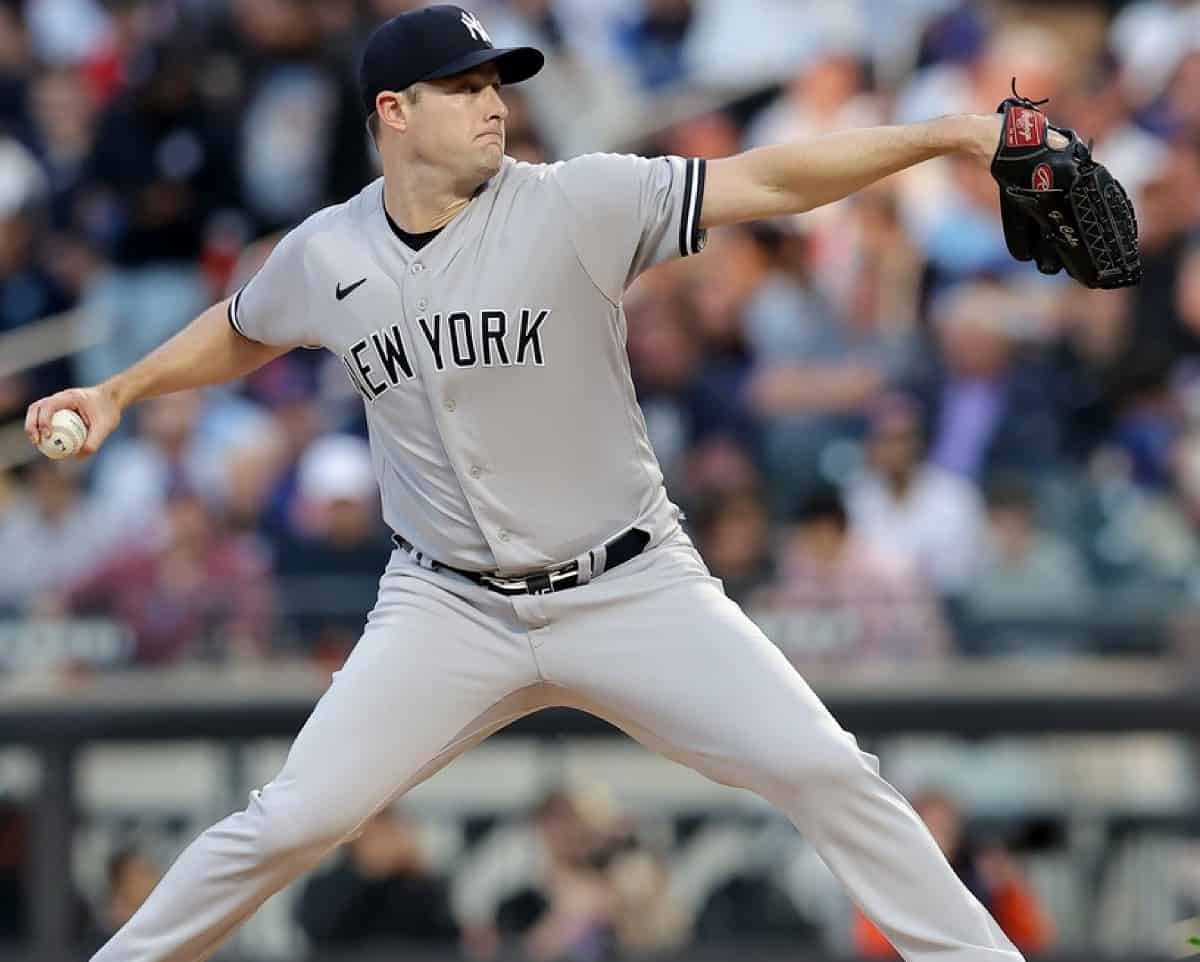
Warren entered spring training as the Yankees’ seventh rotation option. By season’s end, he had worked his way into a dependable starter, logging 33 starts and 162 1/3 innings. His 4.44 ERA and 171 strikeouts only tell part of the story.
The Mississippi native became just the third Yankees rookie ever to start at least 33 games in one season, and the only rookie in all of baseball to do so in the past 17 years. His ability to stay healthy and take the mound every fifth day stood out on a roster battered by injuries.
Warren emerged as one of the Yankees’ most consistent arms behind Max Fried and Carlos Rodon. That reliability was impressive for a 26-year-old rookie.
“I think as starters, being able to post every five days, come out there and throw and eat innings and go as deep as you can in the game to give these guys a chance to win (is the key),” Warren said. “That’s 33 starts. Max (Fried) had 32 and Carlos (Rodón) had 33. I think that’s pretty remarkable for three guys to go the whole season and not really miss any. I think I’m most proud of that.”
Manager Aaron Boone also praised the young right-hander’s growth.
“Really good, and he’s not done yet, either,” Boone said. “But if you would have told me at the start of the year he’s going to make 33 starts and give you 160 innings, strike out 10 per nine, have some bumps along the way… man, he did a lot of really good things and was a staple in our rotation.”
The underlying numbers tell a different story

While Warren’s surface numbers looked solid, the deeper analytics raised red flags. His first-half results showed strong potential, with a 3.46 FIP, 3.58 xFIP, and 10.57 strikeouts per nine innings over 20 starts. Yet his ERA still sat at 4.63 — suggesting bad luck or inconsistency.
The second half painted a different picture. His ERA dropped to 4.16, but advanced stats showed regression ahead. A 5.27 expected ERA and 4.93 FIP in his final 67 innings pointed to problems that surfaced late in the season.
September was rough. Warren posted a 6.46 ERA over his final three starts, then struggled in the postseason. He allowed six earned runs in just 4 2/3 innings in Game 2 of the ALDS against the Blue Jays, who went on to eliminate the Yankees in four games.
Baseball Savant data revealed concerning trends. His 91.0 mph average exit velocity ranked in the seventh percentile of MLB pitchers, and his 45.3 percent hard-hit rate placed him in just the 14th percentile. Hitters consistently made solid contact, an issue that could worsen without adjustments.
Teams showed interest before, could again
Before the season, multiple teams tried to trade for Warren. According to ESPN’s Jeff Passan, the Yankees received several offers for the right-hander but held firm, confident that his rough 2024 debut — a 10.32 ERA — didn’t reflect his true ability.
Their patience paid off during the regular season as Warren proved capable of holding down a rotation spot. His mix of durability and strikeout potential made him an attractive piece.
However, his late-season decline and underlying metrics raise questions about whether his success is sustainable. Some clubs might still be drawn to his surface stats, but that interest could fade quickly if deeper scouting continues to show warning signs.
The case for trading Warren now
The Yankees enter 2026 with rotation uncertainty. Gerrit Cole and Carlos Rodón are both expected to start the season on the injured list. Even with Fried, Luis Gil, Cam Schlittler, and Warren available, the group lacks proven depth behind the front three.
From a value standpoint, this may be the peak time to trade Warren. He’s under team control through 2030, giving him long-term appeal for teams seeking affordable pitching. His 33 starts and 171 strikeouts strengthen his trade profile.
But those same teams could grow cautious once they dig into his advanced numbers. The hard contact rates and exit velocity figures hint at underlying issues. If those don’t improve, his trade value could decline rapidly.
Given their current depth and prospect pipeline, the Yankees could afford to move him. With several young arms close to the majors, Warren becomes more expendable. Some pitchers, like Schlittler, are viewed as long-term pieces. Warren doesn’t appear to fall in that untouchable category.
Moving Warren could also help the Yankees upgrade elsewhere. The bullpen remains a weakness after another playoff collapse. Offensive depth and bench versatility are also on the offseason checklist. Using Warren in a trade could fill multiple needs at once.
After another year of postseason frustration, New York’s front office plans to explore all options. Nothing appears off the table in its search for roster balance.
The case for keeping Warren

The Yankees might also decide that trading Warren is too risky given their injury concerns. With Cole and Rodon rehabbing, reliable innings are at a premium. Warren’s durability — 33 starts in a full season — is rare in today’s game. That consistency is valuable, especially for a staff that struggled to stay healthy.
His flexibility adds another layer of appeal. Warren showed maturity by accepting any role asked of him, including a potential bullpen spot in the postseason.
“Ultimately, I just want to win,” Warren said. “I’m willing to do whatever, however that looks. We’ll take it and run with it.”
That attitude matters in New York’s clubhouse. Boone and the Yankees have long valued players who handle the city’s pressure and perform without excuses. Warren fits that mold, even if his ceiling remains uncertain.
Decision time approaches
The Yankees now face a difficult decision. Warren’s rookie season proved he can survive — and occasionally thrive — in the majors. It also exposed limitations that may prevent him from becoming more than a back-end starter.
Other clubs still see upside in his youth and strikeout numbers, but those advanced analytics could soon temper enthusiasm. The Yankees have a narrow window to decide whether to capitalize on his trade value or bet on internal development.
With Rodon sidelined early next year, Cashman’s decision may come sooner than expected. The Yankees will be active in trade talks this winter, and Warren could be part of a package for immediate help.
Warren has shown he belongs in the big leagues. Whether he belongs in the Yankees’ long-term plans is the question that will define New York’s offseason strategy. The countdown to that decision has already begun.
What do you think? Leave your comment below.












Will Warren I believe is one guy who will eventually get traded away, as early as this off season, or at the trade deadline. He will be a very solid #3-$4 SP in this league for a long time.