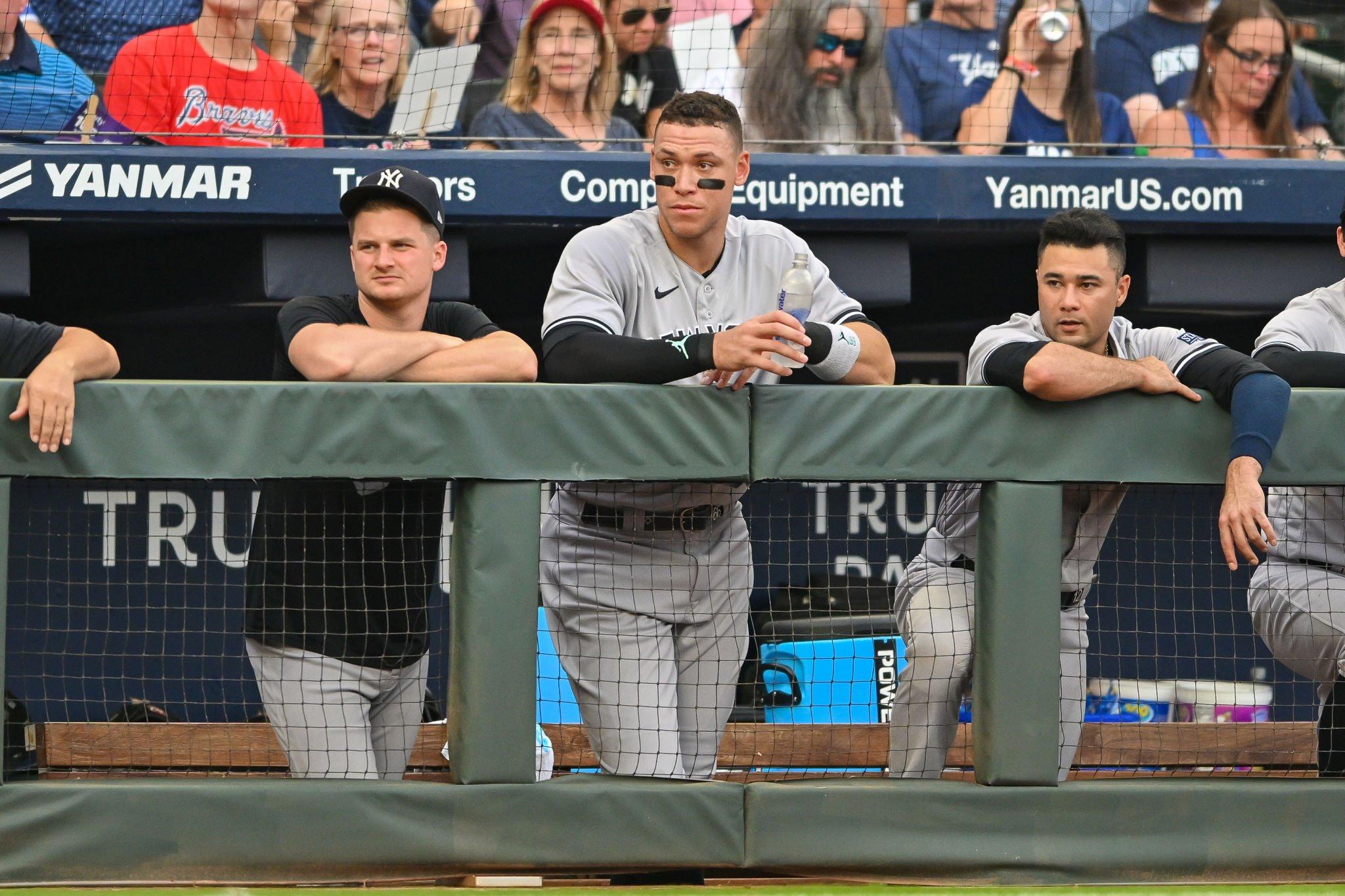
NEW YORK — Yankees fans spent the All-Star break asking one question. The catcher spot has produced the worst offense in baseball. The Yankees captain has been out since June with a fractured rib. The bullpen’s underlying numbers say it is worse than its ERA suggests.
The answer they wanted was money. With the Aug. 3 trade deadline approaching and the Yankees chasing Tampa Bay in the AL East, the demand from the stands has been simple and loud. Spend.
On Wednesday, a number arrived that dwarfed anything a deadline trade could cost. It came from Wall Street rather than a rival front office, and it carried nine zeros.
The figure will not buy the Yankees a catcher. It will not buy a reliever, or a third baseman, or a bat to cover for Aaron Judge. Reading past the headline reveals where nearly $3 billion is actually going, and it is not the lineup.
What the talks actually involve
Bloomberg reported Wednesday that the Yankees are in advanced negotiations with Apollo Global Management for a financing package worth close to $3 billion. Sportico placed the range between $2 billion and $3 billion, describing a mix of debt and equity.
The money would flow into Yankee Global Enterprises, the parent company controlled by Hal Steinbrenner and his family, rather than into the baseball team’s payroll account. YGE is a holding structure with assets well beyond the ballpark.
Those assets explain the appetite. YGE owns roughly 26 percent of the YES Network, about 16 percent of the hospitality company Legends, 10 percent of Serie A’s AC Milan and 10 percent of MLS’ New York City FC.
The stated uses are unglamorous. Reporting indicates the funds would partly refinance existing debt, with the equity portion directed toward buying out some limited partners and the remainder aimed at growth opportunities. Deliberations continue, and no final decisions on size or structure have been made.
Control would not change hands. MLB rules cap a single private equity fund at 15 percent of a franchise and bar institutional firms from majority ownership. The Steinbrenner family would keep control of both YGE and the Yankees.
Why fans will not see it in the lineup
Refinancing debt swaps one obligation for another on better terms. Buying out limited partners transfers existing ownership stakes between parties. Neither transaction creates payroll room, and nothing in the reporting connects the package to player spending.
The payroll picture explains why that distinction stings. The Yankees carry roughly $324 million in player spending this season and are being assessed at the 50 percent luxury tax rate, the penalty for a third straight year above the threshold, with additional surcharges stacked on overages.
Steinbrenner has been candid that the number troubles him. Asked in the offseason whether payroll could come down, he acknowledged the tension between his preference and his obligation.
“Would it be ideal if I went down [with the payroll]? Of course,” Steinbrenner said. “But does that mean that’s going to happen? Of course not. We want to field a team we know could win a championship, or we believe could win a championship.”
The Yankees boss has also rejected the premise that revenue alone tells the story. Pressed on whether the club turns a profit, Steinbrenner pointed to costs that rarely surface in fan arguments.
“Everybody wants to talk about revenues. They need to talk about our expenses, including the $100 million expense to the city of New York that we have to pay every Feb. 1, including the COVID year. It all starts to add up in a hurry,” Steinbrenner said.
The business the deal would transform
The scale is easier to grasp against the franchise’s valuation. Sportico values the Yankees at $9.4 billion, first among MLB clubs for the sixth consecutive year and seventh among all global sports franchises. Forbes puts the figure at $8.5 billion.
Apollo brings the resources of a firm managing $1.03 trillion in assets as of March 31. Its sports fund launched last year under chief executive Al Tylis, with Rob Givone and Lee Solomon as co-portfolio managers and Sam Porter as chief strategy officer.
The fund has moved quickly. It invested in the Mutua Madrid Open and Miami Open tennis tournaments in partnership with Ari Emanuel and Mark Shapiro, then made its biggest swing by buying control of LaLiga club Atletico Madrid at a $2.5 billion valuation, a deal that closed in March.
A Yankees deal would be the firm’s largest US sports investment. Marc Rowan, Apollo’s co-founder and chief executive, laid out the ambition on a February earnings call, describing the sports business as a gateway to far more than the fund itself.
“In addition to deploying the $6 billion or so in the Sports Capital Fund, I believe this ecosystem will generate $30 billion to $50 billion of origination opportunities,” Rowan said.
The trend is industry-wide. Arctos Partners, CVC Capital Partners and Ares Management have all pushed into sports, chasing long-term yields as institutional capital floods leagues that once relied on family owners.
Where the talks stand
Neither side is talking. Apollo declined to comment, and the Yankees did not respond to requests for comment. Negotiators are still finalizing the size and structure, which means the reported figure could move before anything is signed.
The timing is what fans will remember. A potential $3 billion transaction surfaced the same week the second half opened, with a roster carrying obvious holes and a deadline barely two weeks out.
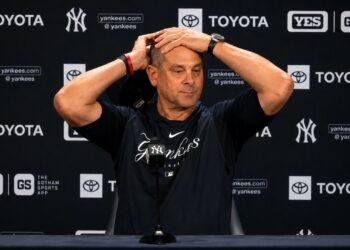
The Yankees returned Friday against the Dodgers at Yankee Stadium sitting at 54-42. Whatever Apollo ultimately provides will reshape the balance sheet of a $9 billion enterprise. The lineup Aaron Boone writes out will be built with different money entirely.
What do you think? Leave your comment below.