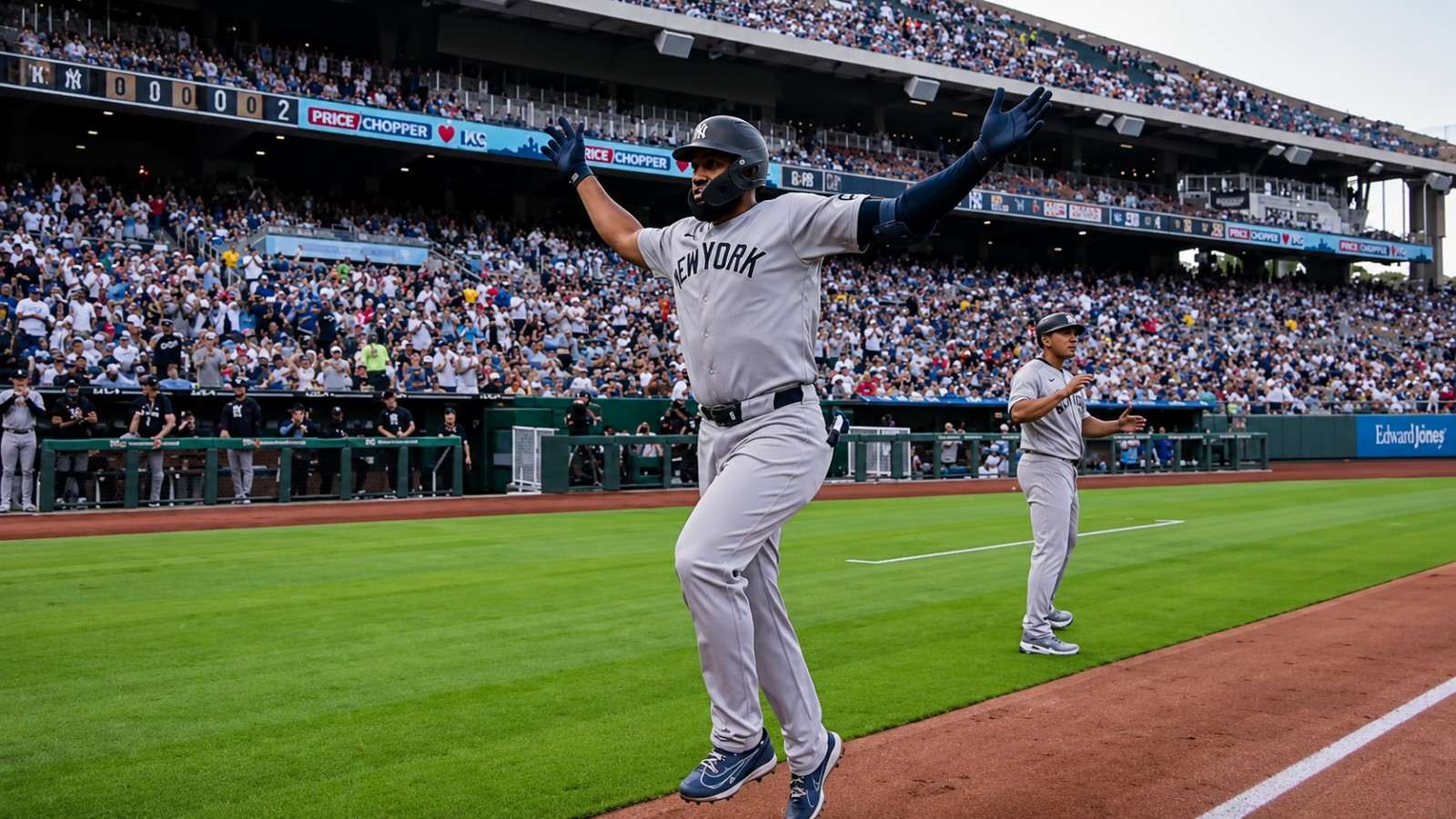
KANSAS CITY — Amed Rosario walked into Kauffman Stadium on Tuesday night having not started a game in eight days. He had not played at all in six. He was the forgotten man in a New York Yankees lineup that has been juggling injuries, slumps, and roster questions for weeks.
By the end of the night, he was the loudest case for change anyone in the Yankees clubhouse had made.
The 30-year-old utility infielder went 4-for-6 with two home runs, three runs scored, and four RBIs in the Yankees’ 15-1 demolition of the Kansas City Royals. He drove in the first big runs of the night. Rosario drove in the last runs of the night. He did everything a player asking for more playing time could possibly do in nine innings of baseball.
What Rosario actually did at the plate
The first homer came in the opening inning. With Paul Goldschmidt on base after a double and Ben Rice having just delivered an RBI single on an overturned challenge, Rosario stepped in against Royals opener Bailey Falter. He worked the count to 1-0. Falter threw a hanging curveball. Rosario yanked it 420 feet into the left field stands for a two-run shot. The Yankees suddenly led 4-0 before they had even taken the field.
The second homer came in the ninth inning, this time off Royals position player Tyler Tolbert who was lobbing 44 mph pitches just to finish the game. Rosario crushed it for his second two-run blast of the night, pushing the score to 15-1.
It was Rosario’s fourth career multi-home run game. He joined his previous outings of April 7, 2026, Aug. 31, 2021, and May 20, 2018. The 2021 game also happened at Kauffman Stadium. The Royals’ ballpark has been a strange comfort zone for him.
Rosario, asked through an interpreter about being part of the historic offensive night where every starter recorded at least two hits, kept the focus on the team rather than himself.
“Feels great to be part of Yankee history,” Rosario said. “It’s a great fraternity. It’s great to be part of that. It’s a team effort.”
The case for giving Rosario more starts
Tuesday was not an isolated outburst. It was a continuation of a quietly strong season hidden inside an inconsistent role. Over 95 plate appearances this season, Rosario is slashing .279/.316/.547 with six home runs, 13 runs scored, and 20 RBIs. The slash line is not just good for a utility man. It is better than what the Yankees are currently getting from two of their three primary infield starters.
The most obvious comparison is at third base. Ryan McMahon, acquired from the Colorado Rockies at the 2025 trade deadline as a defense-first regular, has produced a .172/.294/.276 slash line through his first 25 games this season. His batting average dipped as low as .125 after the Yankees’ April 22 win over Boston. His OPS sat at .376 through 42 plate appearances earlier in May. He has rebounded slightly with a .319 average over a recent 15-game stretch, but his season line still shows a 62 wRC+, which would be an easy career worst.
McMahon has also struggled badly against right-handed pitching specifically. He has hit .111 with a 32.6 percent strikeout rate against righties this season. He has been platooned on nights when the Royals threw right-hander Michael Wacha, with Rosario starting at third base instead. The Yankees have already begun building this exact use case. Tuesday’s two-homer performance just turned the volume up on it.
The case at second base is more nuanced. Jazz Chisholm Jr. has been streaky. He carried a .203 average and a .607 OPS through 43 games before catching fire over a recent five-game stretch with a 1.433 OPS. When Chisholm is hot, he is one of the best second basemen in the American League. When he is cold, he produces less than what Rosario has produced all season at the plate. Rotating Chisholm to the bench against tough left-handers and slotting Rosario at second base would not weaken the Yankees offensively. It might strengthen it.
First base is the third lever. Paul Goldschmidt has settled in as the everyday starter at the position after beginning the year in a reserve role. But Goldschmidt is 38. He needs rest days during a long summer. Ben Rice can split time at the position. Rosario adds another option for those days, allowing the Yankees to keep his bat in the lineup without removing other regulars.
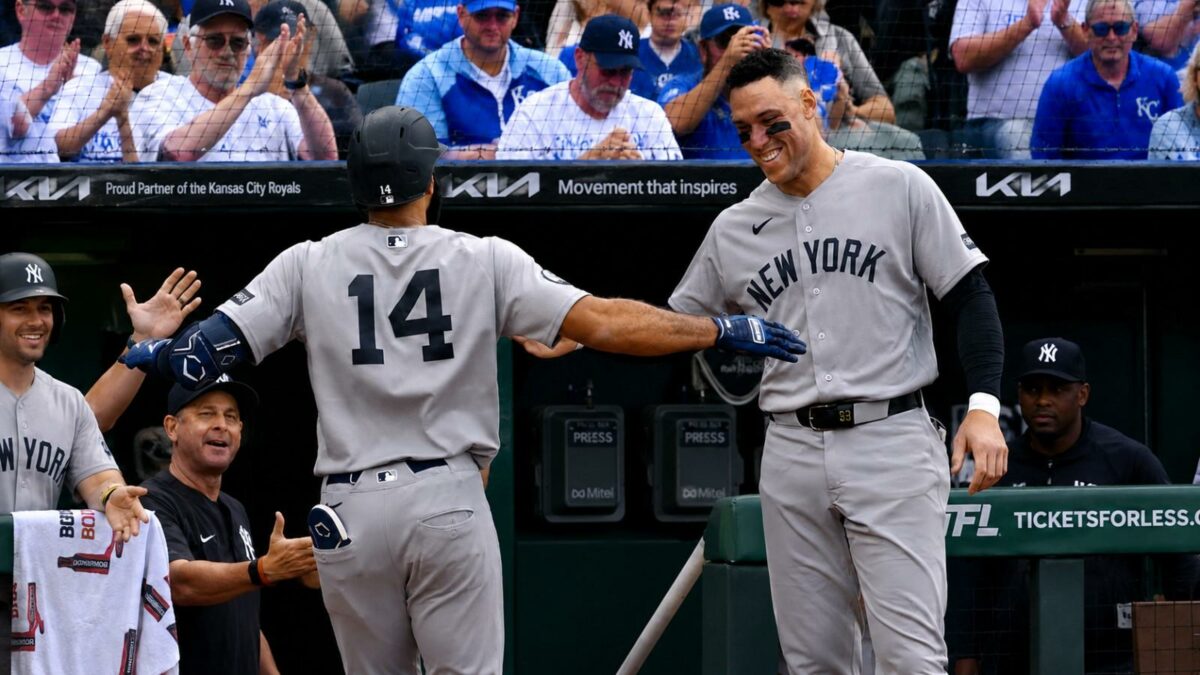
Why Rosario fits this Yankees roster better than most utility men
Rosario is not a typical bench player. He has averaged more than 130 games played in five different seasons. He was an everyday shortstop for parts of his time with the Mets, the Guardians, and the Dodgers. He has experience at second base, third base, and the outfield. He has 95 plate appearances of his own with the Yankees this year, which is more than a true bench piece would typically receive.
Rosario’s right-handed bat also fills a specific need against left-handed pitching. Both McMahon and Chisholm are left-handed hitters. Rice is left-handed. Trent Grisham is left-handed. The Yankees stack lefties throughout their everyday lineup. Rosario gives Boone a legitimate right-handed bat to rotate in without sacrificing average or power.
His .279 average and .547 slugging percentage in limited reps suggest a player who could produce more given consistent at-bats. The risk in giving him more starts is small. The upside is significant.
Rosario’s two-homer night gives Boone exactly that. The 30-year-old has played all four infield positions and the outfield in his career. He has hit lefties well. He has performed when called upon. And on a night when the Yankees made franchise history with all nine starters reaching two hits, Rosario was at the center of it.
The player who just delivered four hits and four RBIs to power one of the loudest wins of the Yankees‘ season has earned the right to be part of that conversation.
Rosario’s case is not subtle anymore. The Yankees were watching. The next move is theirs to make.
What do you think? Leave your comment below.