


MESA, Ariz. — Seventy-five years ago, the New York Yankees were in Arizona for the first and only time. A rookie switch-hitter from Oklahoma was making everyone in the organization question what they were seeing. They didn’t sent him back to the minors.
The rookie got an MLB spot as right fielder and went on to become the greatest Yankees hitter of his generation. This week, the Yankees were back in Arizona. And another young hitter, broad-shouldered and impossibly large, was making people ask the same kinds of questions. The Yankees’ answer was the same, too.
The ground where Mantle first announced himself

In February of 1951, the Yankees arrived in Arizona’s Phoenix for their only spring training in the state, arranged by co-owner Del Webb, who lived there and swapped training locations with the Giants’ Horace Stoneham. With them came a 19-year-old Mickey Mantle, who had batted .383 with 26 home runs and 136 RBI for Class C Joplin the previous season and been named the top minor league prospect in the country by The Sporting News.
Nobody expected Mantle to vault from Class C ball straight to the defending World Series champions. He went to Arizona anyway and rewrote expectations before the spring was over. He batted .402, led the club with nine home runs and 31 RBI, and was described by one observer as the most precocious juvenile player seen in a major camp since Mel Ott arrived at 16 with the Giants.
Manager Casey Stengel selected Mantle as right outflieder. The Yankees opened the 1951 season with Mantle on the roster. They sent him down in July, called him back up in August, and watched him anchor their lineup for 18 seasons after that.
A different generation, the same Arizona ground
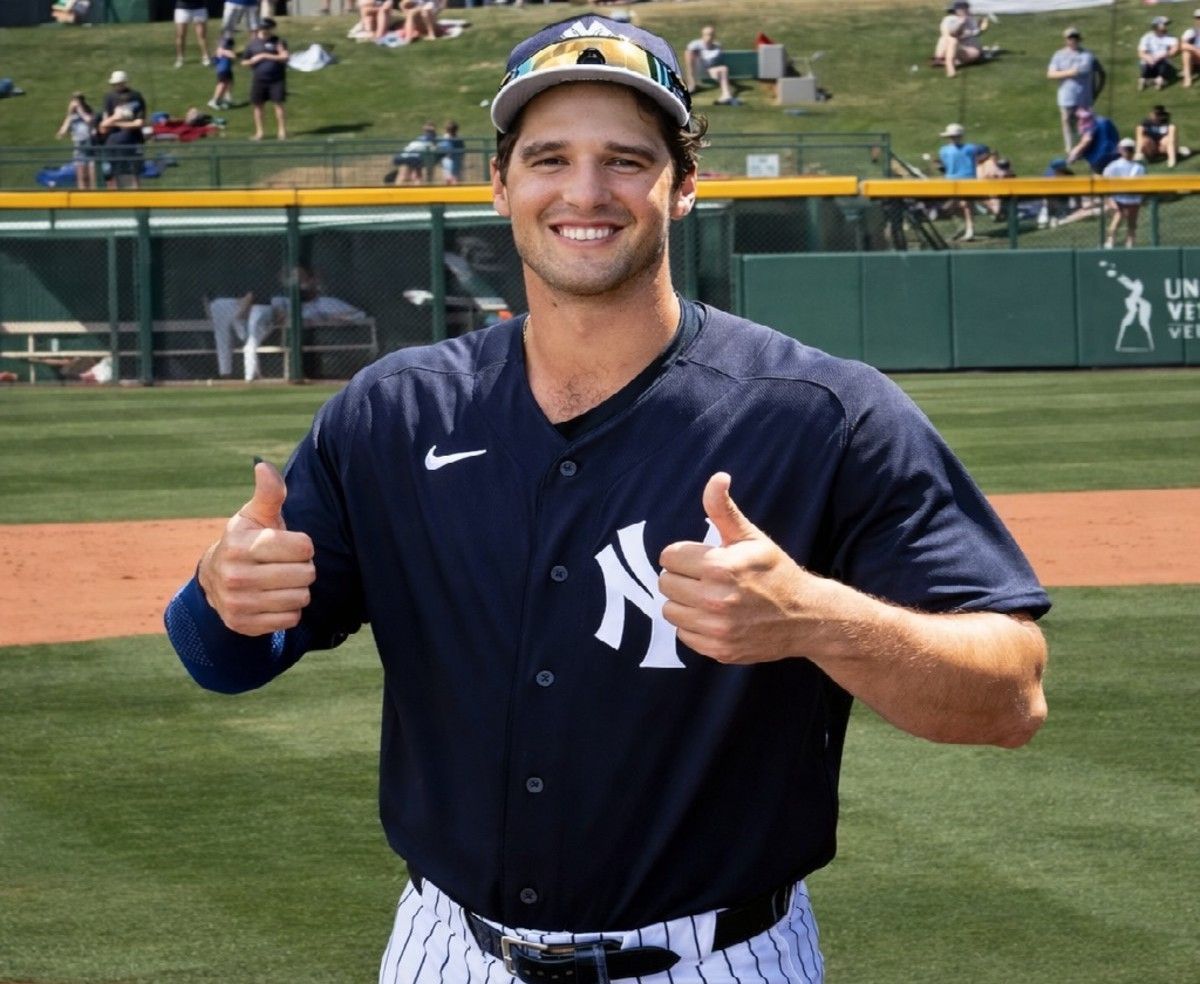
On Monday, March 23, the Yankees played at Sloan Park in Mesa, the final stop on their spring training schedule before heading to San Francisco for Wednesday’s season opener. It was their last game in Arizona. Among the players in the lineup was Spencer Jones, a 24-year-old outfielder from the Vanderbilt system who stands 6 feet 7 and hits with a violence that makes scouts reach for their radar guns even on routine fly balls.
Jones had already been reassigned to minor league camp. The game did not count in a formal sense. But the young outfielder made it matter.
Entering as a pinch hitter in the seventh inning against Cubs setup man Phil Maton, Jones turned on a changeup and drove it 372 feet to right field for a home run. He returned in the ninth inning against Jacob Webb and went the other way, making contact at 104.5 mph off the bat. Two home runs. Two at-bats off projected major league relievers.
Manager Aaron Boone saw both swings and was direct with reporters afterward.
“Really good to see. The homers, yes, but just the more consistent quality of the at-bat has been there, and that’s been noticeable all spring.”
Six spring home runs, a 1.345 OPS, and still no roster spot
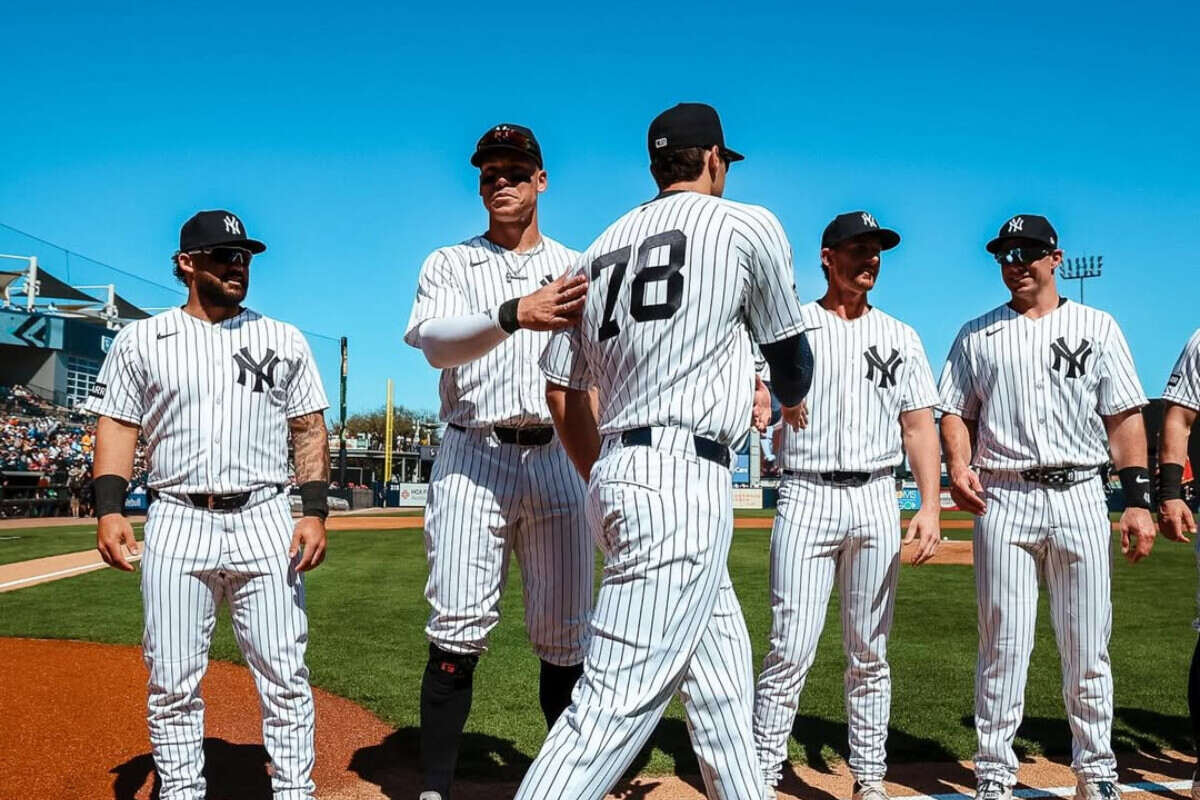
The Mesa performance was the exclamation point on a spring that already told a compelling story. Jones finished Grapefruit League play batting .333 with a 1.345 OPS in 28 plate appearances, striking out at a 29 percent rate, well below the alarming figures that have defined his minor league career. He left Arizona with six home runs this spring, including two off major league arms in the Cactus League finale.
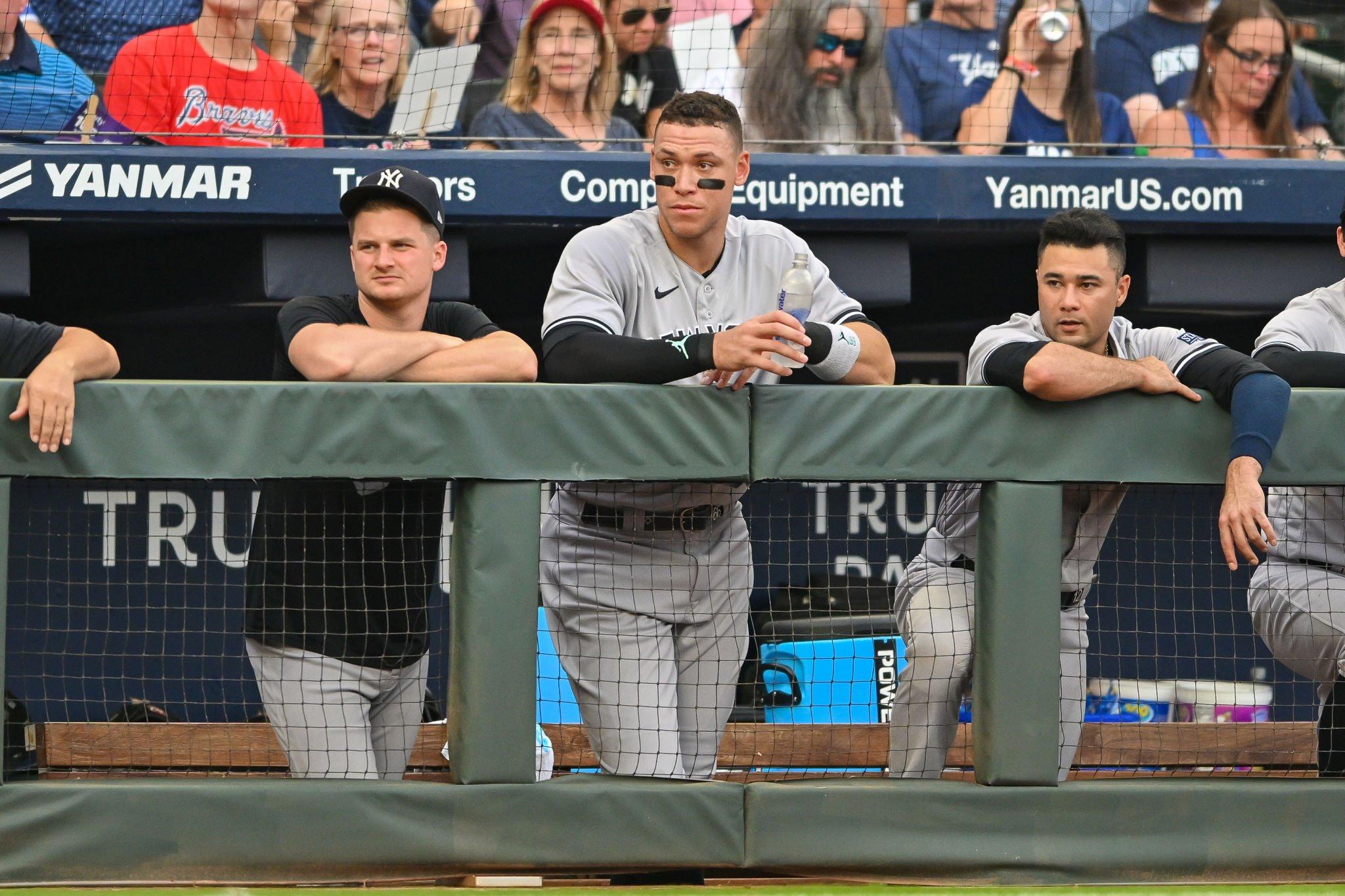
Aaron Judge, who is also 6 feet 7 and has watched Jones closely in camp, noticed a mechanical change in Jones’ approach this spring that he believes matters.
“The minute he puts that foot down with that little toe-tap, he’s ready to hit. They might have gotten him with a lot of high heaters in the past, or even last season. I think that’s just going to help him.”
And yet, Jones will begin the 2026 season at Triple-A Scranton/Wilkes-Barre. He was reassigned to minor league camp before the Arizona trip, a decision driven by roster construction rather than performance. The Yankees’ outfield carries Aaron Judge, Cody Bellinger, and Trent Grisham, leaving no opening for a player who has not yet taken a big-league at-bat. Jasson Dominguez, who logged 123 games with the major league club in 2025, is also headed back to Scranton.
FanGraphs’ Depth Charts projections expect Jones to make his MLB debut this year, but project him for only five games. The gap between what Jones is showing and when the Yankees can actually use him is the central tension of his spring.
The prospect who hit .274 with 35 home runs and 29 steals last year
The spring performance did not arrive in a vacuum. Jones had a breakout 2025 season in the minors, batting .274 with 35 home runs, 80 RBI, and 29 stolen bases across 116 games split between Double-A Somerset and Triple-A Scranton. His 35 home runs were second in all of minor league baseball, behind only Ryan Ward’s 36.
He homered 13 times in his first 19 Triple-A games after being promoted to Scranton in late June, briefly taking the overall minor league home run lead with 29. The Yankees added him to the 40-man roster in November to protect him from the Rule 5 Draft.
The strikeout rate remains the standing question. Jones became the first Yankees minor leaguer ever to strike out 200 times in a season in 2024. He added 179 strikeouts in 2025, still a large number despite the improved production that came alongside it. The whiff rate has historically hovered around 42 percent, according to Baseball America, tied for the highest mark in the minors last year among players with 400 or more plate appearances.
Stengel moved Mantle’s position on day one. Boone has no such latitude.
The parallel between the 1951 spring and this one has limits. Mantle was a teenager on a team with open questions about where to play him. Jones is 24, with a defined role as a corner outfielder on a team that has three established starters ahead of him. Stengel had the flexibility of a clean roster. Boone does not.
What the two springs share is the quality of the prospect and the disconnect between what the player is showing and what the organization can do about it immediately. Mantle batted .402 in Arizona in 1951 and was still sent down in the middle of his first season when the at-bats dried up. Jones hit six home runs this spring and is being sent to Scranton to keep working on the strikeouts.
The Yankees‘ history in Arizona produced one Hall of Famer on the strength of a single spring training. Seventy-five years later, the organization was back in the same state with a different kind of problem: not whether the player is ready to be noticed, but whether the major league roster has room to let him prove it.
What do you think about Yankees decision to keep Jones in Triple-A?








Great comparison on two great minor leaguers proving themselves on the same AZ ground! Love it!
From everything I’ve read, Jones really has been working hard and his early setup is clearly working out. So exciting to see him bat, run and field!
If Cashman wants to win this year, he’s got to use this key asset. That $22M Tent payment was a sound insurance move, but we don’t need it anymore. We’ve groomed an even better player!
Couple of factual corrections: Spencer’s OPS is 1.621 and he is not a “corner outfielder”.
Once again the Yankees wasting a great talent, they rather pray that Grishuk would hit than keep Dominguez or even Jones in the roster as a 4th outfielder and give them regular at bats. Well I know that Grisham is going to be the Grisham of past and they would have to bring one of this two guys up.