NEW YORK — The Yankees signed Randal Grichuk to serve a specific purpose: punish left-handed pitching, fill a bench outfield spot, and give Aaron Boone a credible right-handed option in late-game situations.
Through 15 games, none of that has happened.
Grichuk is 0-for-10 at the plate with no walks, no on-base appearances, and no situations where he has changed the course of an inning. He has appeared in six games, mostly as a pinch hitter or pinch runner. He has delivered nothing.
Meanwhile, the Yankees are 8-7, coming off a five-game losing streak, and sitting at .500 for the first time in weeks. The bench has not helped in close games. Grichuk has been the most visible example of that failure.
What Grichuk was supposed to be
The Yankees brought Grichuk in during spring training as a right-handed bat who would thrive against left-handed pitching. That has always been his defining attribute. He is a pull-side power hitter who can damage southpaws, and the Yankees designed his role around that specific matchup.
The problem is that the role has not materialized the way it was drawn up. Eight of his 10 at-bats this season have come against left-handed pitching. He has gone hitless in all of them. The one tool he was kept for has not shown up.
When Grichuk did bat against a right-hander in a critical moment, the results were just as bad. In the ninth inning of Sunday’s 5-4 loss to the Rays, he came up with two runners on base and the Yankees needing a hit to take the lead. He swung at the first pitch, a Mason Englert changeup, and popped out to center field. The inning ended.
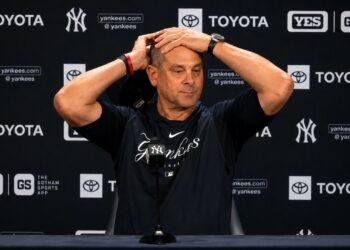
Manager Aaron Boone was asked about the decision not to pinch-hit Paul Goldschmidt for Grichuk in that spot. He gave an answer that acknowledged the question without resolving it. The admission that he could have or should have made the move only added to the scrutiny around the roster construction decision.
“Fair. Definitely could have, should have, whatever,” Boone said. “But definitely some consideration.”
Boone also pushed back when reporters continued to focus on Grichuk as the symbol of the Yankees’ bench problems. His defense of his player pointed to a wider issue that the lineup has as a group.
“You guys love to bring him up, but we’ve got a number of guys we’ve got to get going,” Boone said.
The math of keeping a hitless player on the roster
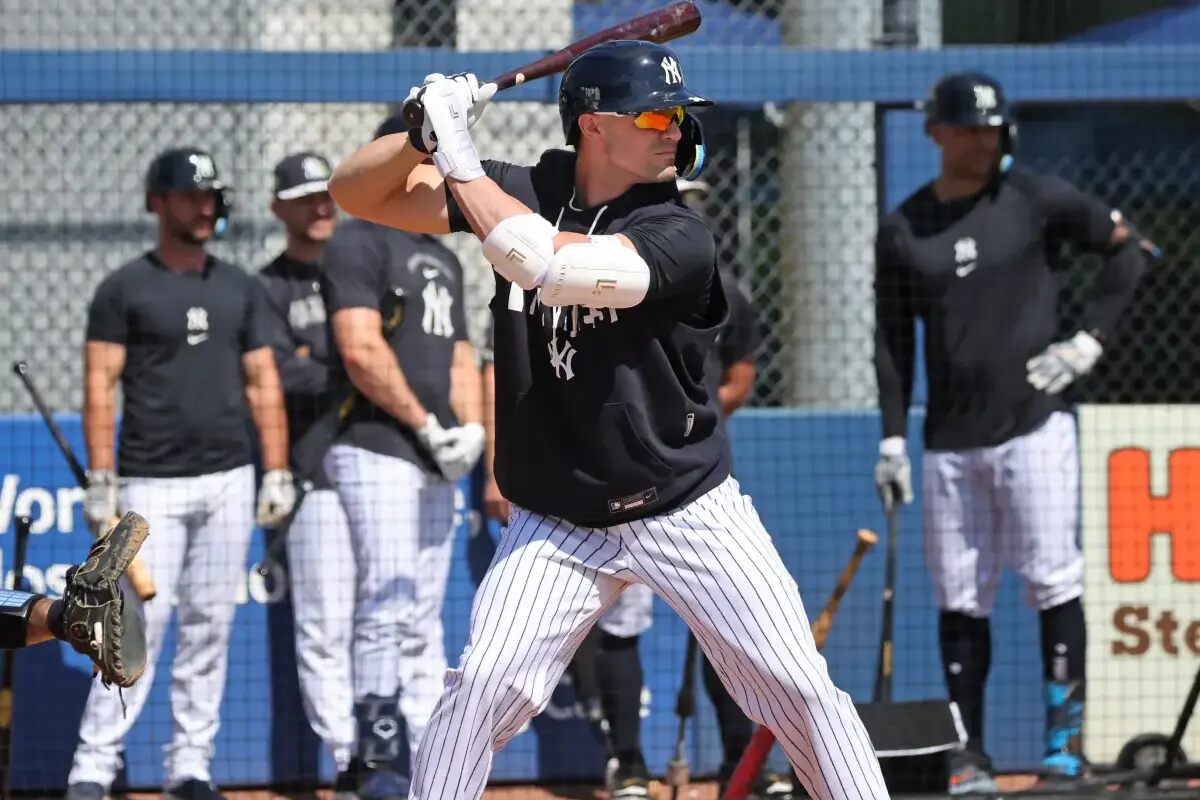
Grichuk’s situation is not just about one bad series or a cold two weeks. It is about what he represents as a roster decision. He is taking up an active roster spot on a team that has legitimate alternatives in the minor leagues.
A bench player who cannot reach base is not a neutral presence. In close games, every out matters. When Boone reaches for his bench in the ninth inning of a one-run game and the player he sends up swings at one pitch and makes an out, that is a negative contribution. The Yankees have lost six of their seven losses by one run. The bench has been in position to matter in almost every one of those games.
Grichuk’s career profile is not a mystery. He is a streaky hitter who can heat up against lefties. But he has never been a patient hitter, and he has never been a player you could deploy in any situation and expect a quality at-bat. The Yankees knew what they were getting. The question now is whether the return on that investment justifies the cost of the roster spot.
Dominguez and Jones are making the decision harder to defer
The two most obvious alternatives to Grichuk are not quiet in the minors. They are making noise.
Jasson Dominguez is slashing .354/.475/.521 at Triple-A Scranton with an OPS above .996 . His wRC+ of 166 means he is producing 66 percent above the average Triple-A hitter. His strikeout rate is 12.8 percent and his walk rate is 14.9 percent. Those discipline numbers are the best of his minor league career. He has big-league experience. He is ready.
Spencer Jones had a five-RBI doubleheader on April 11, including a 107.1 mph home run to the opposite field. His early-season strikeout rate remains a concern, sitting above 50 percent, but his raw power and athleticism give him an upside that Grichuk cannot match. For a team that is struggling to score runs, Jones in the lineup would change the threat level.
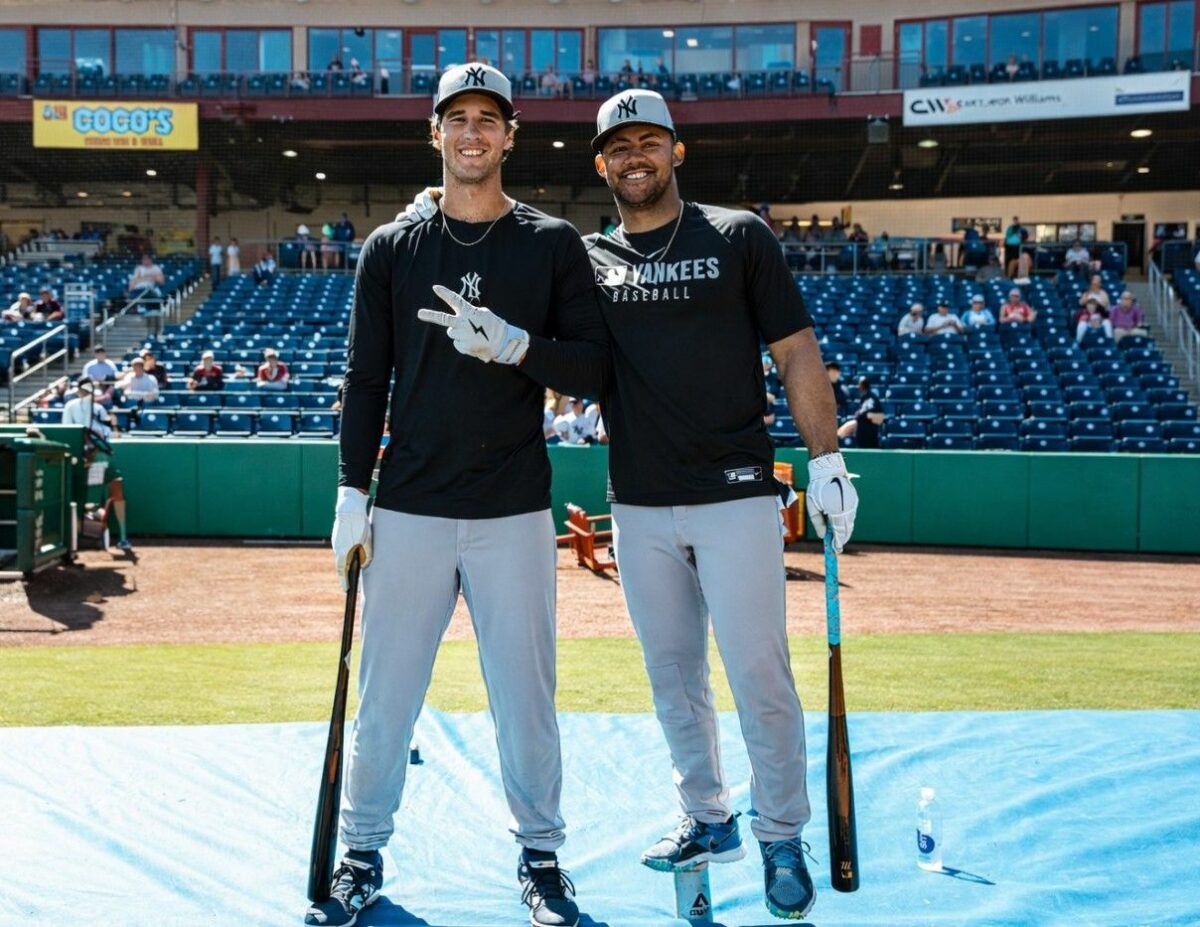
The Yankees have been reluctant to promote Dominguez because they wanted him playing every day rather than sitting on a big-league bench. That logic is sound in a vacuum. But the alternative is keeping a player on the active roster who has zero on-base appearances and has actively hurt the team in critical moments. At some point the development philosophy has to bend to the competitive reality.
Grichuk’s profile and where it fits
Grichuk has always been a boom-or-bust option. When he is hot, he can carry a bench and provide value. When he is cold, he is an out waiting to happen. Five of his 10 at-bats this season have ended in strikeouts. He has not put a ball in play with any authority.
There is still a version of the season where Grichuk heats up against lefties, gives the Yankees a few big pinch-hit moments, and justifies his spot. That version is getting harder to envision with each scoreless game. The Yankees are not in a position to carry passengers right now.
The roster decision does not have to be dramatic. A simple option to Triple-A would create the opening. Dominguez or Jones could step in. The bench would have more upside. The Yankees’ lineup would carry a different kind of threat.
Boone has options. The question is how much longer he waits before using one.
What do you think? Who should replace Grichuk on the Yankees’ roster?