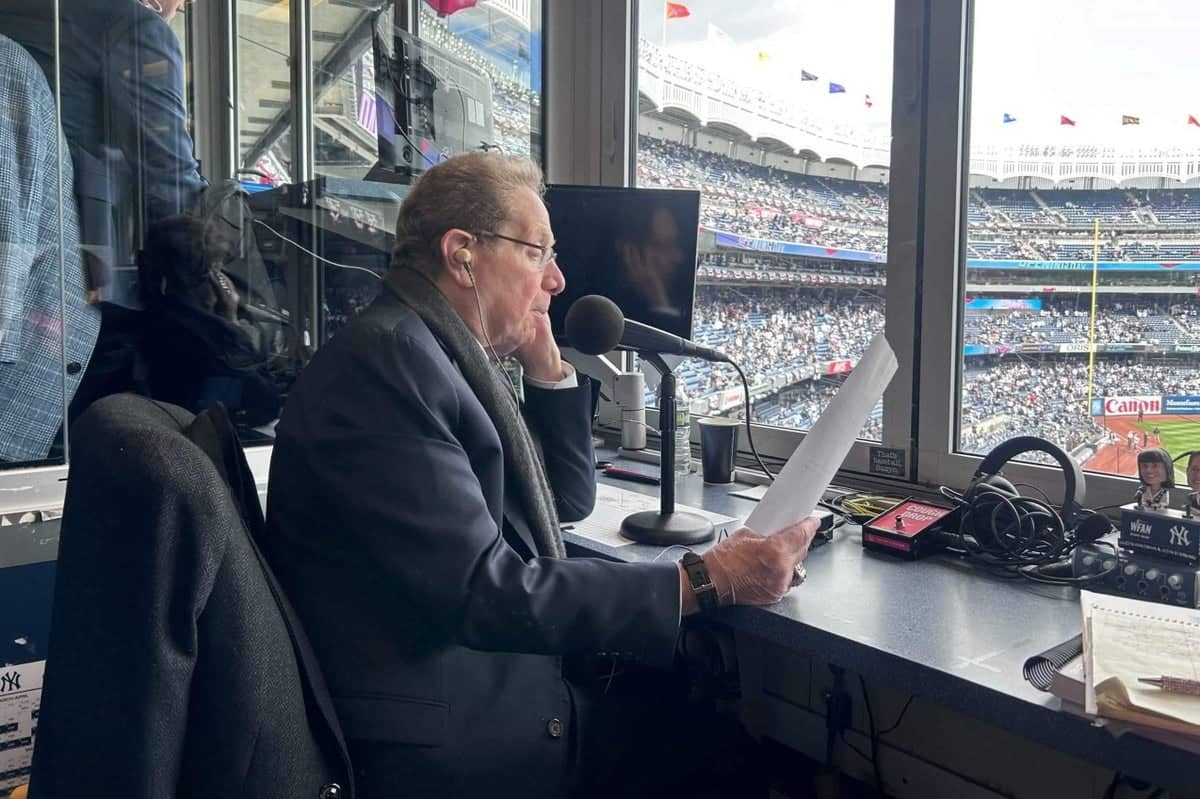
NEW YORK — For 36 years, his voice was the soundtrack of summer in New York.
John Sterling, the man who called five Yankees World Series championships and became one of the most recognizable figures in the franchise’s history, died Monday at the age of 87. WFAN confirmed his death. No cause was specified, though Sterling had suffered a heart attack in January.
He was known simply as the Voice of the Yankees. By the time he retired in 2024, few titles in baseball had been more earned.
A career measured in decades and championships
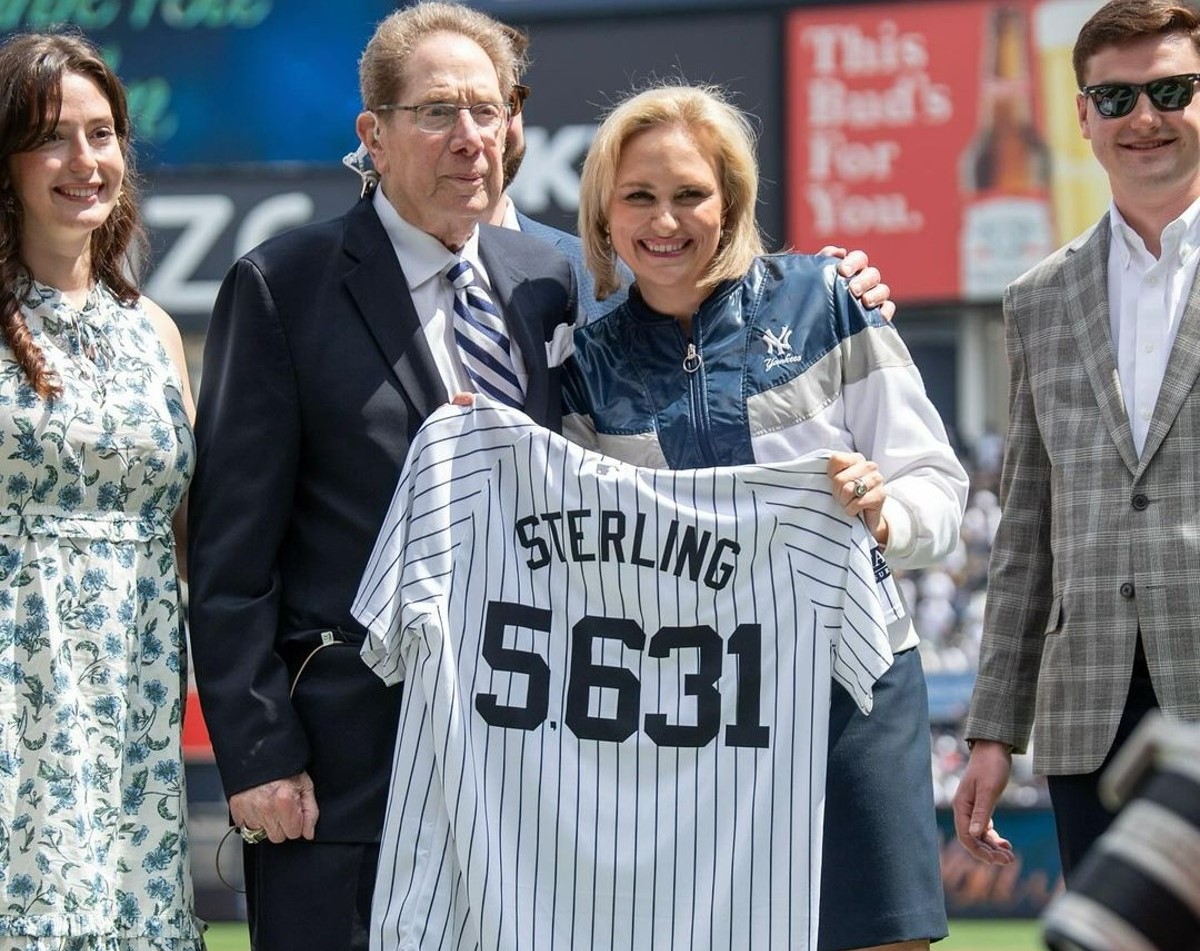
Sterling joined the Yankees’ radio booth in 1989 and spent 36 years there. He called 5,631 Yankees games in total, including eight World Series appearances and 211 postseason contests.
His consecutive-game streak was one of the most remarkable in broadcasting history. Sterling called 5,060 straight Yankees games before missing three in July 2019 due to illness. Some Yankees fans had never heard another voice call their team’s games.
Howie Rose, a Mets broadcaster, captured what that streak meant.
“Think about that,” Rose said. “Some Yankees fans have never heard anyone but John’s voice for the entirety of their life.”
Sterling was present for the defining moments of the Yankees’ golden era. He called every game of Derek Jeter’s 20-year career and every pitch thrown by Mariano Rivera. He broadcast Aaron Judge’s AL record 62nd home run in 2022. He emceed number retirement ceremonies for Jorge Posada, Andy Pettitte, Bernie Williams and Joe Torre.
The phrases that defined a generation
Sterling’s signature lines became part of Yankees culture. After victories, his thunderous baritone delivered the words fans waited for all game. “Thuuhhh Yankees win!” He stretched the word “the” into something theatrical and entirely his own. Before each pitch came “Thuuhhh pitch,” drawn out like a ceremony.
He personalized home run calls for every player. Bernie Williams got “Burn, Baby, Burn!” Alex Rodriguez earned “An A-bomb from A-Rod.” Robinson Cano got “Robbie Cano, don’t you know?”
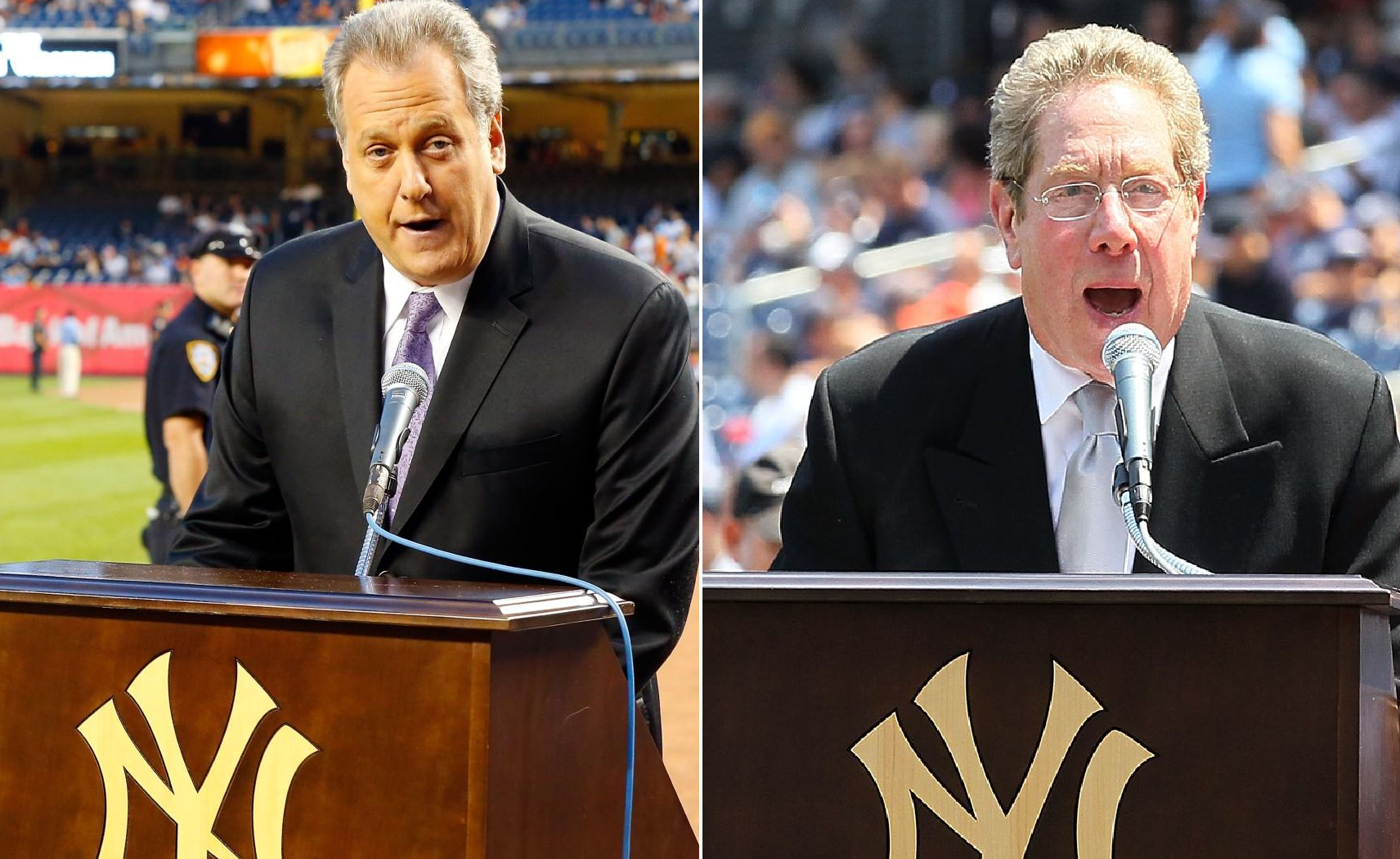
Longtime broadcast partner Michael Kay described what those phrases meant to fans who heard them through radios at the beach, in cars, and on summer porches for more than three decades.
“He’s synonymous with those five championships,” Kay said. “If you’re coming into people’s homes, at the beach, the pool or their car, and you’re constantly telling them good news, it made him part of the Yankee firmament. He became a part of forever, because those championships are never going to go away.”
The voice behind the microphone
Sterling was born John Sloss and grew up on Manhattan’s Upper East Side listening to Yankees games on the radio. He studied at Moravian College and Boston University, then later at Columbia University after his mother died young.
His first radio job came in 1961 at a small station in Wellsville, N.Y. Around that time he took the name Sterling. He worked in Providence, then Baltimore, where he broadcast games for the Colts and Bullets.
By 1971 he was back in New York at WMCA, where sports fans first heard him challenge callers who disagreed with him on the air.
Jim Rosenhaus, now a Cleveland Guardians broadcaster, recalled listening as a kid when Sterling would argue with callers who challenged his takes.
“He would hang up on people and berate them: ‘You don’t know what you’re talking about!'” Rosenhaus said. “It was awesome. We’d go to school the next day and say, ‘Did you hear what John Sterling said last night?'”
In Atlanta from 1981, Sterling called Braves and Hawks games. He became known for punctuating Dominique Wilkins dunks with the phrase, “Dominique is Magnifique!”
Commitment that bordered on legend
Sterling never adapted to modern technology. He carried no smartphone and did not use the internet. On the road he bought the local newspaper each morning and traveled with crime novels. He dressed in tailored suits and dress shoes every day, as if TV cameras were always waiting.
Yankees manager Aaron Boone described what it was like to watch Sterling work.
“It’s like he gets in that chair and it shoots life through him,” Boone said. “He’s at home when he’s in his office. It’s a remarkable career, to be able to do it like that and as long as he did it. He’s left quite a mark on this organization and the game of baseball.”
His dedication produced one of the most talked-about moments of his career. On the day of Game 2 of the 2000 ALCS, Sterling’s wife gave birth to their triplets in New Jersey. Sterling was at the hospital that morning. That night, he called the Yankees’ win over Seattle. Then he boarded the team’s charter.
Third baseman Scott Brosius saw Sterling on the plane and could not believe what he was seeing.
“John,” Brosius said, “didn’t you just have triplets? Why are you on the flight?”
Sterling’s answer said everything.
“Nothing more I can do,” he said.
A broadcaster who became part of the team
Sterling spent 10 seasons alongside Kay in the booth. In 2005, Suzyn Waldman became his color analyst and their partnership became as beloved as the Yankees themselves.
Waldman spoke about what Sterling meant to the franchise.
“He’s one of a kind,” Waldman said. “There will never be another person like that, to have that kind of love for a team and that kind of love for his fan base.”
Even Aaron Judge, who grew up hearing Sterling’s Yankees calls, spoke about the broadcaster’s place in team history.
“He was so witty, smart,” Judge said. “As a kid, you always heard it. You watch old Yankees games. You hear the old broadcasts.”
Sterling retired in April 2024, then returned for the final weeks of that season and the Yankees‘ postseason run through Game 5 of the World Series. He hosted a weekly show on WABC through much of 2025.
He is survived by his wife Jennifer and their four children: Abigail and triplets Veronica, Bradford and Derek.
“How lucky can you be,” Sterling once said, “for people to celebrate what you do for a living?”
RIP John Sterling.