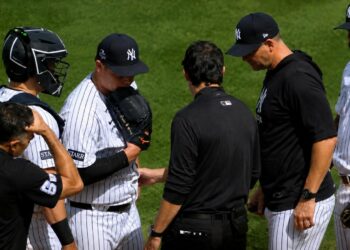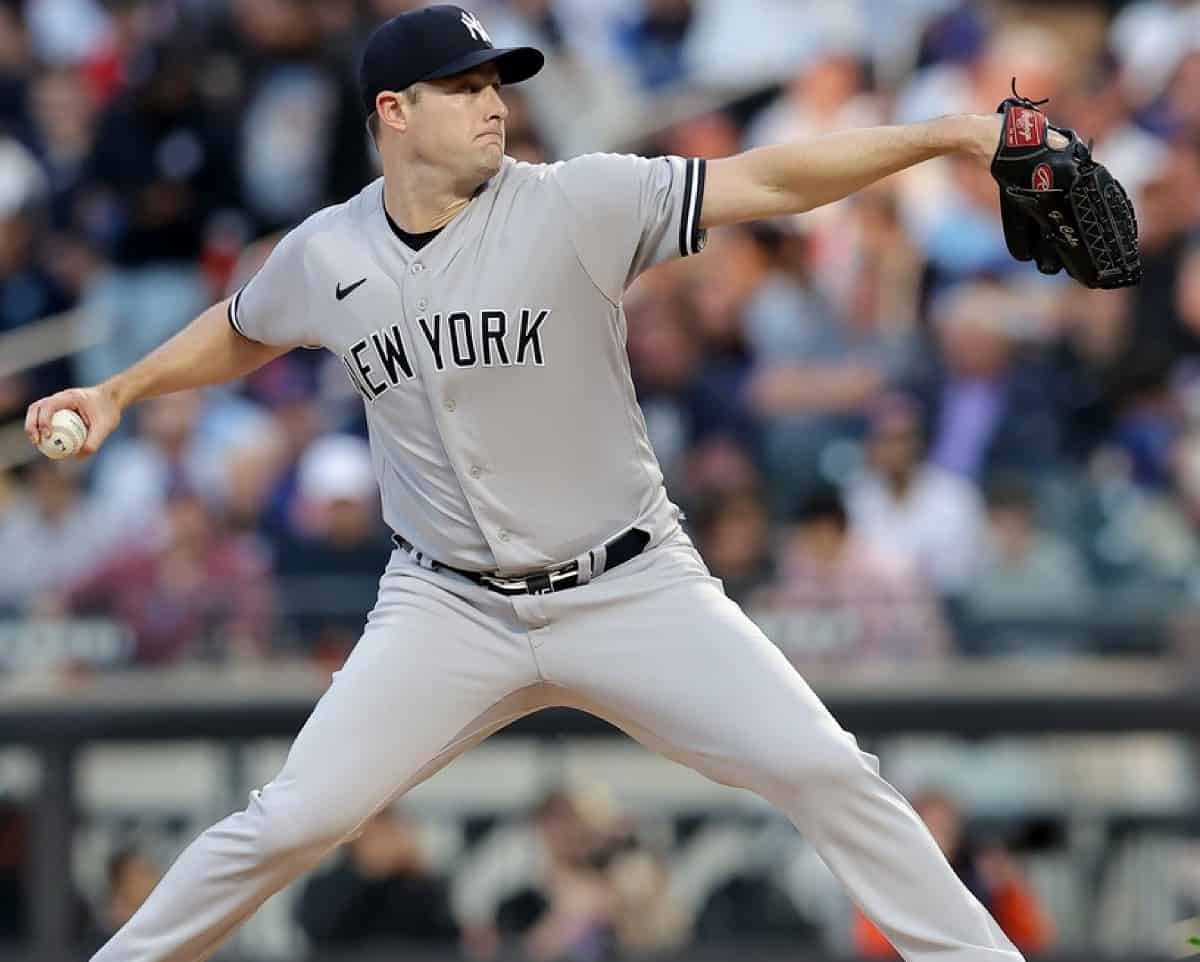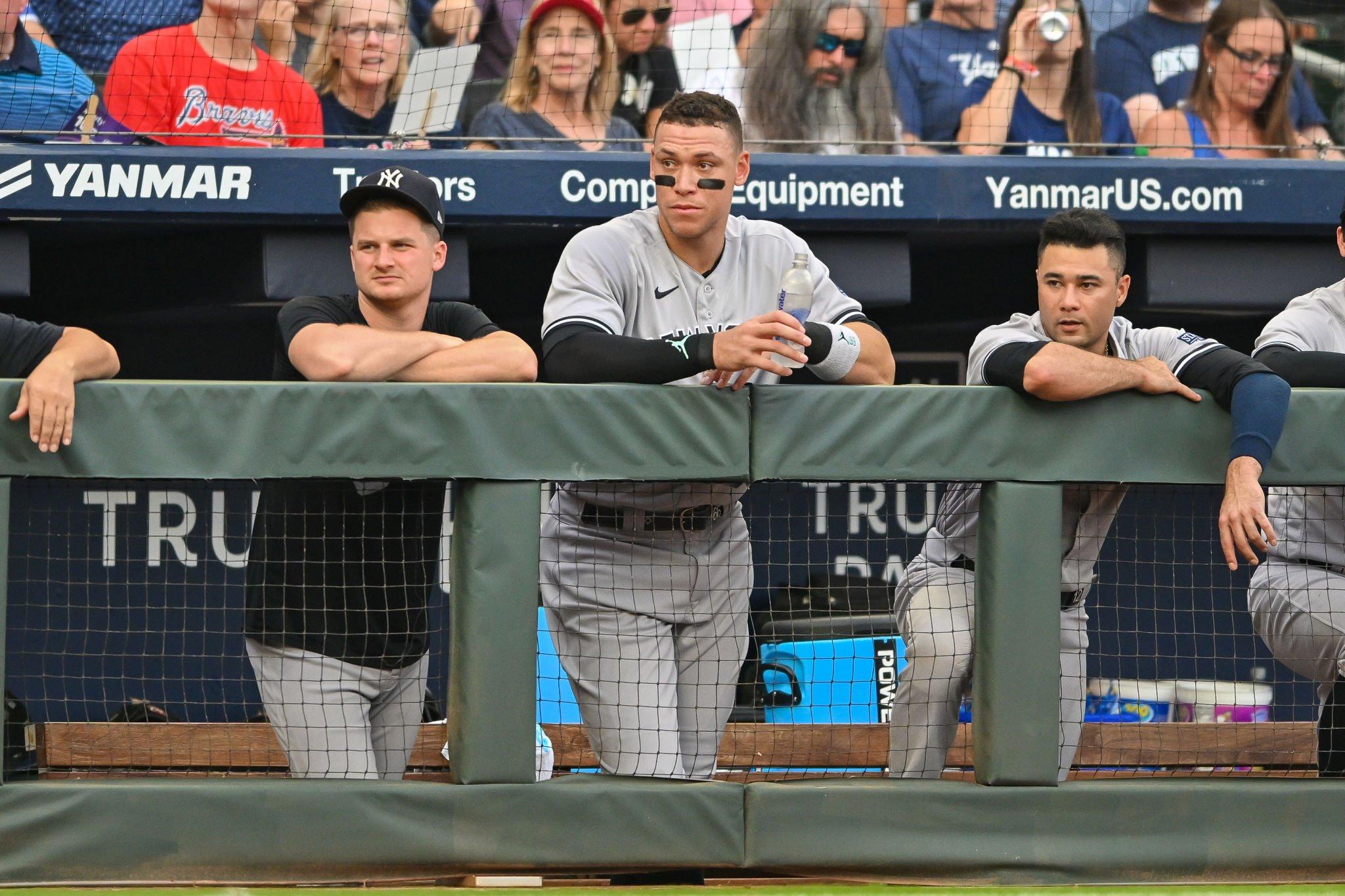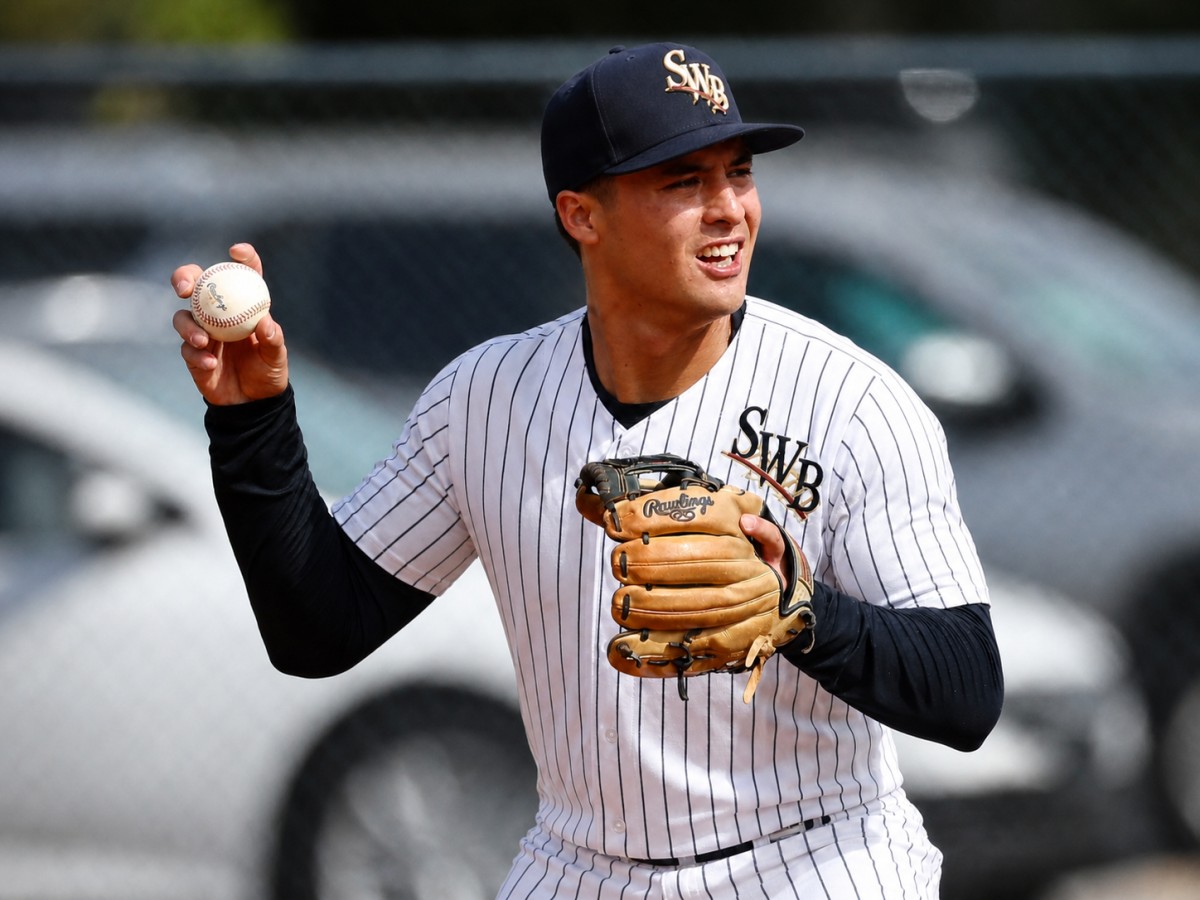
NEW YORK — Anthony Volpe’s path with the New York Yankees took a stunning turn May 3 when the club optioned its three-year starting shortstop to Triple-A Scranton/Wilkes-Barre.
The move landed hard because Volpe was not a fringe roster piece, a rookie shuttle case or a bench player squeezed by roster math. He had started at shortstop for the Yankees for three straight seasons. He had won a Gold Glove. He had hit more than 20 home runs as a rookie. Yet after 472 games as the club’s everyday shortstop, Volpe found himself headed back to the minors.
The Yankees had the right to make the move. Under MLB rules, any player with fewer than five years of service time and an option year remaining can be sent down without consent. Volpe entered 2026 with three years of service time. The Yankees still had that roster lever available, and they pulled it.
Has this kind of move been made before? Yes.
The Yankees’ own history: A thin and cautionary record
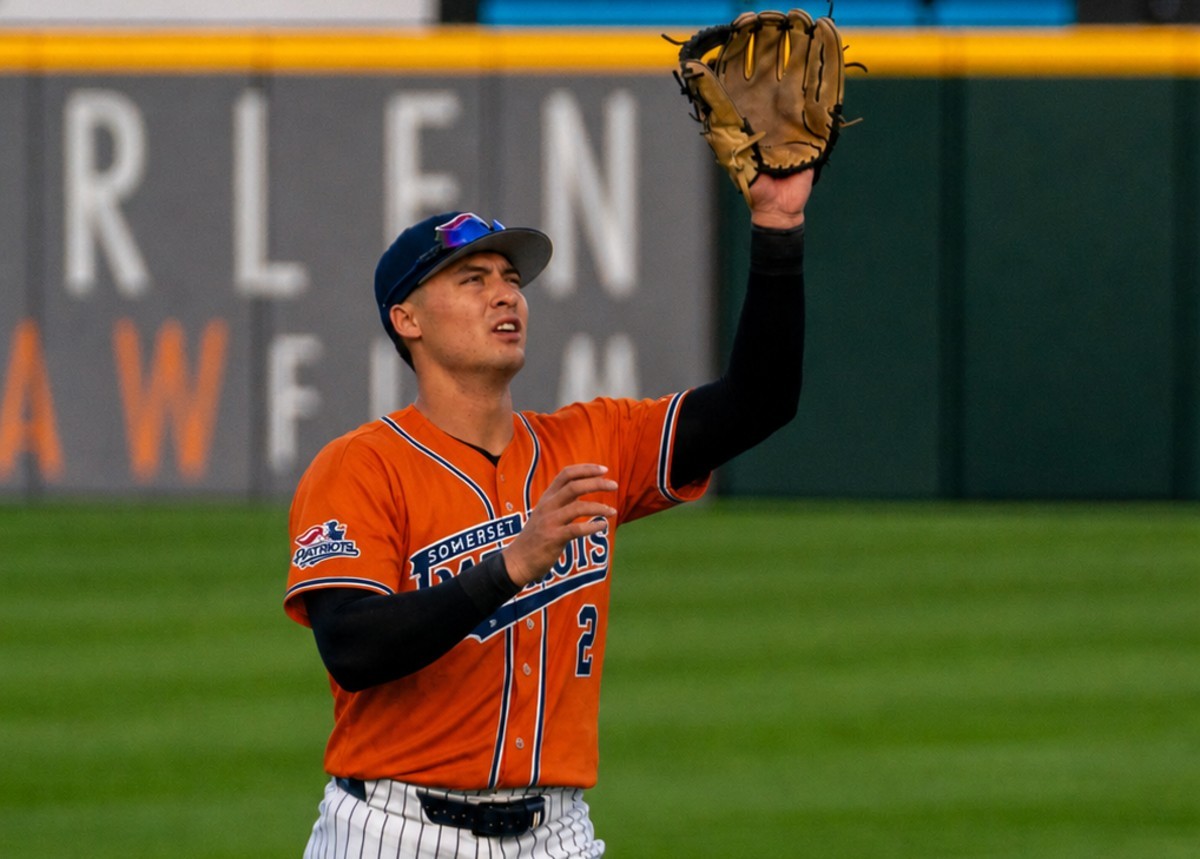
The Yankees’ own history offers only a few imperfect comparisons.
Bobby Meacham, 1984. This is the only direct precedent of a Yankees starting shortstop being formally optioned to the minors in the modern era. Meacham took over as New York’s regular shortstop in 1984. Four games into that season, he committed an error in extra innings. George Steinbrenner ordered him demoted immediately. Not to Triple-A. All the way to Double-A. Meacham returned and started 156 games at shortstop in 1985. He hit .218 with a .266 slugging percentage. He was a backup for the rest of his career, finishing with a 73 OPS+ over six seasons. He never recovered offensively.
Melky Cabrera, 2008. Cabrera had been the Yankees’ regular center fielder since 2006. He was optioned to Triple-A Scranton on Aug. 15, 2008, after going 3-for-26 in two weeks. That demotion came while the slump was actively happening. Cabrera was eventually traded to Atlanta in 2009. He later made the 2012 All-Star Game with the San Francisco Giants before a suspension. His career recovered, but away from New York.
Brandon Drury, 2018. Drury arrived from Arizona as a projected regular infielder. Migraine-like symptoms disrupted his season early. He was hitting .178 when the Yankees optioned him to Triple-A Scranton on July 10, 2018, primarily to clear a roster spot for pitching depth. Drury was traded to Cincinnati shortly after. He went on to carve out a useful career in the NL but never returned to New York as a regular.
Tyler Austin, 2018. Austin was on the Yankees’ Opening Day roster in 2018 as a first base platoon type. He was optioned to Triple-A Scranton on June 15, 2018, after 22 months of up-and-down service. He was traded to Minnesota weeks later and had a limited MLB window from that point. He was never an entrenched starter in the way Volpe was.
Miguel Andujar, 2020. Andujar finished runner-up in the 2018 AL Rookie of the Year voting. A 2019 shoulder injury derailed him before he could build on it. By Aug. 6, 2020, the Yankees optioned him to their alternate training site. Boone cited a need for an additional pitcher and noted Andujar had started 1-for-14 that season after the lost 2019. He eventually shifted between left field and first base, never recapturing his 2018 form. The pandemic-era alternate site option is not a traditional minor league demotion, but the roster dynamic mirrors others in this group.
Dave Righetti, 1982. A pitcher rather than a position player, but worth noting as a Yankees-specific example. The 1981 AL Rookie of the Year was demoted to Triple-A Columbus in mid-1982 after control issues. He was gone about three weeks, returned, and threw a no-hitter in 1983. He later became an All-Star closer. His case shows the Yankees have used short demotions for reset purposes and seen them work. But Righetti is a pitcher, and the dynamics differ.
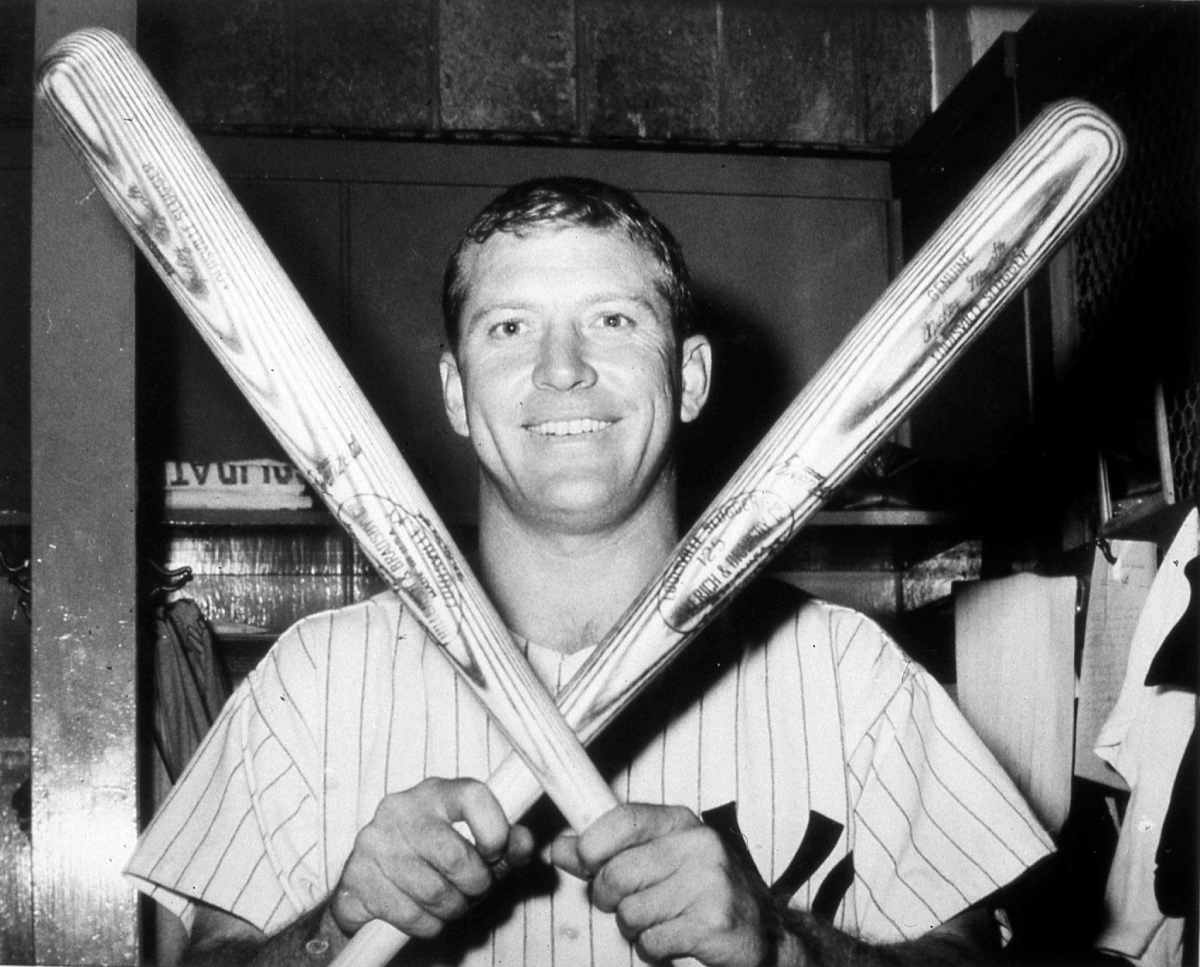
Mickey Mantle, 1951. The most famous Yankees demotion of all time, but it is not a comparable case for Volpe. Mantle was a 19-year-old rookie when the Yankees sent him to Triple-A Kansas City in mid-July 1951. He was not a multi-year incumbent starter. He had not yet played a full season at the big league level. Mantle reportedly considered quitting before his father talked him out of it. He returned and built a Hall of Fame career.
MLB’s closest comp: Mike Moustakas, 2014 Royals
Moustakas is the single best position-player analogue to Volpe. The No. 2 overall pick in 2007, he was Kansas City’s regular third baseman for three full seasons before being sent to Triple-A Omaha on May 22, 2014. He had slashed .233/.287/.364 in 2013 and fallen to .152/.223/.320 in 139 plate appearances the following year. Three consecutive Opening Day starts at a premium infield position. Declining production. A contending team. The match to Volpe is direct.
Moustakas was gone only 10 days. A Danny Valencia injury brought him back. He hit .212 that season but slugged five postseason homers, then made his first All-Star team in 2015 at .284/.348/.470 with 22 home runs. In 2017 he set the Royals’ single-season home run record with 38. He is the most optimistic template for Volpe.
Good, bad and ugly MLB reset stories
Alex Gordon, 2010 Royals. The No. 2 pick in 2005, Gordon was optioned in May 2010 while hitting .194 as Kansas City’s third baseman. The Royals also moved him to left field. That position change, not just the Triple-A reps, unlocked him. He posted a .303/.376/.502 line in 2011 with 7.3 fWAR, won the first of seven Gold Gloves, and became a 2015 World Series champion.
Mike Zunino, 2015 Mariners. Seattle’s starting catcher was hitting .174 when he was optioned to Triple-A Tacoma in August. Manager Lloyd McClendon said the pressure had become overbearing. Zunino rebuilt his approach and eventually made the AL All-Star team with Tampa Bay in 2021. Patient organizational handling made the difference.
Miguel Sano, 2018 Twins. A 2017 AL All-Star and Home Run Derby runner-up, Sano was optioned all the way to Class A Advanced Fort Myers on June 14, 2018, after hitting .203 with 66 strikeouts in 37 games. Conditioning issues from offseason shin surgery added to the concern. He returned July 28, hit 34 home runs in 2019, and signed a three-year extension. He never fully matched his 2017 peak and was out of MLB by 2022.
Randal Grichuk, 2017 Cardinals. After a .548 slugging percentage in 2015, Grichuk was optioned to Class A Palm Beach at 25. He returned, was traded to Toronto that winter, and had a long career as a platoon outfielder. Never an All-Star. A middling outcome: years in baseball, not the star his 2015 suggested.
Orlando Arcia, 2018 Brewers. Milwaukee’s Opening Day shortstop in both 2017 and 2018, Arcia was optioned to Triple-A Colorado Springs on July 1, 2018, after becoming one of the NL’s least productive qualified hitters. Traded to Atlanta in 2021, he remained a useful MLB player but not at the Brewers’ original expectations.
Spencer Torkelson, 2024 Tigers. After 31 home runs in 2023, Detroit’s first baseman was optioned to Triple-A Toledo on June 3, 2024. Manager A.J. Hinch had already bypassed him for a key pinch-hit opportunity. Torkelson was recalled. His outcome remains unresolved.
Keston Hiura, 2021 Brewers. Milwaukee’s Opening Day first baseman slashed .168/.256/.301 before being optioned to Triple-A Nashville on June 7. The league had adjusted to his strikeout-heavy approach. He could not adapt. He never reclaimed an everyday role.
Mallex Smith, 2019 Mariners. Seattle’s starting center fielder was optioned to Triple-A Tacoma on April 30 after hitting .165 in 27 games. He never regained the job. His time as a recognized regular was over.
Bobby Dalbec, 2022 Red Sox. Boston’s first baseman through 2021 and into 2022, Dalbec was optioned to Triple-A Worcester on Sept. 4. Recalled in September, later released. Short career, limited recovery.
Cavan Biggio, 2022 Blue Jays. A Toronto multi-position regular from 2019 through 2021, Biggio was optioned to Triple-A Buffalo on May 16. Injuries and uneven production drove the decision. He never returned to an everyday starting role.
Jordan Walker, 2024 Cardinals. Walker started 117 games as a Cardinal rookie in 2023 at a 113 OPS+. The league adjusted in 2024. He was optioned to Triple-A Memphis and has bounced back and forth since. His profile, a former top-10 pick demoted after starter-level rookie production failed to repeat, is the closest contemporary comp to Volpe.
Jose Miranda, 2025 Twins. After a record-tying 12-for-12 hitting streak in an earlier season, Miranda collapsed in 2024 and was demoted to Triple-A in April 2025. He has not recovered as of 2026.
Victor Robles, 2023 Nationals. Once a top-five overall prospect, Robles lost his everyday job in Washington after several disappointing seasons, was optioned to Triple-A, then resurfaced with Seattle in 2024. His path is the most common outcome for former top prospects in this window: the next opportunity comes elsewhere.
The most extreme case: Roy Halladay, 2001 Blue Jays
Roy Halladay is a pitcher, not a position player, but his case is the most dramatic rebuild in this entire group. After a disastrous 2000 and a bad spring in 2001, Toronto sent him to Class A Dunedin for a full mechanical overhaul. He rebuilt his delivery from scratch, returned, dominated, and built a Hall of Fame career.
| Player | Team | Year | Level | Age | Career outcome after demotion |
| Anthony Volpe | Yankees | 2026 | Triple-A SWB | 25 | Ongoing — no MLB games played in 2026 before option |
| Bobby Meacham | Yankees | 1984 | Double-A | 24 | Returned in 1984; started 156 G in 1985 but hit .218/.266 SLG; career backup; 73 OPS+ over 6 seasons |
| Melky Cabrera | Yankees | 2008 | Triple-A SWB | 24 | Traded to Braves 2009; made 2012 All-Star Game with Giants before suspension |
| Brandon Drury | Yankees | 2018 | Triple-A SWB | 25 | Traded to Reds mid-2018; carved out useful MLB career elsewhere |
| Tyler Austin | Yankees | 2018 | Triple-A SWB | 26 | Traded to Twins weeks later; limited MLB window after that |
| Miguel Andujar | Yankees | 2020 | Alt. Site | 25 | Shifted to LF/1B roles; never recaptured 2018 Rookie of the Year runner-up form |
| Mike Moustakas | Royals | 2014 | Triple-A Omaha | 25 | Gone 10 days; All-Star 2015; 38 HR 2017 (Royals record); World Series champion 2015 |
| Alex Gordon | Royals | 2010 | Triple-A Omaha | 26 | Moved to LF; exploded in 2011 (.303/.376/.502, 7.3 fWAR); 7x Gold Glove; World Series 2015 |
| Miguel Sano | Twins | 2018 | Class A-Adv. | 25 | Returned July 28; 34 HR in 2019; 3-yr extension; never matched 2017 All-Star peak |
| Randal Grichuk | Cardinals | 2017 | Class A Palm Bch | 25 | Traded to Toronto offseason; long career as platoon OF; never reached All-Star level |
| Keston Hiura | Brewers | 2021 | Triple-A Nashville | 24 | Slashed .168/.256/.301 before option; never reclaimed everyday role in Milwaukee |
| Orlando Arcia | Brewers | 2018 | Triple-A Col. Spgs | 24 | Traded to Braves 2021; became useful utility/starter; still active in MLB |
| Mike Zunino | Mariners | 2015 | Triple-A Tacoma | 24 | Hit .130 in Aug before demotion; rebuilt bat; later All-Star with Tampa Bay |
| Spencer Torkelson | Tigers | 2024 | Triple-A Toledo | 24 | 31 HR in 2023; demoted seeking that form; recalled; still developing |
| Mallex Smith | Mariners | 2019 | Triple-A Tacoma | 26 | Hit .165 in 27 G before option; never regained starting CF job in Seattle |
| Bobby Dalbec | Red Sox | 2022 | Triple-A Worcester | 27 | Recalled in September; later released; short MLB window closed |
| Cavan Biggio | Blue Jays | 2022 | Triple-A Buffalo | 27 | Injuries and uneven production; never returned to everyday starter role |
| Jordan Walker | Cardinals | 2024 | Triple-A Memphis | 22 | Starter-level rookie in 2023 (113 OPS+); still bouncing Memphis/St. Louis |
| Jose Miranda | Twins | 2025 | Triple-A | 26 | Followed record 12-for-12 streak; demoted April 2025; has not recovered |
| Victor Robles | Nationals | 2023 | Triple-A | 26 | Optioned after disappointing seasons; resurfaced with Mariners in 2024 |
| Roy Halladay | Blue Jays | 2001 | Class A Dunedin | 24 | Full mechanical rebuild; returned to dominate; Hall of Fame career (pitcher analogue) |
History does not close the door on Volpe. Moustakas and Gordon both show what a genuine bounce-back looks like. But both needed something to change structurally alongside the demotion. Time in Triple-A alone was not the fix for anyone in this list. That is the real lesson buried inside two decades of comparable cases.
What do you think? Did the Yankees fail to handle Volpe properly?