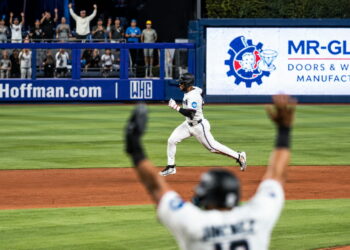
ST. PETERSBURG, Fla. — One night after a ninth-inning collapse delayed a championship celebration, the difference between another October disappointment and a title came down to a rookie Brewers shortstop, an injured starter and a bullpen protecting a lead.
The Milwaukee Brewers had been three outs from winning it all Tuesday. Instead, Tampa Bay forced another game with a 12-inning comeback. On Wednesday, Cooper Pratt opened the scoring with a second-inning single, then drove in another run in the sixth. Jacob Misiorowski fought through a tight calf before leaving with two outs in the sixth.
The response was immediate, orderly and decisive. Milwaukee scored again in the fifth and twice in the sixth. JoJo Romero, Abner Uribe and Trevor Megill protected the advantage, allowing the Rays only a ninth-inning run.
For a New York club that also watched its season end against Tampa Bay, the contrast reaches beyond the final score. Both teams encountered October pressure. Their different outcomes have renewed attention on how standards are established months before the postseason begins.
Brewers finish a championship season with a response
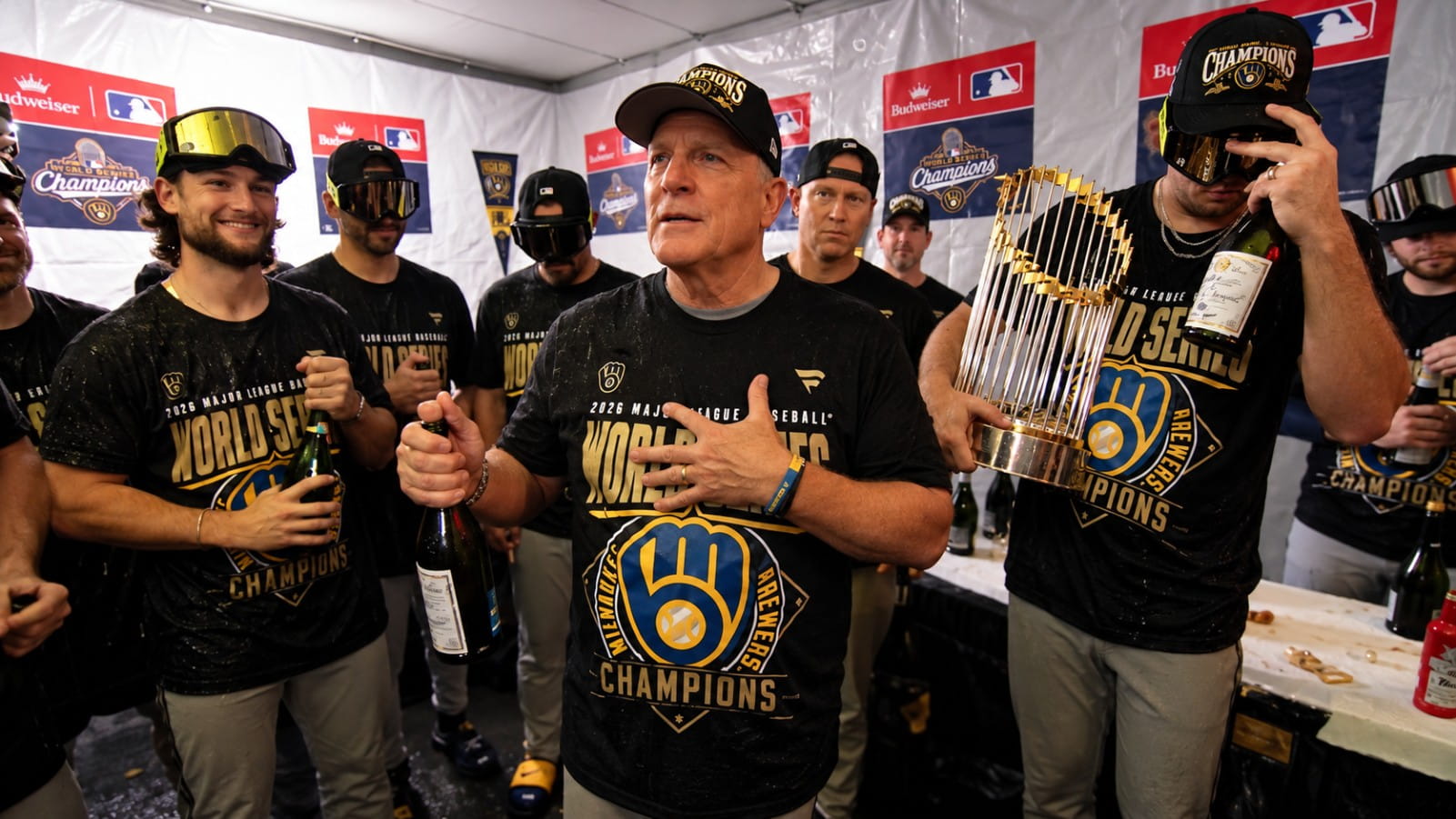
The Brewers beat the Rays 4-1 in Game 5 at Tropicana Field on Oct. 28, claiming the first World Series title in franchise history. The Brewers won the series 4-1 after a 103-win regular season and an 11-2 postseason. Misiorowski was the winning pitcher, while Drew Rasmussen took the loss. No save was awarded.
Pratt finished with two hits and two RBIs. David Hamilton contributed an RBI single, while World Series MVP William Contreras doubled home Christian Yelich. Jackson Chourio collected 11 hits across five games, a World Series record for that span.
The Brewers’ Game 4 loss had included a costly throwing error by third baseman Joey Ortiz in the 12th. Their defense was tested again Wednesday when a Sal Frelick error moved a runner into scoring position in the fourth. Misiorowski escaped with a groundout, keeping Tampa Bay off the board.
The Brewers also benefited from a decision made the previous night. Manager Pat Murphy declined to use Misiorowski in relief with the title in reach, preserving the young starter for a potential fifth game. Misiorowski then delivered 5 2/3 scoreless innings on two hits.
Pat Murphy’s discipline extends beyond October
The championship placed Murphy’s daily methods under a brighter light. The Brewers manager has mixed humor with direct consequences, removing both Pratt and Contreras from games during the season when they did not run hard. He has also maintained a clubhouse exercise called the Check Game, which flags displays of individual ego by players, staff and even ownership.
Milwaukee outfielder Garrett Mitchell described the personal demands of working under Murphy before the title was secured.
“It’s an iron-sharpens-iron mentality, and you’ve got to be able to take the punches when he gives them to you,” Mitchell said.
Brewers owner Mark Attanasio also acknowledged Murphy’s willingness to discipline productive players rather than exempting them from the standard.
“When it’s time to send some tough love, it looks like he’s pretty good at that, too,” Attanasio said.
The Brewers’ approach was not simply about punishment. Murphy kept trusting young talent, including Pratt, and maintained a steady role for the pitching staff and bullpen even after the Game 4 setback.
A measurable difference in the teams’ October paths
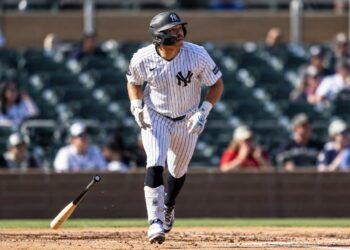
The Yankees won 93 games in 2026 and swept Boston in the American League Wild Card Series. Tampa Bay then swept New York in three AL Division Series games. The Brewers, by comparison, won 103 regular-season games and lost just twice across 13 postseason contests.
That is a 10-win regular-season gap and a sharper October distinction: Milwaukee won 11 playoff games, while New York won two. The Brewers eliminated the same Rays team that had ended the Yankees’ season, winning four of five World Series meetings.
Those figures do not isolate managerial influence. They do, however, make the Brewers’ daily approach a timely reference point as New York reviews the execution, lineup decisions and defensive lapses that surfaced against Tampa Bay.
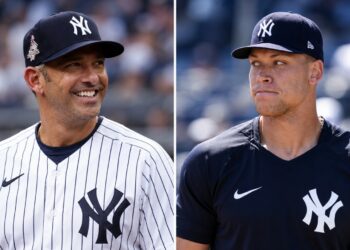
The discussion also echoes an unusually direct assessment from former Yankees catcher Jorge Posada. In an interview published Oct. 27, Posada called for a stronger coaching voice to push players on accountability, while supporting Boone and general manager Brian Cashman. His example involved making failure to run hard carry a consequence during the regular season.
That overlap is striking. The Brewers had already taken that step with two prominent hitters, including their eventual World Series MVP, long before they lifted the trophy.
Boone returns as Yankees choose continuity
The New York Yankees have not changed course at the top. Managing general partner Hal Steinbrenner confirmed Oct. 21 that Boone will return in 2027, the final season of his contract and his 10th as manager. Cashman also said he had agreed in principle to continue as general manager.
Boone’s teams have qualified for the postseason eight times in nine seasons, won three AL East titles and reached the 2024 World Series. His 790 regular-season wins since taking over rank second to the Dodgers over that period. The franchise still seeks its first championship since 2009.
The Brewers’ breakthrough makes the comparison unusually concrete. Murphy held players accountable for effort, preserved his Game 5 starter despite a costly Game 4 defeat and finished the season with the game’s biggest prize. New York has chosen to pursue its next title with the same manager and front office leadership, now facing another offseason of decisions about roster balance, execution and the standards enforced inside its clubhouse.
What do you think? Leave your comment below.