NEW YORK — The Yankees had the tying run in scoring position and one out left to spend. Their season still had a chance. It ended Wednesday with a 4-3 loss to Tampa Bay at Yankee Stadium, leaving another October opportunity unfinished.
Victor Mesa Jr.’s two-run homer against Max Fried in the sixth inning gave the Rays the lead for good. Ian Seymour earned the win, Fried took the loss and Bryan Baker collected the save as Tampa Bay completed a three-game American League Division Series sweep.
The Yankees had scored twice across the first two games, both runs coming on Ben Rice homers. Their best source of offense remained productive in Game 3, delivering an RBI single in the third inning. But New York never assembled enough sustained pressure to extend the series.
That left Aaron Boone answering for the choices designed to rescue the Yankees’ offense. The manager had entered Wednesday needing an immediate response from a lineup that had given his pitching staff almost no margin. His adjustments produced three runs, but no fourth game.
Yankees enter elimination game with little offensive margin
Spencer Jones supplied an RBI double in the fourth inning. Anthony Volpe added a run-scoring double in the sixth after replay overturned his apparent tying homer because of spectator interference. The Yankees remained one run behind and failed to score again.
Rice’s third-inning hit had followed a walk by Jones and a groundout that moved the rookie to second. The Yankees had manufactured the kind of scoring opportunity their manager wanted. Rice converted it with two outs.
The larger problem was repetition. One successful sequence could not carry an elimination game, especially after two nights of limited production. The Yankees needed their lineup to keep creating opportunities for the hitter who had supplied both of their runs at Tropicana Field. Instead, their final inning exposed the cost of the order Boone chose.
Boone promotes Grisham and leaves Rice waiting
Boone moved Trent Grisham from seventh to leadoff and dropped Rice to second. Grisham went 0-for-5 with three strikeouts. His last swing ended the Yankees’ season with Rice on deck and Jazz Chisholm Jr. at second.
Before the game, Boone explained that he wanted Grisham to reach ahead of Rice, Luis García Jr. and Cody Bellinger. The Yankees were betting on his ability to draw walks and extend innings.
“Just the potential of the on base there and trying to get some traffic created for Benny, Garcia and Belli. When Trent is at his best, he’s got that ability to get on.”
The season’s numbers offered a warning. Grisham hit .199 with a .303 on-base percentage while batting first. Among 16 MLB players with at least 350 plate appearances in that lineup position, his average and .680 OPS ranked last.
Grisham’s .104 average in game-opening at-bats describes a narrower split. StatMuse lists seven hits in 67 at-bats, with 12 walks across 80 plate appearances. That is distinct from his performance across all innings batting first.
His on-base percentage in those game-opening appearances was .241. The walks improved a poor batting line but still left him reaching less than a quarter of the time. For a decision built around getting runners aboard, that offered little statistical reassurance for the Yankees.
There was a matchup argument for Boone’s choice. Grisham entered 4-for-6 with three doubles and two walks against Rays starter Nick Martinez. That favorable history covered eight plate appearances, a much smaller sample than his season in the leadoff spot.
Rice gets one runner and one fewer plate appearance
A review of the game’s play-by-play shows Rice batted with the bases empty in the first, fifth and seventh innings. Jones stood at second in the third. Nobody occupied first during any of Rice’s four trips, but saying he never hit with a runner aboard would be incorrect.
Grisham created no baserunners for Rice and received five plate appearances to Rice’s four. The top two spots combined to go 1-for-9 with five strikeouts. The move intended to improve Rice’s opportunities ultimately gave the extra turn to Grisham.
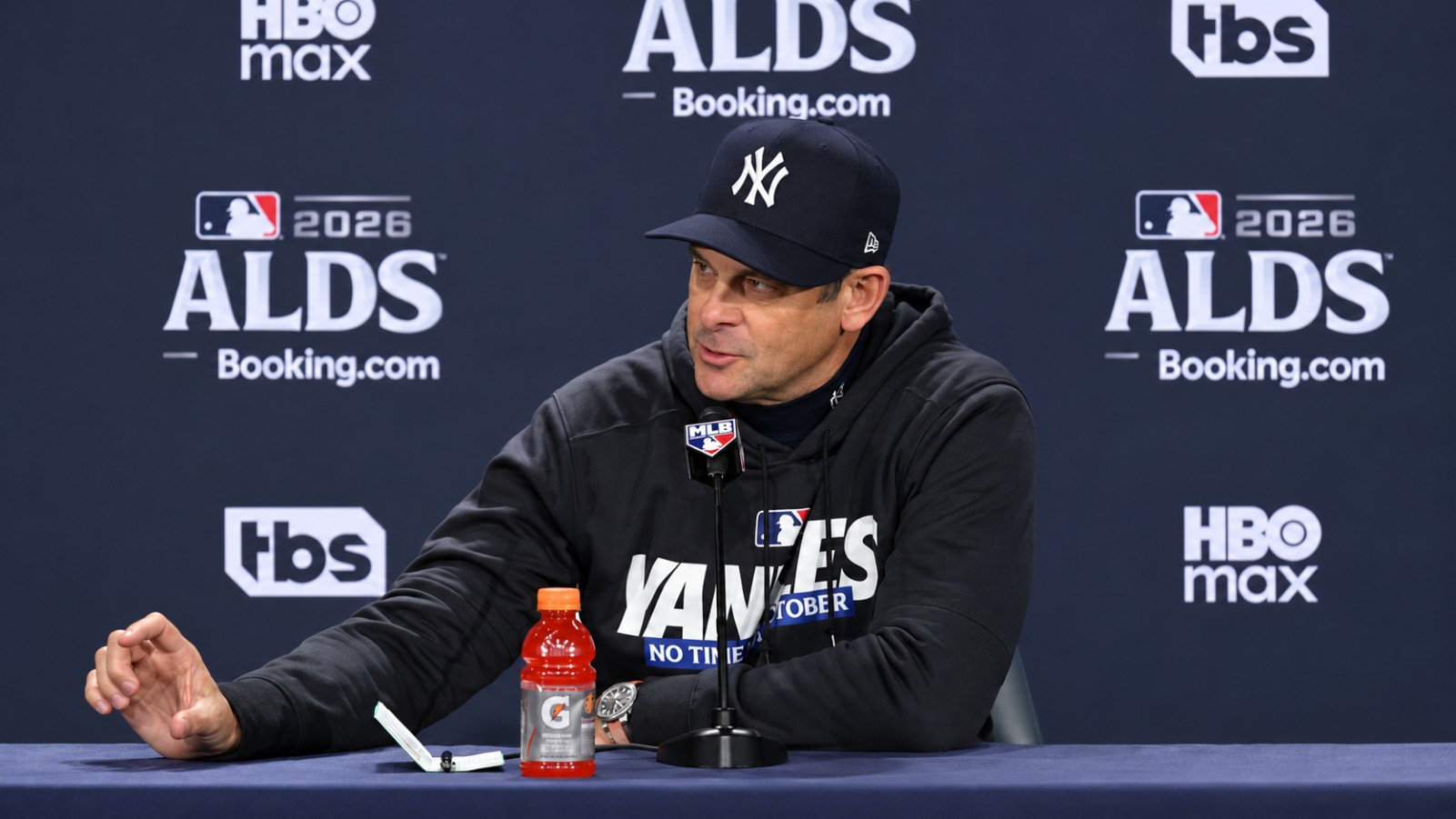
Boone pointed to the RBI single when asked whether he regretted the switch. He also acknowledged the frustration of having Rice waiting when the Yankees made their final out.
“No. I mean, look, obviously, we really struggled to score runs in the first two games, and I was pretty convicted on trying to find a way to be able to get Benny a chance to come up with runners on or be in a position to do that more often tonight. He was able to hit with a runner in scoring position and drove in our first run of the game. You hate when Benny doesn’t get to hit there in the end. But it’s a decision I made to try and create a little bit of traffic, and obviously it didn’t work. But you’re going to live with that.”
Boone stands by a decision that fails its stated goal
Batting Rice first would not guarantee Yankees a different result. Changing the order changes the game’s sequence. But Grisham’s five outs and Rice’s position on deck are measurable consequences of the lineup the Yankees used.
Boone’s gamble failed to supply the baserunners he sought. The Yankees finished with five runs in three ALDS games, and their manager left the season-ending loss defending the choice while conceding it had not worked.
What do you think? Leave your comment below.