TORONTO — The New York Yankees made two notable position-player additions last winter. One came with a $162.5 million price tag and headline expectations. The other arrived on a $4 million deal that a chunk of the fan base openly disliked.
Six months into the 2026 season, the gap between those two moves is not what anyone expected.
Cody Bellinger has been good. Paul Goldschmidt has been a revelation. And the question of which one is the better Yankees winter signing now depends entirely on how the answer is framed.
The headline deal and the bargain deal
Bellinger was the marquee addition. He re-signed with the Yankees on January 26 on a five-year, $162.5 million contract with opt-outs after 2027 and 2028 and a full no-trade clause. He was one of the top free-agent bats on the market. The Yankees made him a long-term cornerstone.
Goldschmidt was the afterthought. The Yankees brought the 38-year-old back on a one-year, $4 million deal that many fans saw as a step backward. The club had signaled it wanted Ben Rice to play every day. Re-signing Goldschmidt looked like a reversal. He also offered no positional flexibility as a first baseman only.
The two signings were judged very differently in February. They are being judged very differently now, just not in the direction anyone predicted.
Bellinger and Goldschmidt by the numbers
A full side-by-side look at where the two Yankees signings stand through June 18.
| Category | Paul Goldschmidt | Cody Bellinger |
| Age | 38 | 30 |
| WAR | 1.6 | 3.9 |
| Games | 47 | 71 |
| Plate appearances | 185 | 308 |
| At-bats | 166 | 261 |
| Runs | 26 | 45 |
| Hits | 50 | 73 |
| Doubles | 8 | 15 |
| Triples | 1 | 3 |
| Home runs | 11 | 11 |
| RBIs | 36 | 49 |
| Walks | 15 | 42 |
| Strikeouts | 34 | 38 |
| Batting average | .301 | .280 |
| On-base percentage | .368 | .373 |
| Slugging percentage | .560 | .487 |
| OPS | .928 | .860 |
| Contract | 1 year, $4 million | 5 years, $162.5 million |
| Positional value | First base only | All 3 OF spots, first base |
| Roster role | Lefty masher, insurance | Everyday star |
| Clubhouse value | Hall of Fame presence | Respected veteran |
The home run totals are even at 11 apiece. Goldschmidt leads in the rate categories. Bellinger leads in volume, walks, and wins above replacement. The contracts could not be more different. That is what makes the comparison interesting.
What the Statcast numbers reveal
A deeper Statcast look at the contact quality and plate discipline behind the two bats tells a more layered story.
| Statcast metric | Paul Goldschmidt | Cody Bellinger |
| Strikeout rate | 21.1% | 15.4% |
| Whiff rate | 27.9% | 40.9% |
| Walks | 3 | 0 |
| Walk rate | 7.9% | 0% |
| Batting average | .257 | .385 |
| Slugging percentage | .400 | .692 |
| wOBA | .314 | .452 |
| Expected BA (xBA) | .226 | .274 |
| Expected SLG (xSLG) | .382 | .422 |
| Expected wOBA (xwOBA) | .294 | .301 |
| Exit velocity (mph) | 92.6 | 85.6 |
| Launch angle (degrees) | 17.2 | 10.1 |
The Statcast split flips parts of the surface read. In this sample, Bellinger has been scorching, with a .385 batting average, a .692 slugging mark, and a .452 wOBA. He has also done it with a 40.9 percent whiff rate and zero walks, a boom-or-bust profile that lives on contact.
Goldschmidt’s underlying contact has been louder than his results. His 92.6 mph exit velocity and 17.2-degree launch angle both top Bellinger’s 85.6 mph and 10.1 degrees. Yet his .257 average and .400 slugging in this window sit below what those batted balls usually produce.
The expected stats hint at where each may be headed. Goldschmidt’s .226 xBA and .382 xSLG suggest his recent dip may be partly bad luck. Bellinger’s .274 xBA and .422 xSLG sit well below his actual .385 and .692, a sign that his hot stretch may cool. Their expected wOBA marks are nearly identical at .294 for Goldschmidt and .301 for Bellinger.
Why Goldschmidt has become the better value
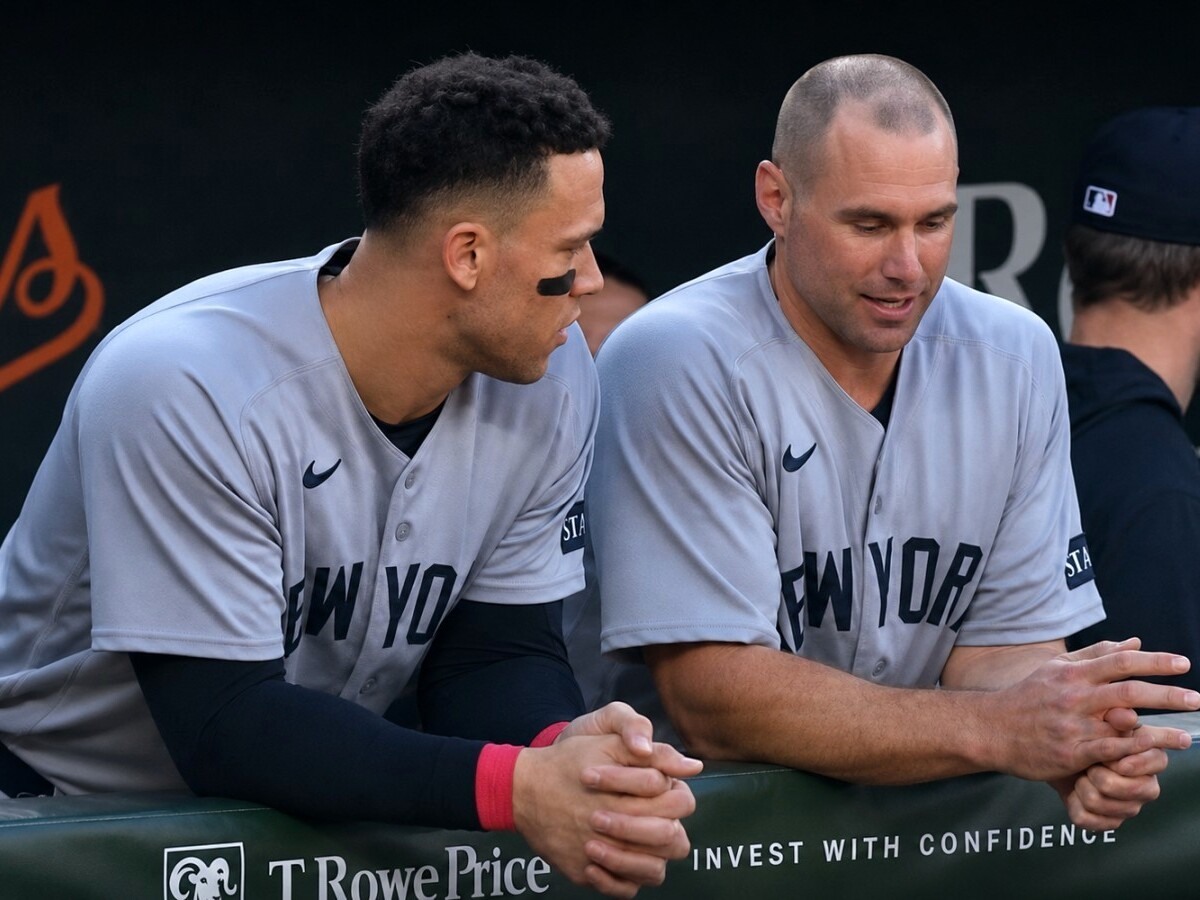
Goldschmidt is in the middle of a career renaissance at 38. He is slashing .301/.368/.560 with a .928 OPS and 11 home runs, his best rate production since his 2022 National League MVP season. For $4 million, the Yankees are getting MVP-caliber numbers.
His value spikes against left-handed pitching. His 249 wRC+ against lefties this season would be the highest mark any hitter has posted since the shortened 2020 season. No one in baseball has been better against left-handers.
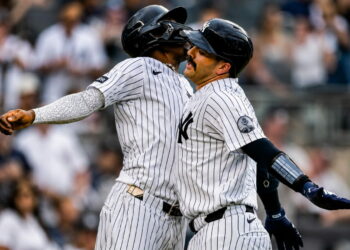
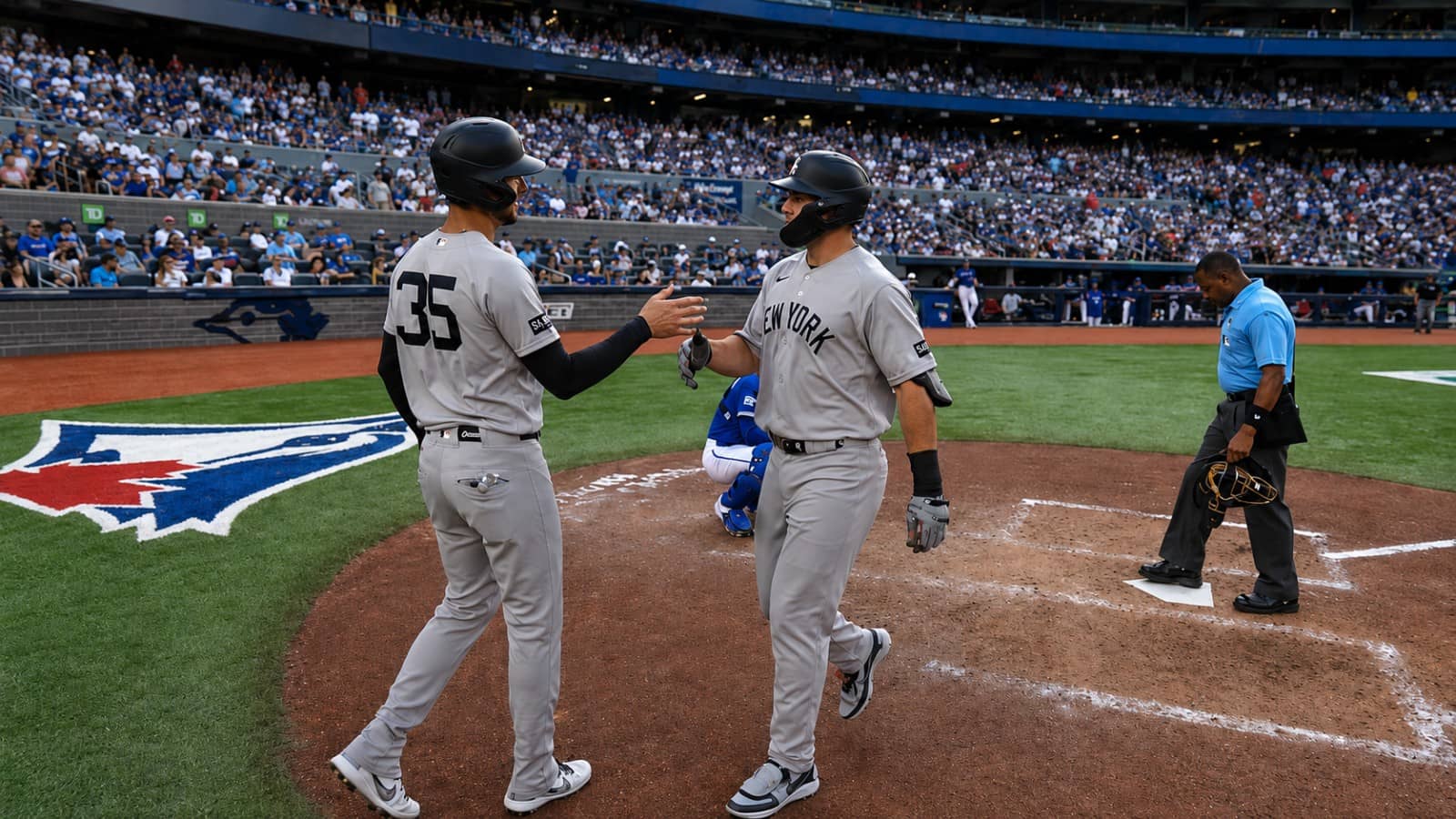
The Saturday moment in Toronto captured it. With the score tied at 1 in the ninth inning and Bellinger on first base, Goldschmidt faced Blue Jays closer Louis Varland. Varland was the American League’s best reliever this season and had not allowed a home run all year. Goldschmidt drove a hanging knuckle-curve over the left-field wall for a two-run homer and a 3-1 Yankees win.
Goldschmidt explained afterward that he had a feeling about the matchup before he ever stepped in.
“I kind of joked in my head before that at-bat that he hasn’t given up a run in forever,” Goldschmidt said. “Maybe (Saturday) will be the day.”
The deal has paid off in ways the Yankees did not fully bank on. Goldschmidt was partly signed as insurance in case Giancarlo Stanton missed time. Stanton has now missed nearly two months with a calf strain and recently suffered a rehab setback. With Aaron Judge also sidelined, Goldschmidt has at times been the only right-handed bat at the top of the Yankees order.
One mechanical change has driven the surge. Goldschmidt is attacking pitches further out front this year. In 2025 he posted a .931 OPS when pulling the ball with five home runs. In 2026 that figure has jumped to a 1.410 OPS with seven home runs on pulled balls.
Why Bellinger remains the bigger overall piece
Goldschmidt wins the rate-stat argument. Bellinger wins the total-impact argument, and the volume gap is real.
Bellinger is hitting .280/.373/.487 with an .860 OPS, 11 home runs, 49 RBIs, 45 runs, and 42 walks across 71 games entering June 18. His 3.9 WAR more than doubles Goldschmidt’s 1.6, a reflection of his everyday volume and defensive value. He plays all three outfield positions and first base. He hits in the middle of the order every day. On June 18, he nearly made history with another big performance, continuing one of the steadiest stretches of his Yankees tenure.
He is doing it while the Yankees navigate injuries to Judge, Stanton, Trent Grisham, Max Fried, and others. Bellinger has been the everyday anchor. Goldschmidt is the high-leverage weapon. A $4 million bench-and-platoon bat, no matter how hot, cannot fill a lineup card every day at premium positions the way Bellinger does. That is where the 3.9-to-1.6 WAR gap comes from.
What leadership adds to the verdict
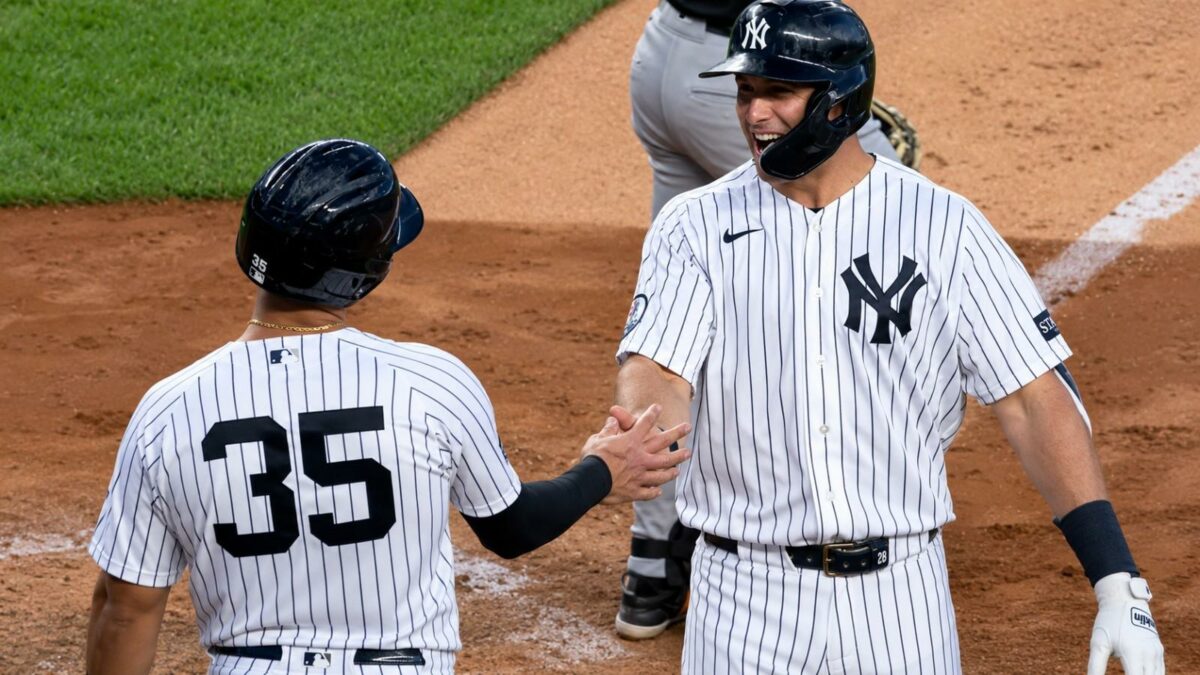
Performance is only part of the equation the Yankees weigh. Both signings were made with clubhouse value in mind.
Manager Aaron Boone made clear that Goldschmidt’s presence in the room was a core reason for the signing, not just his bat against lefties.
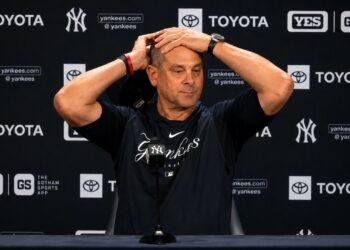
“We were very confident in Goldy’s production, even though with Benny it’s not necessarily the perfect fit,” Boone said. “Our confidence in his ability to still kill lefties was there, plus just who he is in the room and who he is on the team. I was thrilled when we got it done.”
That respect runs through the roster. Jasson Dominguez, who returned from the injured list Saturday, has taken to calling the veteran “Young Goldy” as the 38-year-old keeps turning back the clock. Boone did not hold back on the bigger picture.
“He’s a Hall of Fame player and obviously proved that he can still do it,” Boone said.
Bellinger brings a quieter, everyday-professional leadership. Goldschmidt brings the gravity of a likely Hall of Famer and former MVP mentoring a young clubhouse. On the leadership axis, Goldschmidt’s veteran presence gives him a real edge despite Bellinger’s larger on-field role.
The verdict for the Yankees
The two signings are not really competing for the same crown.
Bellinger is the best signing by total value. He is an everyday star at multiple positions producing across every category. If the Yankees could keep only one, they would keep Bellinger without hesitation.
Goldschmidt is the best signing by return on investment, and it is not close. Four million dollars for MVP-level rate stats, the best lefty-mashing in baseball, clutch ninth-inning home runs off elite closers, and Hall of Fame leadership is the kind of bargain that decides division races.
Considering both performance and leadership together, Goldschmidt has given the Yankees the most relative to what they paid and what they expected. Bellinger was supposed to be great. Goldschmidt was supposed to be a role player. Only one of them has wildly exceeded his deal, and that is the $4 million man.
What do you think? Leave your comment below.