ST. PETERSBURG, Fla. — The Yankees spent most of Saturday night waiting for one opening against Drew Rasmussen. They got almost none.
Tampa Bay’s right-hander carried a no-hit bid into the eighth inning at Tropicana Field, struck out 10 and turned Game 1 of the American League Division Series into a test the Yankees never solved. New York lost 1-0, managed one hit and fell behind in the best-of-five series.
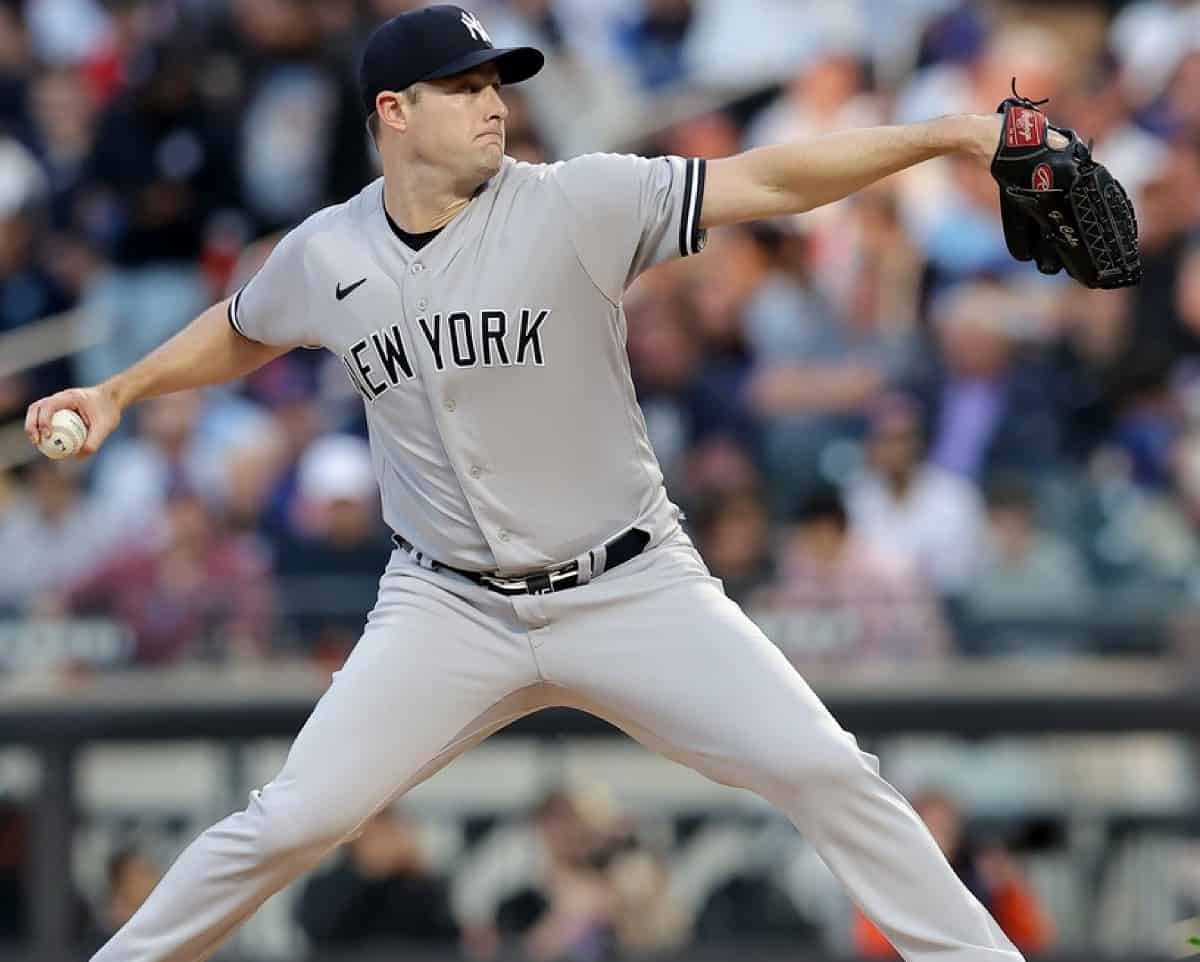
Gerrit Cole gave the Yankees five innings of one-run ball. Jonathan Aranda’s third-inning solo homer accounted for Tampa Bay’s only run, and the bullpen kept the Rays scoreless thereafter.
They could not. Rasmussen retired 23 of the 26 batters he faced. Bryan Baker worked a clean ninth for the save after Rasmussen earned the win and Cole took the loss.
The one-hit total was the fewest in the Yankees’ 447 postseason games. It came immediately after New York scored 18 runs in a two-game Wild Card Series sweep of Boston.
By the eighth, the Yankees were trying to manufacture one moment. When it arrived, it exposed a disconnect between a player’s urgency, a coach’s instruction and Aaron Boone’s view of October baseball.
Boone and Wells saw the same play differently
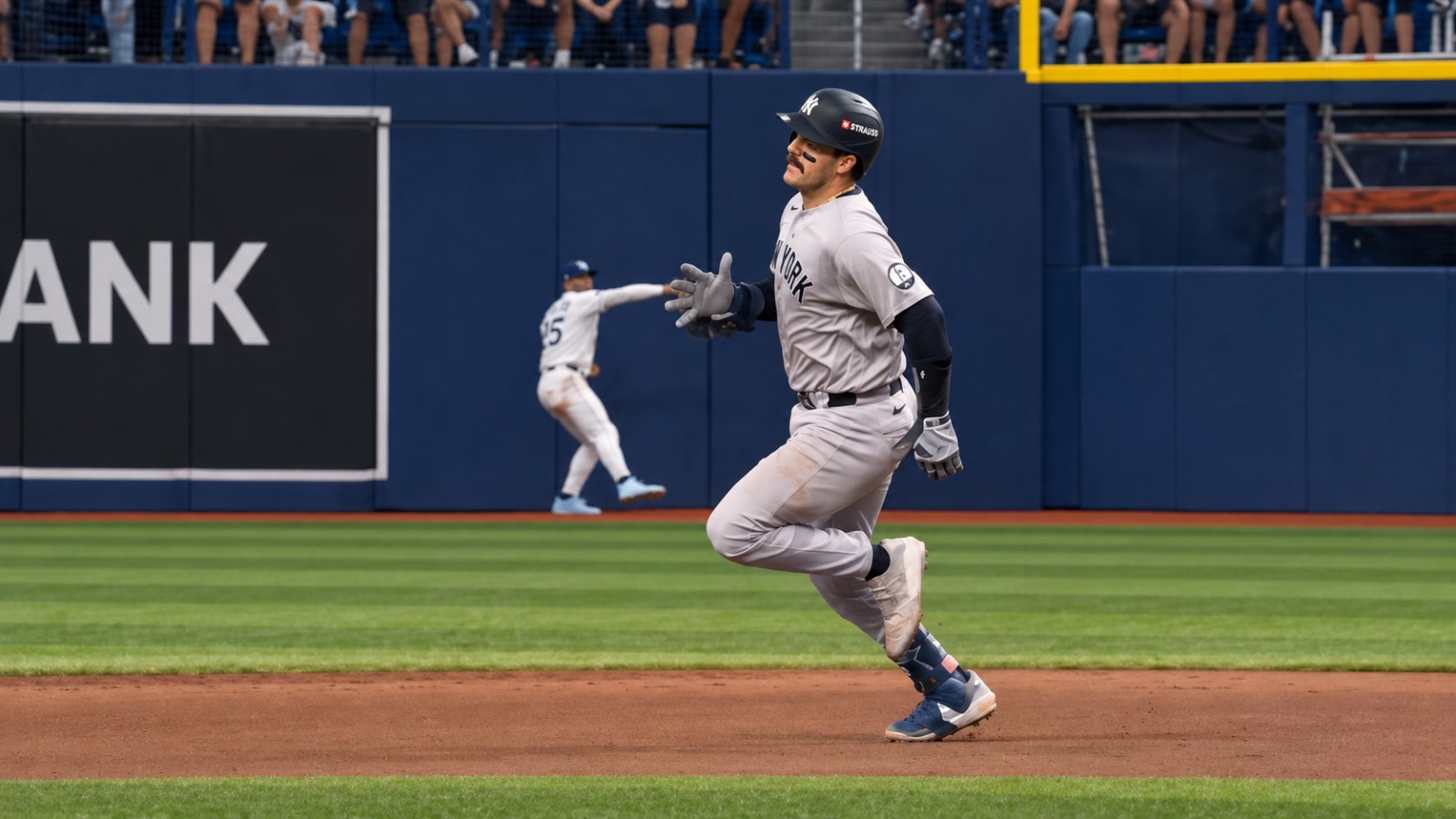
Austin Wells lined a 94.3 mph Rasmussen sinker down the right-field line with two outs in the eighth. The ball left Wells’ bat at 107.8 mph and ended the no-hit bid. It should have put the tying run at second with Giancarlo Stanton available to pinch hit.
Instead, Wells kept going.
Third-base coach Luis Rojas had both arms up with a stop sign. Wells acknowledged he picked it up only after passing second, when he believed he was already committed. Victor Mesa Jr. recovered the ball, fired to Taylor Walls and watched the Rays shortstop complete the relay to Junior Caminero for the out.
Boone did not soften his assessment after the Yankees’ loss.
“Just obviously not a good decision there,” Boone said. “Not sure if he saw something on his way between first and second that caused him to go there. But obviously a mistake there.”
Wells explained the gamble differently, pointing to the fast Tropicana Field surface and an offense that had created almost nothing.
“The field plays fast here. Guaranteed to score on a single there at third versus maybe not so much from second base. That was, really, I would say the only benefit there. They’re an athletic bunch. I felt like if I got to third there, I was almost guaranteeing that if we got another ball on the turf there, we were going to score a run and tie the game.”
Wells also conceded the central problem. With two outs, being wrong ended the inning.
“I think you have to take risks, but in that situation, obviously the risk was wrong.”
Jazz Chisholm adds another layer to Yankees disconnect
The reaction inside the Yankees clubhouse was not uniform. Jazz Chisholm Jr. defended Wells’ aggression while Boone labeled the decision a mistake.
Chisholm focused on the possibility that a rushed relay or bad throw could have produced the spark New York had been missing.
“He’s just trying to make something happens, it’s the playoffs. If you were watching him run the bases, out of the box, he was hustling like hell…if they threw that ball away, you never know what happens. Just keep going”
That was not Chisholm directly challenging Boone. It showed three different readings of the same play: Boone judged the decision, Wells explained the risk and Chisholm defended the intent.
The Rays sounded surprised New York gave them the chance. Jonathan Aranda said he was “a little surprised” Wells tried for third. Taylor Walls was more direct.
“I couldn’t really believe it in my head.”
The numbers made the gamble even thinner
The Yankees’ disagreement becomes sharper when the physical matchup is added.
Statcast listed Wells at 25.9 feet per second during the 2026 season, placing him in the 15th percentile among major league runners. Mesa knew the catcher was not an elite runner and attacked the play accordingly.
The Rays outfielder’s throw left right field at 91.7 mph. Walls handled the relay cleanly, and Wells was beaten by several feet.
Advancing from second to third with two outs offered limited extra benefit. A single could already score Wells from second. Getting thrown out erased every option, including a potential Stanton plate appearance with the tying run in scoring position.
Game 2 arrives with less margin
The play did not cause the Yankees’ one-hit night, and Boone made that distinction. Rasmussen was the larger problem, recording 23 swinging strikes and again dominating a lineup he has repeatedly troubled.
But postseason losses turn on scarce opportunities. New York had one clean hit Saturday, and its own decision-making removed it almost immediately.
The Yankees now need three wins in the next four games to advance. Teams taking Game 1 of a best-of-five postseason series have historically won 73% of those series.
The lasting image was Rojas signaling stop, Wells continuing, Boone calling it a mistake and Chisholm defending the instinct behind it.
For a Yankees team with almost no offensive margin Saturday, the sequence laid bare how costly a few seconds of disconnect can become in October.
What do you think? Leave your comment below.