| The final standing | 7th in AL (Did not qualify for World Series) |
| Regular season record | 69-85 (0.448) |
| Post-season record | – |
| AL rank | 7th |
| World Series record and opponent | – |
| Manager | Miller Huggins |
| Captain | Everett Scott |
| Top batter | Home run: Bob Meusel (33), Babe Ruth (25), Lou Gehrig (20) BA: Earle Combs (.324), Lou Gehrig (.295), Joe Dugan (.292) Runs: Earle Combs (117), Bob Meusel (101), Lou Gehrig (73) RBI: Bob Meusel (134), Lou Gehrig (68), Babe Ruth (67) |
| Top pitcher/ (W-L, ERA) | Herb Pennock: 16-17, 2.96 Urban Shocker: 12-12, 3.65 |
| Attendance record | 697,267 (5th of 8) |
1925 New York Yankees season
The 1925 New York Yankees season stands as a significant chapter in the team’s storied history, primarily marked by health challenges and a rare dip in performance. This season, which was the Yankees’ 23rd, ended with a rather unimpressive record of 69–85. This placed them in seventh position, a substantial 30 games behind the leading Washington Senators. Managed by Miller Huggins, the team played their home games at the iconic Yankee Stadium, a venue synonymous with baseball greatness.
One of the most notable aspects of the 1925 season was the mysterious illness of Babe Ruth, an iconic figure in baseball. This illness significantly impacted Ruth’s ability to contribute, as he was absent for a considerable portion of the season. His absence was deeply felt by the team, as evidenced by their performance and standings.
The season represented a low point for the Yankees, particularly when considering their history and expectations. It was their lowest finish since 1913 in both percentage and place. More notably, it marked the first time since 1918 that the Yankees concluded a season with a sub-.500 record. This was a stark contrast to the team’s usual dominance in the sport.
However, the 1925 season also demonstrated the resilience and capacity for regeneration that the Yankees are known for. Following this disappointing performance, the team regrouped and regained their formidable stature in the baseball world. It would be another 40 years before the Yankees experienced a season finishing below .500, highlighting their remarkable ability to bounce back from setbacks and maintain a high standard of excellence in the subsequent decades.
In summary, the 1925 New York Yankees season was a period of adversity, marked by Babe Ruth’s illness and an uncharacteristic finish in the standings. Yet, it also set the stage for a resurgence, showcasing the enduring spirit and resilience of the team. This season, though not celebrated for its successes, remains a crucial part of the Yankees’ rich history, illustrating both the challenges and the triumphs that have defined the franchise over the years.
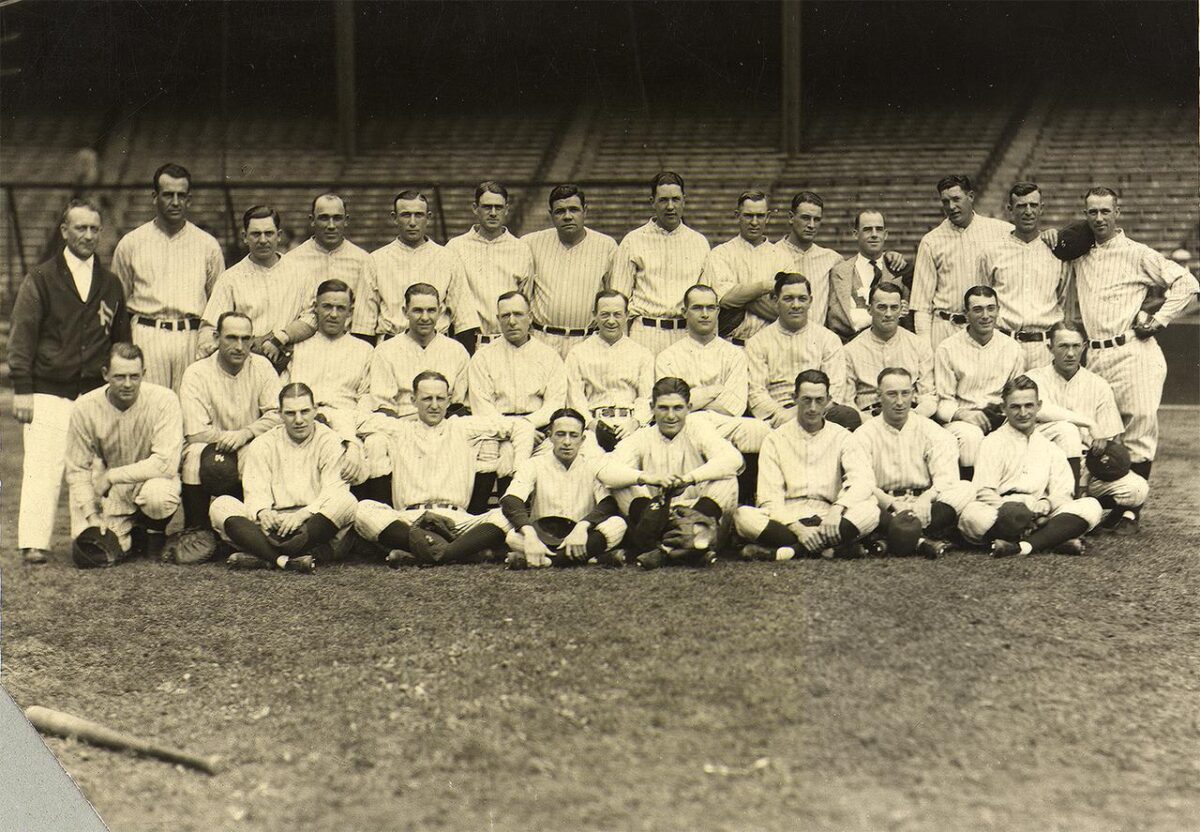
1925 New York Yankees’ big-bang Opening Day
On April 14, 1925, the New York Yankees hosted the defending World Series champion Washington Nationals for the season opener at Yankee Stadium. More than 50,000 fans braved chilly, overcast weather to witness the contest, which was notable for the absence of key stars on both sides. Washington ace Walter Johnson was unavailable due to insufficient conditioning, while the Yankees were missing Babe Ruth, who was hospitalized with a severe illness that would later require surgery.
The Yankees handed the ball to Urban Shocker, a proven veteran acquired to stabilize the rotation. The Nationals put George Mogridge against him. The game began as a tight defensive battle. The Yankees took an early 1-0 lead in the second inning when Shocker himself drew a bases-loaded walk. Washington leveled the score in the fourth inning on an RBI single by Ossie Bluege.
Shocker delivered a poised performance, limiting Washington’s offense and pitching effectively under pressure. He allowed runs but consistently escaped trouble, particularly in the middle innings when the Senators threatened to swing momentum. His ability to change speeds and locate pitches neutralized a Washington lineup that had been among the league’s most productive the previous season.
New York’s offense did not overpower the Senators but executed efficiently. The Yankees scored early and added key runs through a combination of base hits, situational hitting, and capitalizing on defensive lapses. Rather than relying on home runs, they applied steady pressure, forcing Washington to play from behind. Several Yankees hitters contributed with timely singles and productive outs that advanced runners and extended innings.
The turning point occurred in the fifth inning. Washington catcher Muddy Ruel nearly gave the Nationals the lead with a deep drive to left, but Yankees fielder Bob Meusel made a spectacular play, reaching over the railing to rob Ruel of a home run. In the bottom of that inning, Shocker helped his own cause with a triple and scored the go-ahead run on a hit by Ben Paschal, Ruth’s replacement in right field.
Washington had opportunities to rally but failed to deliver in critical moments. Missed chances with runners on base and uneven pitching allowed the Yankees to maintain control. The Senators’ inability to generate a late comeback underscored the fine margins that often decide early-season games.
The Yankees pulled away in the later innings demonstrating unexpected power. Paschal hit a solo home run in the sixth, and Meusel added another solo shot in the seventh to extend the lead to 5-1. Shocker remained dominant on the mound, retiring the final batters in order to secure a complete-game victory. Despite the Opening Day triumph, the season proved difficult for New York, who finished seventh, while Washington went on to win another American League pennant.
How Wally Pipp’s headache let Lou Gehrig start a storied career
Wally Pipp‘s headache on June 2, 1925, inadvertently paved the way for one of baseball’s greatest legends, Lou Gehrig, to embark on a journey that would forever change the course of the sport. Pipp, the New York Yankees’ starting first baseman, was a seasoned player known for his significant contributions to the team, including driving in more than 100 runs three times and playing in three World Series. However, on that fateful day, he stepped down from the lineup due to a headache, unknowingly setting the stage for Gehrig’s rise.

Lou Gehrig, then a 21-year-old bench player, was chosen by Yankees manager Miller Huggins to fill in for Pipp. This opportunity, although seemingly ordinary at the moment, marked the beginning of an extraordinary streak and a storied career. Gehrig seized the moment, showcasing his talent with three hits and scoring a run in an 8-5 victory over the Washington Senators. While Gehrig had officially started his consecutive game streak the day before with a pinch-hitting appearance, it was Pipp’s absence that truly launched Gehrig’s career as the Yankees’ starting first baseman.
Despite Gehrig going hitless in the next game and being replaced at first base in subsequent games, his breakthrough moment came on June 5 against the Browns, where he hit his first home run of the season. This event ignited the legend of Lou Gehrig, who would go on to achieve remarkable feats, including 2,721 hits, 493 home runs, 1,995 RBI, two American League Most Valuable Player awards, and six World Series titles. In his 34 World Series games, Gehrig batted an impressive .361 with 10 homers and 35 RBI.
Pipp’s Yankees career, in contrast, took a different turn after 1925. He was sold to the Cincinnati Reds post-season and continued to play effectively, including driving in 99 runs in 1926 as the Reds’ everyday first baseman. However, by 1929, Pipp had exited the major leagues.
Lou Gehrig, nicknamed the Yankees’ “The Iron Horse,” became synonymous with durability and excellence. His streak of 2,130 consecutive games stood as a testament to his resilience and commitment, a record that remained unbroken until Cal Ripken Jr. surpassed it in 1995. Gehrig’s Yankees career, tragically cut short by amyotrophic lateral sclerosis (ALS) in 1939, remains a beacon of inspiration. His farewell speech at Yankee Stadium, where he declared himself “the luckiest man on the face of the earth,” encapsulates his humility and gratitude, even in the face of adversity.
In essence, Wally Pipp’s headache and subsequent Yankees replacement by Lou Gehrig symbolize one of baseball’s most pivotal moments. It underscores the unpredictability of sports and how a single, seemingly minor event can alter the course of history, turning one player into a trivia footnote and elevating another to the pantheon of baseball immortals.
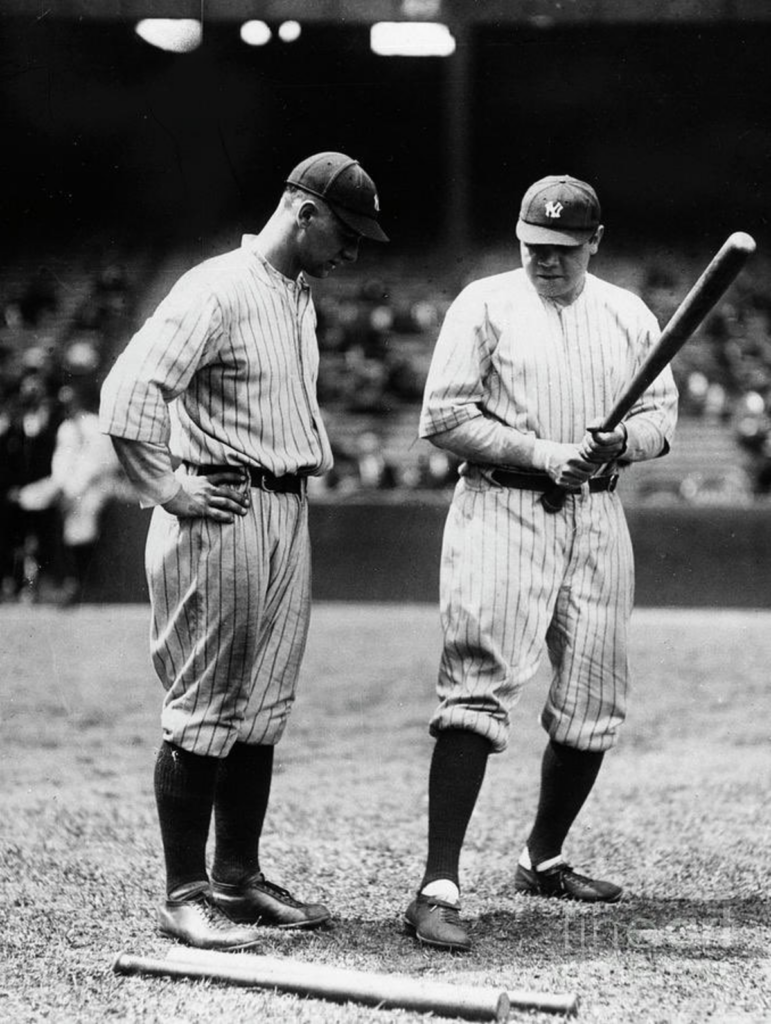
Postseason result
(Did not qualify – Eliminated in Regular Season)
The 1925 New York Yankees roster
| Name | Age | B | T | Ht | Wt | DoB | Yrs | G | GS | WAR | Salary | |
| Walter Beall | 25 | us US | R | R | 5′ 10″ | 178 | Jul 29, 1899 | 2 | 8 | 1 | -0.5 | $6,500 |
| Benny Bengough | 26 | us US | R | R | 5′ 7″ | 168 | Jul 27, 1898 | 3 | 95 | 84 | 0.7 | $5,000 |
| Garland Braxton | 25 | us US | B | L | 5′ 11″ | 152 | Jun 10, 1900 | 3 | 3 | 2 | 0 | |
| Charlie Caldwell | 23 | us US | R | R | 5′ 10″ | 180 | Aug 2, 1901 | 1st | 3 | 0 | -0.2 | $2,100 |
| Earle Combs HOF | 26 | us US | L | R | 6′ 0″ | 185 | May 14, 1899 | 2 | 150 | 149 | 4.1 | $7,500 |
| Joe Dugan | 28 | us US | R | R | 5′ 11″ | 160 | May 12, 1897 | 9 | 102 | 96 | 1.1 | $12,000 |
| Leo Durocher HOF | 19 | us US | R | R | 5′ 10″ | 160 | Jul 27, 1905 | 1st | 2 | 0 | $1,800 | |
| Alex Ferguson | 28 | us US | R | R | 6′ 0″ | 180 | Feb 16, 1897 | 6 | 21 | 6 | -1.9 | $6,000 |
| Ray Francis | 32 | us US | L | L | 6′ 1″ | 182 | Mar 8, 1893 | 3 | 4 | 0 | 0 | $4,000 |
| Lou Gehrig HOF | 22 | us US | L | L | 6′ 0″ | 200 | Jun 19, 1903 | 3 | 126 | 117 | 3.2 | $3,750 |
| Fred Hofmann | 31 | us US | R | R | 5′ 11″ | 175 | Jun 10, 1894 | 7 | 3 | 0 | 0 | |
| Waite Hoyt HOF | 25 | us US | R | R | 6′ 0″ | 180 | Sep 9, 1899 | 8 | 46 | 30 | 5 | $10,000 |
| Ernie Johnson | 37 | us US | L | R | 5′ 9″ | 151 | Apr 29, 1888 | 10 | 76 | 35 | 0.4 | $6,500 |
| Hank Johnson | 19 | us US | R | R | 5′ 11″ | 175 | May 21, 1906 | 1st | 24 | 4 | -1 | $1,800 |
| Sad Sam Jones | 32 | us US | R | R | 6′ 0″ | 170 | Jul 26, 1892 | 12 | 46 | 31 | 1.4 | $12,000 |
| Mark Koenig | 20 | us US | B | R | 6′ 0″ | 180 | Jul 19, 1904 | 1st | 28 | 27 | -0.6 | $4,200 |
| Roy Luebbe | 24 | us US | B | R | 6′ 0″ | 175 | Sep 17, 1900 | 1st | 8 | 6 | -0.3 | $2,100 |
| Jim Marquis | 24 | us US | R | R | 5′ 11″ | 174 | Nov 18, 1900 | 1st | 2 | 0 | -0.2 | $3,000 |
| Fred Merkle | 36 | us US | R | R | 6′ 1″ | 190 | Dec 20, 1888 | 15 | 7 | 2 | 0.1 | $6,000 |
| Bob Meusel | 28 | us US | R | R | 6′ 3″ | 190 | Jul 19, 1896 | 6 | 156 | 156 | 3.6 | $11,500 |
| Steve O’Neill | 33 | us US | R | R | 5′ 10″ | 165 | Jul 6, 1891 | 15 | 35 | 26 | 0.3 | $10,000 |
| Heinie Odom | 24 | us US | B | R | 6′ 0″ | 170 | Oct 13, 1900 | 1st | 1 | 0 | 0 | $3,000 |
| Ben Paschal | 29 | us US | R | R | 5′ 11″ | 185 | Oct 13, 1895 | 4 | 89 | 54 | 2.4 | $3,000 |
| Herb Pennock HOF | 31 | us US | B | L | 6′ 0″ | 160 | Feb 10, 1894 | 13 | 47 | 31 | 6.4 | $14,500 |
| Wally Pipp | 32 | us US | L | L | 6′ 1″ | 180 | Feb 17, 1893 | 12 | 62 | 42 | 0 | $10,000 |
| Babe Ruth HOF | 30 | us US | L | L | 6′ 2″ | 215 | Feb 6, 1895 | 12 | 98 | 98 | 3.5 | $52,000 |
| Wally Schang | 35 | us US | B | R | 5′ 10″ | 180 | Aug 22, 1889 | 13 | 73 | 40 | 0.1 | $10,000 |
| Everett Scott | 32 | us US | R | R | 5′ 8″ | 148 | Nov 19, 1892 | 12 | 22 | 16 | -0.5 | $10,000 |
| Howie Shanks | 34 | us US | R | R | 5′ 11″ | 170 | Jul 21, 1890 | 14 | 66 | 38 | 0.1 | $6,500 |
| Bob Shawkey | 34 | us US | R | R | 5′ 11″ | 168 | Dec 4, 1890 | 13 | 33 | 19 | 1.5 | $10,500 |
| Ben Shields | 22 | us US | R | L | 6′ 1″ | 195 | Jun 17, 1903 | 2 | 4 | 2 | 0.2 | $2,700 |
| Urban Shocker | 34 | us US | R | R | 5′ 10″ | 170 | Sep 22, 1890 | 10 | 41 | 30 | 6.3 | $12,500 |
| Bobby Veach | 37 | us US | L | R | 5′ 11″ | 160 | Jun 29, 1888 | 14 | 57 | 22 | 0.4 | |
| Paul Wanninger | 22 | us US | L | R | 5′ 7″ | 150 | Dec 12, 1902 | 1st | 117 | 111 | -1.8 | $1,800 |
| Aaron Ward | 28 | us US | R | R | 5′ 10″ | 160 | Aug 28, 1896 | 9 | 125 | 122 | -0.3 | $10,000 |
| Whitey Witt | 29 | us US | L | R | 5′ 7″ | 150 | Sep 28, 1895 | 9 | 31 | 7 | -0.2 | $8,000 |
Player additions, transactions, and trades
December 1924:
– December 10: Traded Mike McNally to the Boston Red Sox. Received Howie Shanks.
– December 13: Harvey Hendrick selected by the Cleveland Indians off waivers.
– December 15: Selected Steve O’Neill off waivers from the Boston Red Sox.
– December 17: Traded the optional assignment of Mack Hillis to Toledo (American Association) and Bullet Joe Bush and Milt Gaston to the St. Louis Browns. Received Urban Shocker.
May 1925:
– May 5: Traded Ray Francis and $9,000 to the Boston Red Sox. Received Alex Ferguson and Bobby Veach.
– May 29: Traded a player to be named later, Fred Hofmann, Oscar Roettger, and $50,000 to St Paul (American Association). Received Mark Koenig.
– The New York Yankees sent Ernie Johnson (October 28, 1925) to St Paul (American Association) to complete the trade.
June 1925:
– June 17: Purchased Fred Merkle from Rochester (International) for $6,000.
– Everett Scott selected by the Washington Nationals off waivers.
July 1925:
– July 4: Released Whitey Witt.
August 1925:
– August: Purchased Leo Durocher from Hartford (Eastern) for $12,000.
– August 1: Purchased Jim Marquis from St. Joseph (Western).
– August 17: Alex Ferguson player rights sold to the Washington Nationals.
– Bobby Veach selected by the Washington Nationals off waivers.
– August 19: Traded two players to be named later (minors) and cash to Springfield (Eastern). Received Garland Braxton.
– August 30: Traded a player to be named later and $25,000 and 3 players to be named to St Paul (American Association). Received Pat Collins.
– The New York Yankees sent Paul Wanninger (December 16, 1925) to St Paul (American Association) to complete the trade.
September 1925:
– September 14: Traded undisclosed players to St Paul (American Association). Received Herb McQuaid.
October 1925:
– October 9: Drafted Curt Fullerton from St Paul (American Association) in the 1925 rule 5 draft.
1925 New York Yankees debuts
- Charlie Caldwell – 07-07-1925 – 23 years old
- Leo Durocher – 10-02-1925 – 20 years old
- Hank Johnson – 04-17-1925 – 18 years old
- Mark Koenig – 09-08-1925 – 21 years old
- Roy Luebbe – 08-22-1925 – 24 years old
- Jim Marquis – 08-08-1925 – 24 years old
- Heinie Odom – 04-22-1925 – 24 years old
- Pee-Wee Wanninger – 04-22-1925 – 22 years old
The 1925 New York Yankees stats (batting)
| Pos | Name | Age | G | PA | AB | R | H | 2B | 3B | HR | RBI | SB | CS | BB | SO | BA |
| C | Benny Bengough | 26 | 95 | 308 | 283 | 17 | 73 | 14 | 2 | 0 | 23 | 0 | 2 | 19 | 9 | 0.258 |
| 1B | Lou Gehrig | 22 | 126 | 497 | 437 | 73 | 129 | 23 | 10 | 20 | 68 | 6 | 3 | 46 | 49 | 0.295 |
| 2B | Aaron Ward | 28 | 125 | 502 | 439 | 41 | 108 | 22 | 3 | 4 | 38 | 1 | 4 | 49 | 49 | 0.246 |
| SS | Paul Wanninger | 22 | 117 | 427 | 403 | 35 | 95 | 13 | 6 | 1 | 23 | 3 | 5 | 11 | 34 | 0.236 |
| 3B | Joe Dugan | 28 | 102 | 441 | 404 | 50 | 118 | 19 | 4 | 0 | 33 | 2 | 4 | 19 | 20 | 0.292 |
| OF | Bob Meusel | 28 | 156 | 697 | 624 | 101 | 181 | 34 | 12 | 33 | 134 | 13 | 14 | 54 | 55 | 0.29 |
| OF | Earle Combs | 26 | 150 | 674 | 593 | 117 | 203 | 36 | 13 | 3 | 62 | 12 | 13 | 65 | 43 | 0.342 |
| OF | Babe Ruth | 30 | 98 | 426 | 359 | 61 | 104 | 12 | 2 | 25 | 67 | 2 | 4 | 59 | 68 | 0.29 |
| OF | Ben Paschal | 29 | 89 | 276 | 247 | 49 | 89 | 16 | 5 | 12 | 55 | 14 | 9 | 22 | 29 | 0.36 |
| 1B | Wally Pipp | 32 | 62 | 200 | 178 | 19 | 41 | 6 | 3 | 3 | 24 | 3 | 3 | 13 | 12 | 0.23 |
| C | Wally Schang# | 35 | 73 | 191 | 167 | 17 | 40 | 8 | 1 | 2 | 24 | 2 | 1 | 17 | 9 | 0.24 |
| IF | Howie Shanks | 34 | 66 | 184 | 155 | 15 | 40 | 3 | 1 | 1 | 18 | 1 | 0 | 20 | 15 | 0.258 |
| 2B | Ernie Johnson | 37 | 76 | 183 | 170 | 30 | 48 | 5 | 1 | 5 | 17 | 6 | 3 | 8 | 10 | 0.282 |
| OF | Bobby Veach | 37 | 56 | 130 | 116 | 13 | 41 | 10 | 2 | 0 | 16 | 1 | 4 | 8 | 0 | 0.353 |
| SS | Mark Koenig# | 20 | 28 | 117 | 110 | 14 | 23 | 6 | 1 | 0 | 4 | 0 | 1 | 5 | 4 | 0.209 |
| C | Steve O’Neill | 33 | 35 | 105 | 91 | 7 | 26 | 5 | 0 | 1 | 10 | 0 | 0 | 10 | 3 | 0.286 |
| SS | Everett Scott | 32 | 22 | 65 | 60 | 3 | 13 | 0 | 0 | 0 | 4 | 0 | 1 | 2 | 2 | 0.217 |
| OF | Whitey Witt | 29 | 31 | 46 | 40 | 9 | 8 | 2 | 1 | 0 | 0 | 1 | 1 | 6 | 2 | 0.2 |
| C | Roy Luebbe# | 24 | 8 | 18 | 15 | 1 | 0 | 0 | 0 | 0 | 3 | 0 | 0 | 2 | 6 | 0 |
| 1B | Fred Merkle | 36 | 7 | 16 | 13 | 4 | 5 | 1 | 0 | 0 | 4 | 1 | 0 | 1 | 1 | 0.385 |
| C | Fred Hofmann | 31 | 3 | 2 | 2 | 0 | 0 | 0 | 0 | 0 | 0 | 0 | 0 | 0 | 0 | 0 |
| 3B | Heinie Odom# | 24 | 1 | 1 | 1 | 0 | 1 | 0 | 0 | 0 | 0 | 0 | 0 | 0 | 0 | 1 |
| Leo Durocher | 19 | 2 | 1 | 1 | 1 | 0 | 0 | 0 | 0 | 0 | 0 | 0 | 0 | 0 | 0 | |
| P | Herb Pennock# | 31 | 47 | 110 | 99 | 6 | 20 | 1 | 1 | 0 | 7 | 0 | 0 | 2 | 7 | 0.202 |
| P | Sad Sam Jones | 32 | 46 | 95 | 80 | 2 | 13 | 2 | 0 | 0 | 3 | 1 | 0 | 3 | 19 | 0.163 |
| P | Urban Shocker | 34 | 41 | 94 | 64 | 12 | 11 | 5 | 1 | 0 | 4 | 0 | 0 | 20 | 17 | 0.172 |
| P | Waite Hoyt | 25 | 46 | 91 | 79 | 5 | 24 | 2 | 3 | 0 | 8 | 0 | 1 | 2 | 1 | 0.304 |
| P | Bob Shawkey | 34 | 33 | 68 | 68 | 1 | 10 | 1 | 2 | 0 | 2 | 0 | 0 | 0 | 4 | 0.147 |
| P | Hank Johnson | 19 | 24 | 22 | 17 | 2 | 1 | 0 | 0 | 0 | 0 | 0 | 0 | 3 | 3 | 0.059 |
| P | Alex Ferguson | 28 | 21 | 17 | 15 | 0 | 2 | 1 | 0 | 0 | 1 | 0 | 0 | 0 | 4 | 0.133 |
| P | Ben Shields | 22 | 4 | 8 | 8 | 0 | 1 | 0 | 0 | 0 | 0 | 0 | 0 | 0 | 2 | 0.125 |
| P | Garland Braxton# | 25 | 3 | 6 | 6 | 1 | 2 | 0 | 0 | 0 | 1 | 0 | 0 | 0 | 1 | 0.333 |
| P | Walter Beall | 25 | 8 | 3 | 3 | 0 | 0 | 0 | 0 | 0 | 0 | 0 | 0 | 0 | 1 | 0 |
| P | Jim Marquis | 24 | 2 | 2 | 2 | 0 | 0 | 0 | 0 | 0 | 0 | 0 | 0 | 0 | 1 | 0 |
| P | Charlie Caldwell | 23 | 3 | 1 | 1 | 0 | 0 | 0 | 0 | 0 | 1 | 0 | 0 | 0 | 0 | 0 |
| P | Ray Francis | 32 | 4 | 0 | 0 | 0 | 0 | 0 | 0 | 0 | 0 | 0 | 0 | 0 | 0 | |
| Team Totals | 28.2 | 156 | 6024 | 5350 | 706 | 1470 | 247 | 74 | 110 | 654 | 69 | 73 | 466 | 480 | 0.275 | |
| Rank in 8 AL teams | 5 | 7 | 7 | 8 | 3 | 1 | 6 | 4 | 7 | 8 | 7 | |||||
| Non-Pitcher Totals | 28 | 156 | 5507 | 4908 | 677 | 1386 | 235 | 67 | 110 | 627 | 68 | 72 | 436 | 420 | 0.282 | |
| Pitcher Totals | 30.2 | 156 | 517 | 442 | 29 | 84 | 12 | 7 | 0 | 27 | 1 | 1 | 30 | 60 | 0.19 |
The 1925 New York Yankees stats (pitching)
| Pos | Name | Age | W | L | W-L% | ERA | G | GS | GF | CG | SHO | SV | IP | H | R | ER |
| SP | Herb Pennock | 31 | 16 | 17 | 0.485 | 2.96 | 47 | 31 | 11 | 21 | 2 | 2 | 277 | 267 | 117 | 91 |
| SP | Sad Sam Jones | 32 | 15 | 21 | 0.417 | 4.63 | 43 | 31 | 8 | 14 | 1 | 2 | 246.2 | 267 | 147 | 127 |
| SP | Urban Shocker | 34 | 12 | 12 | 0.5 | 3.65 | 41 | 30 | 7 | 15 | 2 | 2 | 244.1 | 278 | 108 | 99 |
| SP | Waite Hoyt | 25 | 11 | 14 | 0.44 | 4 | 46 | 30 | 14 | 17 | 1 | 6 | 243 | 283 | 124 | 108 |
| SP | Bob Shawkey | 34 | 6 | 14 | 0.3 | 4.11 | 33 | 19 | 6 | 9 | 1 | 0 | 186 | 209 | 101 | 85 |
| RP | Hank Johnson | 19 | 1 | 3 | 0.25 | 6.85 | 24 | 4 | 16 | 2 | 1 | 0 | 67 | 88 | 58 | 51 |
| RP | Alex Ferguson | 28 | 4 | 2 | 0.667 | 7.79 | 21 | 6 | 7 | 0 | 0 | 1 | 54.1 | 83 | 57 | 47 |
| RP | Walter Beall | 25 | 0 | 1 | 0 | 12.71 | 8 | 1 | 2 | 0 | 0 | 0 | 11.1 | 11 | 17 | 16 |
| Ben Shields | 22 | 3 | 0 | 1 | 4.88 | 4 | 2 | 2 | 2 | 0 | 0 | 24 | 24 | 13 | 13 | |
| Garland Braxton | 25 | 1 | 1 | 0.5 | 6.52 | 3 | 2 | 0 | 0 | 0 | 0 | 19.1 | 26 | 14 | 14 | |
| Jim Marquis | 24 | 0 | 0 | 9.82 | 2 | 0 | 1 | 0 | 0 | 0 | 7.1 | 12 | 8 | 8 | ||
| Ray Francis | 32 | 0 | 0 | 7.71 | 4 | 0 | 1 | 0 | 0 | 0 | 4.2 | 5 | 4 | 4 | ||
| Charlie Caldwell | 23 | 0 | 0 | 16.88 | 3 | 0 | 1 | 0 | 0 | 0 | 2.2 | 7 | 6 | 5 | ||
| Team Totals | 30 | 69 | 85 | 0.448 | 4.33 | 156 | 156 | 76 | 80 | 8 | 13 | 1387.2 | 1560 | 774 | 668 | |
| Rank in 8 AL teams | 7 | 2 | 4 | 2 | 3 | 4 | 1 | 3 | 4 | 4 |
Record vs. opponents/ Team splits
| Opponent (Games) | Won | Lost | WP |
| Boston Red Sox (22) | 13 | 9 | 0.591 |
| Chicago White Sox (22) | 9 | 13 | 0.409 |
| Cleveland Indians (22) | 12 | 10 | 0.545 |
| Detroit Tigers (23) | 8 | 14 | 0.364 |
| Philadelphia Athletics (22) | 9 | 13 | 0.409 |
| St. Louis Browns (23) | 11 | 11 | 0.500 |
| Washington Senators (22) | 7 | 15 | 0.318 |
Monthly record of 1925 New York Yankees
| Month (Games) | Won | Lost | WP |
| April (11) | 4 | 7 | 0.364 |
| May (30) | 11 | 18 | 0.379 |
| June (27) | 14 | 13 | 0.519 |
| July (29) | 12 | 17 | 0.414 |
| August (26) | 9 | 17 | 0.346 |
| September (31) | 18 | 12 | 0.600 |
| October (2) | 1 | 1 | 0.500 |
1925 New York Yankees All-Star
(No All-Star game in 1925)
1925 New York Yankees: Awards and honors
(Coming from a horror season, no New York Yankees player won any major award in 1925. Neither did any player rank in the top 10 AL MVP voting list)
The mystery of Babe Ruth health and impact on 1925 New York Yankees
Babe Ruth’s mysterious illness during the 1925 New York Yankees season, often referred to as “The Bellyache Heard ‘Round the World,” is a notable event in the history of baseball and one of the most intriguing episodes in the career of this legendary player.
In 1925, Babe Ruth, then a colossal figure in baseball and a key player for the 1925 New York Yankees, was suddenly struck by an illness that was both severe and enigmatic. The illness began in spring training and worsened as the season progressed. Ruth’s condition was initially attributed to a variety of causes, ranging from the flu to indigestion. However, the severity of his symptoms, which included severe stomach cramps and high fever, suggested something more serious.
Ruth’s illness took a dramatic turn in April 1925, when he collapsed at a train station in Asheville, North Carolina. He was rushed to a hospital where he underwent multiple surgeries, including one to address an intestinal abscess. The exact nature of his illness was never conclusively diagnosed, leading to widespread Yankees speculation and rumor. Some reports suggested that Ruth’s condition was exacerbated by his notorious lifestyle, particularly his habits of overeating and drinking.
The impact of Ruth’s illness on the Yankees’ performance that season was significant. His absence from the lineup for a substantial part of the season was a major factor in the team’s poor showing. The Yankees finished the season with a 69–85 record, placing them seventh in the American League, a sharp decline from their usual dominance in the sport.
Ruth’s illness and subsequent recovery also marked a turning point in his personal life and career. After his recovery, the Yankees legend made some changes to his lifestyle, although he never completely abandoned his indulgent habits. Professionally, Ruth returned to form in subsequent seasons, continuing to be one of the most dominant and influential players in baseball.
The 1925 New York Yankees season remains a curious chapter in Babe Ruth’s career and in the annals of baseball history. The mystery surrounding his illness and its impact on one of the most storied teams in baseball adds to the legend of Babe Ruth, a player as famous for his off-field exploits as his unparalleled skills on the field.
How do you rate the 1925 New York Yankees?