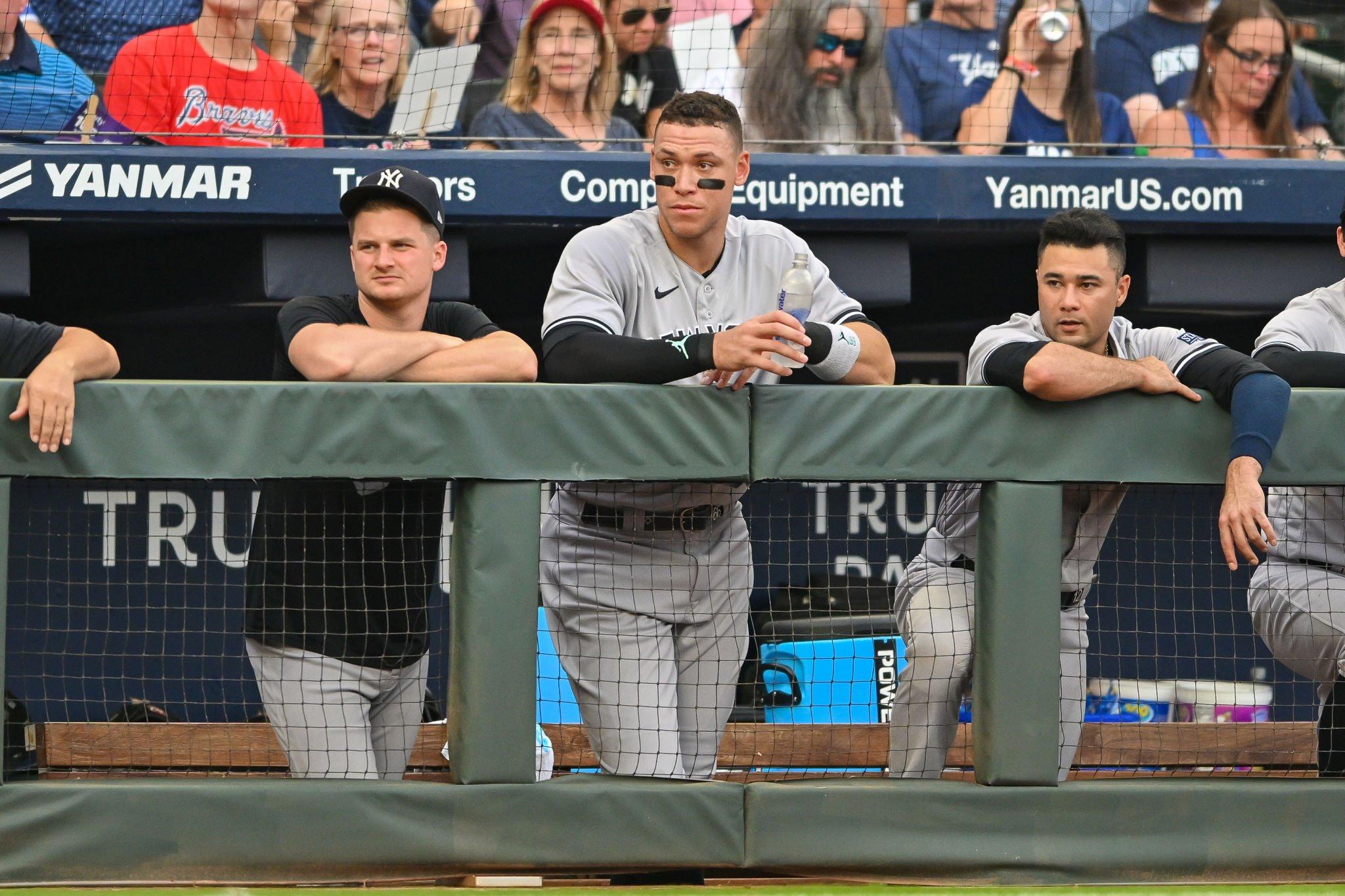
NEW YORK — The final score read 5-3, but the Yankees did not really lose to the Red Sox on Friday night so much as beat themselves. Two plays in the field, both avoidable, both quietly devastating, handed Boston four runs and ultimately the game. Without them, a tense night in the Bronx might have ended very differently.
Pitching and a Judge-less lineup got plenty of attention. The real story sits in two moments when the Yankees simply did not make the play, and the last-place Red Sox made them pay.
The double play that never happened
The first mistake came in the third inning, and it set the tone for everything that followed. With the Yankees looking to escape trouble, Red Sox outfielder Wilyer Abreu hit a ground ball that Anthony Volpe fielded at short.
The play was there to be made. To many watching, the grounder looked like a potential inning-ending double play, or at the very least a sure force out at second base. The Yankees got neither. The chance to end the threat slipped away, and instead of walking off the field, New York stayed stuck in the inning.
The cost was immediate. That failure to convert led directly to two Boston runs. What should have been a clean escape turned into a multi-run hole, the kind of self-inflicted damage that haunts a team already short on margin without Aaron Judge.
A lazy play that swung the game
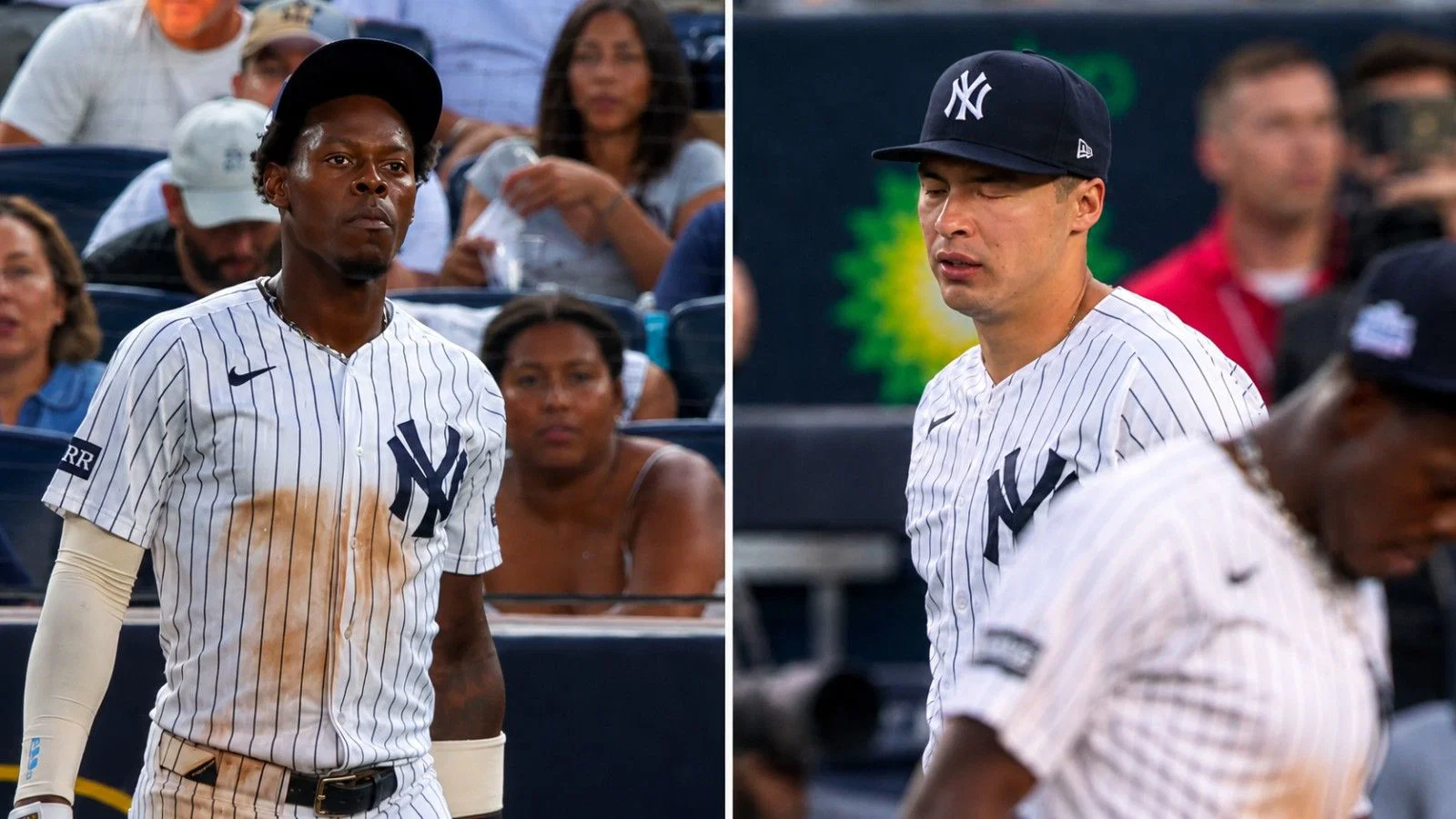
The second mistake was even more damaging, and it involved Jazz Chisholm Jr. The moment has drawn sharp criticism for the effort, or lack of it, on the play.
It looked like Chisholm had a chance to catch a line drive, but the ball sailed under his glove. The misplay kept the inning alive and opened the door for Boston’s biggest swing of the night. Moments later, Willson Contreras crushed a two-out, two-run home run, the blow that proved to be the deciding margin of the game.
That sequence captured the frustration. A play that appeared catchable instead became a two-run homer. For a Yankees team clinging to contact in a tight game, watching a routine-looking opportunity turn into the difference on the scoreboard was a gut punch. Two outs, two runs, and a deficit New York could not climb out of.
Why the mistakes loomed so large
Here is what made these two plays sting more than a normal defensive lapse. The Yankees are operating without their best hitter, and that changes the math on every run.
Judge was diagnosed this week with a stress fracture in his rib and will miss a significant stretch. With the captain out, the Yankees cannot afford to gift opponents extra outs or extra runs, because the offense no longer has the firepower to erase those mistakes with one swing. Four runs handed to Boston through sloppy defense is a near-fatal blow for a lineup in that position.
The numbers underline it. The four runs tied to those two plays were the difference in a 5-3 final. Clean defense, even on just one of the two plays, likely keeps the Yankees in front or close enough to steal the game late. Instead, they spent the night chasing a deficit of their own making.
A pitcher who could not absorb the damage
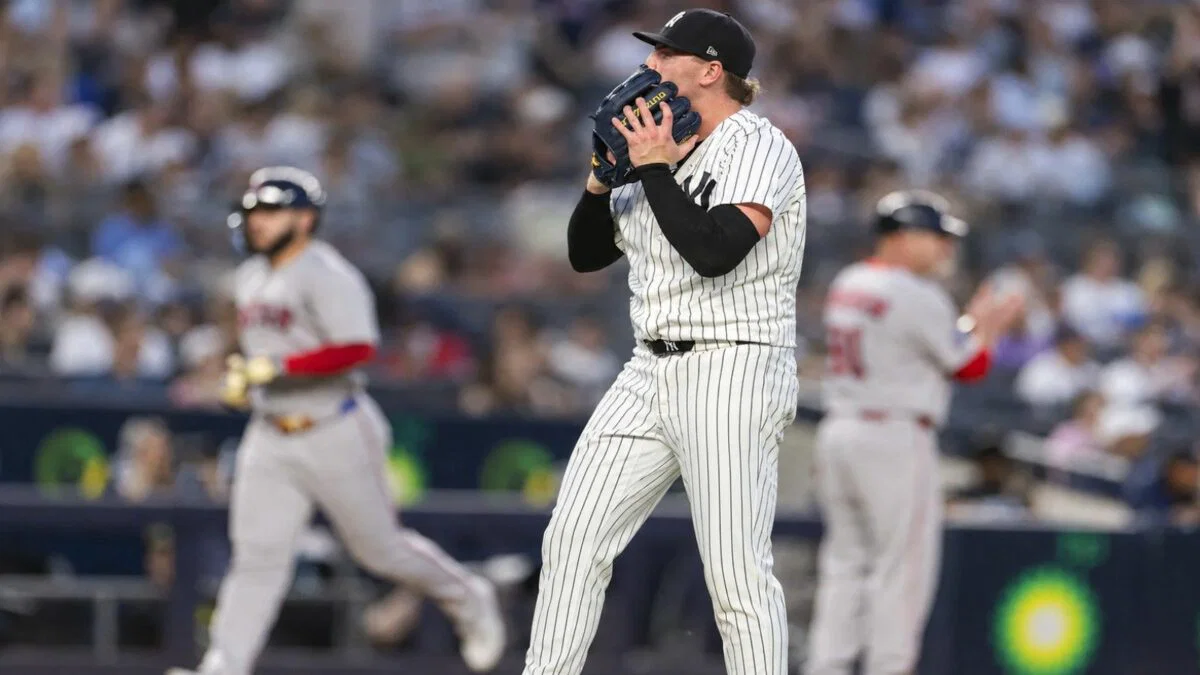
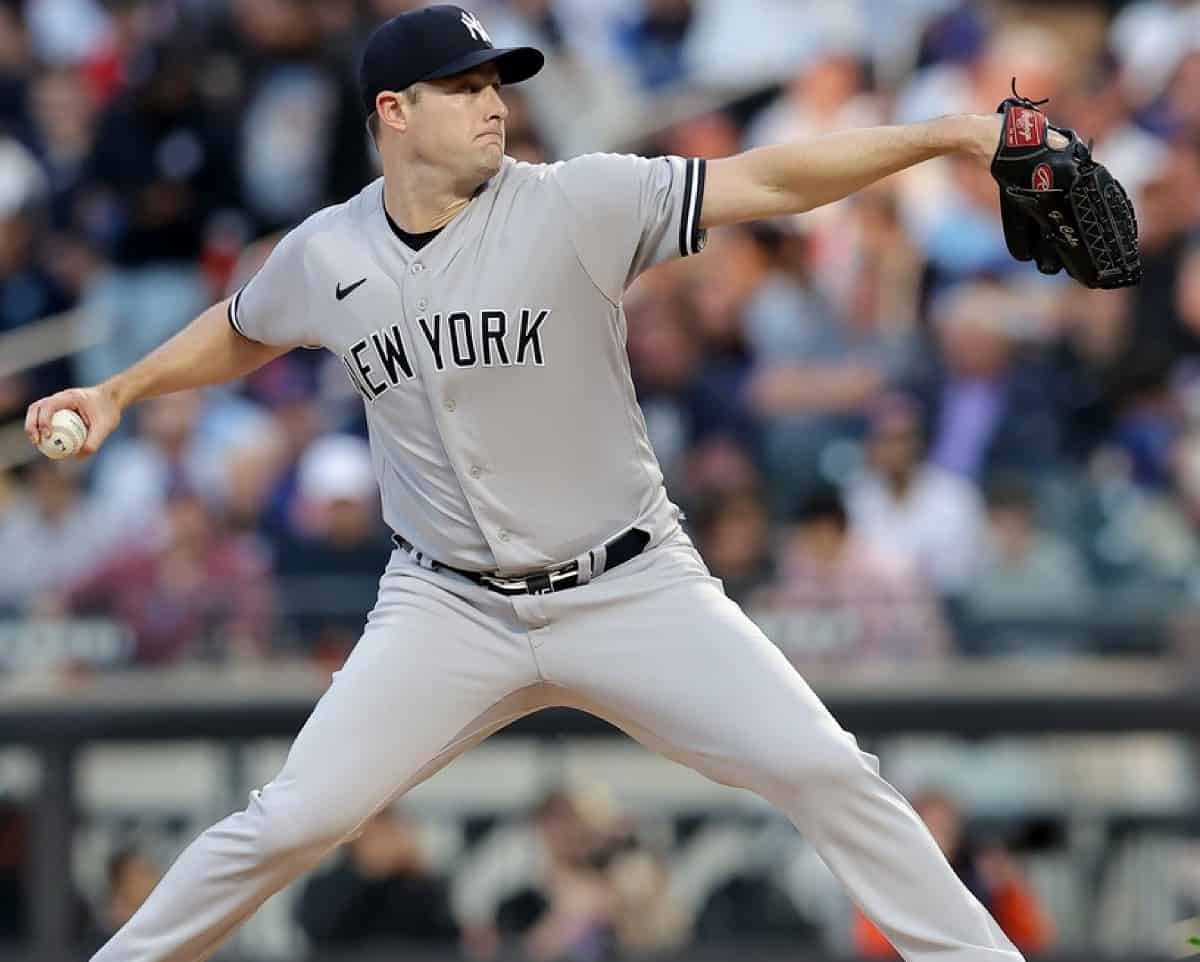
The mistakes also fell on a night when the Yankees had no margin from the mound. Ryan Weathers was already struggling, which made the defensive lapses even more costly.
Weathers was tagged for five earned runs, the third time in his last four starts he has allowed that many. He surrendered a solo homer to Andruw Monasterio in the fourth and a two-run shot to Contreras in the fifth, giving him seven home runs over his last four outings. He admitted he has been unhappy with his four-seam fastball, the pitch that keeps ending up in the seats.
On a night when the starter could not stop the bleeding, the Yankees needed flawless support behind him. They did not get it. The combination of a leaky rotation arm and two defensive miscues proved too much to overcome, even against a last-place club.
Missed chances compound the damage
The defensive errors were not the only self-inflicted wounds, but they were the decisive ones. The Yankees did get contributions, yet kept failing to deliver the answer when it counted.
Ben Rice homered in the first for an early lead, his 18th of the season. Spencer Jones doubled home Chisholm in the fourth, and Trent Grisham added a fifth-inning blast to pull within two. But the rallies stalled. Rice struck out with a runner on and Paul Goldschmidt on deck in the seventh, and a ninth-inning threat against Aroldis Chapman fizzled when Jose Caballero popped out and Grisham grounded out.
Those missed offensive chances mattered, but they would have meant far less without the two defensive gifts that put the Yankees behind in the first place. The Yankees swept the Red Sox in three games at Fenway Park in April. This time, in their first loss to Boston all year, they handed the rivals a win they did not have to earn. For a team navigating life without Judge, that is the kind of beating that hurts most, because the Yankees did it to themselves.
What do you think? Leave your comment below.