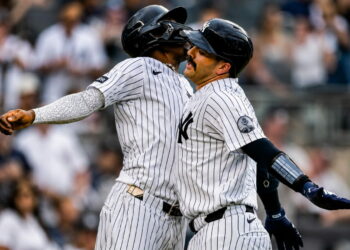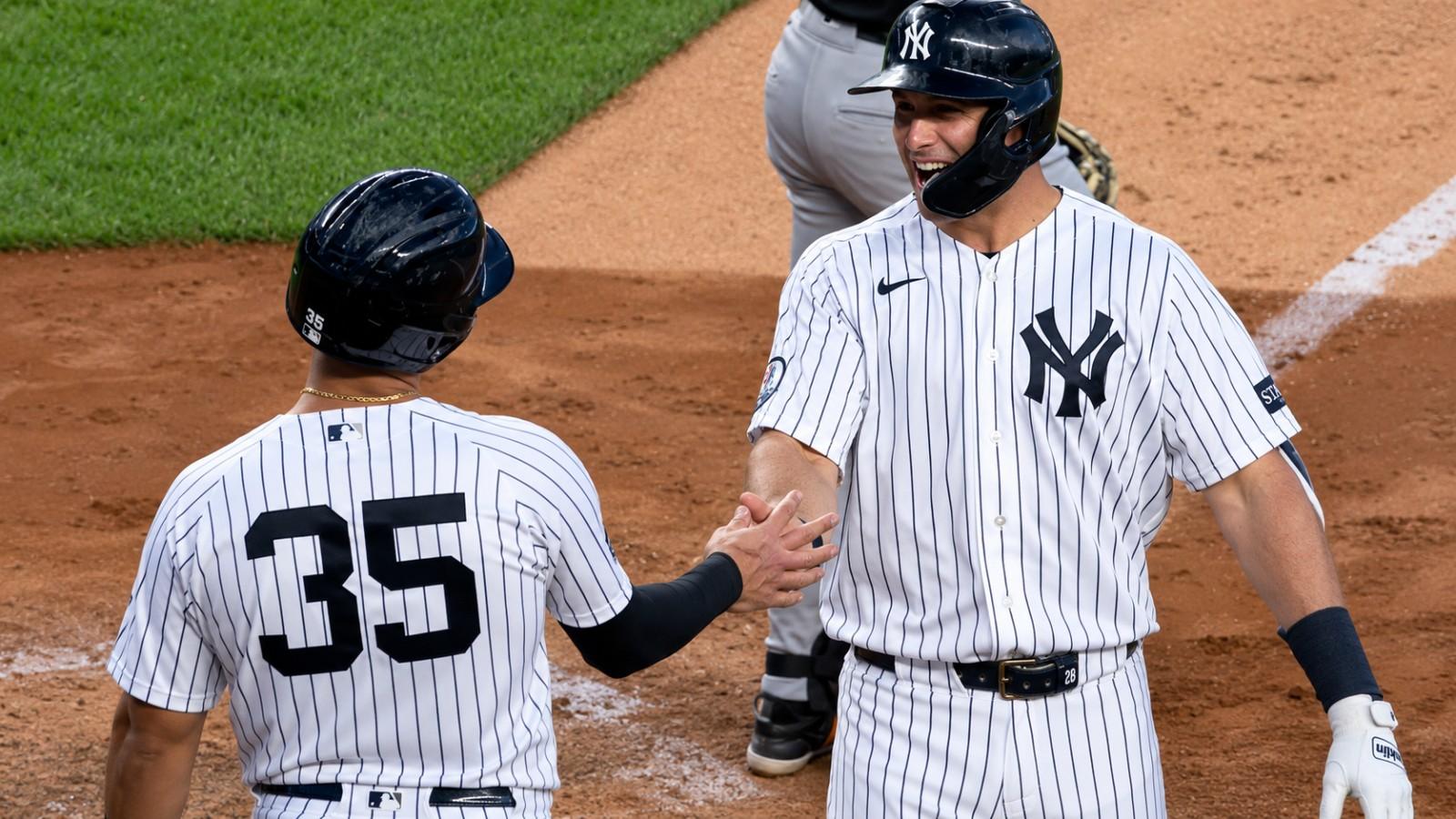
BRONX, N.Y. — The New York Yankees crushed the Chicago White Sox 12-2 on Tuesday night, with the fourth inning bringing the loudest noise of the evening. Six runs. Two-run homers from Ben Rice and Paul Goldschmidt. A 16-hit explosion that finally pushed Davis Martin out of the game.
That fourth-inning avalanche will be the highlight reel. It should not be the headline.
The Yankees won this game one inning earlier on three plays that should not have happened to a starter carrying a 2.41 ERA. A check-swing double. A grounder that turned into a free base. A called third strike that the automated ball-strike system erased.
Three weird moments. Three cracks. The Yankees walked through every one of them.
The check swing that should have been a strikeout
J.C. Escarra led off the bottom of the third.
The Yankees catcher offered at a pitch he clearly did not want to hit. The bat barely cleared the front of the plate. The kind of swing that produces strike three nine times out of 10.
This time, the barrel caught the ball just enough.
The contact dropped softly into the gap between the second baseman and the right fielder. By the time the ball came back in, Escarra was standing on second base with a double that did not look anything like a double.
It was the kind of hit that does not appear in scouting reports or trends. It is the kind of hit that scouts call lucky and managers call dangerous, because it does what no plan accounts for. It puts a runner in scoring position with nobody out.
The bottom-of-the-order at-bat that started Tuesday’s rout was exactly the kind of contribution the Yankees have needed all spring.
The base nobody bothered to cover
Anthony Volpe stepped in next.
The Yankees shortstop put the ball in play to the right side of the infield. A routine grounder. The kind of play professional defenses execute thousands of times a season without thinking about it.
Then the White Sox forgot to cover first base.
Martin did not break toward the bag in time. The first baseman ranged for the ball without holding the position. Volpe simply ran through an empty bag for a single. Escarra moved to third.
It was the kind of mistake that almost never shows up in a major league box score because most major league teams almost never make it. The Yankees suddenly had runners on the corners with no outs and a starter who had just unraveled mentally as much as physically.
The strikeout the robot took away
Ben Rice came up with the bases threatening to load.
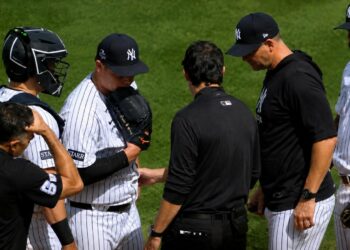
Martin worked the count carefully and got Rice on what looked like a corner pitch for a called third strike. The Yankees designated hitter walked away from the box. The strikeout would have ended the rally with the damage still contained.
Then Rice tapped his helmet.
The automated ball-strike system, introduced full-time to Major League Baseball this season, allows hitters and pitchers a limited number of challenges per game. Rice used his on the most important pitch of his at-bat. The challenge was upheld.
Strike three became ball four-in-waiting. The at-bat continued. Rice eventually drew the walk that loaded the bases for Cody Bellinger.
The White Sox had recorded zero hard-hit balls against them in the inning. They had a runner on third because of a check swing, a runner on second because of a missed first-base cover, and the bases loaded because a robot reversed a human call. Three moments. Zero damage at the plate. Maximum chaos on the basepaths.
Bellinger lined the next clean swing of the inning into the outfield for a two-run single. Spencer Jones followed with a bases-loaded walk. Jose Caballero added a sacrifice fly that pushed the lead to 5-1.
Four runs. One real hit during the rally that scored runs. Three loose ends that the Yankees pulled all the way through.
What the inning did to Davis Martin
Martin entered Tuesday as one of the American League’s most quietly effective starters. He carried a 2.41 ERA through 13 outings. He had allowed three home runs all season.
The third inning did not damage him with home runs. It damaged him with everything that was not.
Martin entered the third inning with a 1-0 lead and a manageable workload. He left the third inning trailing 5-1, having thrown a heavy pitch count to escape a frame in which his defense and the umpiring system had both worked against him.
He never recovered emotionally. The unraveling that followed was the natural extension of the inning he had just lived through. Martin allowed nine total runs across just 3.1 innings before being pulled. His ERA climbed from 2.41 to 3.31 in a single Tuesday at Yankee Stadium.
The fourth inning would write the box score. The third inning had already written the result.
Why the weird inning was the real Yankees win
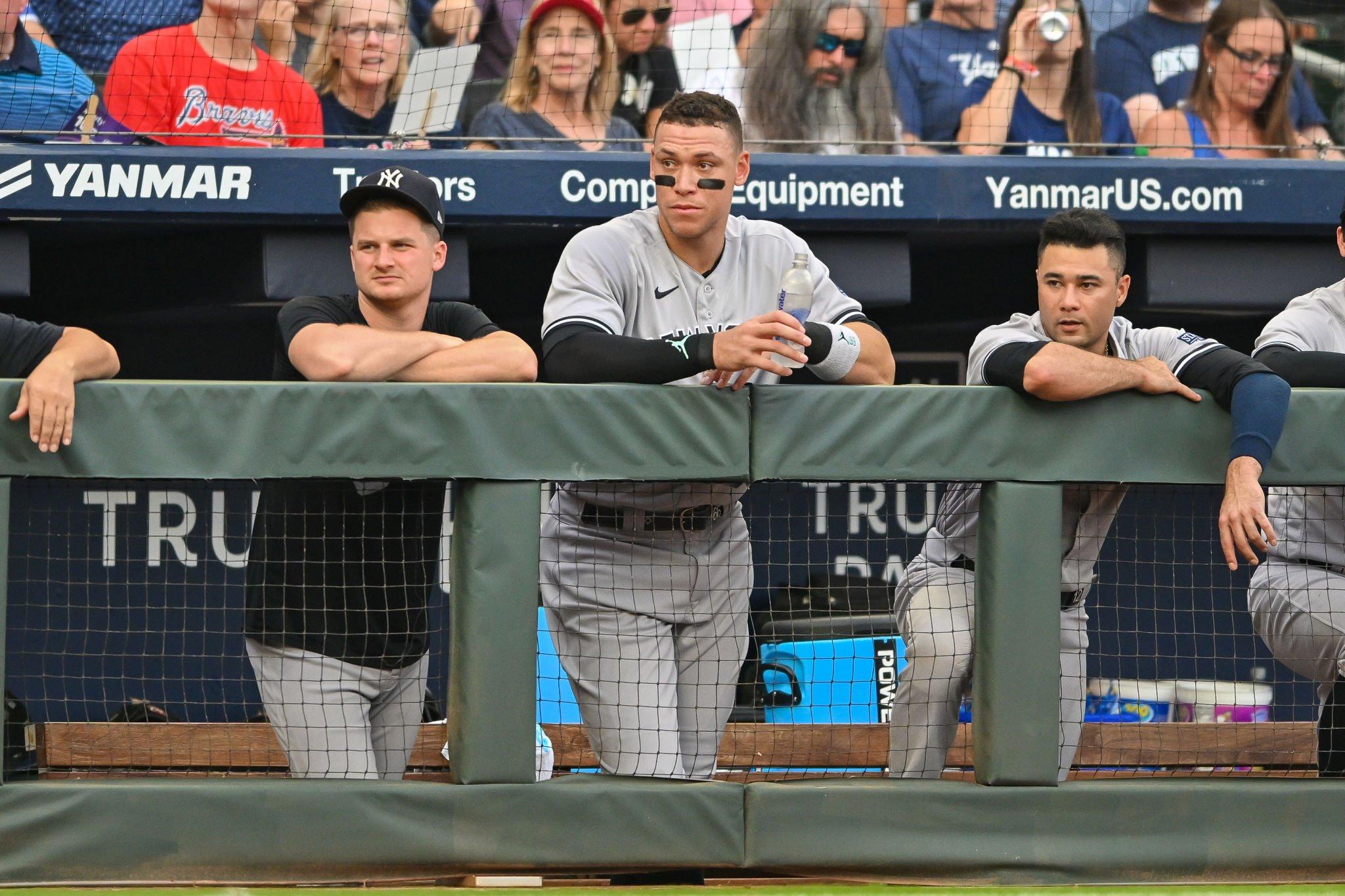
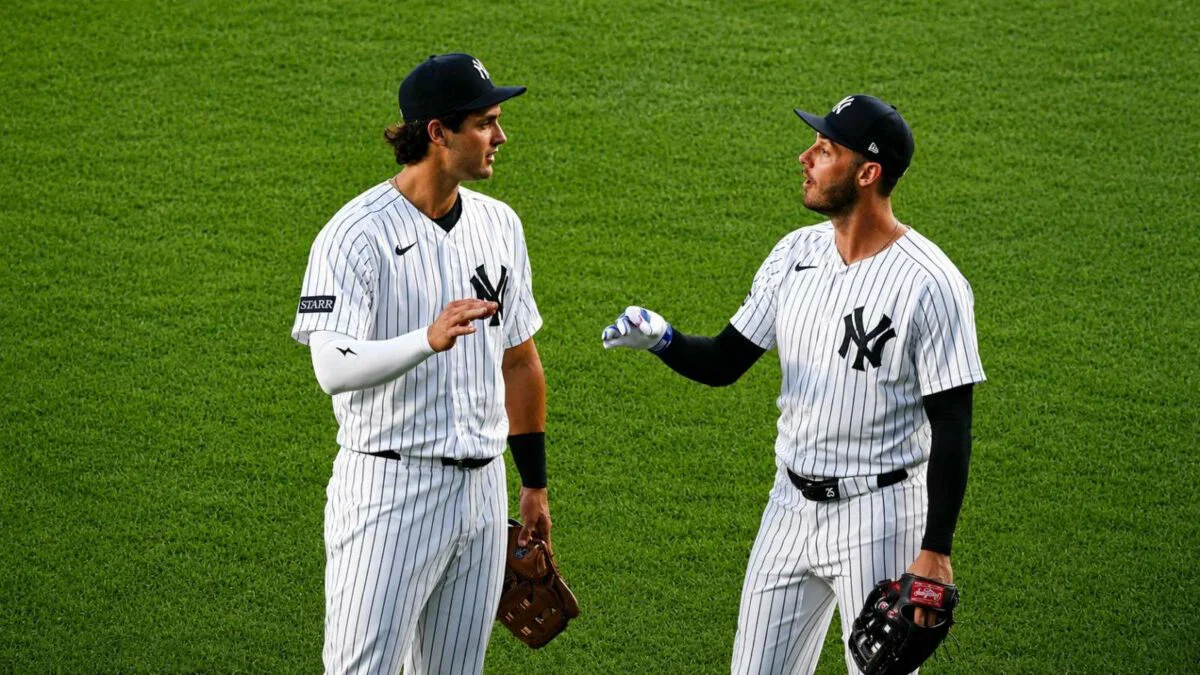
The Yankees have spent the past month learning to win without their stars. Judge has been out since May 31. Stanton has been out since April. Trent Grisham hurt his hamstring last week. The lineup that took the field Tuesday was missing nearly half of its Opening Day power production.
Tuesday showed the alternative path. Innings built on small contributions. Hits that should not happen. Strikeouts taken back. Defensive breakdowns punished without mercy.
Escarra’s check-swing double will be forgotten by Wednesday morning. Volpe’s grounder will live in nobody’s video clips. Rice’s ABS challenge will only register with the fans who saw it live. The home runs that came later in the night will dominate every recap.
But the Yankees won this game in the third inning. Everything after was scoreboard math, and the bizarre three stories from the third deserve to be remembered as the real reason a 12-2 final showed up on the board.
What do you think? Leave your comment below.