NEW YORK — The Yankees once built a powerful connection with Japanese baseball by bringing Hideki Matsui and Masahiro Tanaka to the Bronx. That reputation has been harder to turn into new signings in recent years, despite New York remaining one of baseball’s biggest spenders.
Shohei Ohtani chose the Los Angeles Angels when he first entered MLB. Yoshinobu Yamamoto picked the Dodgers after the Yankees mounted a serious pursuit. Roki Sasaki later eliminated New York from contention before signing with Los Angeles. Each decision underlined the challenge facing a franchise accustomed to competing for marquee international talent.
The Yankees began addressing that problem last winter. Mario Garza replaced Donny Rowland as director of international scouting, and the club added Matt Slater to oversee global player acquisitions. The changes placed greater emphasis on relationships and on identifying younger players before they became established Japanese professionals.
An early result came in June. New York signed 18-year-old Taiwanese pitcher Chien-Fan Lai for an $872,500 bonus, according to MLB.com. He had struck out 14 in seven innings at the 2025 under-18 World Cup. The acquisition gave the Yankees a foothold in the broader Asian amateur market, but Japan presented a different recruiting test.
That test is now arriving at a moment when the Yankees’ organizational pitch could matter as much as their brand name. Their challenge is to convince a teenager and his family that a long development path through an American system offers the best route to the majors.
A 97-mph decision puts the Yankees back in race
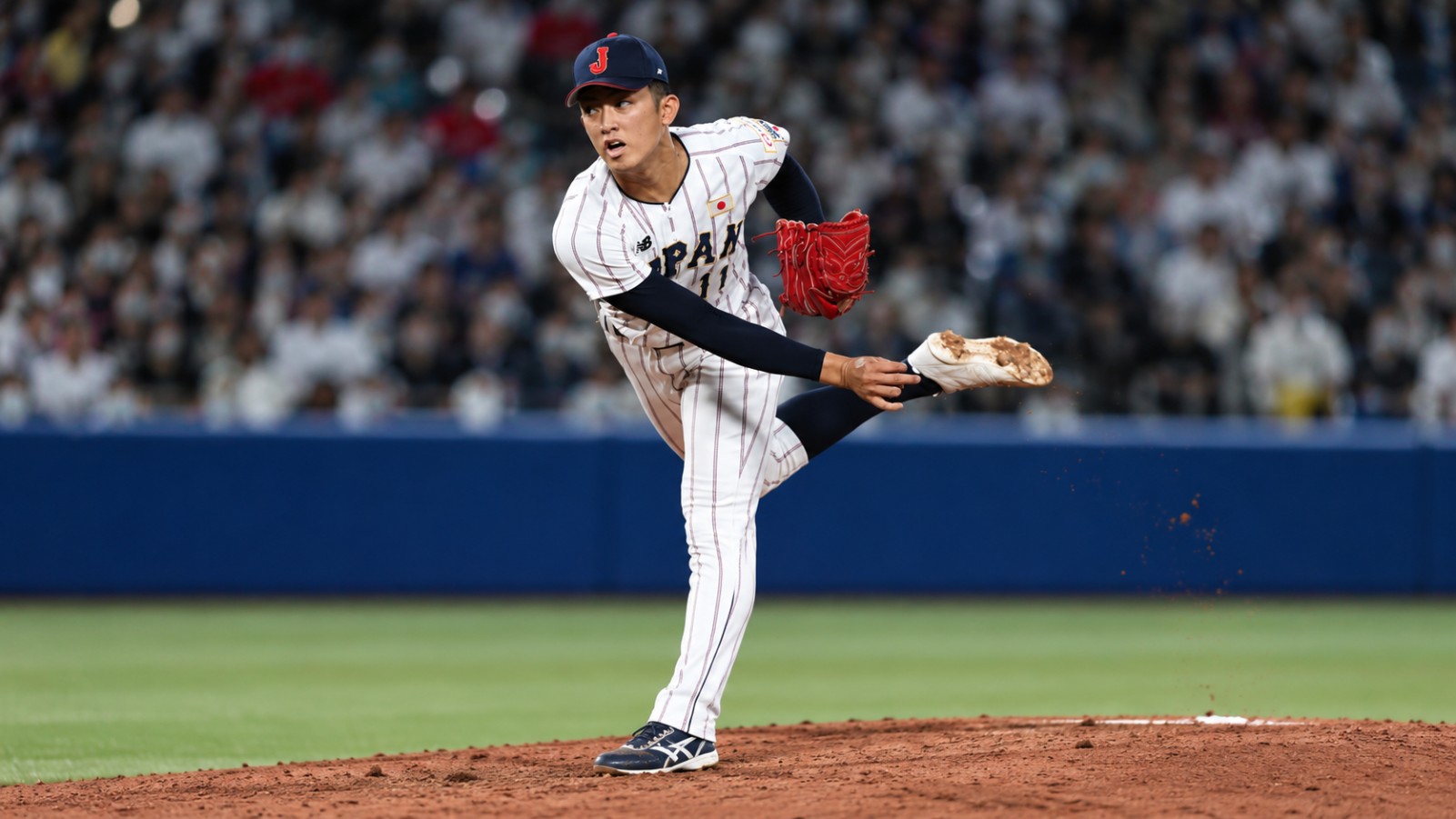
Shoki Oda, an 18-year-old right-hander from Yokohama High School, announced in mid-October that he would bypass Japan’s professional draft to pursue opportunities in the United States. MLB.com reported that his choices include signing with a major league organization as an international amateur or attending an American college.
The Yankees have been identified among the interested clubs, with the Dodgers also linked to the pursuit. Oda’s decision has given New York a chance to compete for a highly rated Japanese pitcher before he establishes himself in Nippon Professional Baseball.
Oda touched a tournament-record 97.6 mph during the Summer Koshien tournament in August. The right-hander also throws a slider, curveball, changeup, cutter and splitter, providing a broader repertoire than his age and headline velocity might suggest.
In one Koshien outing, Oda struck out 12 over 8 2/3 innings. He followed with seven strikeouts while allowing one run against Chinese Taipei in an under-18 international competition. His performances have attracted scouts from professional organizations on both sides of the Pacific.
Why the Yankees’ Japanese record matters
Oda would represent a markedly different kind of acquisition from Matsui or Tanaka. Both joined New York after establishing their credentials in Japan. Oda could enter the Yankees’ development system as a teenager, with years of instruction and minor league competition ahead of him.
The distinction matters after New York missed Ohtani, Yamamoto and Roki Sasaki. Signing an emerging talent would give the Yankees a chance to build a long-term relationship with a Japanese player rather than compete only when a star is ready for an immediate major league role.
The front office has already made that strategic shift explicit. After the club signed Lai in June, Garza described the move as part of a broader regional effort.
“The signing of Chien-Fan represents our renewed commitment to players in Taiwan, and in Asia as a whole,” Garza said.
Lai’s signing is a meaningful first step, but a Japanese pitching prospect of Oda’s profile would test whether the Yankees can translate a reorganized scouting operation into a signature recruitment victory.
A limited bonus pool changes recruitment battle
The financial framework also makes Oda’s recruitment unusually revealing. Players younger than 25 with limited professional experience generally fall under MLB’s international amateur signing rules. Teams operate within assigned bonus pools, so the richest organizations cannot simply offer unlimited guarantees.
The Yankees had a $5.44 million international bonus pool for the 2026 signing period, according to MLB.com. That figure is a historical reference, not a confirmed 2027 allotment. Oda’s route through college would create a different timetable and acquisition process than an international amateur agreement.
For New York, the deciding pitch could therefore involve its coaches, pitching development facilities, education support and a credible plan for moving a young arm through the minors. The Yankees can point to the progress of Cam Schlittler as evidence that their system develops pitchers, although his path began in American college baseball rather than Japan.
Oda is also more than a velocity story. His multi-pitch mix suggests the appeal of a potential starter, but command, durability and adaptation to professional workload will determine how quickly his tools translate. That is the work a signing club would be buying into.
New York’s next step comes before an MLB debut
The Yankees‘ interest arrives while their major league rotation already includes established veterans and emerging arms. Oda would be a long-term addition to the prospect pipeline, not an immediate answer to the 2027 roster.
The club’s recruitment of Oda will test Garza’s revamped international department against established competition, including the Dodgers. His decision between an amateur contract and college baseball will determine how that pursuit proceeds.
For the Yankees, the opportunity is larger than one pitcher’s fastball. The organization is trying to restore the ability to attract Japanese talent early, develop it and eventually turn that investment into another major league contributor.
What do you think? Leave your comment below.