ST. PETERSBURG, Fla. — The Yankees went home early last October. What followed was a winter of waiting.
The Yankees had spent that winter doing almost nothing. Fans watched rivals load up. The front office stayed quiet. The Cody Bellinger negotiation dragged. First base sat unsettled.
The front office’s quiet approach made the fan base nervous, and the calls were for a bat, a corner infielder, someone who could drive the ball out of the Stadium.
Then, there was a sudden move two days after Christmas. Highlight clips circulated. Career slash lines got passed around. A player almost nobody in the Bronx had watched became, for about 48 hours, the most interesting name in the organization.
Six months later, the Yankees sat at 50-42, five games behind Tampa Bay in the AL East. They had lost eight of 10. The offense had gone missing. And the man whose signing once quieted a furious fan base was no longer employed by the team.
A December signing that landed like a rescue
Nick Torres arrived on a minor league contract with a spring training invitation. The right-handed first baseman and corner outfielder had just won the 2025 Mexican League MVP award.
The numbers were absurd. He slashed .347/.425/.730 across 86 games for Algodoneros Union Laguna, with 27 home runs and 79 RBIs. His 1.155 OPS led the entire league. He tied for the league lead in doubles with 32 and in extra base hits with 65.
It was not a fluke season. Torres had hit .343 with a 1.025 OPS for Union Laguna since 2021. Four straight years of production, in a league the Yankees had not mined for talent.
Context made the signing land harder than it should have. New York had waited on Cody Bellinger. First base was unsettled. Fans wanted a move. Torres was the move.
The gap in his resume nobody wanted to discuss
The complication was always there, in plain sight. Torres was a fourth-round pick of the San Diego Padres in the 2014 draft, out of Cal Poly San Luis Obispo. He climbed steadily. He never arrived.
He has never made his major league debut. He reached Triple-A with both the Padres and the Rangers by 2018, and played 212 games at Double-A and 71 at Triple-A across his affiliated career, hitting a combined .267.
His last affiliated season came with Triple-A Round Rock in 2018, where he hit .195 before the Rangers released him. He signed in Mexico the following year and stayed.
Seven years is a long time away from affiliated pitching. The Yankees knew this. The signing was structured as a lottery ticket precisely because of it. A minor league deal costs a club nothing. That was the point.
Forty games, then a phone call
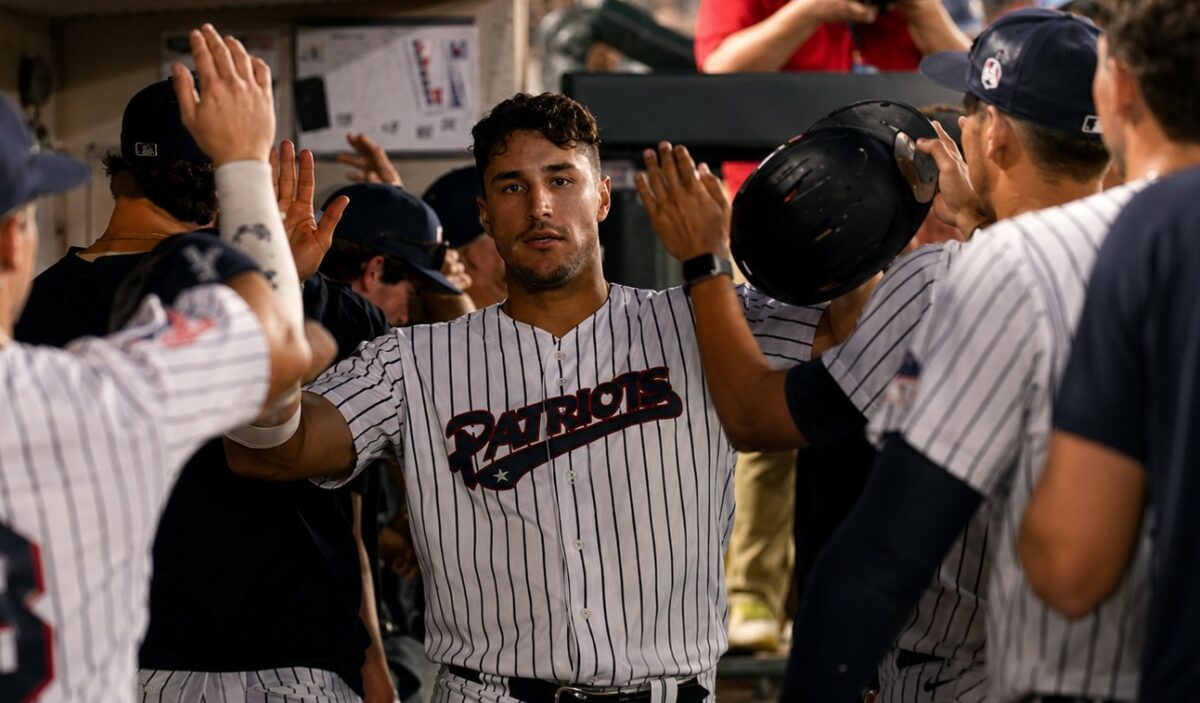
The assignment itself was the first real signal. The expectation in December was a Triple-A assignment with Scranton/Wilkes-Barre, the level closest to the majors. Torres went to Double-A Somerset instead.
There, he hit .247 with two home runs and 11 RBIs in 40 games. Serviceable. Nowhere near what he had done in Mexico.
On Wednesday, while the Yankees prepared for the third game of a series against the Rays in Florida, the Somerset Patriots posted the news. The organization had released Torres from his minor league contract. He is 33.
The Yankees had lost the night before. They would lose again that evening. Nobody in the Bronx was watching Double-A transactions.
A reporter covering the Trenton and Somerset beat put the arithmetic plainly. It was not an accusation. It was a question about process.
“A 40-game runway for the 2025 Mexican League MVP is curious.”
Forty games is roughly a quarter of a minor league season. It is a sample that tells an evaluator something. It rarely tells them everything.
What the Yankees actually bought
The organization never announced a plan for Torres beyond depth. General manager Brian Cashman spent the winter describing a market of cheap options and expensive ones, and said he felt the club was in a good spot. Torres was the cheap option.
What the Yankees received was not production. Two home runs in 40 games is not production.
No Yankees official has said the move was made for optics, and none of the available reporting supports that reading. The club had a real hole at first base behind Ben Rice. Torres fit the profile of a right-handed bat who could cover a corner and cost nothing to find out.
But the sequence is the sequence. Signed during a winter of waiting. Buried at Double-A. Released in 40 games, on a road trip, with the roster in free fall.
The Yankees have gone 2-8 over their last 10 games. Their lineup has struck out more than any team in baseball over a 20-game stretch. A Double-A first baseman was never going to fix that.
Where the story sits now
Torres is a free agent. At 33, with no major league service time, his options narrow. He can sign with another organization. He can go back to Mexico, where he was an idol rather than an afterthought. He can try independent ball.
His Mexican League club said goodbye publicly when he left, calling him one of the most beloved players in its history. That league, where he hit .343 over four seasons, is still there.
The Yankees visit Washington after the Rays series, then host the Dodgers coming out of the All-Star break. Their deadline needs are a right-handed catcher, an infielder and pitching depth. None were ever going to be met by a Double-A signing from Union Laguna.
Torres never appeared in a game at Yankee Stadium. He never reached Triple-A in pinstripes.
The Yankees have not commented publicly on the decision beyond the transaction notice. Torres has not spoken. What remains is a December announcement, a July release, and 40 games in between.
What do you think? Leave your comment below.