


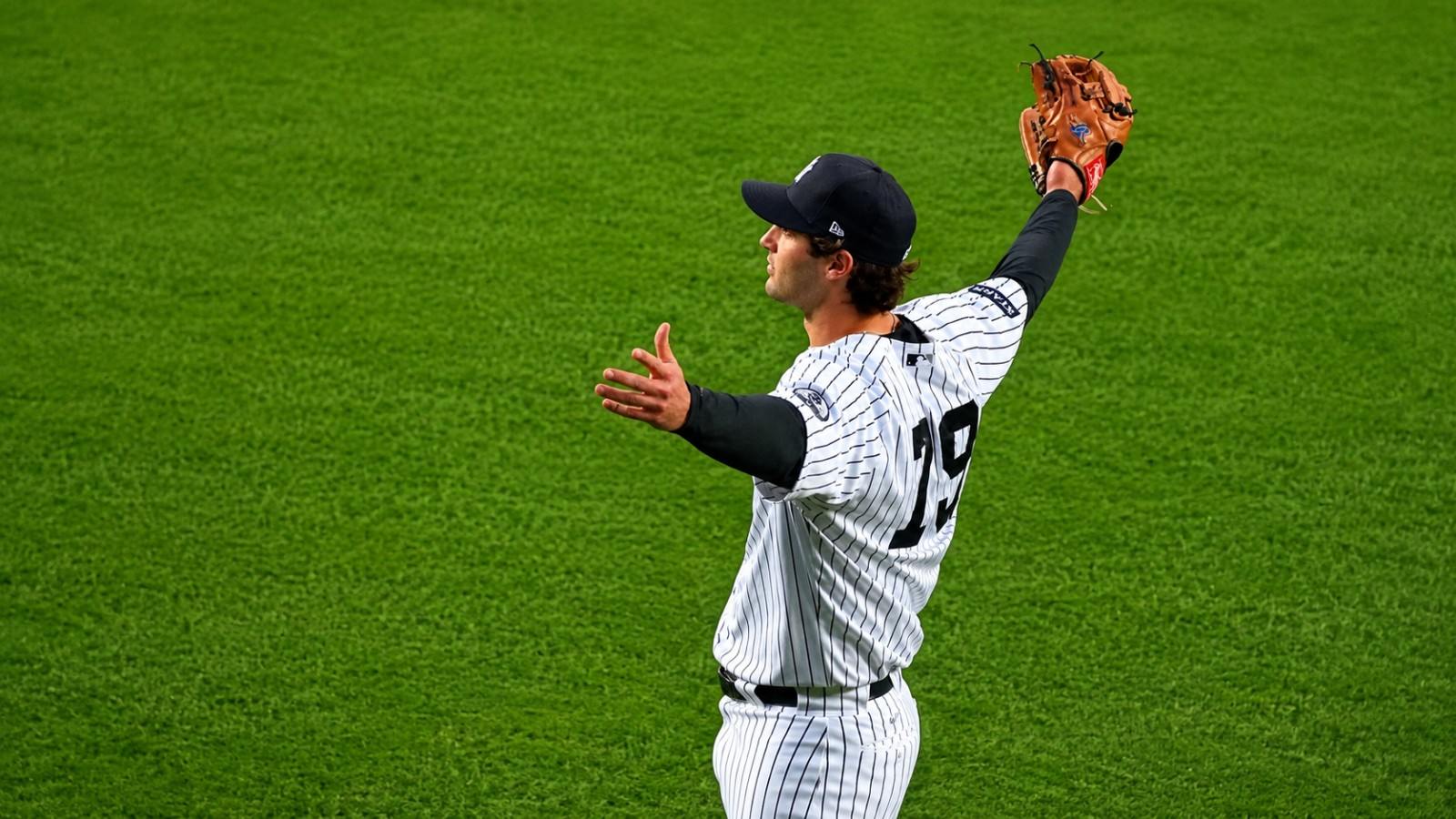
NEW YORK — The Yankees had two players coming off the injured list and only so many seats.
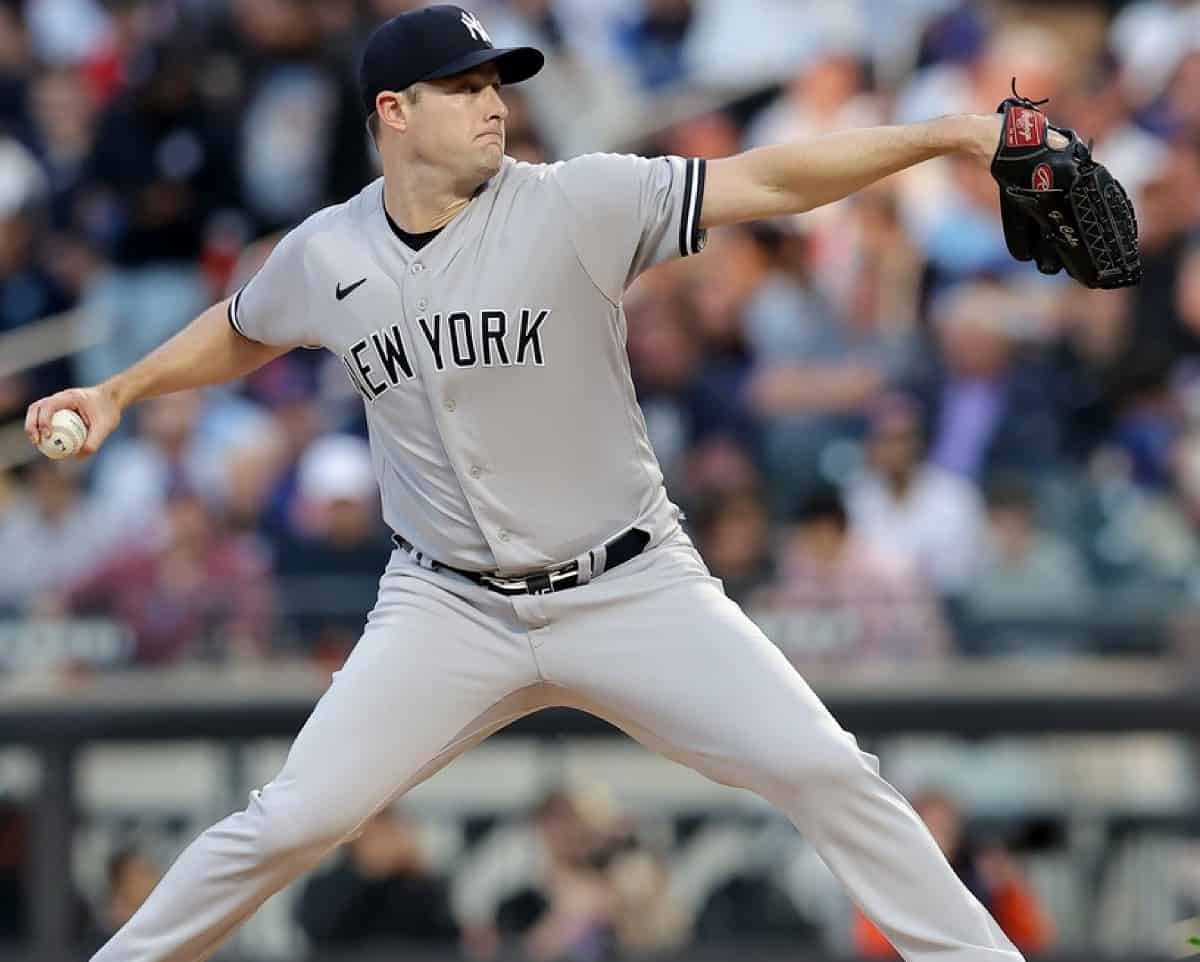
Jose Caballero was set to return Friday after the minimum 10 days out with a fractured right middle finger. Gerrit Cole was coming back the same night from Tommy John surgery. Anthony Volpe had been filling in at shortstop and playing well. Trent Grisham was day to day with a knee issue but trending toward a return.
The media debate was largely focused on Caballero vs. Volpe competition for the roster spot. But it ended with both staying safe,
So, who paid the price? Not Volpe. Not a struggling veteran reliever. The Yankees sent down one of the most hyped prospects they have produced in years.
Jones is the odd man out
Spencer Jones was optioned to Triple-A Scranton/Wilkes-Barre after Thursday’s 2-0 loss to the Blue Jays. Yovanny Cruz went down with him.
The move opened a spot for Caballero while keeping Volpe on the roster. That was the telling part. Volpe has not played any position other than shortstop at the big league level. With Caballero expected to reclaim the starting job, Volpe is now a bench piece with no defensive flexibility. The Yankees kept him anyway.
Caballero was asked Thursday about Boone’s vote of confidence in Volpe. He took the high road.
“[Volpe] is doing great,” Caballero said. “It definitely means a lot to me [Boone giving a vote of confidence]. But I just want to be in there and help the team as much as I can.”
Caballero is no ordinary returning piece. As of Thursday, his defense at shortstop ranked as the best in the majors by Defensive Runs Saved. The Yankees were always going to make room for him.
Jones, the 25-year-old slugger and the team’s No. 6 prospect, was the casualty. His demotion also signals that Grisham could rejoin the Yankees lineup as soon as Friday.
The power was real, the contact was not
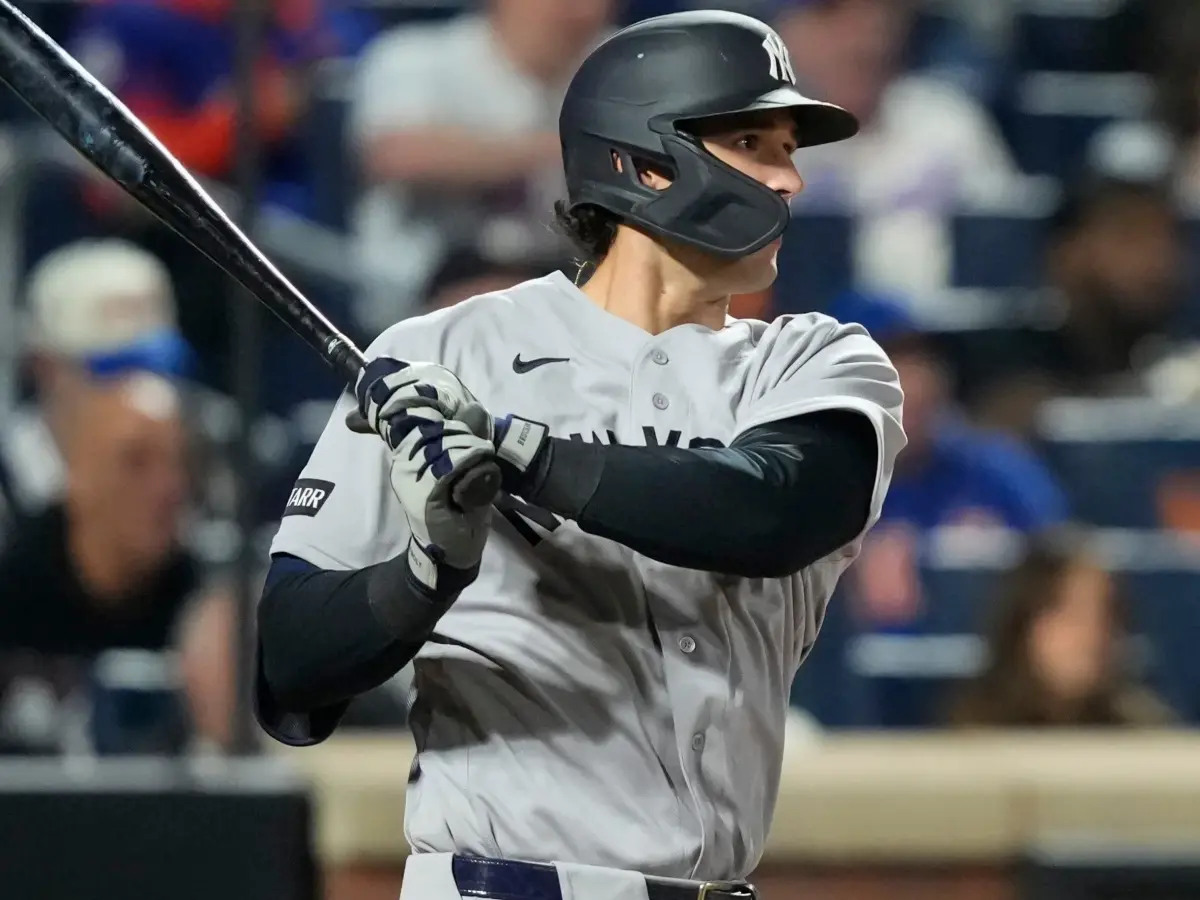
Jones did not get much time to settle in. Ten games in pinstripes. Twenty-four at-bats. The results were rough for the Yankees prospect.
He finished 4-for-24, a .167 average, with all four hits being singles. He drew three walks, drove in two runs, and stole a base. He also struck out 12 times. His OPS sat at .426.
The strikeouts are the worry. Jones whiffed on 41.7% of his swings, per Statcast. His chase rate climbed to 38.6%. Big league pitchers attacked the hole in his swing right away. His expected batting average was .156. His expected slugging was .236. This was not bad luck. This was the book on him playing out in real time.
Here is the other side. When the Yankees prospect connects, the ball travels.
His average exit velocity measured 95.5 mph, with some readings as high as 96.4 mph, higher than qualified league leader James Wood. His hard-hit rate sat at 66.7%. His bat speed of 77.3 mph would top the league leaderboard. The raw power is not a question. It never has been.
Jones hit 35 home runs in the minors in 2025 and 11 already this year before the call-up. The thunder is real. The contact is the problem the Yankees need fixed.
Across 33 games at Triple-A this season, Jones struck out 46 times in 120 at-bats. Between Double-A and Triple-A, he piled up 179 strikeouts in 438 at-bats. The swing-and-miss has followed him at every level. The Yankees knew that when they promoted him.
Why the Yankees called him up at all
The Yankees never expected a finished product. They called Jones up out of necessity.
Jasson Dominguez landed on the injured list with a low-grade left AC joint sprain. Giancarlo Stanton still has not cleared the running hurdle in his calf rehab. The outfield needed a body with real upside. Jones fit that description better than anyone in the system.
There is a comparison that follows Jones everywhere, and it is not a small one. He is constantly measured against Aaron Judge, in part because of the towering frame and the enormous raw power. Judge struck out in nearly half his at-bats as a rookie, across a larger sample, before becoming the best hitter in baseball. Defenders of Jones point to that. It is a fair point. Twenty-four at-bats decide nothing.
Still, the early returns are loud. A 22 wRC+ and a 45.8% strikeout rate over 24 plate appearances are hard to ignore, even in a tiny sample. The Yankees got their look. Now Jones goes back to work on the one thing that has defined his entire professional career.
He did cross a few items off his list. His fifth-inning steal of second base Thursday was his first stolen base in the majors. The first home run waits for his next Yankees call-up.
What the move says about the Yankees outfield
With Jones gone, the Yankees’ fourth outfielder is now Max Schuemann or Amed Rosario. Caballero has also played the outfield in the past. Grisham’s return would further ease the crunch.
Grisham missed Thursday with left knee discomfort. An MRI showed no structural damage, only some inflammation he said was unrelated to the latest issue. He spoke about the relief of the clean imaging.
Boone said before the roster move that Grisham had a chance to play Friday after a productive day of testing. That further reduced the need to carry Jones.
The bigger picture is this. Even sending Jones down, the fact that the Yankees gave him a shot at all marks a shift in how the organization treats its top prospects. The Jones project is a long one. The Yankees know it. They are willing to live in the discomfort of the strikeouts because the ceiling is too high to ignore.
For now, Jones heads back to Triple-A to shorten up with two strikes and make pitchers earn the whiffs. The power will keep showing up. The Yankees are betting the contact eventually catches up. When it does, the roster math will look very different.
What do you think? Will Jones get another Yankees chance this season?







He should get another chance where he will have more playing time. Look at how the Mets treat their prospects giving them consistent playing time and they have adjusted becoming good hitters.Jones will be a force given the at bats.