NEW YORK — The Yankees are 27-16 and the lineup carries genuine threats.
However, there is one exception. It crouches behind home plate and has been quietly draining production from the Yankees lineup since Opening Day.
The catching position is struggling. Both catchers. The longer the numbers sit where they are, the harder it becomes to look away.
The numbers at catcher are hard to defend
Austin Wells is the primary catcher for the Yankees in 2026. Through the first six weeks of the season he is batting .177 with a .310 on-base percentage, a .591 OPS, three home runs and five RBIs.
JC Escarra, who handles backup duties behind Wells, is batting .195 with a .250 on-base percentage, a .567 OPS, zero home runs and six RBIs.
Combined, the Yankees catching tandem is producing a .579 OPS. That is a drag on any lineup. For a team built to compete for a World Series, it is a quiet but persistent problem.
To be fair, catching has always been one of baseball’s weakest offensive positions. Teams accept below-average production behind the plate. Defense, framing, arm strength and staff management matter. Those things do not show up in a slash line. But they influence games.
The Yankees know this. Wells and Escarra are not failing some impossible standard. The gap between what they produce and what a contending lineup needs is simply wide enough to matter.
What Wells brings beyond the batting average
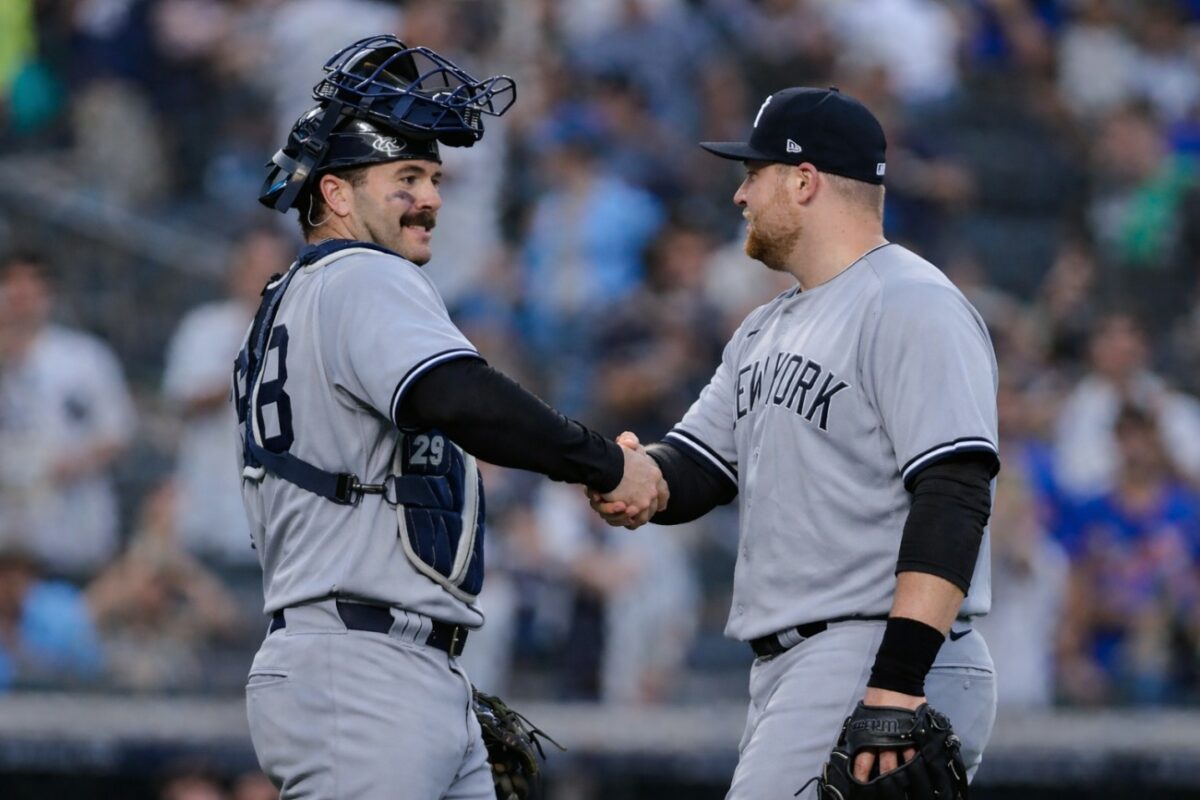
Wells is 24 years old and was considered one of the better catching prospects in baseball heading into the 2026 season. His bat showed promise in 2025 and the Yankees built genuine expectations around his development at the plate.
He is a left-handed hitter with real power potential. Three home runs early suggest that part of his game is still intact. The .177 average says consistency has not arrived yet.
Behind the plate, Wells has drawn respect for his receiving. Managing a Yankees staff that includes Gerrit Cole, Will Warren and others takes real skill. None of that appears in a box score.
None of that changes what happens when Wells steps to the plate. A .177 average six weeks in is a real number. A .591 OPS from your starting catcher is a real problem. Defensive value matters. It does not erase the offensive hole.
Escarra fills innings but not the gap
Escarra has handled backup work without major criticism for his defense. He manages his at-bats and contributes in low-leverage spots.
The offensive line tells a different story. A .195 average and zero home runs. When Wells rests, the Yankees get no offensive relief. The backup spot cannot be a guaranteed out.
When Escarra catches, the Yankees concede one lineup spot before the game starts. Against strong pitching, that compounds fast.
The Yankees lineup is deep enough to absorb one weak spot. The question is how long that remains true.
How other contenders handle the position
The Yankees are not alone. Elite offensive catchers are rare and expensive. Most contending teams accept the trade-off.
What separates teams that manage it well is depth. Some carry a tandem where one bat offsets the other. Others maximize defense behind the plate and build offense everywhere else.
The Yankees have taken the latter approach. Paul Goldschmidt, Cody Bellinger, Aaron Judge, Jazz Chisholm and Trent Grisham are genuine threats throughout the order. Production elsewhere is supposed to cover the catching hole.
That theory holds right now. The Yankees are scoring runs and winning games. But one automatic weak spot is a structural vulnerability. Pitchers target it. Managers exploit it late in games. Over 162 games, the cost adds up.
The production floor the Yankees need
Catchers across MLB have historically averaged around a .700 OPS. That is already below the league norm for position players. The Yankees catching tandem is more than 100 points below even that modest mark.
The Yankees do not need their catchers to hit cleanup. They need enough production that pitchers cannot simply pitch around the slot. A .680 to .700 combined OPS would be manageable given the firepower elsewhere in the Yankees order.
Getting there requires Wells to find his form. He is young and talented enough that a turnaround is plausible. The power is still there.
But if the numbers stay flat through June, the Yankees face a harder conversation. Catching is one of the toughest positions to upgrade mid-season. Options are limited. Costs are high. The best catchers rarely become available.
The Yankees are winning despite it. Credit the rest of the roster. But the clock on solving it has been running since April.
What do you think? Should they make a trade?